Stop Tangles: How to Choose the Best Earring Organizer Stand
Stop losing backs and tangling dangles. Discover how to choose the perfect earring organizer stand for your collection based on material and weight.

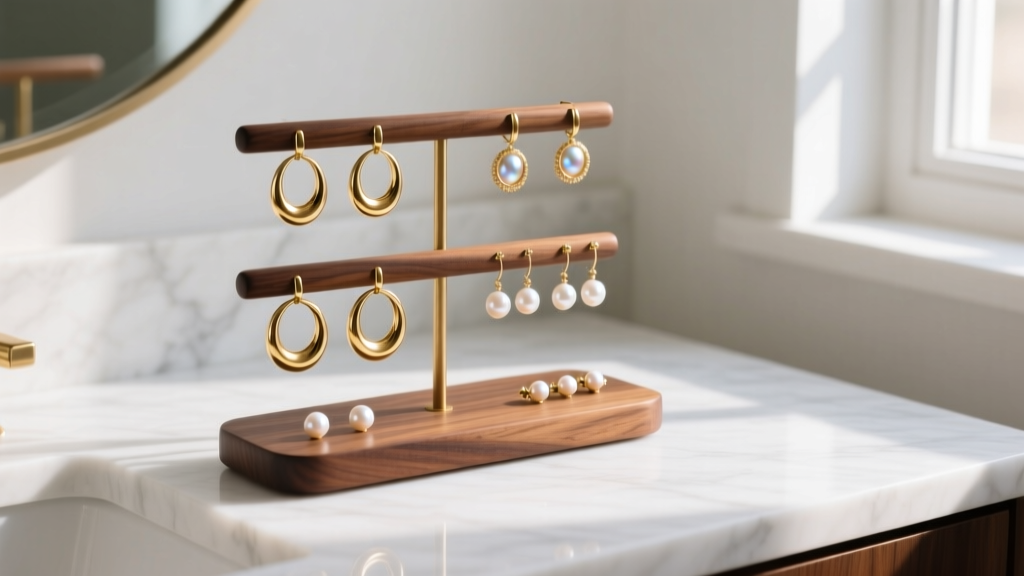
There is a distinct, universal frustration known only to jewelry lovers: reaching into a velvet-lined box to grab your favorite morning studs, only to pull out a tangled bird’s nest of chains, missing butterfly backs, and slightly bent posts. While traditional jewelry boxes have their place for long-term storage, they are fundamentally flawed for daily wearability and visual inventory. This is where a dedicated earring organizer stand transitions from a mere vanity accessory to an essential troubleshooting tool for your daily routine.
However, not all stands are created equal. A poorly designed stand can actually accelerate tarnishing, scratch precious metals, or tip over under the weight of statement pieces. In this comprehensive troubleshooting guide, we will diagnose the common failures of earring storage and provide a precise framework for selecting an earring organizer stand that protects your collection while streamlining your morning routine.
The Hidden Costs of Poor Earring Storage
Before investing in a new display, it is crucial to understand the physical and chemical damage caused by improper storage. When earrings are tossed into a communal drawer or box, three primary issues occur:
- Micro-Scratching and Abrasion: Harder gemstones (like diamonds or sapphires, rating 9-10 on the Mohs scale) will easily scratch softer metals like 24k gold or high-polish sterling silver when they rub together in a confined space.
- Post Warping: Standard 20-gauge (0.81mm) and 18-gauge (1.02mm) posts are relatively delicate. When heavy dangles are piled on top of them, the posts bend, making them painful to insert and prone to snapping.
- Accelerated Oxidation: According to the Gemological Institute of America (GIA), environmental factors and humidity play a massive role in jewelry degradation. However, completely sealing silver in non-archival plastic traps moisture, while leaving it entirely exposed to open-air sulfur accelerates silver sulfide tarnish.
A high-quality earring organizer stand solves these issues by providing individual spatial separation, upright posture for posts, and adequate airflow, provided you choose the right materials and base weight.
Diagnosing Your Collection: Weight, Gauge, and Style
The most common mistake consumers make is buying an earring organizer stand based purely on aesthetics, ignoring the physics of their specific collection. A stand designed for delicate 14k gold studs will catastrophically fail if loaded with heavy brass chandelier earrings. Use the diagnostic table below to match your collection to the required stand specifications.
| Earring Type | Common Storage Failure | Required Stand Feature |
|---|---|---|
| Heavy Dangles & Drops | Top-heavy tipping; chain tangling | Weighted base (marble/solid wood); deep drop-slots |
| Standard Studs (20g/18g) | Lost butterfly backs; sinking into fabric | Angled acrylic tiers with 1mm laser-cut holes |
| Cartilage & Flat Backs | Bent labret posts; scratched opals | Wide-spacing velvet rolls or slotted silicone rails |
| Threader & Chain Earrings | Severe knotting; chain kinking | Vertical hanging bars with top-notch catches |
| Huggies & Small Hoops | Clasps snagging on other jewelry | Horizontal dowel rods or T-bar displays |
Material Matters: Preventing Tarnish and Scratches
The material of your earring organizer stand dictates how well it will preserve your metals over time. Here is a breakdown of the most common materials and their troubleshooting profiles:
Acrylic (PMMA)
Acrylic is the gold standard for visibility and modern aesthetics. It is lightweight, easy to clean, and allows you to see your entire inventory at a glance. The Catch: Acrylic generates static electricity, which attracts dust. Furthermore, unpolished laser-cut edges can micro-scratch soft gold. Solution: Look for flame-polished acrylic edges and wipe the stand down monthly with an anti-static microfiber cloth.
Solid Wood (Walnut, Oak, Bamboo)
Wood offers a premium, weighted feel and naturally resists static. The Catch: Raw or poorly sealed wood contains natural acids and tannins that can react with sterling silver and copper, causing localized tarnishing. Solution: Ensure the wood is sealed with a jewelry-safe polyurethane or lacquer finish. The London Assay Office notes that keeping silver away from acidic organic materials is key to preventing rapid sulfide formation.
Metal (Brass, Steel, Aluminum)
Metal frames are incredibly durable and can support heavy loads without bowing. The Catch: Bare metal-on-metal contact will scratch your earrings. Solution: Only purchase metal stands that feature silicone or velvet sleeving on the hanging rods and display tiers.
Troubleshooting Common Organizer Failures
Even well-intentioned purchases can lead to daily frustrations. Here is how to troubleshoot the three most common earring organizer stand failures:
Failure 1: The 16-Gauge Squeeze
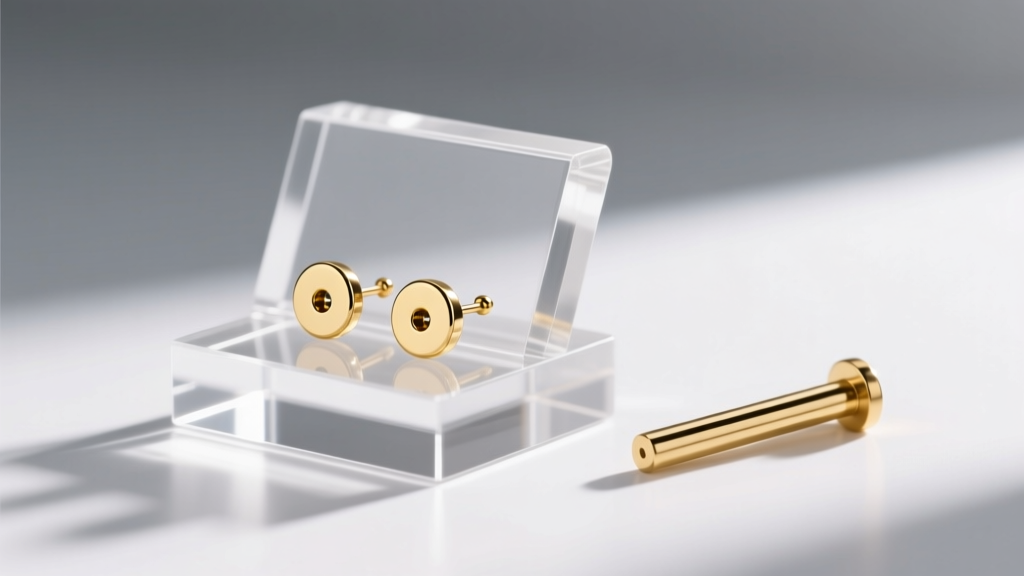
Most mass-produced acrylic stands feature laser-cut holes that are exactly 1.0mm to 1.1mm in diameter. This perfectly accommodates standard 20-gauge (0.81mm) and 18-gauge (1.02mm) lobe earrings. However, if you wear cartilage jewelry, stretched lobes, or thicker artisan wires, you are likely dealing with 16-gauge (1.29mm) or 14-gauge (1.63mm) posts. Forcing a 16g post into a 1.0mm acrylic hole will scratch the acrylic and potentially bend a soft sterling silver post. The Fix: Look for stands that feature "slotted" tops (a narrow channel leading to a wider circular rest) rather than closed holes, or use a 1.5mm drill bit to carefully widen the holes in your existing acrylic stand.
Failure 2: The Top-Heavy Tip
If your stand tips over every time you remove a heavy pair of brass dangles, the center of gravity is poorly calibrated. Lightweight acrylic or thin bamboo stands with a footprint smaller than 4x4 inches are notoriously unstable. The Fix: Calculate the base weight. A stand holding heavy drops must feature a solid marble, concrete, or dense walnut base measuring at least 6x6 inches. The base should account for at least 60% of the stand's total weight.
Failure 3: Dust and Oxidation Accumulation
Open-air stands are fantastic for accessibility but act as dust magnets. Dust traps moisture and environmental pollutants against the metal of your earrings. The Fix: Place a small, discreet 3M Anti-Tarnish strip at the base of the stand. These strips absorb airborne hydrogen sulfide before it can react with your silver. For high-humidity environments, consider an acrylic stand that comes with a matching clear dust-cover lid.
Expert Tip: Never use chemical silver dips or harsh polishing cloths on your earrings before placing them on an acrylic stand. Residue from chemical cleaners can degrade the acrylic over time, causing it to cloud and crack. Stick to mild dish soap and warm water for cleaning both your jewelry and the stand.
Step-by-Step: Organizing by Anatomy and Frequency
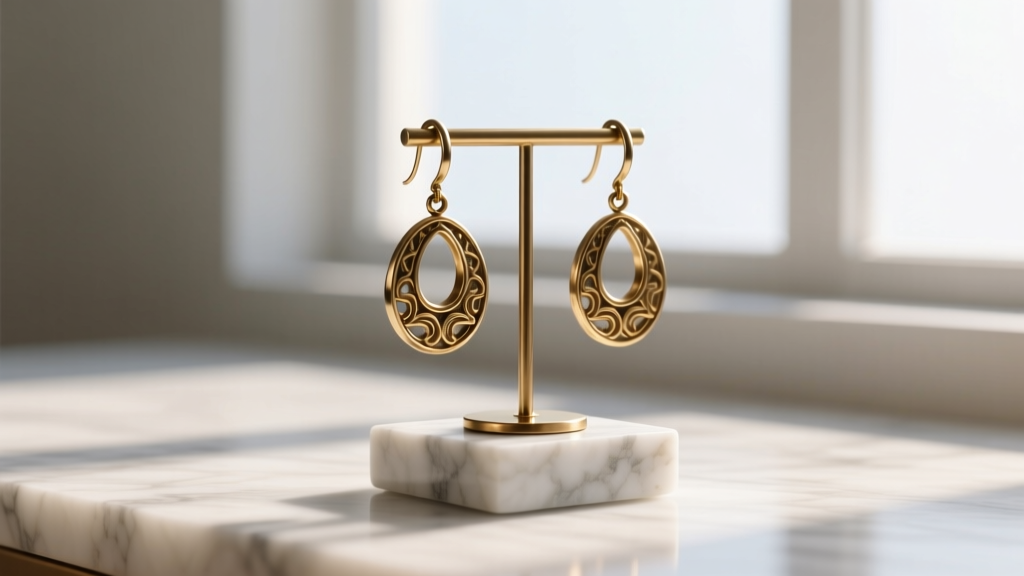
Once you have selected the correct earring organizer stand, the way you load it will dictate your daily efficiency. Organize your stand using the "Anatomy and Frequency" matrix:
- Top Tier (Eye Level): Reserve this for your daily drivers. Standard lobe studs, small huggies, and lightweight sleepers go here. This tier should require zero friction to access.
- Middle Tier (Chest Level): This is the domain of your cartilage and helix jewelry. Flat-back labrets and threadless ends are best stored here, ideally on a slotted rail where you can easily grip the decorative front without touching the post.
- Bottom Tier (Hand Level): Hang your longest dangles, chandeliers, and drop earrings here. The vertical clearance from the bottom tier to the vanity surface is critical—ensure you have at least 3.5 inches of clearance so your longest pieces do not drag on the table, which can dull gemstone points or bend delicate wire-wrapping.
Expert Verdict: Matching the Stand to Your Lifestyle
An earring organizer stand is an investment in the longevity of your jewelry and the sanity of your morning routine. If your collection is primarily 20g and 18g gold and silver studs, a multi-tiered, flame-polished acrylic stand with a weighted silicone base is your most practical, cost-effective choice (typically ranging from $25 to $45). If you collect heavy, oversized artisan dangles or thick-gauge cartilage pieces, bypass acrylic entirely and invest in a solid walnut or marble-based T-bar stand with slotted silicone rails ($60 to $120).
By diagnosing the specific gauge, weight, and material needs of your collection, you can eliminate tangles, prevent post-warping, and ensure your favorite pieces are always ready to wear, perfectly preserved, and beautifully displayed.


