Spider Man Earrings: Metallurgy & Enamel Tech Guide
Explore the technical craftsmanship behind premium Spider Man earrings, from 925 silver alloys and vitreous enamel to structural post gauges.

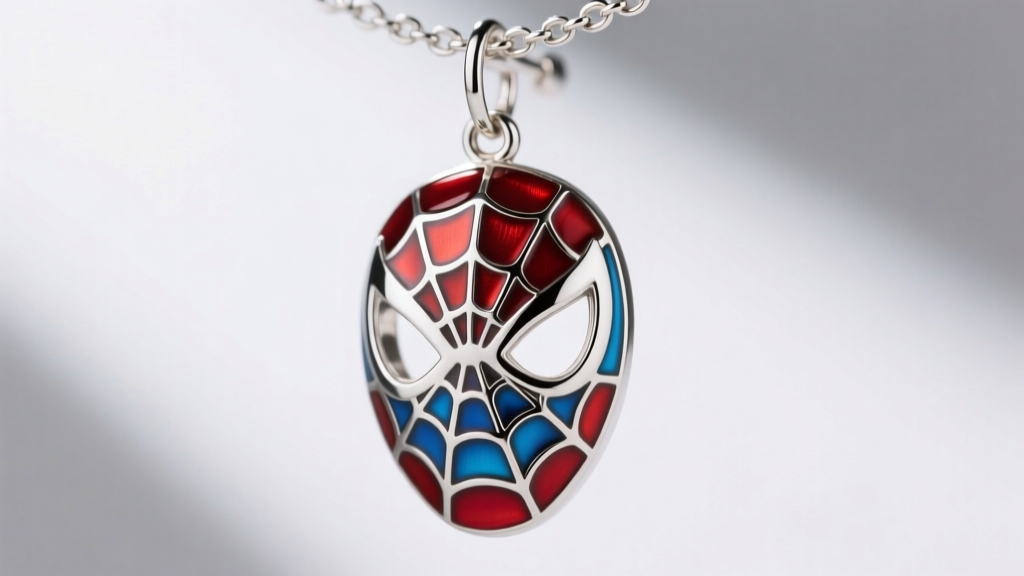
The Evolution of Licensed Character Jewelry
When evaluating premium spider man earrings, collectors and jewelry enthusiasts must look past the intellectual property and examine the physical craftsmanship. Historically, character-themed jewelry was relegated to cheap, mass-produced novelty items cast from low-grade zinc alloys and painted with toxic lead-based enamels. However, as of 2026, the intersection of pop culture and fine jewelry has birthed a new category of semi-fine and fine character accessories. Today, licensed Marvel and Disney collaborations are frequently executed using traditional lost-wax casting, precious metal alloys, and advanced enameling techniques. This guide provides a technical deep dive into the metallurgy, structural engineering, and surface finishing that separate high-end spider man earrings from cheap costume alternatives.
Base Metallurgy: 925 Sterling Silver vs. Zamak Alloys
The foundation of any premium earring is its base metal. High-end spider man earrings are predominantly cast in 925 sterling silver or, for ultra-premium lines, 14k or 18k gold. Sterling silver is an alloy consisting of 92.5% pure silver and 7.5% copper. The copper addition is critical; pure silver is too soft (measuring just 2.5 on the Mohs scale) to hold the intricate webbing details of a Spider-Man mask or the sharp angles of the Spider-Emblem.
Conversely, mid-tier licensed merchandise often utilizes Zamak, a family of alloys with a base of zinc, combined with aluminum, magnesium, and copper. While Zamak allows for high-pressure die casting and sharp detail reproduction at a lower cost, it is highly susceptible to oxidation and pitting over time. To combat this, manufacturers apply a rhodium or e-coat finish. According to the Federal Trade Commission's Jewelry Guides, any item stamped as 'Sterling' or '.925' must strictly adhere to the 92.5% purity threshold, making hallmark verification a crucial step for buyers.
Allergenic Profiles and the EU Nickel Directive
For cartilage piercings or sensitive earlobes, the presence of nickel is a primary concern. Cheap brass or white gold alloys sometimes contain nickel as a whitening agent. Premium manufacturers adhere to the European Union's Nickel Directive (EN 1811:2011), which restricts nickel migration from post assemblies to less than 0.5 µg/cm²/week. When purchasing spider man earrings for newly pierced or sensitive ears, always verify that the earring posts are crafted from implant-grade titanium (ASTM F136) or nickel-free 925 silver.
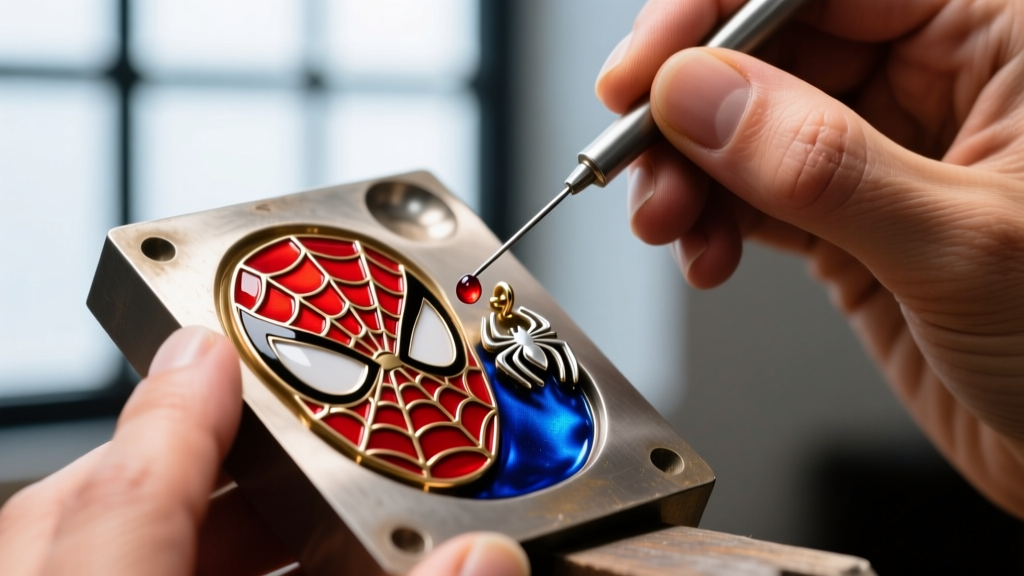
Color Fastness: Vitreous vs. Cold Enamel Techniques
The iconic red and blue of the classic Spider-Man suit, or the stark white and black of the Symbiote suit, rely on enameling. The longevity and visual depth of these colors depend entirely on the enameling technique employed by the artisan.
Vitreous (Kiln-Fired) Enamel
In high-end artisan pieces, vitreous enamel is the gold standard. This process involves fusing powdered glass (silica, soda ash, and metal oxides for color) to the metal base at temperatures exceeding 1,400°F (760°C). Cobalt oxide is used to achieve the deep Spider-Man blue, while cadmium or selenium compounds yield the vibrant red. Vitreous enamel boasts a Vickers hardness of 500-600, making it highly resistant to scratching and entirely immune to UV degradation. The Gemological Institute of America (GIA) notes that properly fired vitreous enamel can retain its color and structural integrity for centuries, making it ideal for heirloom-quality character jewelry.
Cold Enamel (Epoxy Resin)
Most commercially licensed, mid-range spider man earrings utilize cold enamel, which is essentially a two-part epoxy resin tinted with synthetic pigments. While modern 2026 formulations include UV-stabilizers to prevent yellowing, cold enamel remains significantly softer than vitreous glass (often scratching with a copper coin) and is vulnerable to chemical degradation from perfumes, hairsprays, and chlorine. Furthermore, cold enamel is applied via syringe or needle into recessed cavities (the champlevé technique) and left to cure at room temperature, resulting in a slightly domed, plastic-like finish that lacks the optical depth of fired glass.
Structural Engineering: Post Gauges and Backings
Character dangle earrings present a unique structural challenge: pendulum torque. A detailed, solid-cast 925 silver Spider-Man head dangle can easily weigh between 4 and 8 grams. When suspended from a standard friction post, the kinetic energy of walking or turning the head creates a lever effect that can stretch the earlobe piercing—a phenomenon jewelers refer to as the 'cheese-cutter effect'.
| Component | Standard Novelty Spec | Premium / Fine Jewelry Spec | Technical Advantage |
|---|---|---|---|
| Post Gauge | 20G (0.81mm) | 18G (1.02mm) or 16G (1.29mm) | Reduces shear stress on the earlobe; prevents bending. |
| Post Length | 9mm | 11mm - 13mm | Accommodates the thicker backing mechanisms required for heavy dangles. |
| Backing Type | Standard Butterfly Friction | La Pousette or Screw-Back | Mechanical locking prevents loss due to the weight and swing of the dangle. |
| Bail / Jump Ring | Soldered closed, thin wire | Laser-welded, 1.2mm thickness | Prevents the dangle from snapping off under sudden kinetic tension. |
To mitigate lobe damage, expert jewelers recommend utilizing hollow electroforming techniques for large spider man earrings, which can reduce the weight of a solid 8-gram piece to a mere 2.5 grams without sacrificing exterior volume or detail. Additionally, upgrading to a La Pousette locking backing—a mechanism that uses internal spring-loaded clips to grip the post's groove—ensures that a heavy dangle remains securely anchored regardless of physical activity.

Hallmarks, Licensing, and Authenticity Verification
The secondary market for character jewelry is flooded with unauthorized counterfeits. Authenticating premium spider man earrings requires a multi-point inspection. First, examine the metal hallmark. Genuine 925 silver pieces will bear a '.925' or 'Sterling' stamp, often accompanied by the manufacturer's trademark. According to The London Assay Office, a true hallmark in the UK also includes a fineness mark and an assay office symbol, providing a legally binding guarantee of metal purity.
Second, verify the IP licensing stamp. Authentic Marvel or Disney collaborations will feature a microscopic '© MARVEL' or '© Disney' stamp, usually located on the flat back of the earring post or the reverse of the dangle element. Counterfeiters often omit this due to the cost of micro-engraving, or they misspell the trademark. Finally, inspect the webbing details. Authentic high-end pieces use raised silver wire or deep, sharp champlevé recesses, whereas fakes often exhibit soft, blurred edges indicative of worn, low-quality rubber molds used in mass production.
Care and Maintenance Protocols
Maintaining the pristine condition of enameled character earrings requires strict adherence to material-specific cleaning protocols. For vitreous enamel and solid silver pieces, a mild ultrasonic cleaner can safely remove sebum and environmental grime from the intricate webbing crevices. However, if your spider man earrings feature cold enamel, resin gemstones, or glued-in synthetic rubies (often used for the eyes of the mask), ultrasonic frequencies will shatter the resin and dissolve the adhesives.
Instead, cold enamel pieces must be cleaned using a soft-bristled baby toothbrush, lukewarm water, and a pH-neutral dish soap. Avoid silver dip solutions entirely, as the harsh thiourea chemicals will permanently cloud and strip the glossy finish of both cold and vitreous enamels. Store these pieces in an anti-tarnish cloth pouch, separate from harder gemstones like diamonds or sapphires, which can easily scratch the enamel surface during transit.


