Spike Hoop Earrings Buying Guide: Metals & Fit (2026)
Discover how to choose the perfect spike hoop earrings in 2026. Learn about implant-grade metals, gauge sizes, hoop mechanisms, and styling tips.

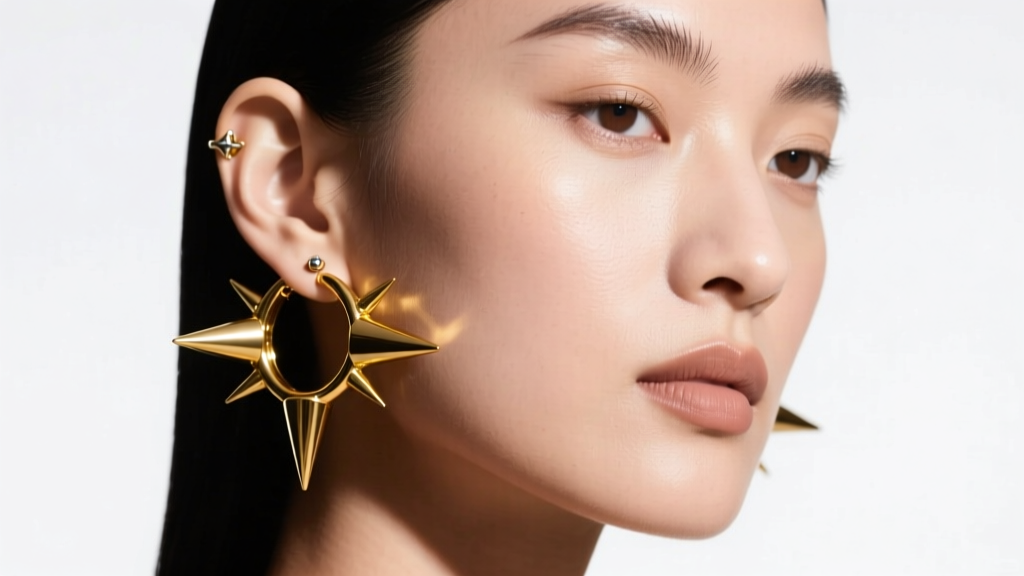
The Evolution of Edge: Why Spike Hoops Dominate 2026
Spike hoop earrings have transcended their punk-rock origins to become a staple in modern, elevated jewelry wardrobes. In 2026, the trend leans heavily into 'quiet rebellion'—pairing sharp, architectural spikes with sleek, minimalist hoops that work just as well in a corporate boardroom as they do at a weekend concert. However, buying spike hoops requires more than just picking a design you like. The added weight of the spikes, the specific gauge requirements for cartilage versus lobe piercings, and the risk of metal allergies mean you must shop with engineering and anatomy in mind. This comprehensive buying guide breaks down exactly what to look for when investing in spike hoop earrings, ensuring your purchase is safe, comfortable, and built to last.
Decoding Spike Profiles: Cone, Pyramid, and Cluster
Not all spikes are created equal. The silhouette of the spike dictates not only the aesthetic but also the weight distribution on your earlobe or cartilage.
- The Classic Cone: Directional and sharp, cone spikes draw the eye along the curve of the hoop. They are best suited for medium-to-large hoops (15mm+ inner diameter) where the cone can point outward or downward without pressing into the neck or jawline.
- The Pyramid Spike: Featuring a wider, geometric base, pyramid spikes offer an edgy, industrial look. Because they are generally heavier and wider than cones, they are ideal for 'huggie' style hoops that sit flush against the earlobe, providing a stable base that prevents the hoop from flipping upside down.
- Micro-Spike Clusters: For a more subtle approach, micro-spikes offer texture without the aggressive silhouette. These are excellent for tragus or forward helix piercings where large spikes would catch on hair and headphones.
Weight distribution is the silent killer of hoop earrings. A heavy cone spike on a thin, seamless wire hoop will cause the earring to constantly rotate, forcing you to adjust it every few minutes. Always match the spike mass to the hoop's structural integrity.
Material Matters: Hypoallergenic Metals vs. Plated Risks
When shopping for spike hoop earrings, the metal composition is non-negotiable, especially for cartilage piercings which are highly prone to irritation bumps. According to the Association of Professional Piercers (APP), only specific grades of metal are safe for long-term wear in the body.
Implant-Grade Titanium (ASTM F136): This is the gold standard for sensitive ears and fresh piercings. It is completely nickel-free, lightweight (crucial when adding heavy spikes), and highly resistant to tarnish. If you are buying spike hoops for a helix or tragus piercing, titanium should be your default choice.
Solid 14k or 18k Gold: Ensure the gold is alloyed without nickel. Many white gold alloys contain nickel to achieve their color, which can trigger contact dermatitis. Look for 14k palladium white gold or stick to yellow and rose gold. The American Academy of Dermatology frequently warns against nickel exposure in jewelry, noting it as the leading cause of allergic contact dermatitis.
Metals to Avoid: Steer clear of vague terms like 'surgical steel' or 'stainless steel,' which often contain high levels of nickel. Furthermore, avoid gold-plated brass or copper. The friction of the hoop post moving through the piercing will quickly wear away the plating, exposing the reactive base metal to your skin.
Gauge Sizes and Hoop Mechanisms: The Engineering of Comfort
A beautiful spike hoop is useless if the mechanism fails or the gauge is incorrect for your piercing. The addition of a spike changes the center of gravity, meaning the closure mechanism must be robust enough to handle asymmetric weight.
| Piercing Location | Standard Gauge | Recommended Hoop ID | Best Mechanism | Spike Weight Tolerance |
|---|---|---|---|---|
| Standard Lobe | 20g or 18g | 12mm - 20mm | Hinged Latch-Back | High (Lobes can support heavier drops) |
| Helix / Cartilage | 16g or 14g | 8mm - 12mm | Clicker / Segment Ring | Medium (Heavy spikes cause migration) |
| Tragus | 16g | 6mm - 8mm | Threadless Push-Pin | Low (Requires micro-spikes only) |
| Daith | 14g | 10mm - 12mm | Clicker | Medium (Spikes must face inward/outward) |
The Clicker Advantage: For cartilage spike hoops, the 'clicker' mechanism is vastly superior to seamless or segment rings. A clicker features a secure hinge and a locking clasp that audibly clicks into place. Because spikes add drag when pulling on clothing, a seamless ring will easily pull apart, risking the loss of the earring. A clicker remains locked even under tension.
Face Shape & Placement Strategy
Spike hoop earrings are inherently structural, meaning they interact directly with your facial geometry. Choosing the right inner diameter (ID) and spike direction can enhance your natural features.
Round and Oval Faces
For round face shapes, avoid wide, bulky huggies with outward-facing pyramid spikes, as these add horizontal width. Instead, opt for elongated drop hoops with downward-pointing cone spikes. This creates a vertical line that visually elongates the face and jawline.
Square and Angular Faces
Sharp jawlines pair beautifully with contrasting textures. A stack of 8mm huggie hoops featuring micro-spike clusters softens the angularity of the face while maintaining an edgy aesthetic. The tight curvature of the huggie keeps the spikes close to the ear, preventing the look from becoming overwhelming.
Pricing Tiers: What You Should Actually Pay
Understanding the market value of spike hoop earrings prevents you from overpaying for plated metals or underestimating the cost of solid gold.
- Budget ($25 - $50): Expect sterling silver or titanium with simple cone spikes. Avoid anything marketed as 'gold plated' in this tier, as the plating will be thin and degrade quickly against the friction of the ear piercing.
- Mid-Range ($60 - $150): This is the sweet spot for high-quality body jewelry. You will find solid 14k gold vermeil over sterling silver, or high-polish ASTM F136 titanium with intricate pyramid or studded spikes. Brands specializing in body jewelry typically dominate this tier with reliable clicker mechanisms.
- Luxury ($200 - $600+): Solid 14k or 18k gold, hand-finished spikes, and occasionally flush-set diamonds or black onyx inlays. At this price point, you are paying for the alloy purity, the precision of the hinge engineering, and the designer's architectural aesthetic.
Care and Maintenance: Preventing Snags and Tarnish
The most common failure mode for spike hoop earrings is not the metal degrading, but the spikes snagging on knitwear, towels, or hair, which bends the spike or warps the hoop's circular shape.
The Knitwear Rule: During fall and winter, always swap your spike hoops for flat studs or smooth huggies before pulling on tight-necked sweaters. A snagged spike can easily tear an earlobe or cause severe cartilage trauma.
Cleaning the Hinge: Sebum and dead skin cells accumulate in the clicker hinge, eventually preventing it from locking. Once a month, soak your spike hoops in a small cup of warm water and mild, fragrance-free castile soap. Use a soft-bristled baby toothbrush to gently agitate the hinge mechanism and the base of the spikes. Rinse thoroughly and dry with a microfiber cloth to prevent water spots on the metal.
By prioritizing implant-grade materials, selecting the correct gauge and mechanism for your specific piercing, and matching the spike profile to your aesthetic needs, you can confidently invest in spike hoop earrings that are as comfortable as they are striking.


