Spiked Hoop Earrings: 2026 Budget & Value Buying Guide
Discover the true value of spiked hoop earrings in 2026. Compare materials, price tiers, and structural integrity to avoid cheap, irritating alloys.

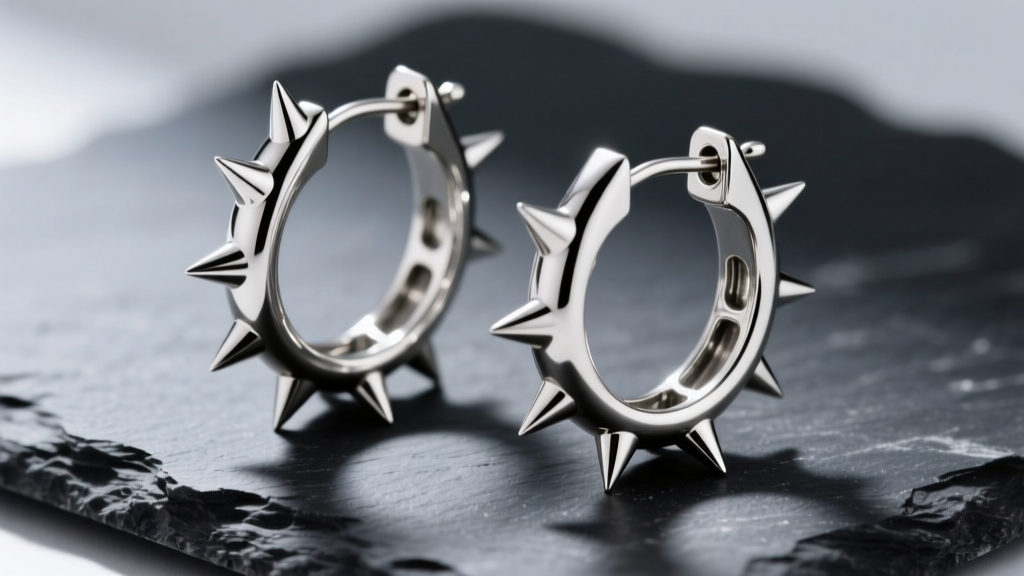
The market for alternative and punk-inspired jewelry has expanded dramatically, making spiked hoop earrings more accessible than ever. However, accessibility often masks severe compromises in metallurgy and structural integrity. When evaluating budget versus value in 2026, the true cost of edgy jewelry isn't just the price tag—it is the longevity of the metal, the security of the spike attachments, and the biological compatibility of the alloy against your skin. This comprehensive value assessment breaks down exactly what you are paying for across different price tiers, helping you avoid irritating base metals and poorly constructed clasps.
The True Cost of Edgy: Why Material Dictates Value
When shopping on a budget, the most common trap is prioritizing the aesthetic of the spikes over the core material of the hoop. The Association of Professional Piercers (APP) strictly outlines which metals are safe for long-term wear, particularly for fresh or sensitive piercings. Understanding these grades is the first step in assessing true value.
Implant-Grade Titanium (ASTM F136)
This is the gold standard for value. While initially more expensive, ASTM F136 titanium is entirely nickel-free, highly resistant to corrosion, and lightweight. A pair of titanium spiked hoops will not tarnish, turn your skin green, or trigger contact dermatitis. The value here is longevity; a $60 pair of titanium hoops will outlast a $15 pair of plated brass by a decade.
Surgical Stainless Steel (316L)
Often marketed as 'hypoallergenic,' 316L steel is a budget-friendly workhorse but comes with a caveat. It contains 8% to 10% nickel. While the nickel is usually bound within the alloy, prolonged exposure to sweat, cosmetics, and friction can cause microscopic degradation, leading to nickel leaching. For fully healed lobes, 316L offers excellent value, but it is a poor investment for cartilage piercings or sensitive skin.
Zinc Alloy and Brass (The Budget Trap)
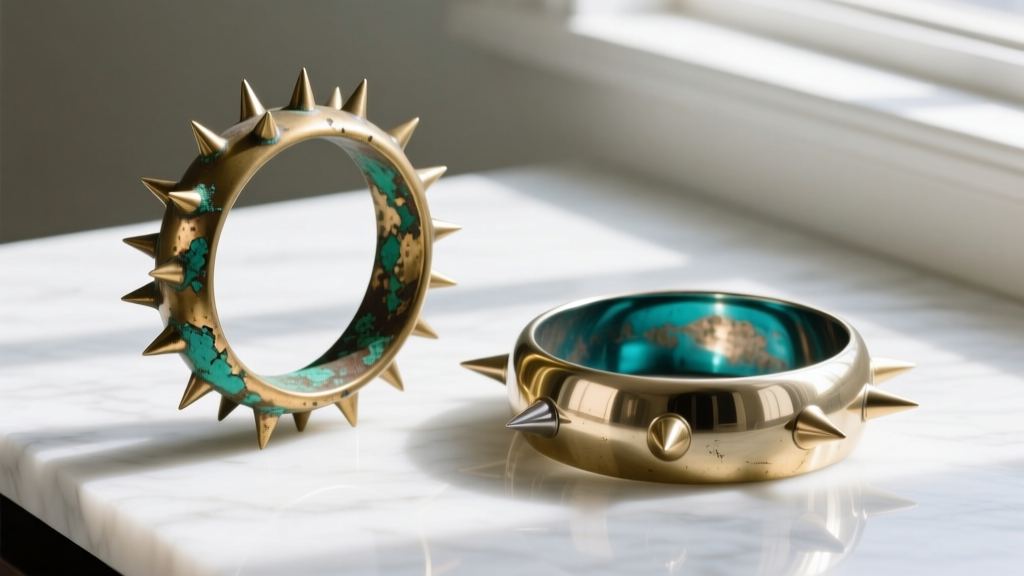
Earrings priced under $15 are almost exclusively cast from zinc alloys or brass, then electroplated with a microscopic layer of silver or gold paint. Once this plating wears off—often within weeks—the raw base metal reacts with your skin's pH, causing severe irritation and rapid tarnishing. From a value perspective, these are disposable items, not investments.
Price Tier Breakdown: What Your Budget Actually Gets You
To help you navigate the 2026 market, we have categorized spiked hoop earrings into three distinct value tiers. This matrix evaluates the intersection of cost, material, and manufacturing quality.
| Price Tier | Typical Material | Spike Attachment | Expected Lifespan | Value Verdict |
|---|---|---|---|---|
| Under $20 | Zinc Alloy / Brass | Industrial Glue | 1 - 3 Months | Poor (Disposable) |
| $25 - $45 | 316L Surgical Steel | Soldered / Cast | 1 - 3 Years | Good (Healed Lobes) |
| $50 - $85+ | ASTM F136 Titanium | Cast-in-Place | Lifetime | Excellent (Investment) |
The Danger Zone: Under $20
At this price point, manufacturers cut corners on structural integrity. The spikes are rarely part of the original mold; instead, they are glued on post-production. The clasps are typically thin, easily bent latchbacks that fail to secure the earring during daily activities.
The Sweet Spot: $25 to $45
This is where genuine value emerges for buyers with healed piercings. Brands utilizing 316L steel in this tier usually employ proper jewelry soldering techniques. The spikes are fused to the hoop using silver or gold solder, ensuring they will not snap off if caught on a sweater or hair.
Premium Investment: $50 and Above
Here, you are paying for ASTM F136 titanium and advanced CNC machining or precision casting. The spikes are often integrated directly into the 3D mold of the hoop, meaning there is zero risk of detachment. Furthermore, premium tiers utilize hinged 'clicker' mechanisms, which we detail below.
Structural Integrity: How Spikes Are Attached
The most frequent point of failure in budget alternative jewelry is the spike-to-hoop connection. When assessing value, you must inspect how the spikes are affixed.
Expert Insight: Never purchase spiked jewelry where the spikes appear to sit 'on top' of the hoop with a visible seam of adhesive. The Ganoksin Jewelry Making Community notes that proper soldering requires capillary action to draw molten solder into the joint, creating a bond stronger than the base metal itself. Glued spikes rely on cyanoacrylate or epoxy, which degrades rapidly when exposed to body heat and shower steam.
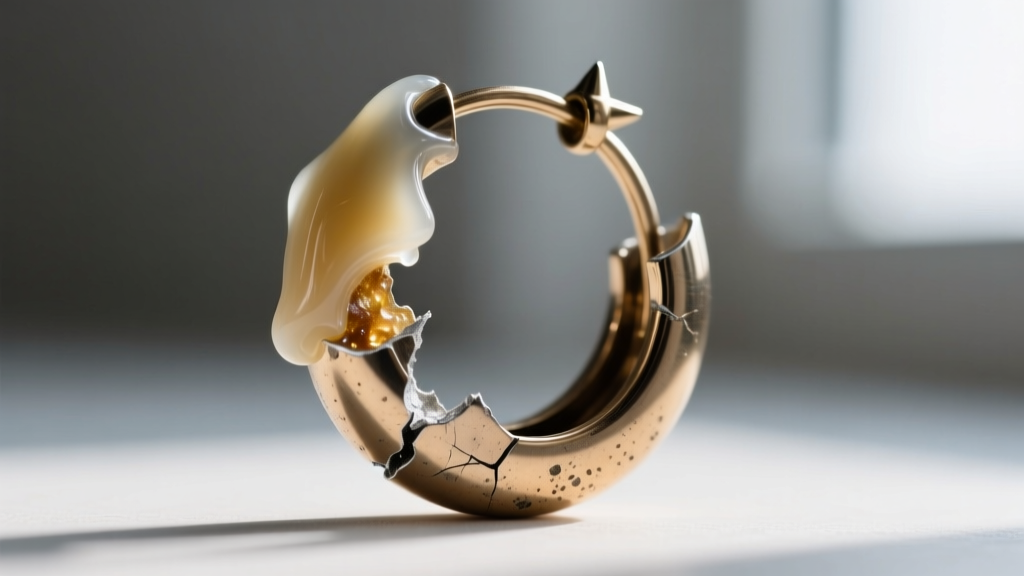
Always look for product descriptions that explicitly state 'soldered spikes' or 'one-piece cast construction.' If the listing is vague or uses terms like 'embellished' or 'adhered,' assume the spikes are glued and factor a three-month replacement cycle into your budget.
Gauge, Diameter, and Clasp Mechanics
Value is also determined by how the earring functions mechanically. A poorly designed clasp will result in lost earrings, negating any money saved on the initial purchase.
Gauge Sizing (Thickness)
- 20 Gauge (0.8mm): Too thin for spiked hoops. The weight of the spikes will cause the wire to warp and bend out of shape.
- 18 Gauge (1.0mm): The standard for lobe piercings. Provides adequate support for small to medium spikes.
- 16 Gauge (1.2mm): Essential for cartilage, helix, or daith piercings, and highly recommended for heavy, oversized spikes to prevent the 'cheese-cutter effect' (where thin wire slowly slices through the piercing fistula).
The Superiority of the Hinged Clicker
Budget hoops often use 'captive bead' or 'latchback' closures. Captive beads are notoriously difficult to insert and remove, while latchbacks feature a thin wire that bends easily. For spiked hoops, the hinged segment ring (clicker) is the only clasp that offers true value. A clicker features a seamless hinge on one side and a tension-fit snap closure on the other. This design prevents the spikes from interfering with the closing mechanism and ensures the earring sits perfectly flush, eliminating snagging hazards.
Final Verdict: Maximizing Your Budget
When shopping for spiked hoop earrings, true value is found by avoiding the false economy of sub-$20 alloy jewelry. If your budget is strict, a $35 pair of 18-gauge 316L surgical steel hoops with soldered spikes and a clicker clasp offers the best immediate return on investment for healed lobes. However, if you can stretch your budget to the $60 range for ASTM F136 titanium, you secure a lifetime piece that guarantees biological safety and structural permanence. Always prioritize the metallurgy and the soldering over the sheer number of spikes on the hoop.


