Square Drop Earrings: 2026 Trend Forecast & Styling Guide
Discover why square drop earrings are the defining jewelry trend of 2026. Explore face-shape styling, material grades, and architectural designs.

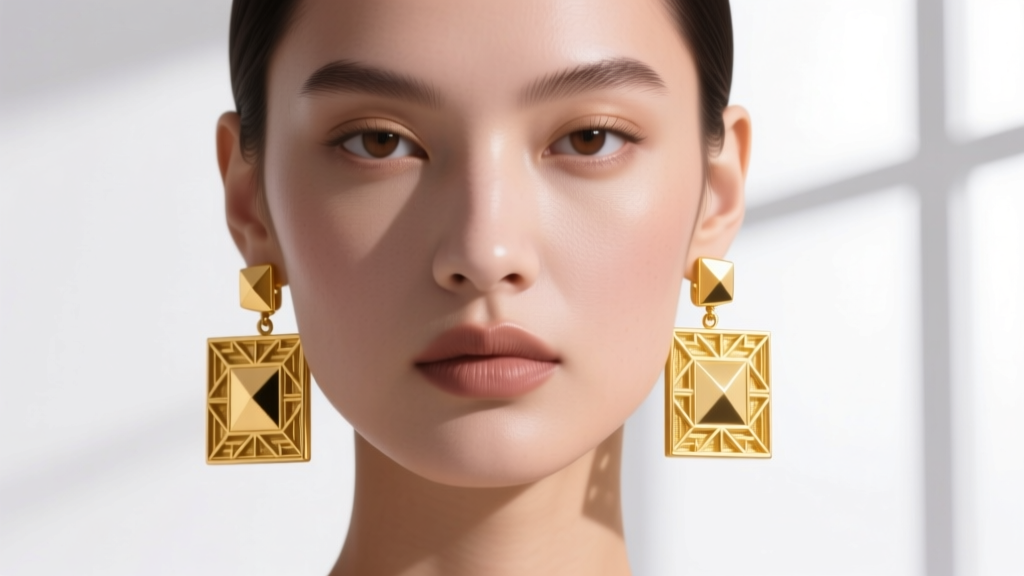
The jewelry landscape of 2026 has decisively pivoted away from the fluid, organic, and amorphous silhouettes that dominated the early 2020s. In their place, a new era of structured minimalism and architectural brutalism has emerged. At the absolute forefront of this geometric renaissance are square drop earrings. No longer confined to conservative office wear or vintage clip-ons, the modern square drop is a masterclass in tension, proportion, and metallurgical precision. This comprehensive trend analysis breaks down the engineering, styling, and investment value of the defining ear silhouette of the year.
The Architectural Shift: Why Square Drops Are Dominating 2026
According to Vogue's jewelry trend forecasting, the consumer appetite for 'quiet luxury' has evolved into 'structured intent.' Buyers are seeking pieces that project authority and precision. Square drop earrings fulfill this psychological and aesthetic need perfectly. Unlike circular hoops which draw the eye in a continuous, passive loop, a square drop creates a definitive visual anchor. The sharp 90-degree vertices frame the jawline with an unapologetic geometry that pairs exceptionally well with the tailored, broad-shouldered suiting and stark minimalism seen on 2026 runways.
'The resurgence of the square drop is a direct rebellion against the overly casual, bohemian aesthetics of the past decade. It is jewelry that demands posture and intention.' — 2026 Global Jewelry Trend Report
Metallurgy & Gauge: Engineering the Perfect Drop
Designing a structurally sound square drop earring requires specific metallurgical choices. The primary failure point of any geometric earring is the vertex (the corner). When a square drop is accidentally dropped onto a hard surface like a marble vanity, the kinetic energy concentrates entirely on those sharp corners.
Alloy Selection for Structural Integrity
- 24k and 22k Gold: Too malleable. The corners will dent and round off within weeks of daily wear.
- 18k Gold (75% purity): Acceptable for low-impact, occasional wear, but still prone to micro-dents on the vertices.
- 14k Gold (58.5% purity): The metallurgical sweet spot. Alloyed with copper, silver, or zinc, 14k gold provides the tensile strength required to maintain razor-sharp 90-degree angles without deforming.
- Grade 5 Titanium (Ti-6Al-4V): The premier choice for avant-garde, lightweight square drops. It offers immense scratch resistance and can be anodized into stark, brutalist gunmetal or deep violet hues.
Wire Gauge and Suspension Mechanics
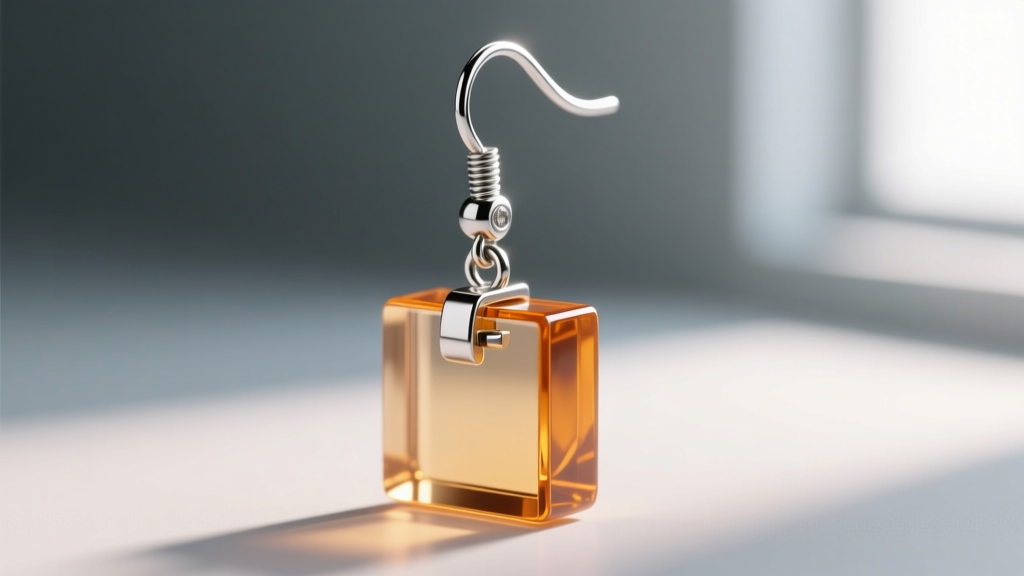
The drop mechanism itself must support the asymmetric weight of a geometric pendant. Standard mass-market earrings often use flimsy 22-gauge (0.64mm) wire, which will warp and bend under the pendulum effect of a square drop. For 2026 designs, look for French hooks or leverbacks forged from 18-gauge (1.02mm) or 20-gauge (0.81mm) wire. This thickness ensures the earring hangs perfectly plumb, maintaining the strict vertical alignment essential to the architectural aesthetic.
Face Shape Matrix: Proportions and Angles
Because square drop earrings introduce strong horizontal and vertical lines to the face, selecting the correct proportion is critical. The goal is not necessarily to 'match' your face shape, but to create optical balance. Below is the 2026 styling matrix for pairing square drops with specific facial structures.
| Face Shape | Recommended Square Dimension | Edge Treatment | Styling Objective |
|---|---|---|---|
| Round | Elongated Rectangular (1.5x drop-to-width ratio) | Sharp, polished vertices | Lengthen the face and introduce structural contrast to soft curves. |
| Square / Angular | Perfect Square (1:1 ratio), medium scale (15mm-20mm) | Chamfered or slightly rounded corners | Echo the jawline without amplifying harshness; soften the overall geometry. |
| Heart | Top-heavy inverted squares or wide trapezoidal drops | Matte or brushed finishes | Add visual weight to the lower half of the face to balance a wider forehead. |
| Oval | Oversized, bold squares (25mm+) | Mixed media (e.g., gold and black enamel) | Capitalize on natural facial symmetry; make a high-fashion statement. |
Gemstone Geometry: Princess vs. Asscher vs. Emerald Cuts
When square drop earrings incorporate gemstones, the cut of the stone dictates both the durability and the light performance of the piece. The Gemological Institute of America (GIA) explicitly warns about the vulnerability of sharp corners in square-cut stones.
The Princess Cut Dilemma
The princess cut is the most common square gemstone, featuring sharp, unmodified 90-degree corners. In a drop earring, which is subject to swinging and accidental impacts, these corners are highly susceptible to chipping. If you choose princess-cut square drops, ensure the setting utilizes V-prongs (chevron-shaped prongs) that completely encase the vulnerable corners.
The Superiority of Cropped Corners
For daily-wear square drop earrings, gemologists recommend stones with cropped corners. The Asscher cut (a square emerald cut with stepped facets) and the Cushion cut (a square with rounded corners) offer the geometric aesthetic of a square while eliminating the fragile points. An Asscher-cut diamond or sapphire set in a bezel or half-bezel square drop provides maximum security and a mesmerizing, hall-of-mirrors light return that complements the structured metalwork.
Market Analysis: Price Tiers and Investment Value
The 2026 market for square drop earrings is distinctly segmented. Understanding these tiers helps consumers identify where they are paying for brand markup versus actual metallurgical and craftsmanship value.
- Mass Market & Fast Fashion ($25 - $85): Typically crafted from brass or sterling silver with thin gold plating (0.5 microns or less). The square edges will wear down quickly, exposing the base metal. The drop wires are usually 22-gauge or thinner, leading to frequent bending. Best for seasonal, trend-driven wear.
- Demi-Fine & Independent Jewelers ($120 - $450): The sweet spot for structural integrity. These pieces utilize solid 14k gold, heavy gold vermeil (2.5+ microns over sterling silver), or high-grade titanium. You will find precise CNC-milled edges, secure 18-gauge leverbacks, and thoughtful details like hidden hinges. Brands in this tier often experiment with mixed media, such as combining gold with architectural acetate or matte black rhodium.
- Fine & High Jewelry ($850 - $5,000+): Hand-forged from 18k gold or platinum, featuring precision-set Asscher or emerald-cut gemstones. The value here lies in the stone quality, the artisan finishing of the vertices (often hand-chamfered to catch the light), and the bespoke tension mechanisms that allow the square drop to move fluidly while retaining its shape.
Maintenance: Protecting Sharp Vertices and Tension Settings
Owning geometric jewelry requires a shift in maintenance habits. The very features that make square drop earrings striking—their sharp lines and flat planes—are magnets for scratches and snagging.
Storage Protocols
Never store square drops in a communal jewelry box. The sharp 90-degree corners will act like blades, scratching the polished surfaces of adjacent necklaces or softer gold bands. Square drops must be stored individually in microfiber-lined compartments or soft silk pouches. For leverback styles, always secure the clasp before storage to prevent the wire from catching on the pouch fabric.
Cleaning Flat Planes
Flat, brushed, or matte square surfaces show fingerprints and skin oils far more readily than textured or domed jewelry. Avoid ultrasonic cleaners if your square drops feature tension-set stones or mixed materials like enamel. Instead, use a lint-free microfiber cloth dampened with a mild, ammonia-free dish soap solution. Wipe strictly in straight, linear motions—never in circles—to preserve the directional brushing on matte metal finishes.
Conclusion: The Enduring Appeal of the Angle
Square drop earrings are not a fleeting micro-trend; they represent a fundamental shift in how we view adornment in the mid-2020s. They are a rejection of the overly delicate in favor of the deliberate and the engineered. By understanding the crucial interplay between wire gauge, metal purity, gemstone cutting styles, and facial proportions, you can invest in architectural pieces that will anchor your wardrobe for decades. In 2026, the sharpest accessory you can wear is a perfectly executed right angle.


