Square Silver Earrings: A 2026 Value & Buying Guide
Discover the true value of square silver earrings. We break down 925 sterling vs plated metals, pricing brackets, and construction quality.

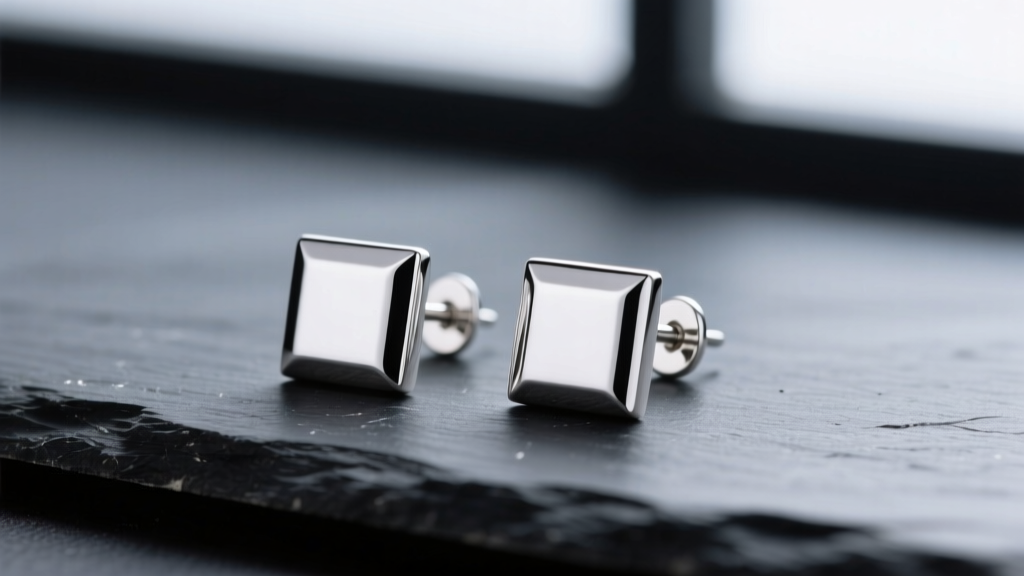
The Geometric Appeal and the Hidden Costs of Silver
Geometric jewelry continues to dominate the accessory market in 2026, with square silver earrings standing out as a staple for both minimalist and avant-garde wardrobes. The sharp angles and clean lines of a square silhouette offer a modern alternative to traditional round studs and hoops. However, the seemingly simple geometry of a square earring introduces unique manufacturing challenges that directly impact pricing, durability, and long-term value. When shopping for square silver earrings, consumers are often confronted with a massive price disparity—ranging from $12 fast-fashion pairs to $150 artisan-crafted pieces. Understanding where your money goes requires a deep dive into metallurgy, construction methods, and structural engineering at the micro-level.
Decoding the Metal: 925 Sterling vs. Plated vs. Fine Silver
The foundation of any silver earring's value lies in its material composition. The Federal Trade Commission (FTC) strictly regulates silver markings, mandating that jewelry stamped '925' or 'Sterling' must contain at least 92.5% pure silver, with the remaining 7.5% typically being copper for added strength FTC Jewelry Guides. This alloy ratio is critical for square earrings, as pure silver is too malleable to hold a crisp 90-degree angle without warping.
| Metal Type | Composition | Durability & Edge Retention | Avg. Price Range |
|---|---|---|---|
| 925 Sterling Silver | 92.5% Silver, 7.5% Copper | High; holds sharp corners well | $30 - $120 |
| 999 Fine Silver | 99.9% Pure Silver | Low; prone to bending and corner rounding | $50 - $150 |
| Silver-Plated Brass | Brass core, thin silver flash | High core strength, but plating wears off | $10 - $25 |
| Argentium Silver | 93.5% Silver, Germanium | Very High; highly tarnish-resistant | $60 - $180 |
While 999 fine silver is hypoallergenic and boasts a brighter luster, it is rarely used for the main body of square geometric earrings because the corners will quickly dent and round off with daily wear. Conversely, silver-plated brass offers the sharp edges of a square shape at a fraction of the cost, but the plating will inevitably wear away at the high-friction corners within six to twelve months, exposing the brass underneath and triggering contact dermatitis for those with metal sensitivities.
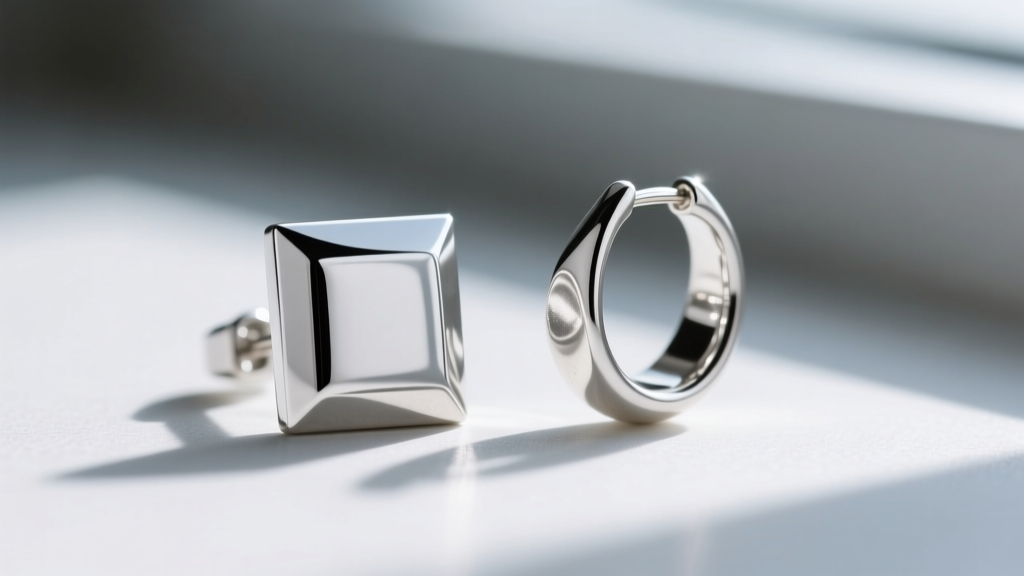
The Geometry Problem: Why Square Costs More to Manufacture
Creating a perfectly symmetrical square earring is inherently more difficult than casting a round one. This manufacturing complexity is a primary driver of value and cost in the square silver earrings market.
Cast vs. Die-Struck Construction
Most budget-friendly silver earrings are created through lost-wax casting. When molten 925 sterling silver is poured into a square mold, surface tension naturally pulls the metal inward at the corners. This results in 'corner rounding' and slight porosity, making the edges look soft and feel slightly rough. To achieve the razor-sharp, mirror-polished edges seen in high-end square studs and hoops, jewelers must use die-striking or hand-fabrication. Die-striking involves cutting the square shape from a sheet of work-hardened silver using a high-pressure steel punch. This process compresses the metal molecules, resulting in a denser, stronger earring with flawless 90-degree angles. Because die-striking requires expensive custom tooling, these square silver earrings command a 30% to 50% premium over their cast counterparts.
Hardware: Posts, Gauges, and Structural Failure Modes
The value of square silver earrings is not just in the visible face, but in the hidden hardware. The structural demands of a square shape dictate specific gauge requirements that budget manufacturers often ignore.
- 22-Gauge (0.64mm) Posts: Standard for cheap, lightweight studs. If used on a wide, heavy square geometric drop, a 22g post will bend under the weight, causing the earring to droop forward on the earlobe.
- 20-Gauge (0.81mm) Posts: The industry standard for quality 925 sterling silver earrings. Provides enough rigidity to support the wider surface area of a square backplate without bending.
- 18-Gauge (1.02mm) Posts: Reserved for heavy, oversized square hoops or cartilage earrings, ensuring the structural integrity of the wire.
Furthermore, the solder joint where the post meets the square backplate is a common failure point. A square backplate has more surface area and sharper stress points than a circular one. High-value earrings utilize laser welding or high-temperature silver solder to ensure the post does not snap off when the earring is snagged on a sweater or towel.
2026 Market Pricing: What Should You Actually Pay?
To assess whether you are getting a fair deal, use this pricing matrix based on current 2026 market rates for genuine 925 sterling silver square earrings. Prices below these brackets usually indicate plated metals or compromised labor practices, while prices significantly above reflect brand markup rather than intrinsic material value.
- Small Square Studs (4mm - 8mm): $25 - $45. (Look for die-struck options at the higher end of this bracket).
- Square Huggie Hoops (10mm - 15mm): $45 - $85. (Hinges and click-closures require precise machining, driving up the cost).
- Geometric Square Drop Earrings: $60 - $130. (Price scales with the complexity of the articulation joints and the weight of the silver).
- Oversized Square Statement Hoops (30mm+): $90 - $180. (Requires heavy-gauge tubing or solid wire to prevent warping).
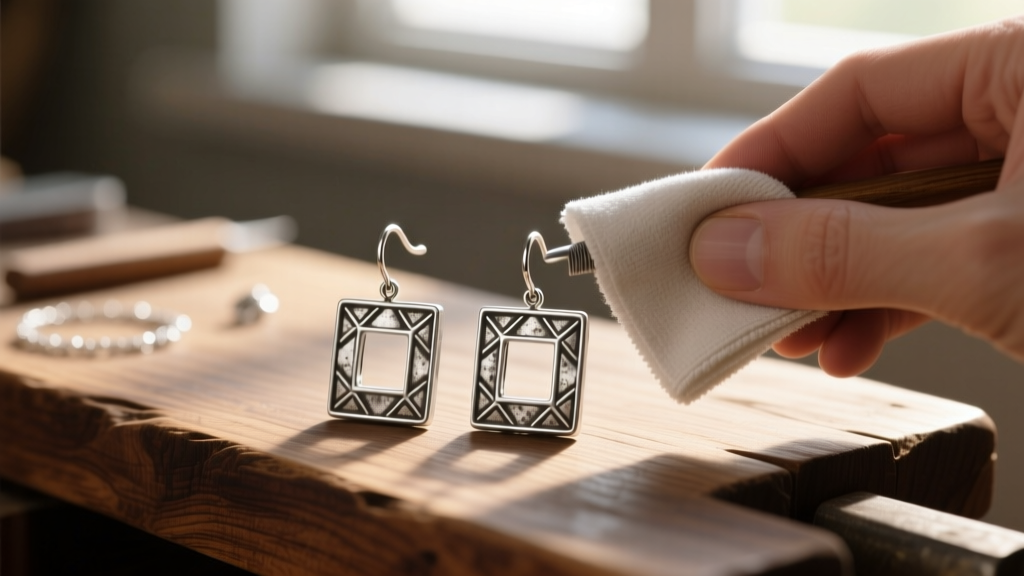
Long-Term Value: Tarnish, Wear, and Maintenance
The copper alloy in 925 sterling silver makes it highly susceptible to tarnishing when exposed to sulfur and moisture. Because square earrings have flat planes and sharp corners, tarnish tends to accumulate heavily in the micro-crevices where the post is soldered to the backplate. According to the Gemological Institute of America (GIA), proper storage and maintenance are critical to preserving the value of sterling silver jewelry.
Many premium brands now offer square silver earrings with a 'rhodium flash'—a microscopic plating of platinum-group metal that prevents tarnish and gives the silver a bright, white-gold-like finish. While this adds roughly $10 to the manufacturing cost, it drastically reduces the maintenance burden on the consumer. If you purchase un-plated 925 silver, storing the earrings in an airtight anti-tarnish bag with a silica gel packet is non-negotiable to maintain the mirror finish on the flat square surfaces.
Final Verdict: Maximizing Your Budget
When investing in square silver earrings, prioritize construction over sheer size. A small, die-struck 925 sterling silver square stud with a 20-gauge post and laser-welded joints will outlast and outshine a massive, cast, silver-plated brass hoop every time. By understanding the metallurgical and geometric realities of square jewelry, you can confidently navigate the market, avoid overpaying for brand names, and build a collection of geometric earrings that retains both its structural integrity and its aesthetic value for decades.


