The Ultimate Buying Guide for Starfish Stud Earrings
Discover what to look for when buying starfish stud earrings. Learn about metal grades, gauge sizes, backing types, and pricing in our expert guide.


The Enduring Appeal of Marine Motifs
Marine-inspired jewelry has long transcended seasonal resort wear to become a permanent fixture in fine jewelry collections. As we navigate the curated ear trends of 2026, starfish stud earrings offer a unique blend of organic asymmetry and geometric charm. Whether you are building a minimalist everyday stack or looking for a statement piece for your primary lobe piercing, understanding the anatomy, materials, and mechanics of these earrings is crucial for making a lasting investment.
Unlike simple round studs, the intricate arms and textured surfaces of starfish designs require specific manufacturing techniques. This guide breaks down exactly what to look for regarding metal purity, gauge compatibility, and structural integrity so you can shop with absolute confidence.
Material Matters: Decoding Metal Grades & Allergies
The oceanic theme of starfish stud earrings demands materials that can withstand daily exposure to moisture, lotions, and environmental elements. More importantly, your skin's reaction to the metal post is paramount. The American Academy of Dermatology notes that nickel allergy is the most common contact allergy, making the base metal of your earrings a critical health consideration.
The Hypoallergenic Hierarchy
- Implant-Grade Titanium (ASTM F136): The gold standard for fresh piercings and severe metal allergies. It is completely nickel-free and biocompatible.
- Solid Gold (14k or 18k): Highly resistant to tarnish. 14k (58.5% pure gold) offers the best balance of durability and hypoallergenic properties for daily wear.
- Gold Vermeil: According to the Federal Trade Commission Jewelry Guides, true vermeil must have a sterling silver (925) base and a gold plating of at least 2.5 microns thick. Avoid standard 'gold-plated' brass, which will quickly corrode and cause irritation.
Material Comparison & Pricing Matrix
| Material | Stamp / Grade | Avg. Price Range | Best Use Case | Nickel Risk |
|---|---|---|---|---|
| Sterling Silver | 925 | $25 - $60 | Occasional wear, budget-conscious | Low (but tarnishes) |
| Gold Vermeil | 925 base, 2.5µm+ | $45 - $95 | Trend-driven, low-allergy risk | Very Low |
| Solid Gold | 14k (585) / 18k (750) | $150 - $450+ | Daily wear, heirlooms, sensitive lobes | None (if nickel-free alloy) |
| Titanium | ASTM F136 | $30 - $80 | Fresh piercings, severe allergies | None |
Sizing, Gauge, and Post Mechanics
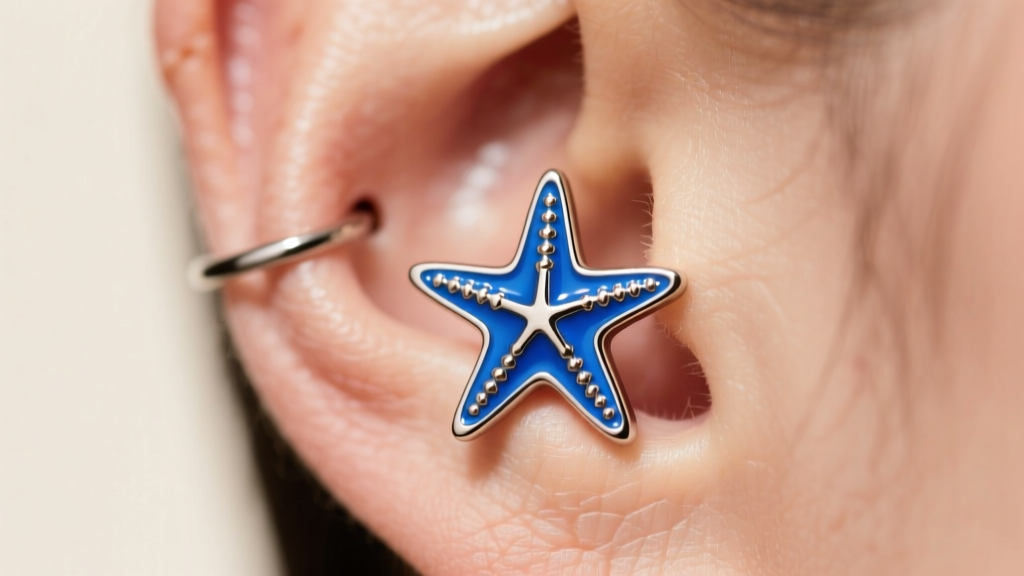
A common mistake when buying starfish stud earrings online is ignoring the post gauge and length. The starfish shape can be top-heavy, meaning the structural support of the post dictates how the earring sits on your ear.
Proportions by Piercing Placement
- Mini (4mm - 6mm): Ideal for second or third lobe piercings, or as a delicate accent in a flat or tragus piercing. At this size, 18G or 16G posts are common to prevent the earring from spinning.
- Standard (8mm - 12mm): The most versatile size for primary earlobe piercings. Provides enough surface area to showcase intricate textures or pavé gemstones without overwhelming the ear.
- Oversized (15mm+): Best reserved for statement lobes. These require a thicker post (18G or 16G) and a wider backing to distribute the weight and prevent the earlobe from drooping.
Understanding Gauge and Length
Standard lobe piercings are typically done at 20G (0.81mm) or 18G (1.0mm). However, if you plan to wear your starfish stud in a helix or cartilage piercing, you will likely need a 16G (1.2mm) post. Furthermore, pay attention to post length. Standard friction posts are 6mm to 8mm long. If you have thicker earlobes or are wearing the earring through cartilage, you must seek out 10mm posts to avoid the backing embedding into your skin.
Backing Systems: Security vs. Comfort
The backing mechanism is just as important as the starfish design itself. Because starfish arms extend outward, they can easily catch on hair and clothing, making secure backings essential.
Expert Tip: For cartilage piercings, avoid traditional butterfly friction backs entirely. They trap moisture and bacteria against the skin, which can lead to irritation bumps on the helix or tragus.
- Screw-Backs: The most secure option for standard lobe studs. The backing threads onto a grooved post, preventing loss. Ensure the threads are precision-cut to avoid stripping the metal.
- Threadless (Push-Pin): The industry standard for high-end cartilage jewelry. A slightly bent titanium pin is pushed into a hollow post, creating tension-based security. Brands like Maria Tash popularized this for star-shaped and marine-themed studs.
- Internally Threaded: The post has a threaded hole at the end, and the backing screws into it. This is safer for the piercing canal than externally threaded jewelry, which can scrape the tissue during insertion.
Gemstone & Enamel Accents: What to Look For
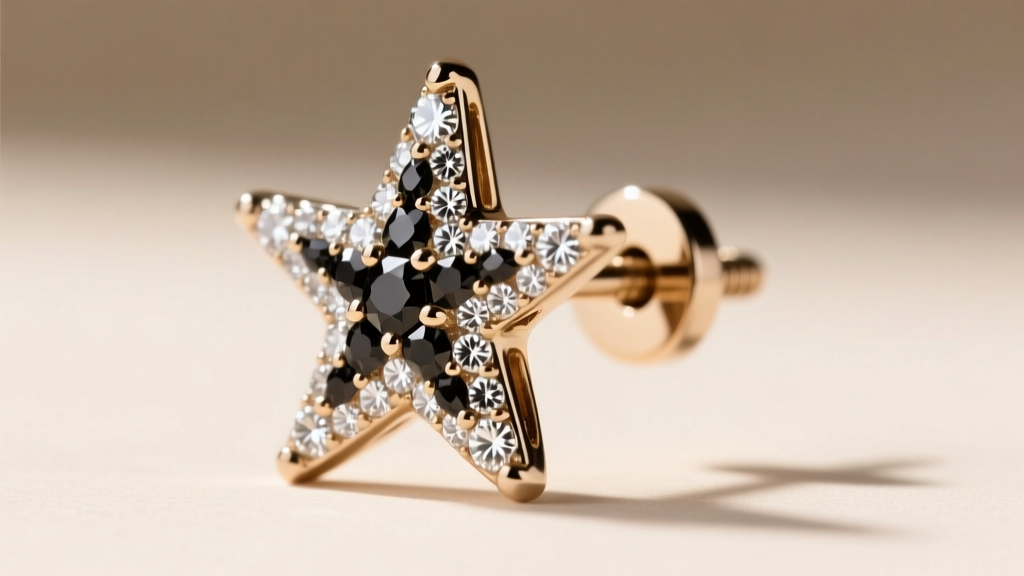
Many starfish stud earrings incorporate color and sparkle to mimic the vibrant life of a tide pool. When evaluating these accents, look for durability.
Enamel Work: Cold enamel (epoxy resin) is cheaper but prone to chipping and yellowing over time. For a lifelong piece, seek out vitreous (kiln-fired) enamel, which is fused to the metal at high temperatures, creating a glass-like, scratch-resistant finish.
Stone Setting: If your starfish features diamonds or cubic zirconia, examine the setting. Micro-prong pavé allows maximum light return but requires periodic checking to ensure stones haven't loosened. Bezel settings, where a rim of metal surrounds the stone, are slightly less sparkly but infinitely more secure for active, everyday wear.
Care & Maintenance for Intricate Designs
The organic, asymmetrical crevices of a starfish design are notorious for trapping sebum, dead skin cells, and cosmetic products. Never use an ultrasonic cleaner on starfish earrings that feature enamel accents, opals, or fracture-filled diamonds, as the high-frequency vibrations can shatter the enamel or exacerbate stone inclusions.
Instead, create a gentle cleaning solution using warm distilled water and a few drops of mild, fragrance-free dish soap. Soak the earrings for five minutes, then use a soft-bristled baby toothbrush to gently sweep out the textured grooves between the starfish arms. Rinse thoroughly and dry with a lint-free microfiber cloth before storing them in an airtight anti-tarnish pouch.
Final Verdict
Investing in high-quality starfish stud earrings is about balancing aesthetic whimsy with structural precision. By prioritizing implant-grade titanium or solid 14k gold, selecting the correct gauge for your specific piercing placement, and opting for secure, tension-based or threaded backings, you ensure your marine-inspired jewelry remains a staple in your collection for decades to come.


