How to Safely Wear and Choose Metal Allergy Earrings
Discover how to choose, test, and safely wear metal allergy earrings. Our step-by-step guide covers titanium grades, nickel testing, and healing.

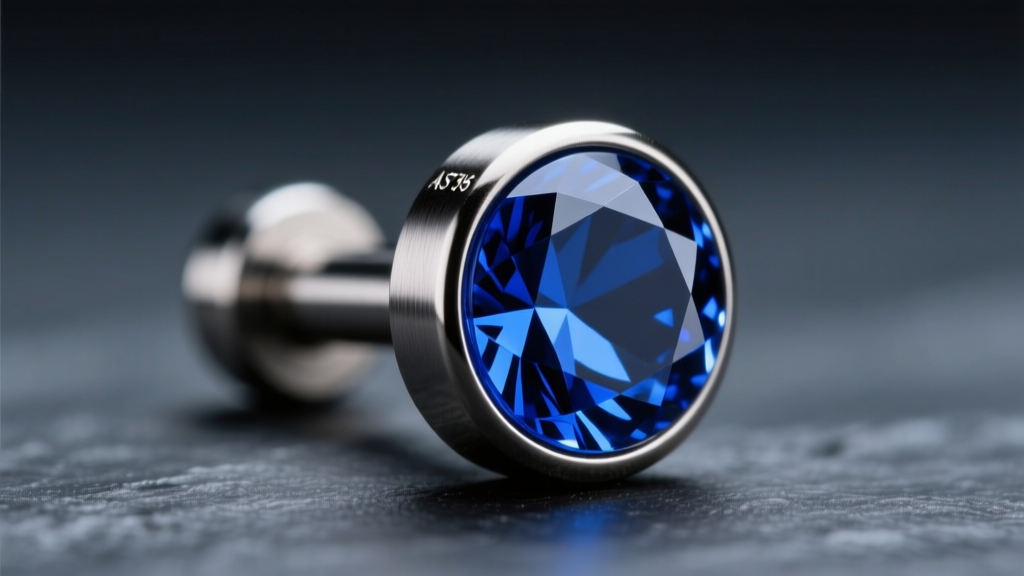
The Hidden Trap of Contact Dermatitis
If your earlobes throb, itch, or develop a flaky rash within hours of putting on a new pair of studs, you are likely experiencing a Type IV hypersensitivity reaction. According to the American Academy of Dermatology, nickel allergy is the most common cause of allergic contact dermatitis, affecting roughly 18% of adults worldwide. When shopping for metal allergy earrings, the jewelry industry's loose use of the term "hypoallergenic" often leads consumers straight into a flare-up. "Hypoallergenic" is a marketing term, not a regulated metallurgical standard. To safely wear earrings without triggering an immune response, you must look past the packaging and evaluate the exact alloy composition, surface polish, and hardware mechanics of your jewelry.
This step-by-step guide will teach you how to decode jewelry metallurgy, test your existing collection for hidden allergens, and select the correct hardware for your specific piercing anatomy.
Step 1: Decode the Metallurgy and Grade Standards
The first rule of managing contact dermatitis is understanding that purity matters just as much as the base element. For example, "surgical steel" is a massive trap for allergy sufferers. While it sounds medical, 316L stainless steel contains between 8% and 10.5% nickel. When your skin's natural acidity breaks down the passive oxide layer on the steel, nickel ions leach directly into your tissue. To avoid this, you must upgrade to implant-grade materials.
| Material | Grade / Standard | Nickel Content | Verdict for Allergy Sufferers |
|---|---|---|---|
| Titanium | ASTM F136 (Ti-6Al-4V ELI) | 0% (Trace max) | Best Overall. The gold standard for fresh piercings and severe allergies. Highly biocompatible and lightweight. |
| Niobium | Unalloyed (99.9% Pure) | 0% | Excellent. Softer than titanium, making it ideal for seamless hoops and clickers in healed cartilage piercings. |
| Yellow Gold | 14k or 18k (Nickel-Free) | 0% (If alloyed with Ag/Cu/Zn) | Good for Healed Lobes. Must be explicitly verified as nickel-free. Avoid gold-plated jewelry, as the plating wears off. |
| White Gold | Standard vs. Palladium | High (Standard) / 0% (Palladium) | Risky. Standard white gold uses nickel for its silver color. Only buy palladium-alloyed white gold if you have allergies. |
| Surgical Steel | 316L or 316LVM | 8% - 10.5% | Avoid. Despite the "surgical" name, the high nickel content makes it a primary trigger for contact dermatitis. |
Step 2: Perform an At-Home Nickel Spot Test
If you have a jewelry box full of heirloom pieces or vintage finds, do not trust the stamp on the back. You can verify the safety of your metal allergy earrings at home using a Dimethylglyoxime (DMG) spot test kit, available at most pharmacies or online for under $15. The Mayo Clinic notes that identifying and avoiding the specific allergen is the only definitive treatment for contact dermatitis.
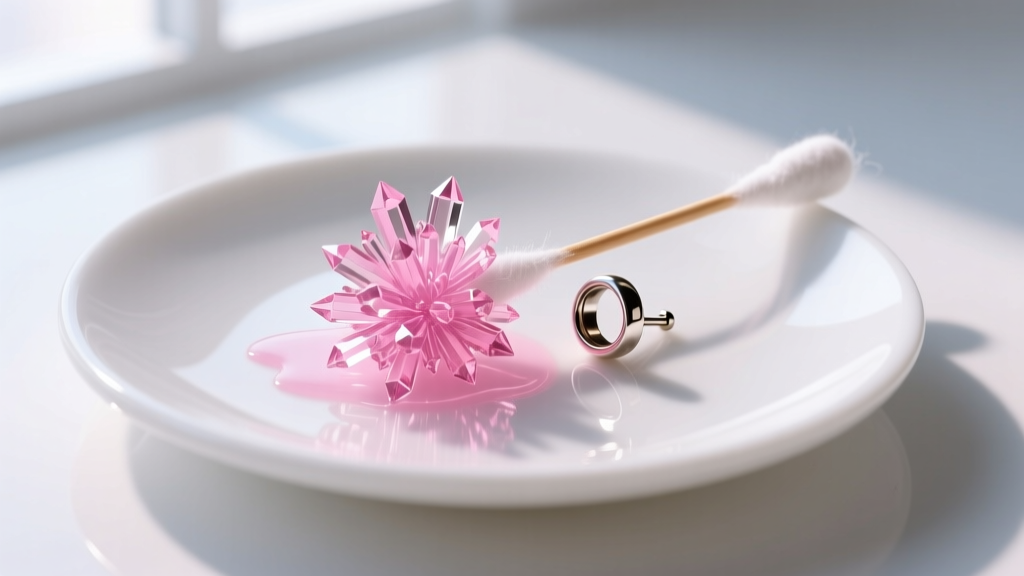
How to Execute the DMG Test
- Prep the Surface: Clean the earring post or backing with rubbing alcohol and let it dry completely.
- Apply the Solution: Squeeze two drops of the DMG solution onto a clean cotton swab.
- Rub the Metal: Vigorously rub the swab against the earring post, butterfly backing, or clasp for 30 to 60 seconds. Friction is required to break the microscopic surface layer.
- Read the Results: If the cotton swab turns pink or red, the item is leaching nickel and is unsafe for your ears. If the swab remains clear or slightly yellow, the metal is nickel-free.
Step 3: Match the Hardware to Your Piercing Stage
Even if you select ASTM F136 titanium, the physical mechanics of the earring can cause irritation bumps that mimic allergic reactions. The Association of Professional Piercers (APP) emphasizes that jewelry design and surface finish are just as critical as the material itself.
Gauge Sizing and Backing Types
- Standard Lobe Piercings (20G or 18G): Most commercial earrings are 20-gauge (0.81mm). However, upgrading to an 18-gauge (1.02mm) titanium post provides better structural stability, reducing the micro-tearing that allows allergens to enter the bloodstream.
- Cartilage and Helix Piercings (16G or 14G): Cartilage requires thicker jewelry to prevent the "cheese-cutter effect." Use 16-gauge (1.29mm) or 14-gauge (1.63mm) flat-back labrets.
- Ditch the Butterfly Backing: Traditional friction backs trap dead skin, shampoo residue, and bacteria against the earlobe. Furthermore, the tight pressure restricts blood flow. Switch to threadless (push-pin) or internally threaded flat-back labrets. These sit flush against the tissue, eliminating pressure necrosis and bacterial pockets.
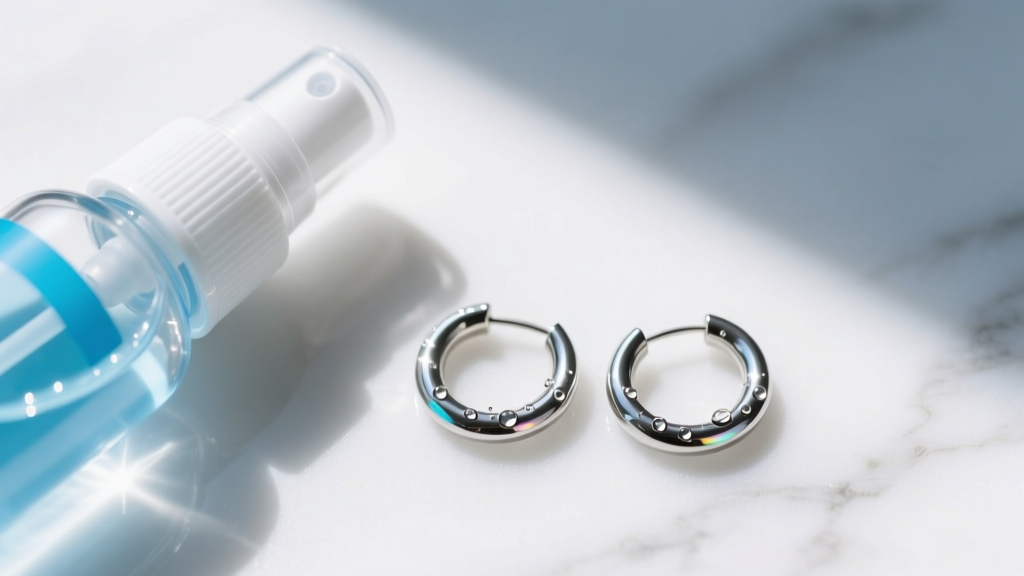
Step 4: Establish a Barrier and Cleaning Protocol
When transitioning to new, safe metals, your ear canal may still be recovering from previous nickel exposure. Establishing a strict hygiene protocol ensures the fistula (the piercing tunnel) heals without complication.
Pro Tip: Never use clear nail polish as a barrier coating on earring posts. While it is a common internet hack, nail polish contains acrylates and formaldehyde resins, which are potent contact allergens themselves. As the polish chips, it creates micro-abrasions inside the piercing channel.
The Daily Maintenance Routine
- Saline Flushing: Spray a 0.9% sterile wound wash saline solution onto the front and back of the earlobe twice daily. Do not use homemade sea salt soaks, as the improper ratio can cause hypertrophic scarring.
- Shampoo Shielding: When washing your hair, tilt your head back to prevent sulfates and fragrances from running down your earlobes. Sulfates strip the skin's natural lipid barrier, making it more permeable to metal ions.
- Nighttime Removal: If your piercings are fully healed (over 12 months old), remove your earrings at night to let the tissue breathe and prevent pressure indentations from the jewelry backing.
Troubleshooting: Why Your Ears Still React
If you have switched to verified implant-grade titanium and your ears are still red and itchy, you are likely dealing with one of three specific failure modes:
1. Contact Allergy to Secondary Metals
While rare, some individuals are allergic to cobalt or chromium, which can be present in trace amounts in lower-grade alloys. If titanium fails, switch to unalloyed, anodized Niobium, which is entirely inert and contains zero alloying elements.
2. Mechanical Irritation (Not an Allergy)
Sleeping on a daith or helix piercing with a hoop earring creates constant rotational friction. This mechanical trauma causes the body to send histamine to the area, resulting in redness and swelling that perfectly mimics a metal allergy. The fix is to downsize to a flat-back labret that cannot spin or snag on pillowcases.
3. Product Buildup and Contact Dermatitis
Hairspray, dry shampoo, and heavy moisturizers accumulate on the flat disc of a labret backing. This trapped chemical residue causes localized dermatitis. Use a soft-bristled interdental brush dipped in saline to gently sweep the back of your earring hardware once a week.
Final Thoughts on Building a Safe Collection
Navigating the world of metal allergy earrings requires a shift from passive consumer to informed metallurgist. By demanding ASTM F136 certification, utilizing DMG spot tests, and upgrading to threadless flat-back hardware, you can entirely eliminate the guesswork. Your ears deserve jewelry that works with your biology, not against it. Invest in high-quality, implant-grade pieces from reputable body jewelry brands, and your contact dermatitis flare-ups will become a thing of the past.


