Why Do My Earrings Smell? Causes, Cures & Care Guide
Discover why your earrings smell like cheese and how to fix it. Expert cleaning tips, material upgrades, and maintenance routines for fresh piercings.

The Biology of Earring Odor: Why the Funk Happens
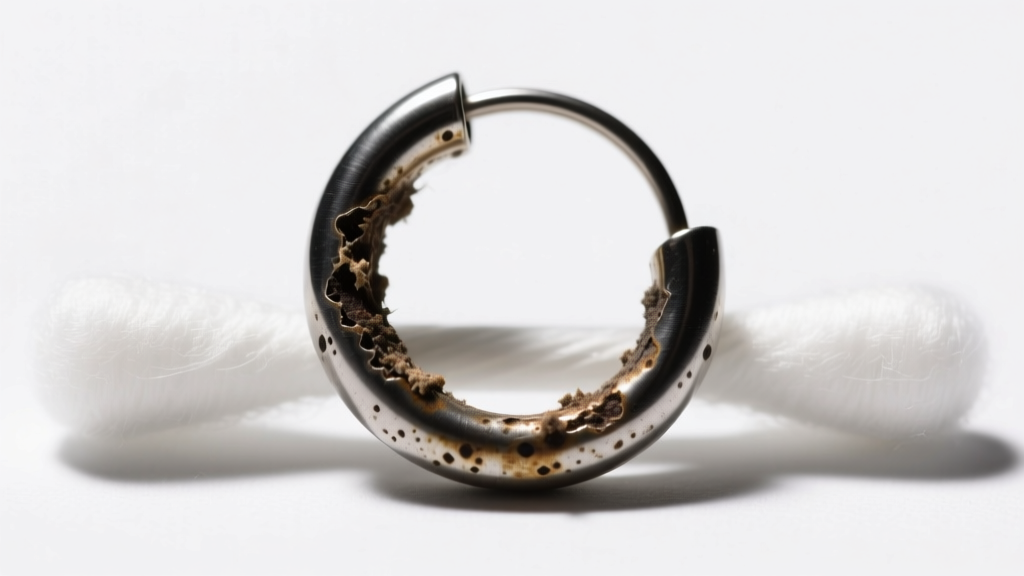
If you have ever taken out your favorite stud or hoop earrings and been hit with a pungent, cheese-like odor, you are not alone. The phenomenon commonly referred to as earring funk is a widespread issue that plagues both new piercings and decades-old lobe holes. However, the metal itself is rarely the source of the smell. Instead, the odor is a complex biological reaction involving your body's natural secretions, environmental debris, and the microscopic topography of your jewelry.
The primary culprit behind the smell is a mixture of sebum (the natural oil produced by your sebaceous glands), dead keratinocytes (skin cells), and sweat. When this organic matter accumulates in the piercing fistula (the tunnel of healed skin) and on the surface of the earring post, it becomes a breeding ground for naturally occurring skin bacteria, particularly Corynebacterium and Staphylococcus hominis. As these bacteria break down the lipids in your sebum and the proteins in dead skin, they release volatile fatty acids, such as isovaleric acid and butyric acid. These are the exact same compounds responsible for the smell of aged cheese and foot odor.
This biological buildup is exacerbated by the environment inside the piercing channel. The fistula is a warm, dark, and often humid microenvironment. When you wear earrings continuously without removing them for cleaning, the organic matter hardens into a microscopic biofilm that clings stubbornly to the jewelry, particularly in areas with micro-scratches or intricate detailing.
Material Culprits: How Your Jewelry Choice Amplifies Odor
While biological matter causes the smell, the material of your earrings dictates how easily that matter accumulates and how difficult it is to remove. Cheap alloys and porous metals act like sponges for bacteria and dead skin.
According to the Association of Professional Piercers (APP), many commercial earrings are made from 316L surgical steel or mystery brass alloys. The term surgical steel is largely a marketing buzzword; 316L steel contains 8% to 10% nickel. Not only can this trigger contact dermatitis—which the Mayo Clinic notes causes weeping, flaking skin that adds to the debris buildup—but these softer alloys are highly susceptible to micro-corrosion. Every time you insert a steel post, it picks up microscopic scratches that trap sebum and bacteria, making them nearly impossible to wipe clean.
| Jewelry Material | Nickel Content | Surface Porosity & Finish | Odor Risk Level |
|---|---|---|---|
| 316L Surgical Steel | 8% - 10% | Prone to micro-scratches; traps biofilm | High |
| Brass / Copper Alloys | Variable (often high) | Highly porous; oxidizes and reacts with sebum | Very High |
| Sterling Silver (925) | Usually 0% (contains copper) | Tarnishes easily; copper reacts with skin acids | Moderate |
| Implant-Grade Titanium (ASTM F136) | 0% | Mirror finish; non-porous and biocompatible | Very Low |
| Niobium | 0% | Highly inert; easily polished to a smooth finish | Very Low |
| 14k / 18k Solid Gold | 0% (if nickel-free alloyed) | Dense and non-porous; resists corrosion | Low |
As highlighted by the American Academy of Dermatology, upgrading to hypoallergenic, non-porous metals is the single most effective way to reduce the surface area available for bacterial colonization.
The Deep Cleaning Protocol: Eradicating the Biofilm
Wiping your earrings with a dry tissue is entirely ineffective against hardened sebum and bacterial biofilms. To truly eliminate the odor, you must break down the lipids and mechanically remove the debris. Follow this professional-grade cleaning protocol every two to four weeks, or more frequently if you have naturally oily skin.
Step 1: The Lipid-Breaking Pre-Soak
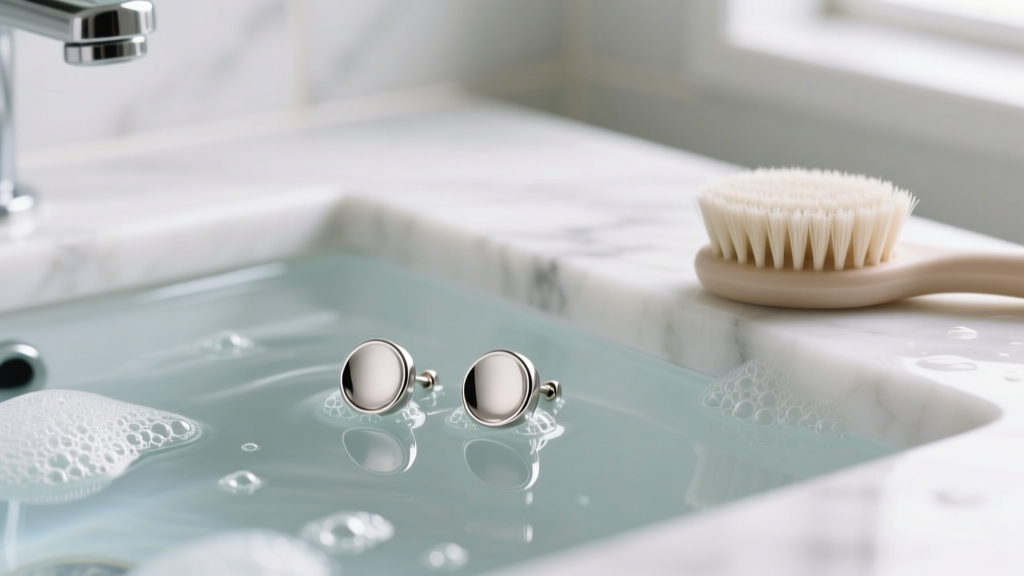
Fill a small glass bowl with warm water (approximately 40°C or 104°F) and add a few drops of mild, unscented liquid castile soap or a dedicated jewelry cleaning detergent. Avoid harsh dish soaps, which can leave a filmy residue. Submerge your earrings and let them soak for 5 to 10 minutes. The warm water softens the hardened keratin, while the surfactants in the soap begin to emulsify the sebum.
Step 2: Mechanical Agitation
After soaking, use a brand-new, ultra-soft baby toothbrush or a dedicated jewelry brush to gently scrub the earring. Pay special attention to the grooves where the post meets the butterfly backing, the inside curve of hoop earrings, and the clasp mechanisms of huggies. For earrings with intricate filigree or pave gemstone settings, an ultrasonic jewelry cleaner operating at 40-45 kHz is highly recommended. The high-frequency sound waves create microscopic cavitation bubbles that implode, blasting debris out of crevices that a brush cannot reach.
Step 3: The Disinfection Rinse
Rinse the jewelry thoroughly under warm running water to remove all soap residue. Pat dry with a lint-free microfiber cloth or non-woven gauze. Avoid cotton swabs or tissue paper, as they leave behind microscopic fibers that can become trapped in the piercing fistula and cause irritation.
Step 4: Gemstone and Pearl Considerations
If your earrings feature porous organic gemstones like pearls, opals, or turquoise, never use ultrasonic cleaners, alcohol, or prolonged soaking. These materials can absorb the smelly oils and cleaning chemicals, leading to permanent discoloration and internal odor. Instead, wipe them gently with a damp, soapy cloth and dry immediately.
Upgrading Your Jewelry: The Hypoallergenic Standard
If you have implemented a strict cleaning routine and your earrings still smell, the issue is likely the metal itself. It is time to retire the mystery metals and invest in body-safe jewelry. The gold standard for both new and healed piercings is Implant-Grade Titanium, specifically alloyed to ASTM F136 or ASTM F67 standards. This is the exact same metal used in surgical joint replacements and pacemakers. It is entirely nickel-free, highly corrosion-resistant, and can be polished to a mirror finish that leaves zero microscopic pores for bacteria to hide in.
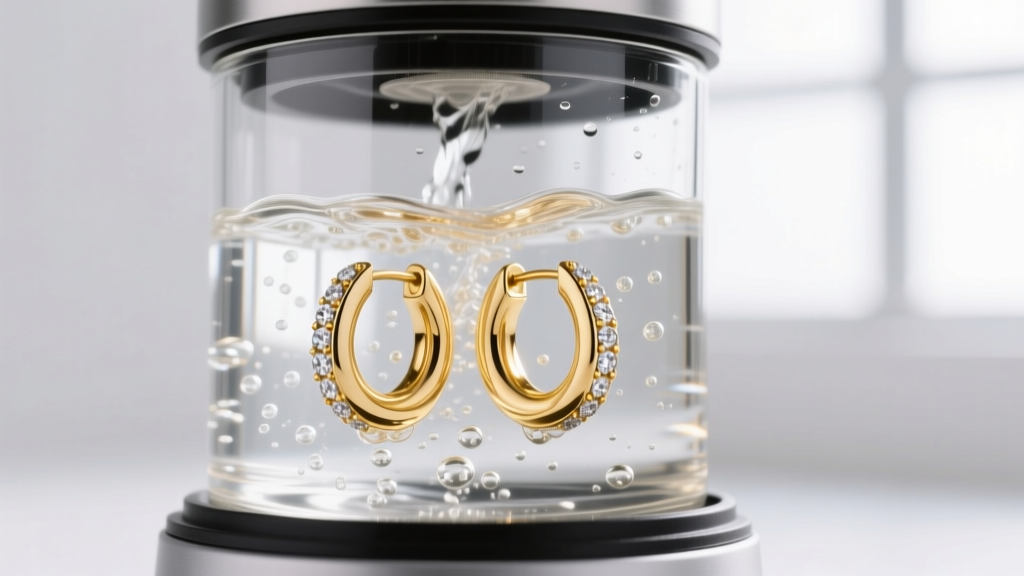
For those who prefer the look of gold, ensure you are purchasing solid 14k or 18k gold that is explicitly alloyed without nickel. Avoid gold-plated or gold-filled earrings for daily wear, as the thin layer of gold will eventually wear away, exposing the reactive brass or copper base metal underneath, which will rapidly oxidize and trap odor-causing bacteria.
Troubleshooting the Piercing Fistula
Sometimes, the jewelry is perfectly clean, but the odor persists. In these cases, the smell is originating from the piercing fistula itself. This is especially common in cartilage piercings (like the helix, tragus, or conch), which typically use thicker 16G (1.2mm) or 14G (1.6mm) jewelry. The cartilage fistula is longer, narrower, and less flexible than a lobe piercing, making it a prime trap for dead skin and sebum.
To clean the fistula, do not use harsh chemicals like rubbing alcohol or hydrogen peroxide, which will dry out the delicate tissue and cause micro-cracking. Instead, use a sterile, isotonic saline wound wash (0.9% sodium chloride with no additives). Spray the saline directly onto the piercing site, let it sit for a minute to soften any internal buildup, and gently wipe away the excess with non-woven gauze. Moving the jewelry slightly back and forth while the saline is applied can help flush out trapped debris from inside the channel.
Preventative Maintenance and Gauge Sizing
Prevention is always easier than the cure. To keep your earrings smelling fresh, adopt a few simple daily habits. First, always remove your earrings before showering. Shampoo, conditioner, and body wash leave behind heavy residues that coat the jewelry and accelerate bacterial growth. Second, give your earlobes a break. Sleeping in earrings, especially heavy hoops or large gauge pieces, causes continuous friction and micro-tears in the fistula, leading to increased cellular turnover and more dead skin buildup.
Finally, ensure your jewelry gauge matches your piercing. Forcing a thick 16G earring into a delicate 20G lobe piercing causes chronic inflammation, swelling, and weeping, all of which contribute to a foul odor. By combining high-quality, non-porous metals with a consistent, science-backed cleaning routine, you can permanently eliminate earring funk and enjoy your jewelry with complete confidence.


