Sterling Silver Post Earrings: The Complete Buying Guide
Discover what to look for when buying sterling silver post earrings. Learn about 925 grades, rhodium plating, gauge sizes, and hypoallergenic tips.

When building a versatile, everyday jewelry wardrobe, sterling silver post earrings are the undisputed workhorses of any collection. They bridge the gap between casual and formal, offering a brilliant luster without the steep investment required for platinum or white gold. However, not all silver jewelry is created equal. The market is flooded with misleading hallmarks, subpar alloys, and poorly constructed posts that can lead to bent metal, lost earrings, or severe contact dermatitis.
As we navigate the jewelry landscape in 2026, consumers are more educated than ever, demanding transparency in metallurgy and ethical sourcing. This comprehensive buying guide strips away the marketing fluff and dives deep into the exact specifications, material grades, and structural details you need to evaluate before purchasing your next pair of sterling silver post earrings.
Why 925 Sterling Silver is the Standard for Post Earrings
To understand what you are buying, you must first understand the metallurgy of silver. Pure silver, often stamped as 999 or 'fine silver,' consists of 99.9% silver. While it possesses a beautiful, bright white luster and is highly hypoallergenic, it is far too soft for functional jewelry hardware. A post made of 999 silver would bend under the slight pressure of inserting it into a piercing and eventually snap from metal fatigue.
To solve this, jewelers alloy pure silver with other metals to increase its tensile strength and durability. The global standard for sterling silver is 925, meaning the piece contains exactly 92.5% pure silver and 7.5% alloy metals. According to the Gemological Institute of America (GIA), copper is the most traditional and effective alloying metal used in 925 silver, as it hardens the metal without altering its natural white-gray hue.
The Rise of Argentium Silver
For buyers frustrated by the rapid tarnishing of traditional 925 copper-alloyed silver, Argentium silver has emerged as a premium alternative. Argentium replaces a portion of the copper alloy with germanium. This chemical adjustment dramatically increases the metal's resistance to tarnish (silver sulfide formation) and allows the silver to be fusion-welded without firescale. If you see a hallmark reading '935' or the Argentium unicorn stamp, you are looking at a highly durable, low-maintenance upgrade ideal for everyday post earrings.
The Hypoallergenic Myth: Nickel, Copper, and Rhodium Plating
One of the most pervasive myths in the jewelry industry is that 'sterling silver is completely hypoallergenic.' This is only half-true. While the 92.5% pure silver content will not trigger an allergic reaction, the 7.5% alloy metal absolutely can.
Historically, some mass-market manufacturers used nickel as the hardening alloy because it was cheaper than copper and provided a brighter, whiter base color. However, nickel is the leading cause of allergic contact dermatitis in jewelry wearers. The European Union's Nickel Directive strictly limits nickel release to 0.5 micrograms per square centimeter per week, a standard that reputable global brands now follow universally. Always verify that the brand explicitly states their silver is nickel-free.
The Role of Rhodium Plating
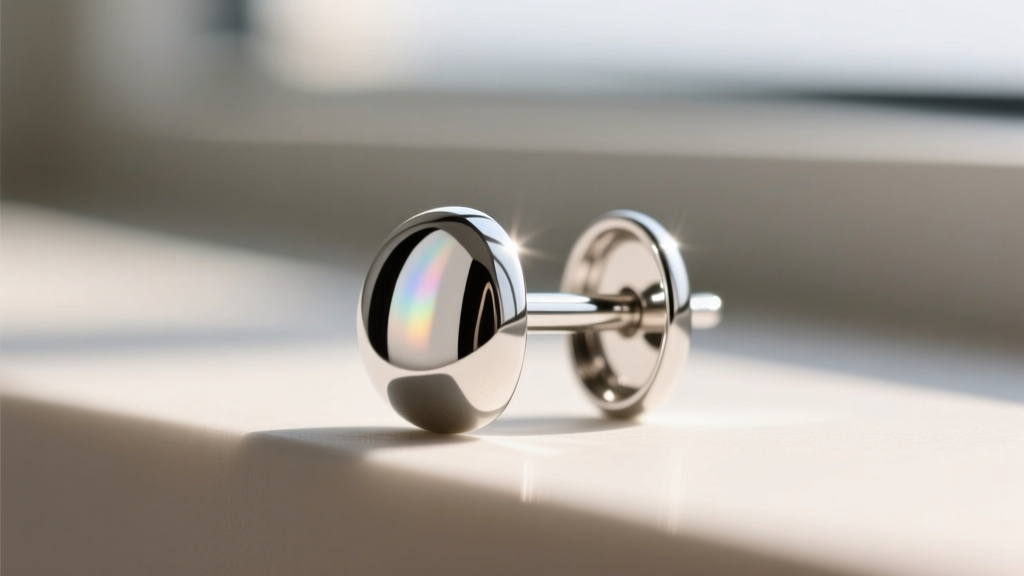
To combat both tarnish and potential copper sensitivities, high-end sterling silver post earrings are frequently plated with rhodium, a precious metal in the platinum family. When evaluating rhodium-plated silver, thickness matters. A flash plating (under 0.25 microns) will wear off within weeks, exposing the silver beneath. Look for brands that specify a plating thickness between 0.75 and 1.5 microns. This provides a durable, highly reflective barrier that mimics the look of white gold while protecting sensitive skin from the underlying copper alloy. The Mayo Clinic frequently recommends rhodium-plated jewelry as a safe barrier for individuals with known metal sensitivities.
Decoding Post Thickness: Gauge Sizes for Lobes and Cartilage
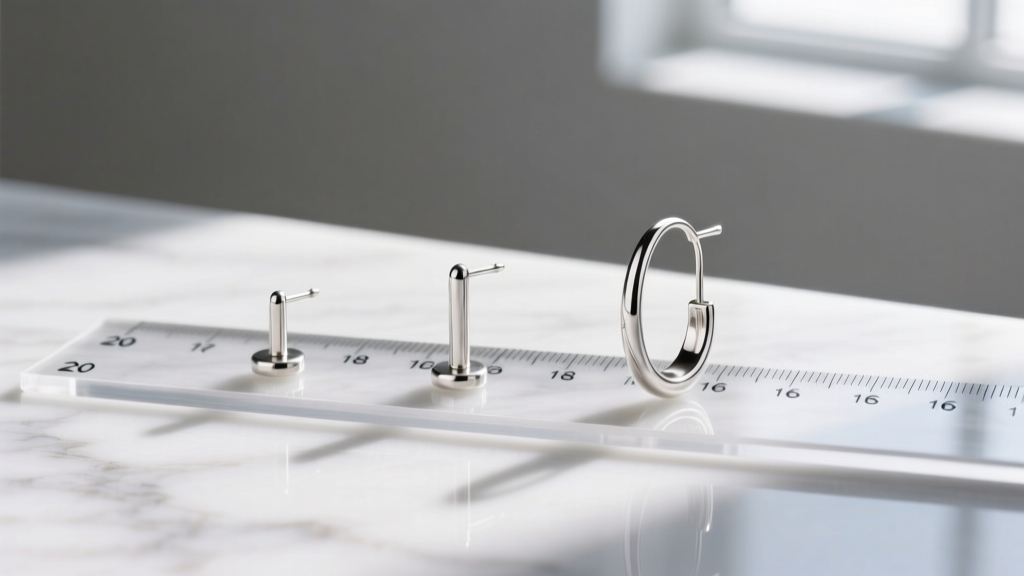
The 'post' is the straight wire that passes through your piercing. Its thickness, measured in gauges, dictates both the comfort of the earring and its structural integrity. Buying a post that is too thin for a cartilage piercing can lead to the 'cheese-cutter effect,' where the thin wire slowly migrates through the tissue. Conversely, a post that is too thick for a standard lobe piercing will cause micro-tears and irritation.
| Gauge Size | Millimeter (mm) | Best Use Case & Piercing Type |
|---|---|---|
| 22G | 0.64mm | Vintage or ultra-lightweight fashion studs (Avoid for daily wear; easily bends) |
| 20G | 0.81mm | Standard earlobe piercings, lightweight everyday studs, and sleepers |
| 18G | 1.02mm | Durable lobe posts, heavier gemstone studs, and some healed cartilage |
| 16G | 1.29mm | Standard cartilage, helix, and tragus piercings; heavy-duty lobe posts |
Pro Tip: If you are buying sterling silver post earrings for a newly healed cartilage piercing, opt for 16G or 18G flat-back labret styles rather than traditional butterfly-back studs, which can harbor bacteria and press uncomfortably against the back of the ear.
Backing Mechanisms: Friction, Screw, and Laconic Discs
The security of your earring is entirely dependent on the backing mechanism. When reviewing product specifications, pay close attention to how the post is secured behind the earlobe.
- Friction Backs (Butterfly/Push Backs): The most common and economical backing. They rely on tension to grip the notched post. While easy to use, the hollow cups can trap dead skin, soap, and bacteria, requiring rigorous weekly cleaning. Furthermore, the tension can loosen over time, risking the loss of valuable gemstone studs.
- Screw Backs: The post features precision-machined threading, and the backing screws onto it. These are the gold standard for security, making them ideal for children, active individuals, or expensive diamond and moissanite studs. The downside is that they take slightly longer to put on and can strip if cross-threaded.
- Flat Backs (Labret/Laconic Discs): Featuring a flat, smooth disc that rests flush against the back of the ear, these are secured via internal threading or a friction-fit O-ring. They are the most comfortable option for sleeping and are the preferred choice for cartilage and helix piercings.
Pricing Tiers: What You Should Actually Pay
Understanding the fair market value of sterling silver post earrings prevents you from overpaying for brand names or underpaying for potentially counterfeit goods. Here is a realistic pricing framework for the current market:
1. Mass-Market & Fast Fashion ($10 - $25)
At this tier, expect thin 22G or 20G posts, minimal rhodium plating, and synthetic or low-grade cubic zirconia stones. The silver is often hollowed out or cast with excessive porosity to save on material costs. Suitable for trendy, seasonal wear, but not built for longevity.
2. Artisan & Mid-Tier Specialists ($30 - $85)
This is the sweet spot for quality everyday wear. You will find solid 18G or 16G posts, heavy 1.0-micron rhodium plating, secure screw-back or threaded flat-back mechanisms, and high-quality lab-grown gemstones or semi-precious stones. Brands in this tier usually provide transparent sourcing and explicit nickel-free guarantees.
3. Fine Jewelry & Designer ($90 - $250+)
At the premium end, you are paying for exceptional craftsmanship, intricate CAD-designed settings, premium gemstones (such as AAA-grade sapphires or diamonds), and luxurious packaging. The silver is often Argentium or heavily plated, and the posts are precision-engineered for maximum comfort and security.
Care and Tarnish Prevention Framework
Sterling silver tarnishes when the copper alloy reacts with sulfur compounds in the air, moisture, and everyday chemicals like lotions or hairspray. To maintain the brilliant white luster of your post earrings, implement this simple care framework:
The 2026 Storage Standard: Never store sterling silver post earrings loose in a humid bathroom jewelry box. Keep them in individual anti-tarnish zip-lock bags with a small strip of 3M anti-tarnish paper. The paper absorbs ambient sulfur gases, keeping the silver bright for up to 12 months without wearing.
For cleaning, avoid harsh chemical dips that strip rhodium plating. Instead, use a few drops of mild, phosphate-free dish soap in warm water, gently scrub with a baby toothbrush, and dry completely with a microfiber cloth before storing.
Final Verdict: Checklist Before You Checkout
Before you add that perfect pair of sterling silver post earrings to your cart, run through this final E-E-A-T checklist to ensure you are getting a quality product:
- Verify the '925' or '935' hallmark is present.
- Confirm the brand explicitly states the alloy is nickel-free.
- Check the post gauge (aim for 18G or 16G for durability and cartilage use).
- Look for rhodium plating thickness specifications if you want tarnish resistance.
- Choose a backing mechanism (screw or flat-back) that matches your lifestyle and piercing type.
By prioritizing metallurgical integrity and structural design over fast-fashion trends, you will invest in sterling silver post earrings that remain comfortable, secure, and brilliantly polished for years to come.


