Stud Earring MM Size Chart: 2026 Styling & Fit Guide
Master the 2026 ear stack with our ultimate stud earring mm size chart. Compare carat to millimeter, gauge sizes, and lobe styling frameworks.

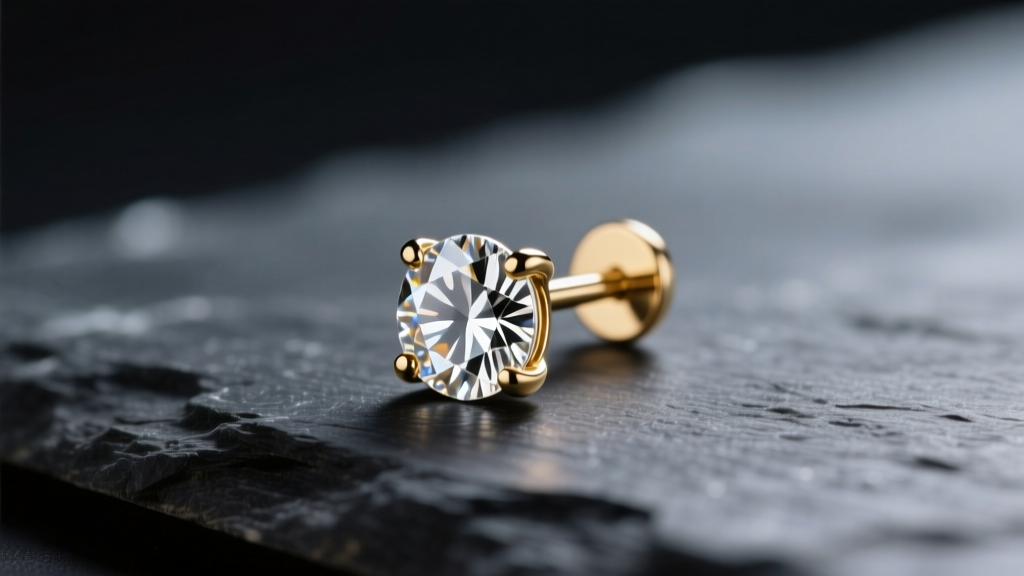
When it comes to fine jewelry, precision is everything. While carat weight often dominates the conversation around diamond and gemstone purchases, millimeter (mm) diameter is the true metric of visual impact. As we navigate the styling landscape of 2026, the shift toward highly curated, anatomical ear stacks has made understanding exact dimensions more critical than ever. A 4mm stud behaves entirely differently on a petite earlobe compared to a larger one, and confusing carat weight with physical spread is a common pitfall for both collectors and first-time buyers.
To help you navigate this nuanced landscape, we have developed a comprehensive stud earring mm size chart and styling framework. This guide breaks down the exact millimeter measurements, gauge requirements, and visual proportions you need to build a flawless, trend-forward ear curation this year.
The 2026 Shift: Precision Sizing and Curated Stacks
Historically, the jewelry market pushed the "bigger is better" narrative, with 1-carat (approx. 6.5mm) solitaires positioned as the ultimate everyday standard. However, 2026 trend analysis reveals a massive pivot toward precision sizing. The modern collector is favoring "mid-size" solitaires (4mm to 5.5mm) for primary lobe placements, reserving larger millimeter spreads for evening wear or specific cartilage focal points.
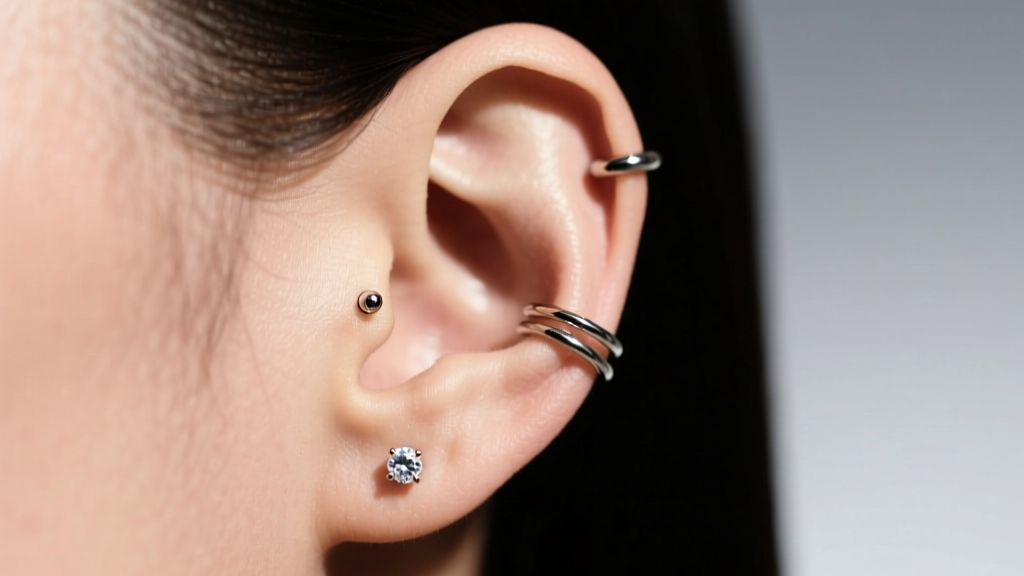
This shift is driven by the popularity of the "constellation stack"—a styling technique that requires multiple piercings to coexist harmoniously without overlapping. When you are working with a forward helix, a tragus, and a double-lobe setup, a 6.5mm stud will cause visual clutter and physical crowding. Understanding the exact mm footprint of your jewelry is the foundation of high-end ear styling.
The Ultimate Stud Earring MM Size Chart
The chart below maps the physical millimeter diameter of a round brilliant cut gemstone to its approximate carat weight, visual reference, and ideal anatomical placement. Keep in mind that these metrics apply specifically to round cuts; fancy shapes (like ovals or pears) will have different length-to-width ratios.
| MM Diameter | Approx. Carat (Round) | Visual Reference | Ideal Placement & Styling Role |
|---|---|---|---|
| 2.0mm | ~0.03 ct | Pinhead / Micro | Forward helix, upper flat, third-hole stack accent |
| 3.0mm | ~0.10 ct | Small Seed / Subtle | Tragus, upper lobe, minimalist everyday wear |
| 4.0mm | ~0.25 ct | Petite Solitaire | Primary lobe (subtle), conch, inner cartilage |
| 5.0mm - 5.2mm | ~0.50 ct | Classic Medium | Primary lobe (standard statement), rook |
| 6.0mm - 6.5mm | ~0.75 - 1.00 ct | Bold Focal Point | Primary lobe (red carpet/evening), daith |
| 8.0mm+ | ~2.00 ct+ | Large / Cluster | Specialty evening wear, single-lobe maximalism |
Carat Weight vs. Millimeter Diameter: The Density Factor
One of the most frequent errors consumers make is assuming carat weight translates universally to millimeter size. Carat is a measure of weight, not physical dimensions. The Gemological Institute of America (GIA) emphasizes that a gemstone's density and cut proportions drastically alter its physical spread.
How Gemstone Density Alters MM Perception
If you are comparing a 5mm round diamond to a 5mm round sapphire, they will look identical in footprint on your ear, but the sapphire will be significantly heavier in carat weight due to its higher specific gravity. Conversely, a 5mm moissanite will weigh slightly less than a diamond of the exact same millimeter spread. When utilizing a stud earring mm size chart for styling purposes, always buy based on the millimeter diameter if your primary concern is how the piece will visually map to your ear anatomy.
The Impact of Cut Proportions
A poorly cut 1-carat diamond (cut too deep) might only measure 5.8mm across the top, making it look like a 0.75-carat stone to the naked eye. An "ideal" or "excellent" cut diamond maximizes the top-down spread, ensuring you get the full 6.5mm visual footprint that corresponds to the 1-carat weight. For stud earrings, where the side-profile is hidden against the skin, top-down spread (the mm measurement) is the only metric that truly matters.
Lobe Anatomy and Post Gauge Sizing
A millimeter size chart is incomplete without addressing the post thickness, known as the gauge. The structural integrity of your piercing—and the comfort of the earring—relies on matching the post gauge to the specific cartilage or lobe placement. The Association of Professional Piercers (APP) provides strict guidelines on initial jewelry sizing, which also applies to long-term fine jewelry wear.
- 20 Gauge (0.81mm): The standard for traditional, older lobe piercings and many lightweight, mass-market fine jewelry studs. Ideal for 2mm to 4mm micro-studs where a thick post would overwhelm the gemstone setting.
- 18 Gauge (1.02mm): The modern standard for high-end lobe studs (4mm to 6mm). It provides enough structural support for heavier gold settings and 14k/18k gold posts without causing the "cheese-cutter effect" in the lobe.
- 16 Gauge (1.29mm): The universal standard for cartilage piercings (helix, conch, flat). If you are placing a 3mm or 4mm stud in a cartilage piercing, it must be set on a 16G post or a specialized 16G flat-back labret to prevent migration and irritation.
- 14 Gauge (1.60mm): Rarely used for traditional gemstone studs, but common for industrial or daith placements requiring heavy structural support.
Pro-Tip for 2026: If you are buying diamond studs for a fresh or healing cartilage piercing, ensure the setting is threaded or threadless on an ASTM F136 implant-grade titanium 16G flat-back post. Traditional butterfly backs trap bacteria and are entirely unsuitable for cartilage anatomy.
Styling Framework: Matching MM Sizes to Ear Curation
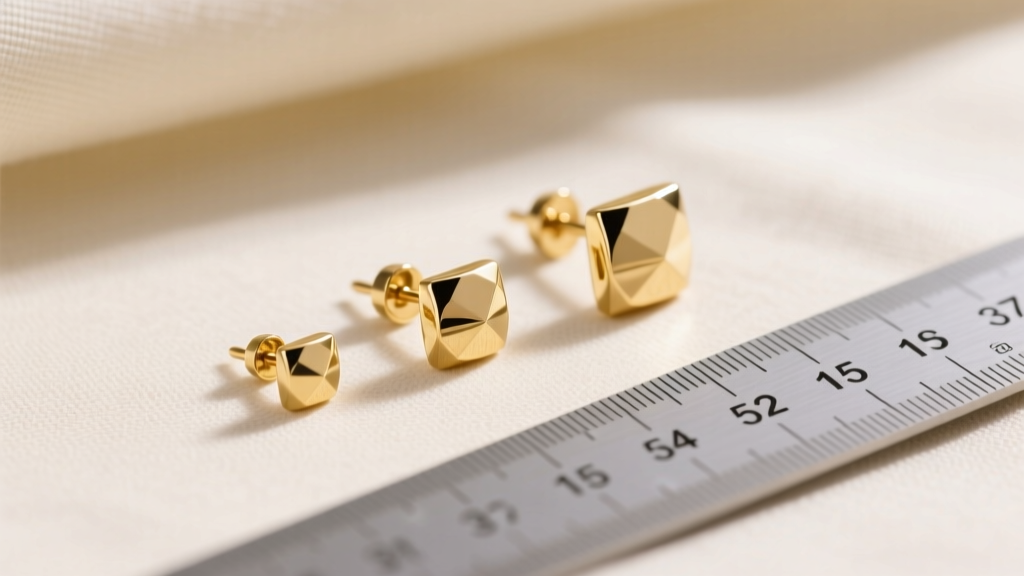
Translating a stud earring mm size chart into a cohesive aesthetic requires an understanding of negative space and visual weight. Here is a practical decision framework for building a balanced ear stack this year.
The "Descending Scale" Stack
The most universally flattering stack utilizes a descending millimeter scale to draw the eye downward, elongating the ear.
Setup: Primary Lobe (5.5mm) → Second Lobe (4.0mm) → Helix (3.0mm) → Forward Helix (2.0mm).
This framework ensures that the largest, heaviest piece anchors the bottom of the ear, while the micro-studs provide a delicate, starry effect along the cartilage ridge.
The "Minimalist Anchor" Approach
For corporate environments or understated personal styles, the 2026 trend leans away from multiple piercings in favor of a single, perfectly proportioned anchor. A 4.5mm to 5.0mm bezel-set stud (in platinum or 18k yellow gold) sits flush against the skin, eliminating the prong-snagging issue common with martini settings. A 5mm bezel stud offers the visual presence of a classic solitaire but with a sleek, architectural profile that aligns with modern minimalist styling.
Face Shape and Proportion Considerations
While ear anatomy dictates gauge and placement, your facial proportions should influence the maximum mm size you choose for your primary lobe studs.
- Petite / Narrow Faces: Studs in the 5.5mm to 6.5mm range (approx. 0.75ct to 1.00ct) can overpower delicate jawlines and narrow cheekbones. A 4.5mm to 5.0mm stud provides a luxurious sparkle without dominating the side-profile of the face.
- Round / Wide Faces: Larger solitaires (6.0mm to 7.5mm) or elongated drops originating from a 5mm stud base help to visually lengthen the face and draw the eye vertically.
- Angular / Square Faces: Soft, rounded bezel settings in the 5.0mm range complement strong jawlines, whereas sharp, geometric halo settings might exaggerate facial angles.
Final Verdict on Sizing Your Studs
The era of blindly purchasing jewelry based solely on carat weight is over. The modern collector uses the millimeter as the ultimate unit of style. By referencing a detailed stud earring mm size chart, you can accurately predict how a piece will interact with your unique anatomy, your existing piercings, and your overall aesthetic. Whether you are anchoring a lobe with a bold 6.5mm solitaire or sprinkling 2.0mm micro-diamonds across your forward helix, precision sizing is the hallmark of true jewelry expertise. Always consult with a master jeweler or professional piercer to ensure your chosen millimeter size is paired with the correct gauge and setting depth for long-term, comfortable wear.


