Stud Earring Value Guide: Solid Gold vs Vermeil vs Plated
Discover which stud earring offers the best long-term value. We break down solid gold, vermeil, and plated options by cost per wear and durability.

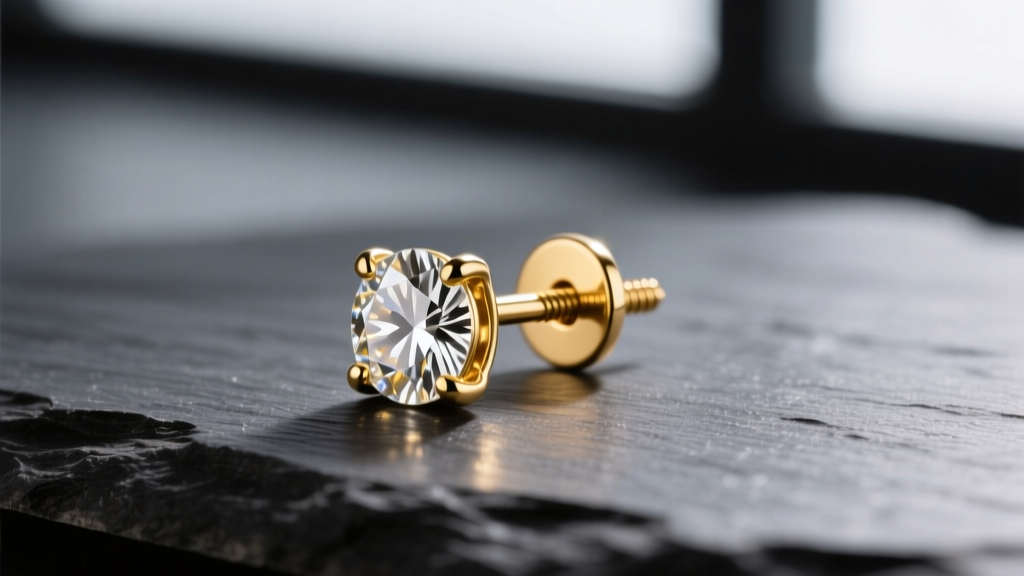
The Hidden Economics of Everyday Stud Earrings
When building a curated, long-lasting jewelry wardrobe, the humble stud earring is the undisputed workhorse. Worn for everything from boardroom meetings to weekend travel, studs endure constant friction, exposure to cosmetics, and the natural oils of your skin. Yet, when evaluating the true cost of these essentials, most consumers only look at the initial price tag. As we navigate the 2026 jewelry market, record-high gold spot prices have drastically shifted the retail landscape, making it more important than ever to understand the difference between an investment and an expense.
A budget-friendly pair of gold-plated studs might seem like a financial win at checkout, but the rapid degradation of base metals often leads to a frustrating cycle of repurchasing. In this comprehensive value assessment, we break down the metallurgical realities, cost-per-wear metrics, and hardware nuances of solid gold, gold vermeil, and flash-plated stud earrings to help you maximize your jewelry budget.
Material Breakdown: What Are You Actually Paying For?
To accurately assess value, we must first look beneath the surface. The terminology used in jewelry marketing is often deliberately ambiguous, blurring the lines between solid precious metals and thinly coated alloys.
Solid Gold (14k and 18k)
Solid gold stud earrings are cast or machined entirely from a gold alloy. The Gemological Institute of America (GIA) notes that 14k gold (58.3% pure gold) offers the optimal balance of rich color and structural integrity for earring posts. Because pure 24k gold is too soft to hold a gemstone securely or maintain a rigid post, it is alloyed with metals like copper, zinc, and silver. An 18k stud (75% pure gold) will offer a deeper, more saturated yellow hue but is slightly softer, making it more prone to post-bending if you sleep in your earrings. Solid gold will never tarnish, flake, or turn your skin green, making it the ultimate hypoallergenic choice for sensitive piercings.
Gold Vermeil (The Middle Ground)
Vermeil (pronounced ver-may) is not simply heavy plating; it is a strictly regulated category of jewelry. According to the Federal Trade Commission Jewelry Guides, gold vermeil must consist of a solid sterling silver (925) base coated with a minimum of 2.5 microns of gold (usually 14k or 18k). This thick layer of gold provides excellent longevity and a luxurious finish. However, because the core is silver, the earring post can eventually wear down to the silver base over years of heavy friction, though it will not cause the severe allergic reactions associated with cheap base metals.
Flash Gold Plated (The Budget Trap)
Standard gold-plated earrings typically feature a base metal core of brass, copper, or nickel-silver, covered by a microscopic layer of gold via electroplating. This "flash plating" is often less than 0.05 microns thick. While the initial shine is indistinguishable from solid gold, the ultra-thin coating wears away rapidly. The American Academy of Dermatology frequently identifies nickel-containing base metals in flash-plated earrings as a primary culprit for allergic contact dermatitis, a painful condition that can cause piercings to swell, reject, or become permanently sensitive.
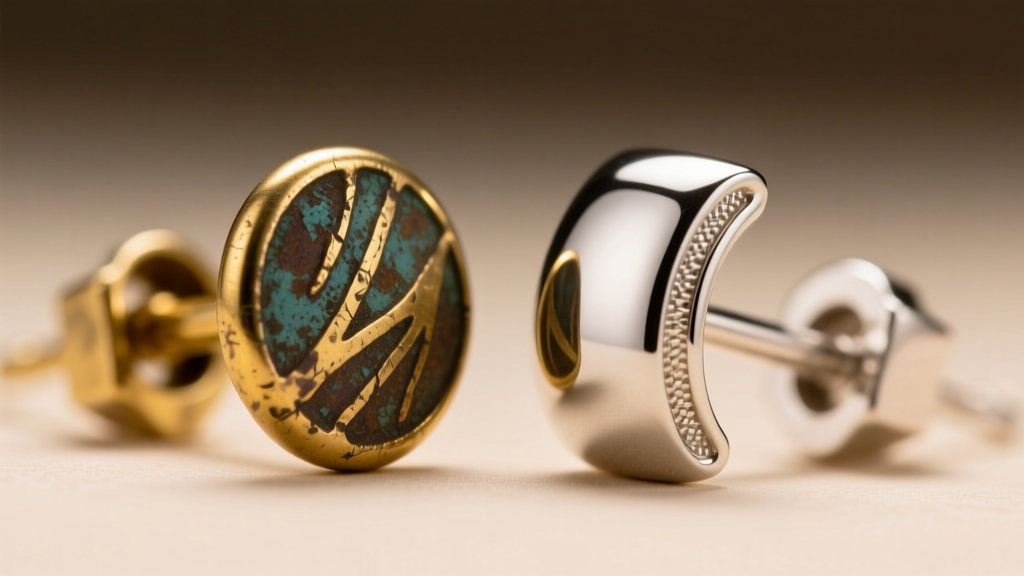
The Cost-Per-Wear Matrix: 5-Year Projection
To understand true value, we must calculate the cost-per-wear over a realistic timeframe. Assuming daily wear, showering, and sleeping, here is how the three primary materials hold up financially over a 5-year period based on 2026 average market pricing for a standard 5mm solitaire stud.
| Material | Upfront Cost (2026) | Est. Lifespan (Daily Wear) | 5-Year Replacement Rate | Total 5-Year Cost |
|---|---|---|---|---|
| Solid 14k Gold | $180 - $250 | Lifetime | 0 | $180 - $250 |
| Gold Vermeil | $65 - $95 | 1.5 - 2 Years | 2 | $195 - $285 |
| Flash Plated | $15 - $30 | 3 - 6 Months | 8+ | $120 - $240+ |
While flash-plated earrings appear to save money upfront, the compounding cost of replacing tarnished, bent, or irritating pairs often surpasses the price of a single pair of solid 14k gold studs. Vermeil sits in a unique middle ground: an excellent choice for trend-driven shapes or larger, heavier statement studs where solid gold would be prohibitively expensive, but a poor long-term investment for tiny, everyday essentials.
Gauge, Posts, and Backings: Where Budget Brands Cut Corners
Material purity is only half the battle. The structural engineering of the earring post and backing dictates both comfort and security. This is where budget brands silently compromise to maintain low price points.
The Danger of 22-Gauge Posts
Earring thickness is measured in gauges. Standard lobe piercings are typically done at 20-gauge (0.81mm) or 18-gauge (1.02mm). Solid gold and high-end vermeil studs reliably use 20g or 19g posts. Budget brands, however, frequently use 22-gauge (0.64mm) or even 24-gauge wire to save on precious metal costs. A 22g post is dangerously thin; it bends easily when inserting the backing and can create a "cheese-cutter effect," slowly migrating through the earlobe tissue and causing permanent piercing damage.
Friction Backs vs. Secure Closures
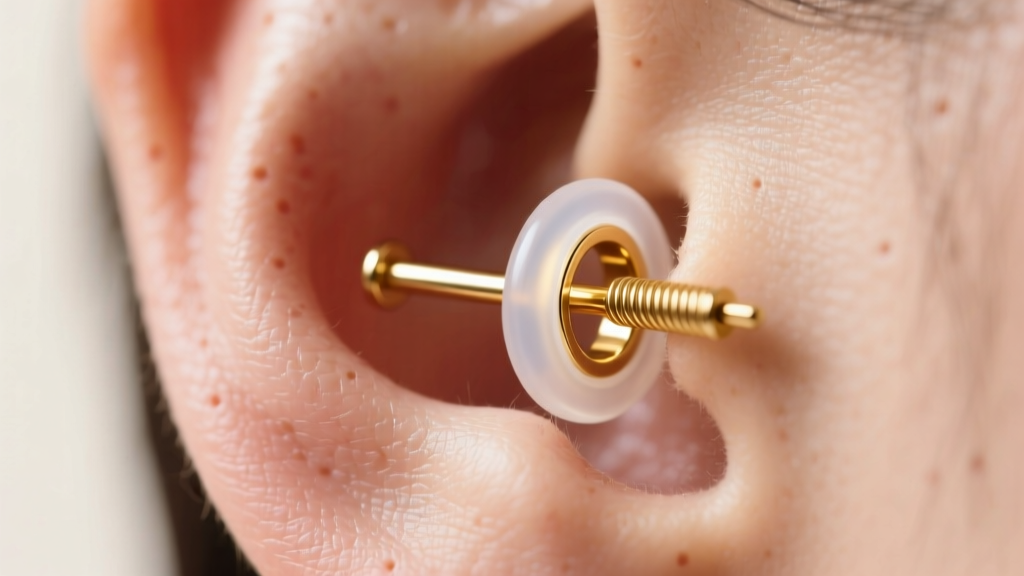
The standard "butterfly" friction back relies on the tension of the metal scrolling to grip the post notch. Over time, this metal fatigues, leading to lost earrings. Premium brands mitigate this by using threaded screw-backs (where the backing screws onto a threaded post) or by including high-grade silicone O-ring backs. If you are investing in solid diamond or gemstone studs, always verify the closure mechanism. A $1,000 diamond held on by a $0.05 fatigued brass friction back is a massive financial risk.
When to Splurge vs. When to Save
Adopting a value-driven approach doesn't mean you must buy solid gold for every single piercing. Use this decision framework to allocate your jewelry budget effectively:
- Splurge on Solid 14k Gold For: Your primary everyday lobe studs, huggie hoops for cartilage, and any jewelry you plan to sleep, shower, or swim in. The cost-per-wear justifies the upfront premium, and the hypoallergenic properties protect your piercing health.
- Save with Gold Vermeil For: Seasonal trends, large geometric shapes, or ear-climber studs that require a thicker, heavier silhouette. Vermeil provides the visual weight and luxury finish without the massive price tag of solid gold, provided you keep them dry.
- Avoid Flash Plated Entirely For: Cartilage piercings, fresh piercings, or sensitive lobes. The risk of nickel exposure and subsequent infection or rejection is simply not worth the $15 savings.
Final Verdict: Maximizing Your Jewelry Budget
The true value of a stud earring is not determined by its weight in gold, but by its resilience, its biocompatibility with your skin, and its cost-per-wear over time. In 2026, treating your jewelry purchases as long-term assets rather than disposable accessories is the smartest financial move you can make. By prioritizing 14k solid gold for your foundational pieces and reserving vermeil for structural statement pieces, you build a sustainable, irritation-free collection that outlasts the fleeting appeal of fast-fashion jewelry.


