How to Style 2 Earrings in One Ear: 2026 Trend Guide
Discover how to style 2 earrings in one ear with our 2026 trend guide. Learn gauge sizes, material grades, and expert pairing frameworks.

The Shift to Intentional Minimalism
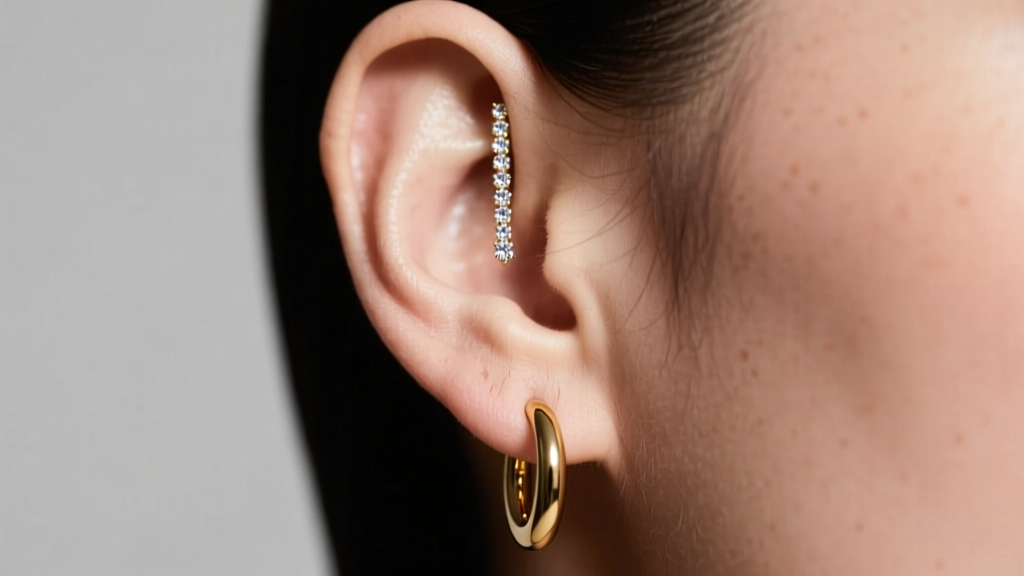
Over the past decade, the 'curated ear' trend pushed collectors toward maximalist stacks of five, six, or even eight piercings per ear. However, as we navigate the style landscape of 2026, a distinct pivot has occurred. The modern aesthetic favors 'intentional minimalism,' and the focal point of this movement is mastering the art of wearing exactly 2 earrings in one ear. This dual-piercing approach relies heavily on negative space, mixed textures, and precise anatomical placement rather than sheer volume. When styling 2 earrings in one ear, the goal is to create a dialogue between the two pieces—whether that means contrasting a chunky, light-catching huggie with a barely-there diamond threader, or balancing a structural cartilage cuff with a classic pearl stud.
This guide breaks down the technical and stylistic requirements for perfecting the double-piercing look, moving beyond generic fashion advice into the specific gauge sizes, material grades, and structural troubleshooting required for long-term ear health and aesthetic excellence.
Anatomical Pairings and Gauge Dynamics
The most common mistake enthusiasts make when adopting the 2 earrings in one ear trend is ignoring post thickness. Piercing gauges are not universal, and forcing mismatched jewelry can lead to tissue tearing, migration, or blowouts.
The Double Lobe (20G vs. 18G)
If your two piercings are both on the lower lobe, you are likely dealing with either 20-gauge (0.81mm) or 18-gauge (1.0mm) posts. Standard fashion earrings from mall retailers are typically 20G or even 22G. However, professional piercers usually needle-pierce lobes at 18G or 16G (1.2mm) to provide better structural support. If you are wearing a heavy 14k gold hoop in your first hole and a delicate 20G stud in your second, be aware that the heavier piece can cause 'cheesewiring'—a process where the thin metal slowly slices through the bottom of the lobe tissue over time.
The Lobe and Helix Combination (18G vs. 16G)
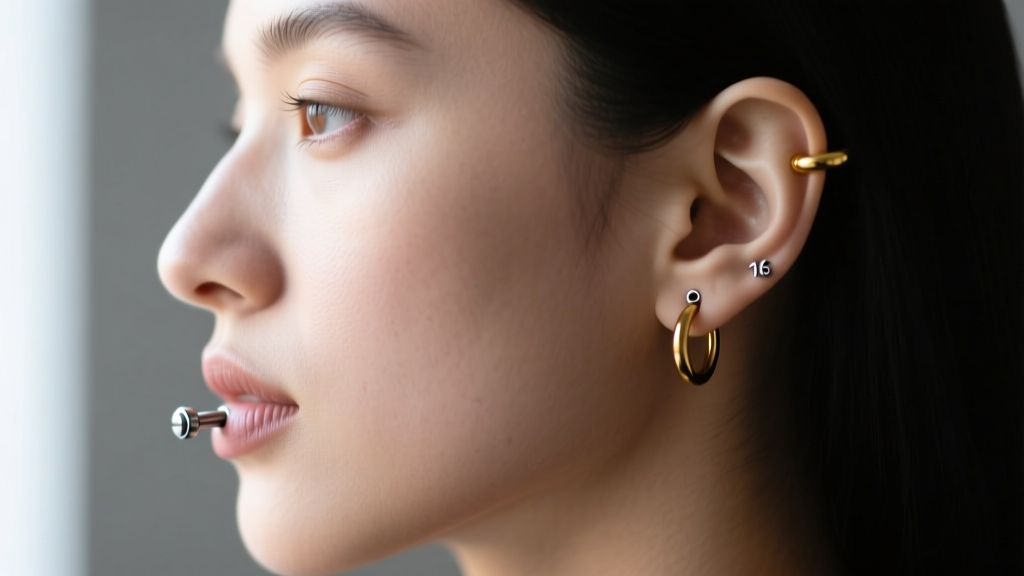
For a more dynamic silhouette, pairing a standard lobe piercing with an upper cartilage piercing (like the helix or forward helix) is a premier 2026 trend. Cartilage piercings are almost universally performed at 16-gauge (1.2mm) or sometimes 14-gauge (1.6mm) to accommodate the swelling and density of the tissue. You cannot comfortably wear a standard 16G cartilage labret in an 18G lobe hole without stretching it, nor should you force a thin 18G wire into a 16G cartilage fistula, which can cause irritation bumps due to excess movement.
2026 Styling Frameworks for 2 Earrings in One Ear
To achieve a cohesive look without appearing mismatched, style experts rely on structural frameworks. Below is a decision matrix for the top three pairing strategies dominating the current market, complete with estimated pricing for high-quality, body-safe materials.
| Pairing Framework | Piece 1 (Primary) | Piece 2 (Secondary) | Aesthetic Vibe | Est. Price Range |
|---|---|---|---|---|
| The Tension Pair | Chunky 14k Gold Huggie (Lobe) | Delicate Diamond Threader (Upper Lobe) | High-contrast, modern elegance | $180 - $450 |
| The Industrial Pair | 16G Titanium Flat-Back Labret (Helix) | Seamless Clicker Hoop (Lobe) | Utilitarian, sleek, gender-neutral | $90 - $220 |
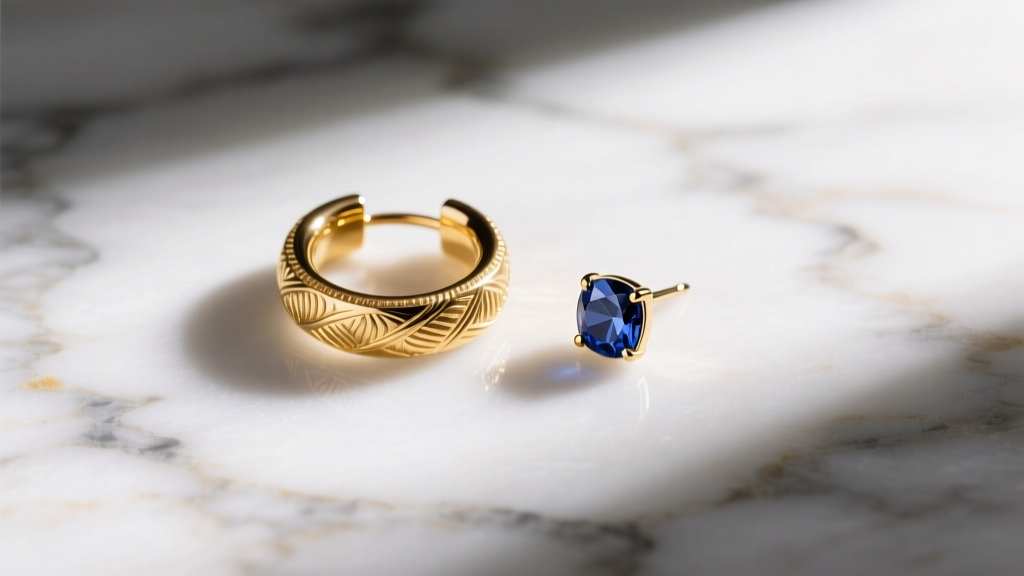
| The Heritage Pair | Bezel-Set Sapphire Stud (Lobe) | Textured Vintage Gold Ear Cuff (Mid-ear) | Romantic, eclectic, heirloom-inspired | $250 - $800+ |
Material Science: What Belongs in Your Piercings
When you are only wearing 2 earrings in one ear, each piece draws significantly more attention. The material quality must be impeccable, both for visual brilliance and biological compatibility.
- Implant-Grade Titanium (ASTM F136): This is the non-negotiable standard for any fresh piercing or sensitive ears. Unlike commercial 'surgical steel,' which contains nickel, ASTM F136 titanium is entirely biocompatible. Brands like NeoMetal and BVLA utilize this for their threadless ends, ensuring a secure fit that won't fall out in your sleep.
- 14k Solid Gold: According to the Gemological Institute of America (GIA), 14k gold (58.5% pure gold) offers the ideal balance of rich color and structural durability. It is hard enough to withstand the friction of daily huggie wear without bending the post.
- 18k Solid Gold: While more luxurious and richer in yellow hue, 18k gold is softer. It is best reserved for bezel-set studs or special-occasion threaders rather than heavy hoops that might warp over time.
- Avoid Plated Brass/Silver: Gold vermeil or rhodium-plated brass will eventually wear down, exposing the base metal to the fistula. This leads to contact dermatitis and localized swelling, ruining the sleek look of your curated pair.
'For long-term wear in healed piercings, high-quality gold (14k or 18k) and implant-grade titanium remain the safest choices to prevent allergic reactions and tissue irritation.' — Association of Professional Piercers (APP)
Troubleshooting the Dual-Ear Experience
Styling 2 earrings in one ear comes with specific mechanical challenges. Here is how to troubleshoot the most common issues reported by jewelry collectors:
The 'Cheesewiring' Effect
If your lower lobe piercing is stretching vertically, your earring is too heavy for the gauge of the hole. The Fix: Switch from a butterfly-back post to a flat-back labret. The flat disc distributes the weight across a wider surface area of the inner lobe, preventing the metal from slicing downward. Alternatively, have a professional piercer upsize your lobe to 16G or 14G using a taper to support heavier statement pieces.
Sleeping on Cartilage + Lobe Combos
Wearing a lobe hoop and a helix stud simultaneously can make sleeping on that side agonizing, often leading to 'piercing bumps' (hypertrophic scarring) on the cartilage due to pressure angles. The Fix: Invest in a specialized piercing pillow with a central hole, or adopt a strict routine of swapping your nighttime jewelry to ultra-low-profile titanium flat-backs with 1mm or 2mm ends, saving the decorative hoops for daytime wear.
Angle Slant in Double Lobes
Many older double piercings were done with piercing guns, resulting in holes that sit at uneven angles or are too close together (less than 6mm apart). If your two earrings touch or overlap awkwardly, embrace the 'cascade' styling method. Wear a small, flush-fitting stud in the higher, awkwardly angled hole, and use a longer, dangling drop earring in the lower hole to draw the eye vertically, masking the horizontal misalignment.
Final Verdict on the 2026 Dual-Piercing Trend
The decision to style 2 earrings in one ear is a masterclass in restraint and personal branding. By moving away from the 'more is more' mentality of the past decade, you allow the craftsmanship, gemstone quality, and architectural design of your jewelry to truly shine. Whether you opt for the utilitarian edge of 16G titanium or the timeless luxury of 14k gold bezels, respecting the anatomy of your ear and the physics of your jewelry will ensure your curated look remains both beautiful and biologically sound for years to come.


