How to Style Angel Earrings: Wing and Halo Curation
Learn how to style and curate angel earrings, from wing climbers to halo studs. Expert guide on materials, gauge sizes, and cleaning intricate motifs.

The Anatomy of Angel Earrings: Studs, Dangles, and Cuffs
Angel earrings have transcended seasonal trends to become a staple in ethereal and celestial jewelry curation. Characterized by motifs like feathered wings, glowing halos, cherubic figures, and celestial messengers, these pieces require a strategic approach to styling. Unlike simple geometric studs, angel-themed jewelry features intricate micro-castings, delicate prongs, and uneven weight distributions. Whether you are working with a freshly pierced helix or a curated lobe stack, understanding the anatomy of these pieces is the first step to mastering the aesthetic.
The three primary categories of angel earrings include:
- Halo Studs: Typically featuring a central gemstone encircled by a micro-pave 'halo,' representing divine light. These act as the foundational anchor in any ear stack.
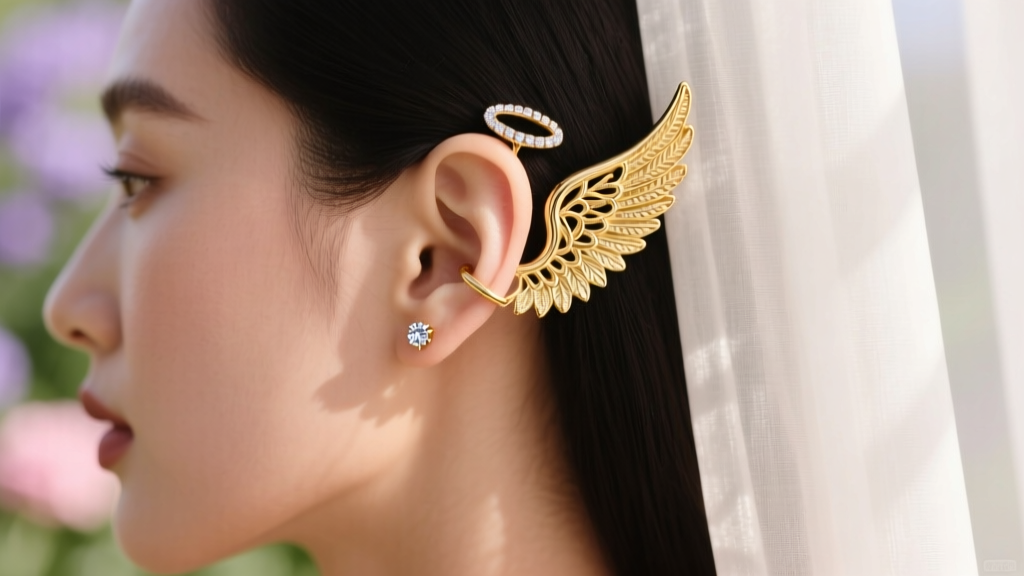
- Wing Climbers and Cuffs: Elongated pieces that trace the curve of the ear cartilage. Pierced climbers use a single post with a sweeping wire, while cuffs rely on tension to grip the helix.
- Cherub and Feather Dangles: Drop earrings that utilize gravity to create movement, often cast in solid gold or sterling silver to capture the fine striations of individual feathers.
Step-by-Step: Curating an Angelic Ear Stack
Building an ear stack around an angelic theme requires balancing visual weight. Because wing and halo motifs are highly detailed, overcrowding the ear will cause the designs to blur together. Follow this step-by-step framework to curate a cohesive look.
Step 1: Anchor with a Halo Stud (Standard Lobe)
Begin at the primary lobe piercing (usually 20G or 18G). Select a diamond or moissanite halo stud measuring between 6mm and 8mm in diameter. The halo mimics the celestial rings often depicted in classical angelic art. Opt for a bezel or micro-prong setting to ensure the tiny accent stones remain secure. Push the post through and secure it with a flat-back or secure butterfly clutch to prevent the halo from drooping forward.
Step 2: Add a Winged Climber (Cartilage/Helix)
Move to the upper ear. A wing climber is the centerpiece of this aesthetic. For cartilage piercings, you must use a 16G (1.2mm) or 14G (1.6mm) post. Cartilage is denser and requires a thicker post to prevent the jewelry from bending or migrating. Sweep the wing motif upward toward the apex of the ear, following the natural curve of the helix. If using an ear cuff instead of a pierced climber, pinch the cuff firmly at the thickest part of the outer helix and slide it down slightly until it grips securely.
Step 3: Balance with a Minimalist Feather Drop (Secondary Lobe)
If you have a second or third lobe piercing, balance the heavy detail of the halo and the wing with a minimalist, elongated feather drop. A sleek, 15mm solid gold feather silhouette provides vertical movement without competing with the intricate castings higher up on the ear.
Material and Gauge Guide for Delicate Motifs
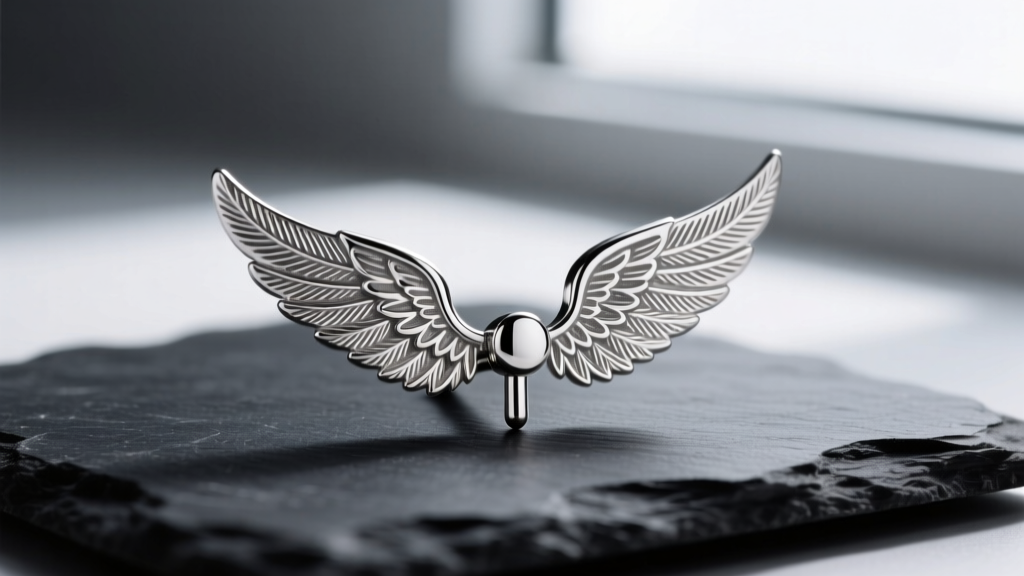
The intricate nature of angel wings and cherub faces requires specific metallurgical properties. Soft metals will lose their detail over time, while plated metals will wear away in the deep crevices of the castings. According to the Association of Professional Piercers, choosing biocompatible and structurally sound materials is critical for both healing and longevity.
| Material | Hardness & Detail Retention | Gauge Recommendation | Best Angel Motif Application |
|---|---|---|---|
| 14k Solid Gold | High (Excellent for lost-wax casting) | 18G (Lobe) / 16G (Cartilage) | Highly detailed cherub faces and micro-feather striations |
| 18k Solid Gold | Medium-High (Slightly softer, richer color) | 20G (Lobe) / 16G (Cartilage) | Halo settings and smooth, polished wing cuffs |
| ASTM F-136 Titanium | Very High (Hypoallergenic, rigid) | 16G or 14G (Cartilage) | Cartilage wing climbers requiring structural rigidity |
| Sterling Silver (925) | Medium (Prone to tarnish in crevices) | 20G (Lobe only) | Occasional wear dangle feathers and wide ear cuffs |
Expert Insight: Avoid gold-plated brass for angel wing designs. The plating process often pools in the deep crevices of feather castings, and as the brass oxidizes underneath, the intricate details will turn black and degrade rapidly.
How to Clean Intricate Wing and Halo Crevices
Angel earrings are notorious for trapping sebum, hair products, and dead skin cells within the tiny grooves of feather castings and micro-pave halo settings. The Gemological Institute of America (GIA) warns against using ultrasonic cleaners on delicate pave settings, as the high-frequency vibrations can loosen the microscopic prongs holding halo diamonds in place.
Follow this safe, step-by-step cleaning protocol:
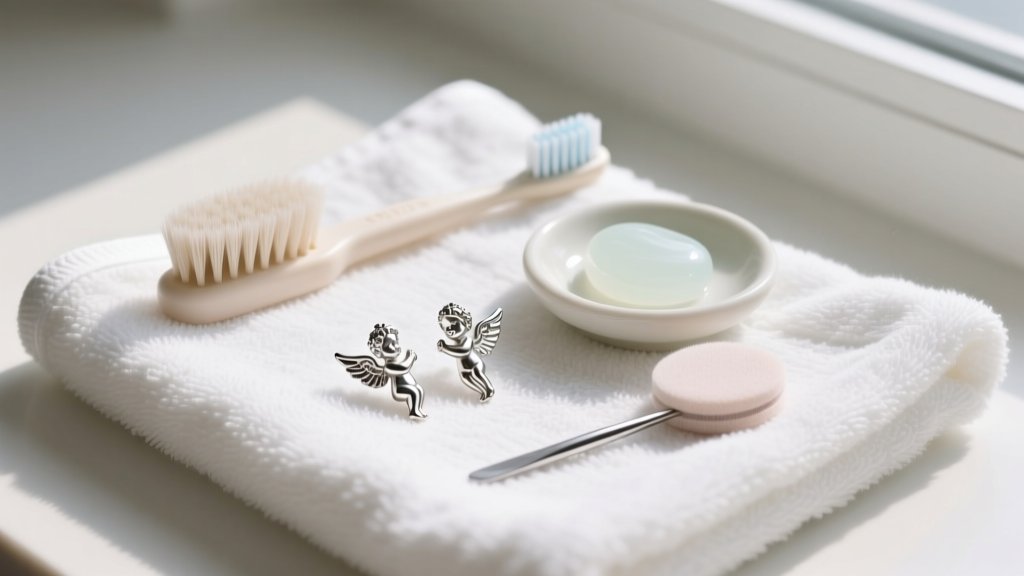
- Prepare a Lukewarm Bath: Mix a few drops of mild, phosphate-free dish soap into a bowl of lukewarm water. Avoid hot water, which can damage certain gemstone treatments.
- Soak Briefly: Submerge your solid gold or platinum angel earrings for 3 to 5 minutes to soften accumulated oils. Do not soak oxidized silver, as it may strip the intentional darkening in the crevices.
- Agitate with a Soft Brush: Using a brand-new, extra-soft baby toothbrush, gently sweep along the grain of the angel wing feathers. For halos, use a circular motion around the central stone to dislodge debris from the prongs.
- Rinse and Dry: Rinse under a gentle stream of distilled water. Pat dry with a lint-free microfiber cloth, and use a can of compressed air to blow moisture out of the deepest casting crevices.
Face Shape Pairings for Angelic Silhouettes
The geometry of angel earrings can subtly alter the perceived proportions of your face. Because wings and halos carry distinct visual lines, pairing them with your face shape enhances the overall harmony of your look.
- Round Faces: Opt for elongated angel feather dangles or vertical wing climbers. The vertical lines draw the eye downward, creating a lengthening effect that balances wider cheekbones.
- Square Faces: Choose curved halo studs or softly rounded cherub motifs. The circular geometry of the halo softens strong jawlines and angular features.
- Heart-Shaped Faces: Teardrop-shaped angel wings or bottom-heavy dangles add visual weight to the lower half of the face, balancing a narrower chin.
- Oval Faces: Highly versatile; you can comfortably wear wide, horizontal wing cuffs and oversized halo studs without disrupting your natural facial symmetry.
Troubleshooting: Snagging and Weight Issues
The most common failure mode for angel earrings is snagging. The tapered tips of cast metal wings and the tiny prongs of halo settings easily catch on knit sweaters, lace, and long hair. To mitigate this, always run your fingertip over the edges of a wing earring before purchasing; if it feels sharp or catches on your skin, the casting needs professional polishing.
For heavy cherub dangles that cause lobe stretching or forward drooping, utilize an earring support patch or a silicone O-ring behind the clutch. These distribute the weight of the drop across a wider surface area of the earlobe, keeping the angel motif facing perfectly forward rather than sagging toward the neck.


