How to Style Ankh Earrings: A Step-by-Step Ear Curation Guide
Learn how to style ankh earrings with our step-by-step ear curation guide. Discover gauge sizing, metal grades, and stacking techniques.

The Ankh Motif: Beyond Basic Styling
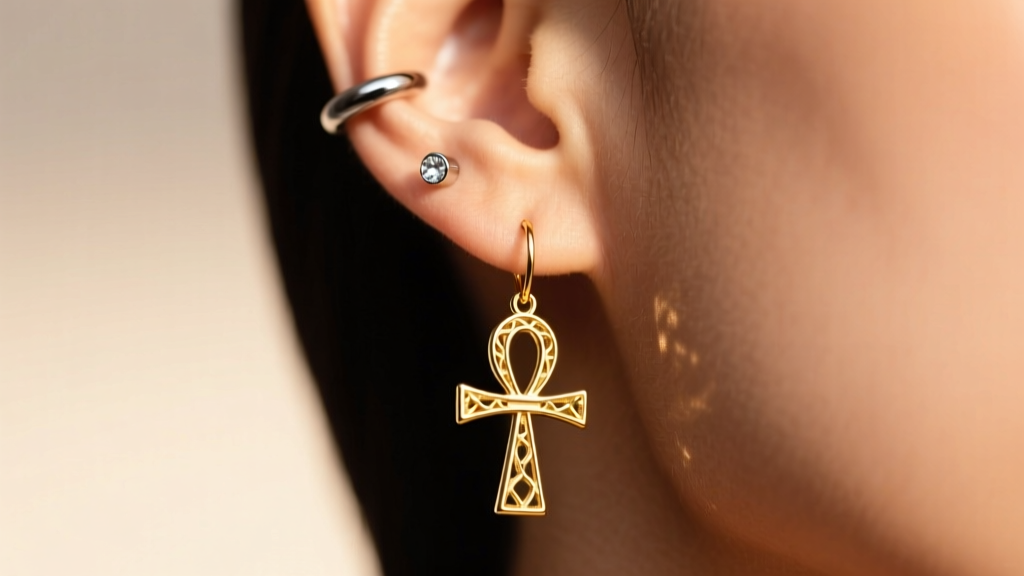
The ankh, an ancient Egyptian hieroglyph representing life and immortality, has transcended its historical roots to become a powerful staple in contemporary jewelry design. According to Encyclopædia Britannica, the symbol's distinct anatomy—a teardrop loop resting atop a T-shaped cross—creates a striking vertical geometry that is highly sought after in ear curation. However, styling ankh earrings requires more than just selecting an aesthetically pleasing design. The unique weight distribution of the ankh's elongated stem and the intricate crevices of the crossbar demand a strategic approach to gauge sizing, metal biocompatibility, and placement.
This step-by-step guide will walk you through the exact methodology for selecting, styling, and maintaining ankh earrings, ensuring your ear stack is both visually cohesive and anatomically safe for long-term wear.
Step 1: Selecting the Correct Metal Grade and Gauge
The foundation of any successful ear curation is biocompatibility and structural integrity. Because ankh dangles carry their weight at the bottom of a long vertical stem, they exert a pendulum effect on the piercing fistula. If the wire gauge is too thin, you risk the "cheese cutter effect," where the jewelry slowly migrates through the earlobe tissue due to concentrated downward pressure.
For standard lobe piercings, a 20-gauge (0.81mm) wire is common for lightweight studs, but for an ankh dangle weighing more than 3 grams, you must upgrade to an 18-gauge (1.02mm) or 16-gauge (1.29mm) wire to distribute the load. For cartilage placements like the helix or conch, the Association of Professional Piercers (APP) strongly recommends implant-grade materials to prevent contact dermatitis and rejection.
| Metal Grade | Nickel Content | Avg. Price Range | Best Placement |
|---|---|---|---|
| ASTM F-136 Titanium | 0% (Hypoallergenic) | $35 - $85 | Fresh piercings, sensitive cartilage |
| 14k Solid Gold | Trace (Alloy dependent) | $150 - $450 | Healed lobes, premium daily wear |
| 316L Surgical Steel | 8% - 10.5% | $20 - $50 | Fully healed, non-sensitive lobes |
| 925 Sterling Silver | 0% (Contains Copper) | $40 - $120 | Occasional wear, fully healed lobes |
Step 2: Choosing the Right Ankh Silhouette for Your Placement
The anatomy of the ankh dictates how it behaves on the ear. The loop (crux ansata) acts as the visual anchor, while the vertical stem dictates the movement. When shopping for ankh earrings, pay close attention to the stem length.
Lobe Placements: The Dangle and the Drop
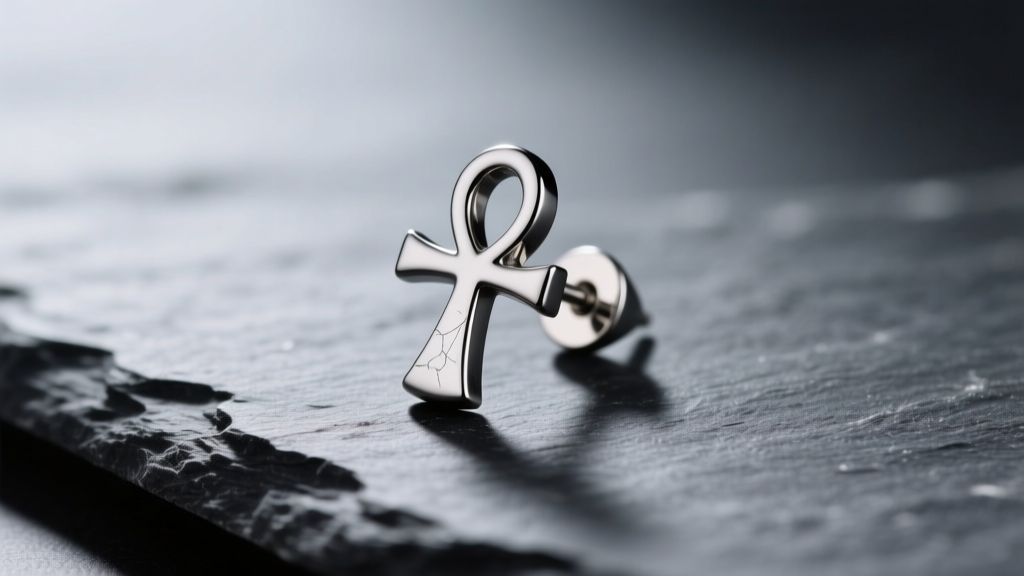
For standard and upper lobe piercings, ankh dangles are the most popular choice. However, to prevent the stem from constantly catching on hair, sweater threads, or face masks, the total drop length should not exceed 1.5 inches (38mm). If you prefer a longer, more dramatic silhouette, opt for a tapered stem that narrows toward the bottom, reducing the overall swing weight and minimizing snagging.
Cartilage Placements: Flat-Back Studs and Huggies
Wearing a dangle in a helix or tragus piercing is generally discouraged due to the high risk of trauma from sleeping or brushing hair. Instead, utilize ankh flat-back labret studs. Ensure the decorative face of the ankh is no wider than 8mm to prevent it from pressing against the folds of your ear. For the upper lobe or a snug piercing, ankh-motif huggies (typically 8mm to 10mm in inner diameter) provide a secure, flush fit that hugs the cartilage without dangling.
Step 3: Building Your Ankh-Centric Ear Stack
Curating an ear stack around a statement piece like an ankh requires balancing visual weight. The ankh is inherently top-heavy in symbolism but bottom-heavy in physical design. We use the "Rule of Three" to build a harmonious stack.
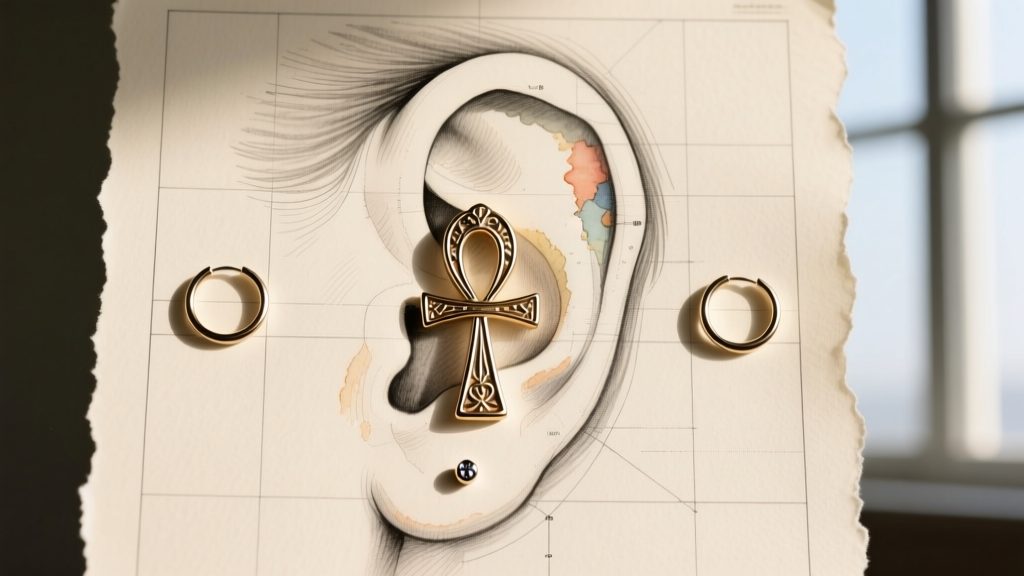
- The Focal Point (Standard Lobe): Place your primary ankh dangle here. A 14k gold or oxidized silver ankh with a subtle gemstone set in the loop (such as a 2mm black onyx or lapis lazuli) draws the eye immediately.
- The Anchor (Upper Lobe or Helix): Choose a complementary but non-competing piece. If your ankh is yellow gold, pair it with a minimalist 8mm yellow gold geometric huggie or a tiny bezel-set diamond stud. This anchors the stack without stealing focus.
- The Filler (Tragus, Conch, or Flat): Use micro-studs (1.5mm to 2mm) to fill negative space. Threadless titanium push-pins with tiny opal or clear CZ ends work beautifully to add sparkle without cluttering the distinct silhouette of the ankh.
Step 4: Cleaning and Maintaining Intricate Ankh Crevices
The 90-degree angles where the horizontal crossbar meets the vertical stem of an ankh are notorious traps for sebum, dead skin cells, and hair products. Neglecting these crevices can lead to localized irritation bumps or contact dermatitis, even with hypoallergenic metals. According to cleaning guidelines from Jewelers of America, intricate jewelry requires targeted mechanical cleaning.
Step-by-Step Cleaning Routine
- Step 1: Preparation. Remove the earrings. Never clean intricate jewelry while it is still in the ear, as you cannot properly access the back of the post or the interior of the loop.
- Step 2: The Soak. For solid gold or titanium, soak the earrings in a bowl of warm water mixed with a few drops of mild, fragrance-free dish soap for 5 minutes. Warning: Do not soak oxidized sterling silver or gold vermeil, as this will strip the intentional patina or plating.
- Step 3: Mechanical Agitation. Use a soft-bristled infant toothbrush to gently scrub the junction where the crossbar meets the stem. Brush in a circular motion to dislodge hardened keratin buildup.
- Step 4: Rinsing and Drying. Rinse thoroughly under lukewarm water. Pat dry with a lint-free microfiber cloth. Avoid using cotton swabs or tissue paper, as the fibers will snag on the sharp corners of the ankh design.
Troubleshooting Common Ankh Earring Issues
Even with perfect curation, ankh earrings present unique physical challenges. Here is how to troubleshoot the most common issues:
- The "Forward Flip" in Cartilage: If an ankh flat-back stud in your helix constantly flips upside down, your post is likely too long, allowing the jewelry to pivot. Visit a piercer to downsize the post length to exactly fit your tissue thickness (usually 6mm or 8mm).
- Lobe Stretching Over Time: If you wear heavy solid gold ankh dangles daily, your lobes will gradually stretch. Mitigate this by applying a drop of jojoba oil to your lobes nightly to maintain skin elasticity, and alternate heavy dangles with lightweight titanium studs on weekends to give the tissue time to retract.
- Tarnish in the Crevices: If the inner corners of your sterling silver ankh turn black, this is accelerated oxidation caused by trapped moisture and skin acids. Use a specialized silver polishing cloth, folding the edge to reach deep into the 90-degree angles, rather than using liquid silver dips which can damage the metal's structural integrity over time.
Final Thoughts on Symbolic Styling
Styling ankh earrings is an exercise in balancing historical weight with modern anatomical science. By prioritizing implant-grade metals, respecting gauge physics to protect your tissue, and strategically stacking complementary pieces, you transform a simple symbol into a masterclass of ear curation. Whether you opt for a minimalist titanium stud in the helix or a sweeping 14k gold dangle in the lobe, the ankh remains a timeless testament to life, longevity, and impeccable personal style.


