How to Style, Clean, and Protect an Evil Eye Earring
Learn how to select, style, and safely clean your evil eye earring collection. Expert guide on enamel grades, gauge sizing, and ear curation.

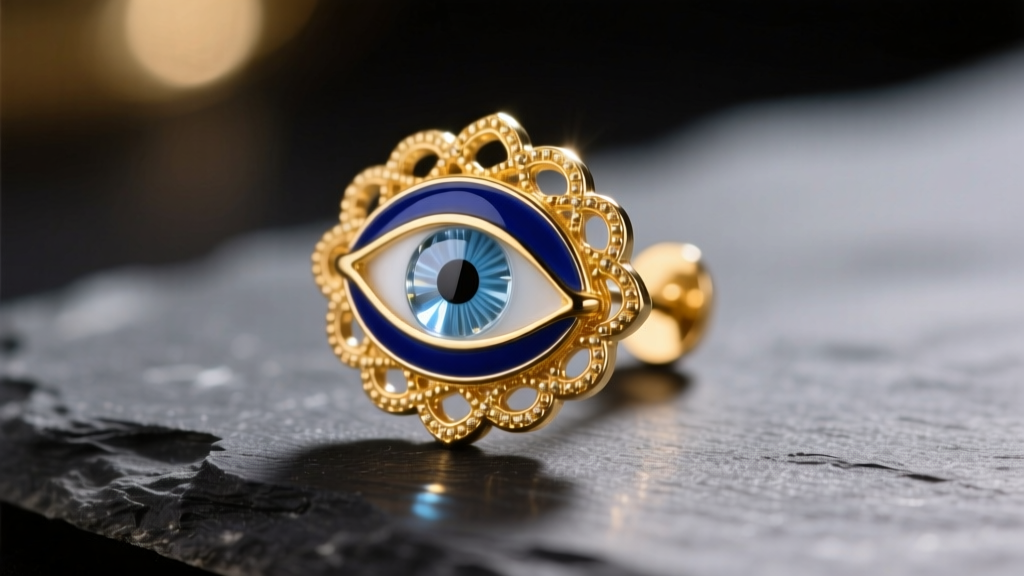
The evil eye, or Nazar, has transcended its ancient Mediterranean and West Asian roots to become a staple in modern jewelry curation. But an evil eye earring is more than just a striking aesthetic choice; it is a delicate intersection of cultural talisman, vitreous enamel artistry, and precision piercing mechanics. Whether you are wearing a subtle 14k gold stud or a dramatic mosaic glass dangle, improper care or incorrect gauge sizing can lead to damaged jewelry and compromised piercings.
In this comprehensive guide, we break down the exact material grades, piercing gauges, and step-by-step maintenance protocols you need to protect your investment and your earlobes in 2026.
The Cultural & Material Anatomy of the Evil Eye
Traditionally, the evil eye amulet is designed to reflect malicious glares back to the sender. Structurally, authentic high-end pieces consist of concentric circles: a dark blue outer ring (representing good karma), a white or light blue middle ring, and a black or dark blue glass pupil. When shopping for an evil eye earring, the manufacturing method of these layers dictates the piece's longevity, price, and cleaning requirements.
Step 1: Selecting the Right Metal and Enamel Grade
Not all blue jewelry is created equal. The Gemological Institute of America (GIA) notes that enamel durability varies wildly based on the firing process. Understanding the difference between vitreous and cold enamel is critical before making a purchase.
Vitreous vs. Cold Enamel
Vitreous Enamel: This is powdered glass fused to metal at extreme temperatures (typically over 1400°F). It is highly scratch-resistant, retains its brilliant cobalt hue indefinitely, and feels like smooth glass to the touch. However, it can shatter if dropped on a hard surface.
Cold Enamel (Epoxy Resin): A modern, cost-effective alternative where colored resin is painted into metal recesses. While it won't shatter like glass, cold enamel is prone to micro-scratches, chemical degradation from perfumes, and yellowing over time.
| Material Type | Metal Base | Expected Price Range | Durability & Lifespan |
|---|---|---|---|
| Cold Enamel | Sterling Silver / Brass | $30 - $85 | 1-3 years (prone to chipping) |
| Vitreous Enamel | 14k / 18k Solid Gold | $150 - $450 | Lifetime (shatter risk) |
| Hand-Cut Mosaic Glass | 18k Gold / Platinum | $500 - $1,200+ | Heirloom (requires prong care) |
Step 2: Matching Piercing Gauges to Earring Weight
One of the most common mistakes collectors make is ignoring the weight of the glass or enamel relative to their piercing gauge. The Association of Professional Piercers (APP) frequently warns against the "cheese-cutter effect"—a phenomenon where heavy jewelry slowly migrates downward, slicing through the earlobe tissue.
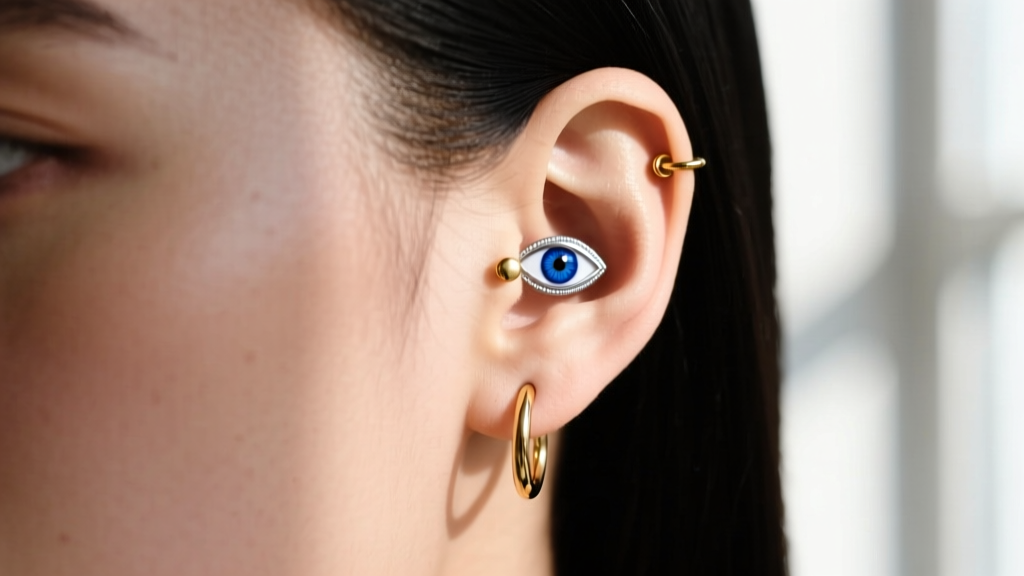
Gauge Sizing Framework
- Standard Lobe Piercings (20g - 18g / 0.81mm - 1.02mm): Suitable only for lightweight, small-diameter evil eye studs or thin wire huggies. If your dangle weighs more than 4 grams, an 18g wire will eventually cause tissue thinning.
- Heavy Lobe / Stretched Lobes (16g - 14g / 1.29mm - 1.60mm): The mandatory gauge for heavy mosaic glass dangles or oversized vitreous enamel hoops. The thicker wire distributes the weight across a wider surface area of the fistula (piercing channel).
- Cartilage / Helix (16g / 1.29mm): If you are placing an evil eye huggie or clicker in a cartilage piercing, ensure it is strictly 16g. Cartilage is less forgiving of pressure necrosis caused by ill-fitting, heavy hoops.
Step 3: The Safe Cleaning Protocol for Glass & Enamel
Because the evil eye relies on optical clarity and vibrant color contrast, keeping it clean is essential. However, the very tools used to clean standard diamond or gold jewelry will destroy an evil eye earring.
CRITICAL WARNING: Never place an enamel or mosaic glass evil eye earring in an ultrasonic cleaner. The high-frequency acoustic cavitation bubbles will fracture the glass pupil and cause the vitreous enamel to delaminate from the gold base.
Step-by-Step Manual Cleaning Routine
- Prepare the Solution: Mix lukewarm (never hot) distilled water with two drops of pH-neutral, phosphate-free dish soap in a glass bowl.
- Targeted Soaking: Submerge only the metal components if possible. If the entire piece must be submerged, limit the soak to exactly 3 minutes to prevent water from seeping under mosaic glass inlays.
- Agitation: Use an extra-soft, baby-hair toothbrush to gently sweep the crevices where the gold bezel meets the enamel. Do not scrub the glass center.
- Rinsing & Drying: Rinse under a gentle stream of cool distilled water. Pat dry immediately with a lint-free microfiber cloth. Allow to air-dry completely on a paper towel before storing to prevent trapped moisture from oxidizing the metal backing.

Step 4: 2026 Ear Curation & Styling Framework
Styling an evil eye earring requires balancing its bold, colorful focal point with the rest of your ear curation. The current trend leans heavily into asymmetrical storytelling and mixed-metal textures.
Face Shape & Placement Matrix
| Face Shape | Recommended Evil Eye Style | Ideal Placement |
|---|---|---|
| Round | Elongated Teardrop Dangles | Standard Lobe (draws the eye downward) |
| Square | Curved Huggie Hoops with Evil Eye Charm | Lobe or Mid-Helix (softens jawline angles) |
| Oval | Geometric Studs or Wide Mosaic Drops | Any placement (highly versatile) |
| Heart | Top-Heavy Evil Eye Climbers | Lobe to Upper Cartilage (balances narrow chin) |
Pro Styling Tip: If your evil eye earring features yellow gold and cobalt blue enamel, anchor it with warm-toned metals in your other piercings. Introduce a textured gold rook or a simple yellow gold flat-back labret stud to create a cohesive, curated look without competing with the talisman's visual weight.
Troubleshooting: What to Do When the Eye "Breaks"
From a purely structural standpoint, a cracked glass pupil or chipped enamel requires professional lapidary or enamelist repair. However, from a cultural and traditional perspective, a broken evil eye is not a failure of craftsmanship—it is a sign of success.
According to Mediterranean and Levantine superstition, when an evil eye amulet cracks or shatters, it means it has absorbed a massive amount of negative energy or malice directed at the wearer, effectively sacrificing itself to protect you. The traditional protocol is not to repair the broken earring, but to thank it, safely dispose of it (often by wrapping it in cloth and burying it or discarding it in running water), and purchase a new one to resume protection.
Final Thoughts
An evil eye earring is a profound blend of ancient symbolism and modern metallurgical art. By respecting the material limitations of vitreous enamel, adhering to strict gauge-to-weight ratios for your piercings, and abandoning harsh ultrasonic cleaners, you ensure that your talisman remains as structurally sound as it is spiritually significant. Treat your jewelry with intentionality, and it will continue to serve as both a protective ward and a cornerstone of your personal style.


