How to Style and Clean Silver Nugget Earrings: A Guide
Learn how to style, clean, and maintain silver nugget earrings. Our step-by-step guide covers ear stacking, tarnish removal, and lobe support.

The Metallurgy and Appeal of Silver Nugget Earrings
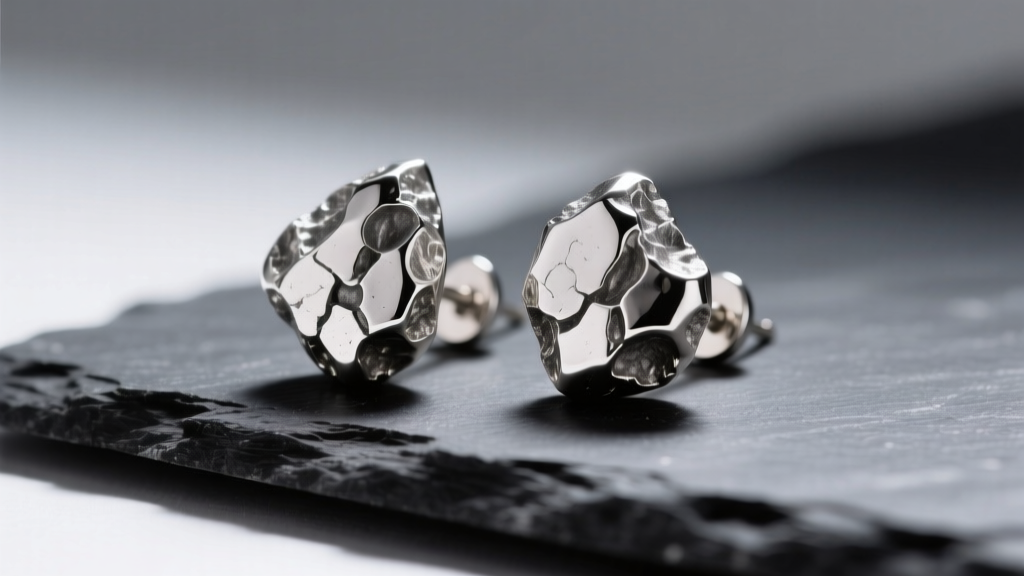
Silver nugget earrings have become a cornerstone of artisanal jewelry curation, prized for their raw, organic textures and unrefined silhouettes. Unlike high-polish dome studs or precision-cut geometric shapes, nugget earrings mimic the natural formation of raw precious metals. This aesthetic is typically achieved through lost-wax casting, where jewelers carve organic shapes into wax, or through reticulation, a technique that uses a torch to melt the surface of the silver while the core remains solid, creating dramatic, craggy ridges.
However, the very texture that makes silver nugget earrings so visually striking also introduces unique metallurgical challenges. According to Rio Grande's Metal Guide, standard sterling silver (925) contains 92.5% pure silver and 7.5% copper alloy. The copper provides the necessary tensile strength for jewelry but is highly reactive to sulfur and moisture in the air, forming silver sulfide (tarnish). Because a nugget texture increases the surface area of the earring by up to 300% compared to a smooth, polished dome, these earrings oxidize and accumulate environmental debris much faster. Understanding this structural reality is the first step in mastering their care and styling.
Step-by-Step Cleaning Guide for Textured Silver
Cleaning deep crevices requires a chemical approach rather than purely mechanical scrubbing, which can inadvertently polish away the dark, oxidized patinas that give nuggets their depth. Avoid commercial silver dips containing thiourea, as these strip all oxidation, leaving the nugget looking flat and artificially white.
The Electrochemical Aluminum Bath Method
This method uses a redox reaction to convert silver sulfide back into pure silver without removing any metal from the earring. The chemical equation is: 3Ag2S + 2Al → 6Ag + Al2S3.
- Prepare the Vessel: Line a glass or ceramic bowl with aluminum foil, shiny side up. Never use a metal bowl, as it can interfere with the ion exchange.
- Add the Catalysts: Place your silver nugget earrings on the foil. Ensure the silver is physically touching the aluminum. Sprinkle 2 tablespoons of baking soda and 1 tablespoon of kosher salt over the jewelry.
- Activate the Reaction: Pour boiling water into the bowl until the earrings are fully submerged. You will immediately smell a faint sulfur (rotten egg) odor as the silver sulfide transfers to the aluminum foil.
- Agitate and Rinse: Let them sit for 3 to 5 minutes. Use wooden tongs to remove the earrings. Rinse thoroughly under warm distilled water.
- Detail the Crevices: While the earrings are still damp, use a soft-bristled baby toothbrush with a drop of mild, phosphate-free dish soap to gently dislodge any loosened environmental debris trapped in the deep fissures.
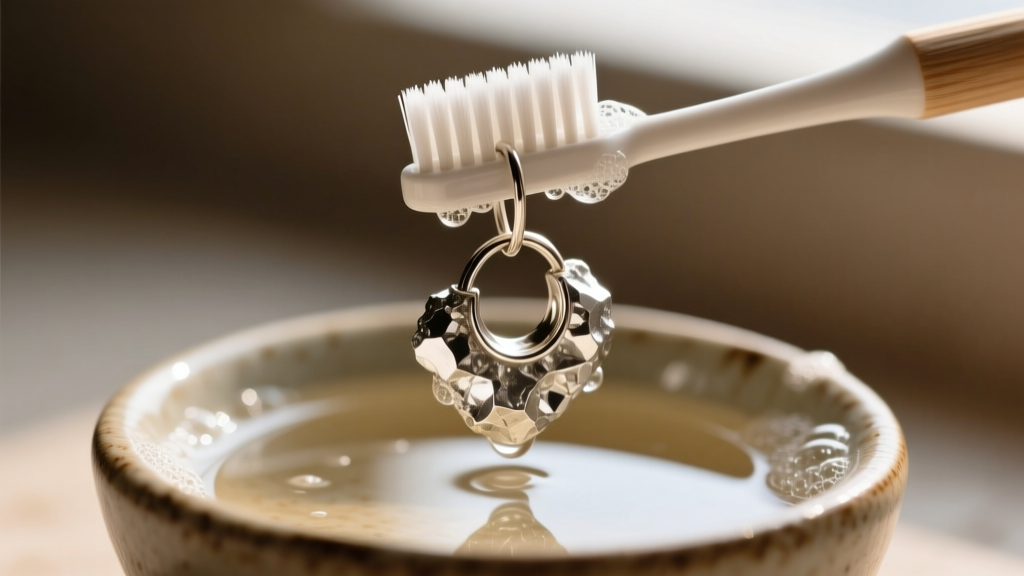
For routine maintenance between deep cleans, the Jewelers of America recommends simply wiping textured silver with a treated microfiber polishing cloth, being careful not to press too hard into the crevices, which can cause micro-scratches on the softer silver alloys.
How to Style Nugget Earrings in a Curated Ear Stack
Styling silver nugget earrings requires an understanding of visual weight and contrast. Because nuggets are inherently chaotic and light-absorbing due to their matte or satin finishes, they must be balanced with structured, light-reflecting pieces to create a harmonious ear curation.
The Rule of Contrast
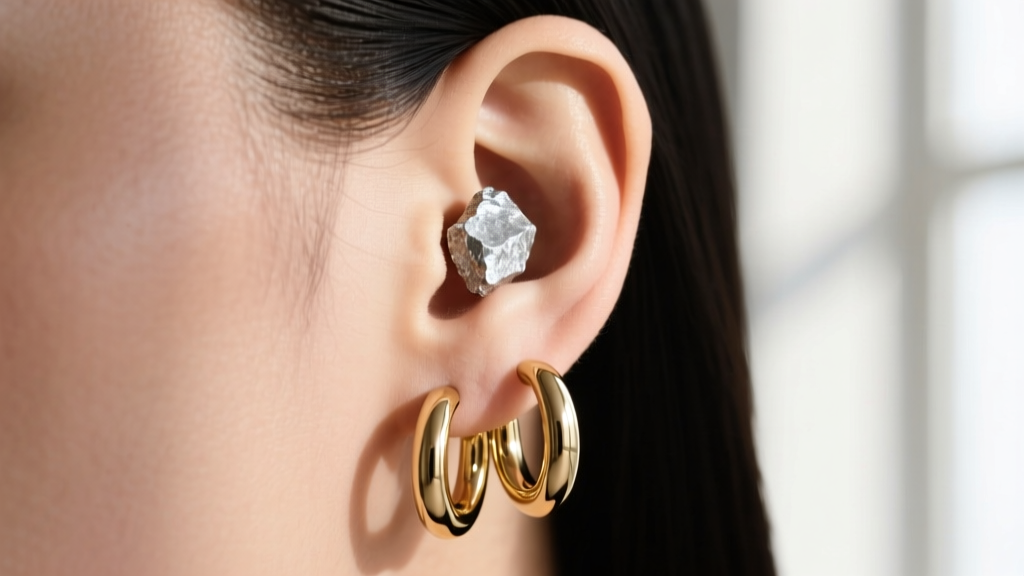
Never pair a raw silver nugget with another raw, heavily textured piece in the same ear. The result is visual clutter. Instead, use the nugget as the anchor piece (usually in the primary lobe piercing) and surround it with sleek, high-polish, or minimalist geometry.
| Anchor Piece (Lobe) | Secondary Piece (Upper Lobe) | Tertiary Piece (Helix/Cartilage) | Visual Effect |
|---|---|---|---|
| Large Raw Silver Nugget Stud | Polished 14k Gold Huggie Hoop | Sleek Silver Threader Chain | High contrast; mixes metals and textures elegantly. |
| Medium Silver Nugget Drop | Minimalist Silver Bezel-Set Diamond | Smooth Silver Cartilage Cuff | Monochromatic; relies on finish contrast (matte vs. mirror). |
| Small Silver Nugget Huggie | Polished Silver Snake Chain Hoop | Tiny Silver Starburst Stud | Cohesive and subtle; ideal for conservative professional settings. |
Face Shape Considerations
Silver nugget earrings add significant horizontal volume to the sides of the face. If you have a long or oblong face shape, wide, clustered nugget studs can beautifully balance your proportions by drawing the eye outward. Conversely, if you have a very round or wide face shape, opt for elongated silver nugget drop earrings rather than wide studs, as the vertical line will help elongate the jawline and neck.
Preventing Lobe Stretching and Earring Loss
One of the most common failure modes with artisanal silver nugget earrings is lobe stretching. Because they are cast from solid metal rather than stamped from thin sheet metal, nuggets are dense and heavy. A standard 20-gauge (0.81mm) earring post is entirely insufficient for supporting a 4-gram silver nugget. Over time, gravity and the weight of the metal will cause the piercing hole to elongate, creating the dreaded "cheese-cutter" effect, which can eventually lead to lobe tearing.
Gauge and Backing Upgrades
- Upgrade the Wire: When purchasing or commissioning custom silver nugget earrings, request an 18-gauge (1.02mm) or 16-gauge (1.29mm) post or French wire hook. This thicker wire distributes the weight across a wider surface area of the piercing tissue.
- Use Silicone O-Rings: Standard butterfly friction backs often fail on heavy nuggets because the post is too short, or the weight causes the earring to droop, pressing the back into the neck. Replace them with medical-grade silicone O-ring stoppers or flat silicone disc backs, which provide a wider, grippier surface area against the back of the lobe.
- The Earlobe Support Patch: For exceptionally heavy statement nuggets (10+ grams), apply a clear, adhesive earlobe support patch behind the ear before inserting the earring. The patch acts as a structural splint, preventing the metal from pulling on the delicate piercing channel.
Troubleshooting Common Silver Nugget Issues
Even with meticulous care, the porous nature of raw silver can lead to specific issues. Here is how to troubleshoot the most common problems associated with this style.
Problem: The Skin Behind the Ear Turns Green or Black
The Cause: This is not an allergic reaction to silver, but rather a chemical reaction between the copper alloy in the 925 sterling silver and the acidic pH of your skin, combined with lotions or perfumes trapped in the nugget's crevices. The resulting copper chloride transfers to the skin.
The Fix: Thoroughly clean the earring using the aluminum bath method to remove trapped oils. Before wearing, coat the back of the silver nugget with a microscopic layer of clear nail polish or a specialized jewelry barrier coating like Jeweler's Skin. This creates an invisible shield between the reactive copper alloy and your skin's moisture.
Problem: White, Chalky Residue in the Crevices
The Cause: This is typically a buildup of dead skin cells, sebum, and residue from hair products like dry shampoo or hairspray, which easily catch on the rough surface of reticulated or cast silver.
The Fix: Do not use a needle or metal pick to scrape this out, as you will scratch the silver. Instead, soak the earrings in a mixture of warm water and a few drops of enzymatic cleaner (like those used for contact lenses or dentures) for 20 minutes. The enzymes will break down the organic proteins, allowing them to be easily flushed away with a gentle spray from a water flosser or a soft rinse.
Problem: The Nugget Has Lost Its Dark Patina
The Cause: Over-cleaning or using harsh abrasive polishes has stripped the intentional oxidation that a jeweler applied to highlight the texture.
The Fix: You can re-oxidize the silver at home using a liver of sulfur solution. Dilute a tiny piece of liver of sulfur in warm water, dip the earring for 10 seconds until it turns dark gray, rinse, and then gently use a polishing cloth to buff only the high points of the nugget, leaving the deep crevices dark and dramatic.


