How to Style Emerald Cut Aquamarine Drop Earrings
Master the art of wearing emerald cut aquamarine drop earrings. Learn face-shape matching, hardware selection, and expert gemstone care.

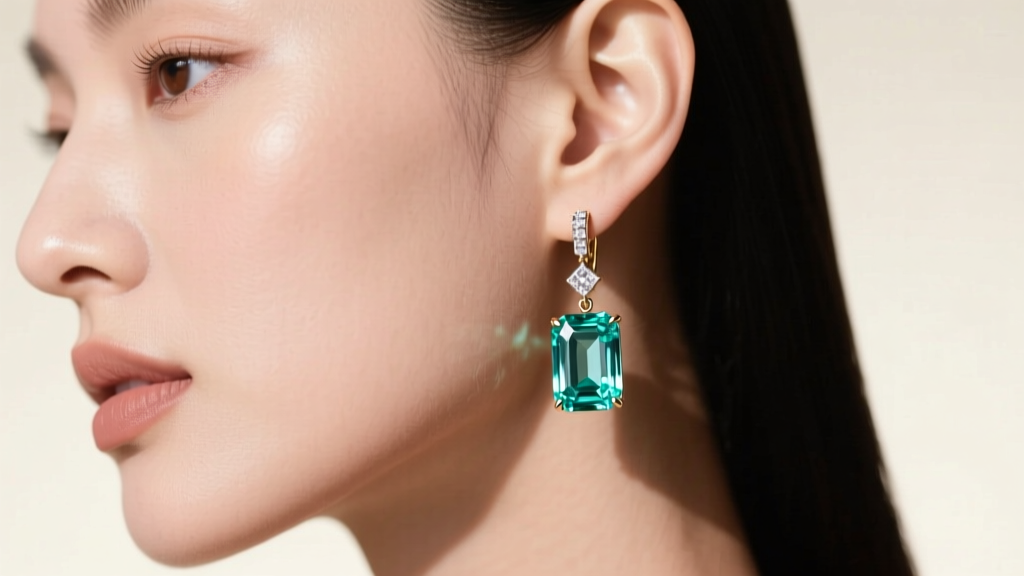
In the 2026 jewelry landscape, the shift towards 'quiet luxury' and architectural elegance has cemented the popularity of step-cut gemstones. Among these, emerald cut aquamarine drop earrings stand out as a masterclass in refined sophistication. The serene, icy blue of the aquamarine combined with the hall-of-mirrors light return of the emerald cut creates a striking visual that commands attention without relying on excessive sparkle.
However, styling and selecting these specific earrings requires a nuanced understanding of gemology, facial proportions, and earring mechanics. This comprehensive guide will walk you through the exact steps to choose, style, and maintain your aquamarine drops like a seasoned gemologist.
The Anatomy of the Perfect Aquamarine Drop
Before styling, you must understand the material you are wearing. Aquamarine is a variety of the mineral beryl, scoring a 7.5 to 8 on the Mohs hardness scale. While durable enough for everyday wear, its specific crystal structure and cutting requirements dictate how it performs as a drop earring.
Color Grading: Santa Maria vs. Commercial
The value and visual impact of your earrings hinge on color saturation. According to the Gemological Institute of America (GIA), the most prized aquamarines exhibit a deep, intensely saturated blue, often referred to as 'Santa Maria' (named after the famous Brazilian mine). However, most commercial aquamarines are pale to medium blue. Be aware that nearly all aquamarines on the market are heat-treated to around 400°C to remove greenish or yellowish secondary tones. This treatment is permanent and widely accepted in the fine jewelry industry, but it means you should focus on the stone's tone and saturation rather than worrying about natural vs. heated origins.
The Emerald Cut: Why Step-Cuts Demand High Clarity
The emerald cut is a rectangular step-cut with cropped corners. Unlike brilliant cuts (like rounds or ovals) that use dozens of tiny facets to hide inclusions, the emerald cut features large, open, parallel facets. This creates a sophisticated 'hall of mirrors' effect, but it also acts as a magnifying glass for internal flaws. When selecting emerald cut aquamarine drop earrings, you must demand a clarity grade of VS1 or better. Any SI (Slightly Included) stones will likely show black carbon spots or white feather inclusions to the naked eye, disrupting the clean architectural lines of the cut.
Step-by-Step: Matching Drops to Your Face Shape
Drop earrings alter the perceived geometry of your face. The linear nature of the emerald cut makes it an incredibly powerful tool for facial contouring. Use this framework to select the right millimeter proportions for your face shape.
| Face Shape | Recommended Drop Length | Recommended Stone Width | Styling Objective |
|---|---|---|---|
| Round | 1.5 to 2.5 inches | Narrow (e.g., 8x6mm) | Elongate the face and draw the eye vertically. |
| Square | 1.0 to 1.5 inches | Medium (e.g., 9x7mm) | Soften strong jawlines with moderate length and width. |
| Heart | 1.2 to 1.8 inches | Wide bottom (e.g., 10x8mm) | Add visual weight to the lower half of the face to balance a narrow chin. |
| Oval | Any length | Any proportion | Maintain natural balance; experiment with dramatic 3-inch drops. |
Carat Weight to Millimeter Translation
When shopping, you will often see carat weights listed, but millimeter dimensions dictate how the earring actually looks on the ear. For a standard emerald cut aquamarine, use this cheat sheet:
- 1.50 Carat: ~8x6 mm (Subtle, perfect for office wear)
- 2.50 Carat: ~9x7 mm (The ideal 'statement' size for drops)
- 4.00 Carat: ~11x9 mm (Bold, requires heavy-duty hardware)
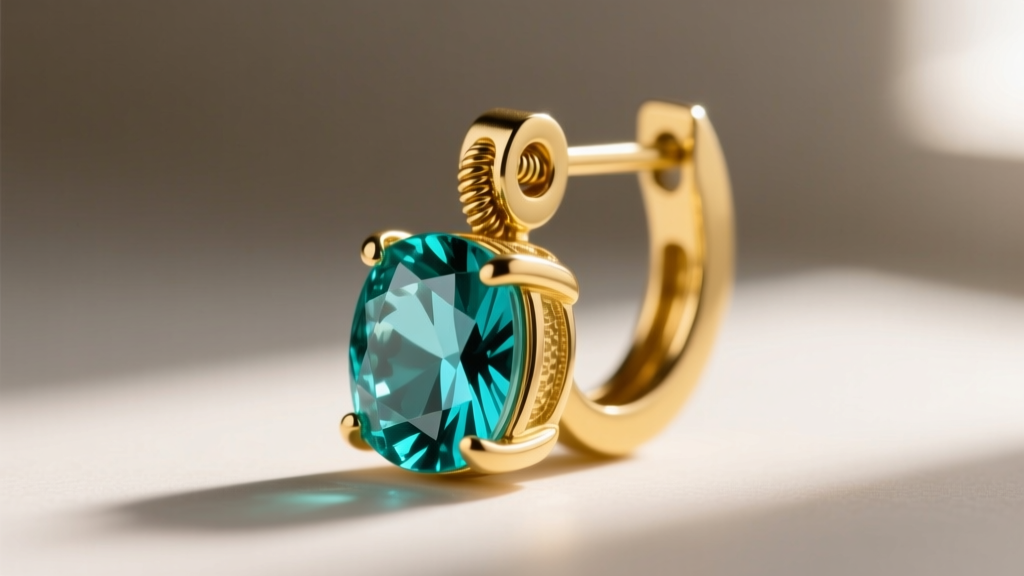
Hardware & Mechanics: Selecting the Right Setting
A common failure mode with drop earrings is poor weight distribution, leading to the 'forward droop' where the gemstone points at the floor instead of catching the light. Emerald cut aquamarines are dense, and a 3-carat stone set in 18k gold can easily weigh 3 to 4 grams per earring. The hardware must support this weight.
Evaluating the Findings
1. The French Wire (Fishhook): Generally 20-gauge or 22-gauge. While elegant, standard French wires are terrible for heavy emerald cut drops. The center of gravity will pull the earlobe forward. If you must use a French wire, ensure the design includes a heavy gold counterweight at the back of the hook to keep the stone facing forward.
2. The Leverback: Usually 18-gauge or 20-gauge. This is the superior choice for aquamarine drops. The secure latch prevents loss, and the rigid backing provides better structural support against the earlobe. Look for leverbacks with a slightly flattened back plate to distribute weight over a wider area of the lobe.
3. The Post and Friction Back: Usually 18-gauge. Best for shorter drops (under 1 inch). For longer drops, a standard butterfly back will fail. You must use 'jumbo' silicone or gold disc friction backs (minimum 6mm diameter) to stabilize the earring post.
Wardrobe Integration: Metals and Necklines
The icy, transparent nature of aquamarine makes it highly responsive to the metal it is set in and the fabrics it rests against.
Metal Pairings
In 2026, mixed-metal settings are trending, but traditional pairings still hold specific aesthetic powers:
- Platinum & 18k White Gold: Enhances the cool, glacial blue of the aquamarine. This is the ultimate choice for a modern, sleek, and minimalist aesthetic.
- 18k Yellow Gold: Creates a striking, high-contrast vintage look. The warmth of the gold plays beautifully against the cool blue, evoking Art Deco glamour.
- 14k Rose Gold: Softens the overall look, making the pale blue appear more romantic and delicate. Ideal for bridal or spring wardrobe styling.
Neckline Synergy
Because emerald cut aquamarine drop earrings draw a strong vertical line, they pair best with necklines that do not compete for the same visual space. Strapless, sweetheart, and off-the-shoulder necklines provide a blank canvas that allows the drops to frame the face and neck perfectly. Avoid high collars, turtlenecks, or intricate halter tops, as the geometric lines of the emerald cut will clash with the busy fabric lines, diminishing the gemstone's impact.
Maintenance: Cleaning and Protecting Your Beryl
Aquamarine is relatively hard, but it is not indestructible. The cropped corners of the emerald cut are specific vulnerability points. If dropped on a hard tile floor, these corners can chip or abrade. Always put your earrings on after applying makeup, hairspray, and perfume to prevent chemical buildup on the step-cut facets, which will quickly make the stone look cloudy and dull.
The Ultrasonic Cleaner Warning
Expert Warning: Never place aquamarine in an ultrasonic jewelry cleaner. According to the GIA Care and Cleaning Guide, beryl crystals frequently contain liquid inclusions. The high-frequency vibrations and heat of an ultrasonic bath can cause these liquid pockets to expand, leading to catastrophic internal fracturing or completely shattering the stone.
Step-by-Step Safe Cleaning Method
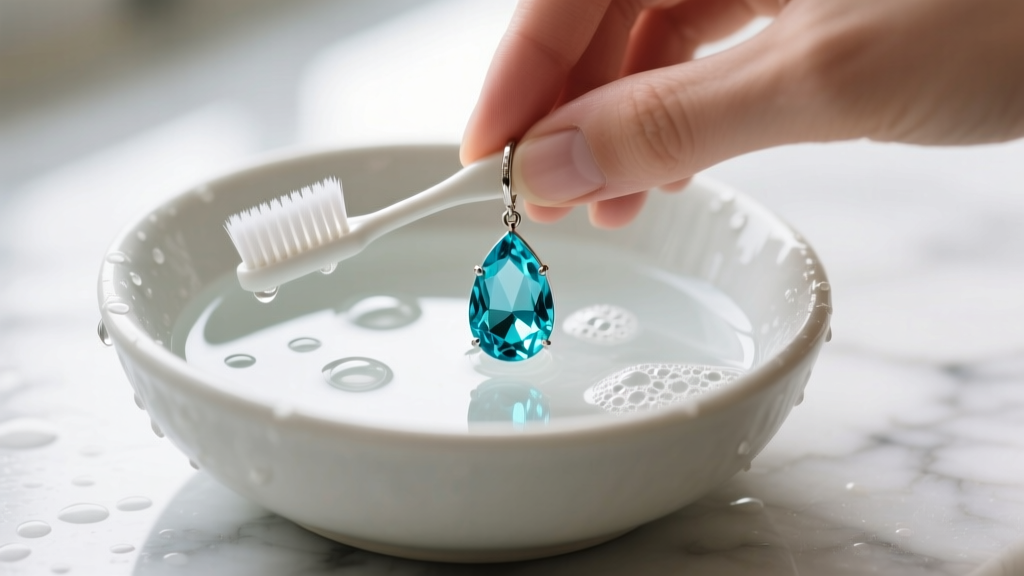
- Prepare the Solution: Fill a small ceramic bowl with lukewarm water and add two drops of mild, phosphate-free dish soap.
- Soak: Submerge the emerald cut aquamarine drop earrings for exactly 5 to 10 minutes to loosen body oils and cosmetic residue from the pavilion (the back facets).
- Agitate Gently: Using a brand-new, ultra-soft baby toothbrush, gently brush the stone. Pay special attention to the gallery (the metal basket holding the stone) where dirt accumulates.
- Rinse and Dry: Rinse under a gentle stream of lukewarm water, ensuring the drain is securely plugged. Pat dry with a lint-free microfiber cloth, being careful not to snag the prongs on the cropped corners.
By understanding the gemological traits, structural requirements, and styling nuances of emerald cut aquamarine drop earrings, you elevate your jewelry from a simple accessory to a curated, expert-level statement. Whether you are selecting a pair for a gala or styling them for daily wear, these architectural gems will continue to offer timeless, icy elegance for decades to come.


