How to Style and Measure for Double Cross Earrings
Learn how to measure, style, and safely wear double cross earrings. Our step-by-step guide covers gauge sizes, chain lengths, and metal grades.

Double cross earrings have evolved from simple novelty studs into sophisticated, high-end ear curation staples in 2026. Whether you are opting for a connected ear chain that links two crosses across adjacent piercings, or stacking a delicate cross stud with a matching drop earring, precision is everything. The intersection of gothic elegance and modern minimalist styling makes the double cross motif incredibly versatile, but achieving the perfect fit requires more than just picking a design off a shelf. This comprehensive, step-by-step guide will walk you through the exact measurement techniques, material science, and styling frameworks needed to curate a flawless double cross ear stack.
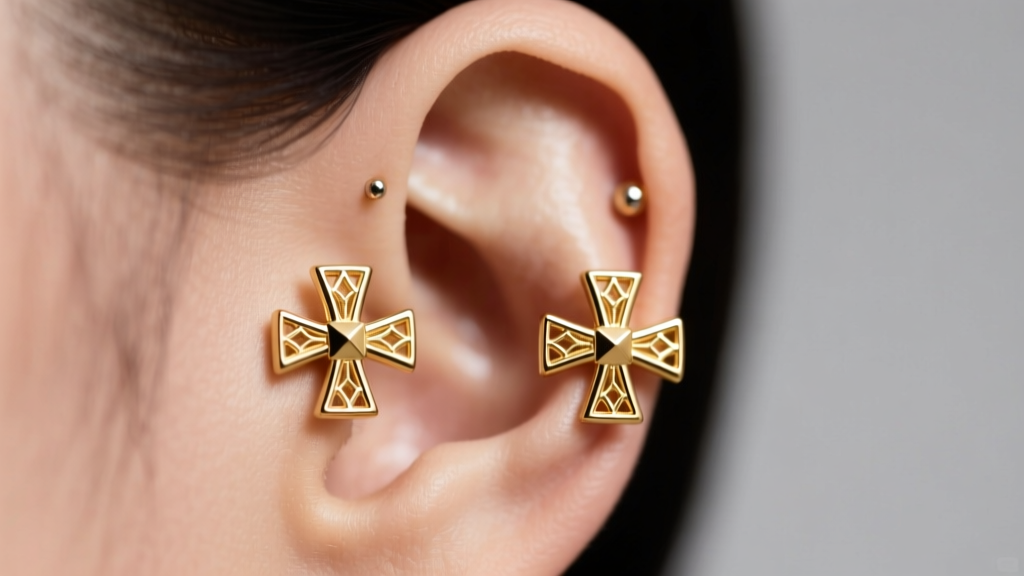
The Anatomy of Double Cross Designs
Before measuring, you must understand the three primary structural categories of double cross earrings available on the market today. Each requires a different approach to piercing placement and jewelry selection.
- Connected Ear Chains (Ear Crawlers): A single piece of jewelry featuring two cross motifs connected by a delicate chain or solid bar. This requires two adjacent piercings with a precise millimeter gap.
- Stacked Independents: Two separate earrings (e.g., a huggie hoop with a cross charm and a standalone cross stud) worn in adjacent piercings. This offers maximum flexibility in spacing.
- Single-Piece Dangles: A single earring featuring a vertical double cross drop. This only requires one standard lobe piercing but demands careful consideration of the earring's total drop length to avoid catching on clothing.
Step 1: Precision Measurement for Connected Styles
The most common failure point when buying connected double cross earrings is guessing the distance between your piercings. A standard ruler lacks the precision required for ear anatomy, where a 2mm discrepancy can cause painful pulling, migration, or tearing of the fistula (the piercing tunnel).
Tools You Need
Discard the fabric measuring tape. You will need a digital vernier caliper (available at any hardware or jewelry supply store for under $15) and a hand mirror. If your piercings are currently healing, do not attempt to measure them; wait until the tissue is fully settled, which takes 3 to 6 months for lobes.
The Measurement Process
- Sanitize: Wash your hands and wipe the caliper tips with 70% isopropyl alcohol.
- Positioning: Gently place the caliper tips on the center of the post of your first earring and the center of the post of your second earring.
- Record the Gap: Note the exact millimeter measurement. Standard lobe-to-lobe distances usually range from 6mm to 12mm.
- Account for Hardware: If the jewelry brand lists their connected chain length as "edge-to-edge" rather than "center-to-center," you must add the width of the cross charms to your calculation to ensure the chain sits flat without tension.
Step 2: Selecting the Right Metal Grade and Gauge
Because double cross designs often involve chains that create kinetic friction against the skin, and because they span multiple piercings, the metal grade is non-negotiable. Low-quality alloys will cause contact dermatitis, especially when sweat accumulates under the connecting chain.
According to the Association of Professional Piercers (APP), only specific, biocompatible metals should be worn in the body. Below is a breakdown of the best materials for double cross earrings.
| Metal Grade | Pros | Cons | Ideal Placement |
|---|---|---|---|
| Implant-Grade Titanium (ASTM F136) | 100% nickel-free, lightweight, highly polishable, hypoallergenic. | Limited to silver/grey tones unless anodized. | Fresh piercings, sensitive lobes, cartilage crawlers. |
| 14k Solid Gold (Nickel-Free) | Durable enough for daily friction, rich warm tone, retains value. | More expensive, can still contain trace alloys if not sourced ethically. | Healed lobe stacks, connected ear chains. |
| 18k Solid Gold | Deepest yellow gold color, highest purity. | Softer metal; prongs on cross pavé settings may bend over time. | Special occasion dangles, low-friction studs. |
| Sterling Silver (925) | Affordable, bright white luster. | Contains copper, tarnishes easily, can cause argyria (skin staining). | Not recommended for 24/7 wear or fresh piercings. |
Understanding Gauge Thickness
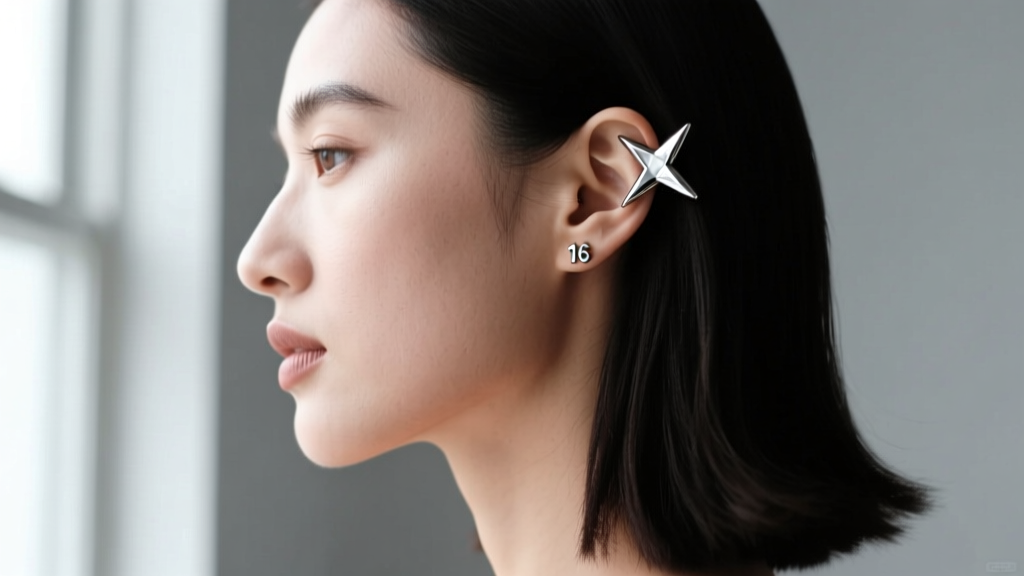
Most standard lobe piercings are done at 20G (0.81mm) or 18G (1.02mm). However, if you are wearing a heavy double cross drop earring, the kinetic swinging motion can cause a thin 20G wire to act like a cheese cutter through your earlobe tissue over time. For any double cross design that includes a dangling element, always opt for an 18G or 16G (1.29mm) post to distribute the weight safely.
Step 3: Styling Your Double Cross Stack by Face Shape
The visual weight of a double cross motif can alter the perceived geometry of your face. In 2026, ear styling is treated as an extension of facial contouring. Here is how to adapt the double cross aesthetic to your specific bone structure.
Round and Oval Face Shapes
If you have softer, rounder facial features, avoid wide, horizontal double cross ear chains that emphasize width. Instead, opt for a vertical double cross drop earring or stack a small cross stud in your first lobe with an elongated, geometric cross dangle in your second lobe. The vertical lines will draw the eye downward, elongating the jawline and neck.
Angular and Square Face Shapes
For strong, angular jawlines, harsh geometric drops can look overly severe. Soften your profile by choosing a connected double cross ear chain featuring curved, gothic-style crosses or crosses set with round-cut diamonds or black onyx cabochons. The horizontal movement of a chain connecting two lobes balances a sharp jawline by adding horizontal visual interest to the lower half of the face.
Step 4: Troubleshooting Common Fit Issues
Even with perfect measurements, anatomy shifts throughout the day due to hydration, sleeping positions, and tissue swelling. Here is how to troubleshoot the most common issues associated with double cross earrings.
- The Chain is Pulling or Pinching: This means the chain is too short for your natural ear movement. If the brand offers adjustable jump rings, add a 2mm extension. If not, abandon the connected chain and switch to two independent cross studs to prevent piercing migration.
- The Cross Charms Flip Upside Down: This is a center-of-gravity issue. Look for double cross designs where the jump ring (the loop connecting the charm to the post) is soldered at the very top of the cross, rather than the middle, to ensure it always hangs perfectly straight.
- Post is Too Long (Poking the Neck): If you are using independent labret studs for your crosses, swap the standard 8mm post for a custom 5mm or 6mm post. The American Academy of Dermatology notes that constant friction from long jewelry posts against the neck can trigger localized contact dermatitis.
Step 5: Safe Insertion and Daily Maintenance
Connected double cross earrings require a specific insertion technique to avoid bending the delicate chain or damaging the threading.
- Insert the Bottom Post First: Always thread the lower piercing first. This allows gravity to help align the top post with the second hole without putting tension on the chain.
- Secure with O-Rings: If your double cross earrings use push-pin or threadless ends, ensure you slightly bend the pin before inserting it to create a secure snap-fit. For threaded ends, use a small piece of rubber O-ring material on the back of the post to prevent the backing from unscrewing and losing the earring in your hair.
- Daily Cleaning: Because chains trap dead skin cells, sebum, and hair products, you must clean the underside of your double cross earrings daily. Use a sterile 0.9% sodium chloride wound wash sprayed onto a non-woven gauze pad, and gently wipe beneath the chain and cross charms. Never use tea tree oil, alcohol, or hydrogen peroxide, as these will degrade the metal's polish and irritate the fistula.
By treating your double cross earrings not just as accessories, but as precision-engineered body modifications, you ensure a comfortable, striking, and long-lasting addition to your ear curation.


