Analyzing the Best Types of Earring Backs for Studs Security
Discover the mechanics, metallurgy, and security of different types of earring backs for studs. Expert analysis on friction, screw, and locking backs.

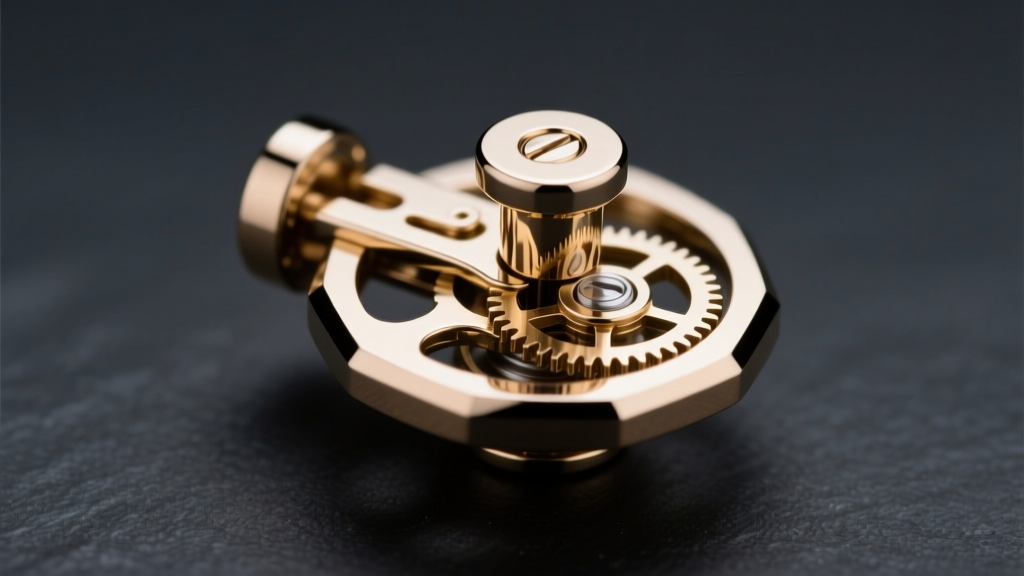
When investing in fine jewelry, the focal point is almost always the gemstone or the precious metal setting. However, master jewelers know a fundamental truth: the security of a diamond stud is only as reliable as the mechanical tolerance of its backing mechanism. Losing a high-carat diamond or a heritage gemstone due to a failed earring back is a devastating and entirely preventable error. In this expert deep dive, we analyze the engineering, metallurgy, and failure modes of the various types of earring backs for studs, providing you with the technical knowledge needed to secure your most valuable pieces.
The Metallurgy and Mechanics of Stud Posts
Before evaluating the backs, we must understand the posts they secure to. Standard fine jewelry stud posts are typically manufactured in 20-gauge (0.81mm) or 19-gauge (0.91mm) thicknesses. Heavier pieces, such as multi-carat diamond solitaires or dense gemstone clusters, require 18-gauge (1.02mm) or even 16-gauge (1.29mm) posts to prevent the metal from bending under the weight of the stone, which can cause earlobe sagging and tissue tearing over time.
The post must also feature a precision-machined groove or notch near the terminus. The depth and sharpness of this notch dictate how well mechanical backs (like locking clutches or butterfly scrolls) will engage. A poorly cut, shallow groove will result in a loose fit, regardless of the quality of the earring back.
Friction and Butterfly Backs: The Industry Standard
The friction back, commonly referred to as the 'butterfly' or 'scroll' back, is the most ubiquitous finding in the jewelry industry. It relies on the inward tension of two rolled metal loops (scrolls) that grip the post and snap into the post's notch.
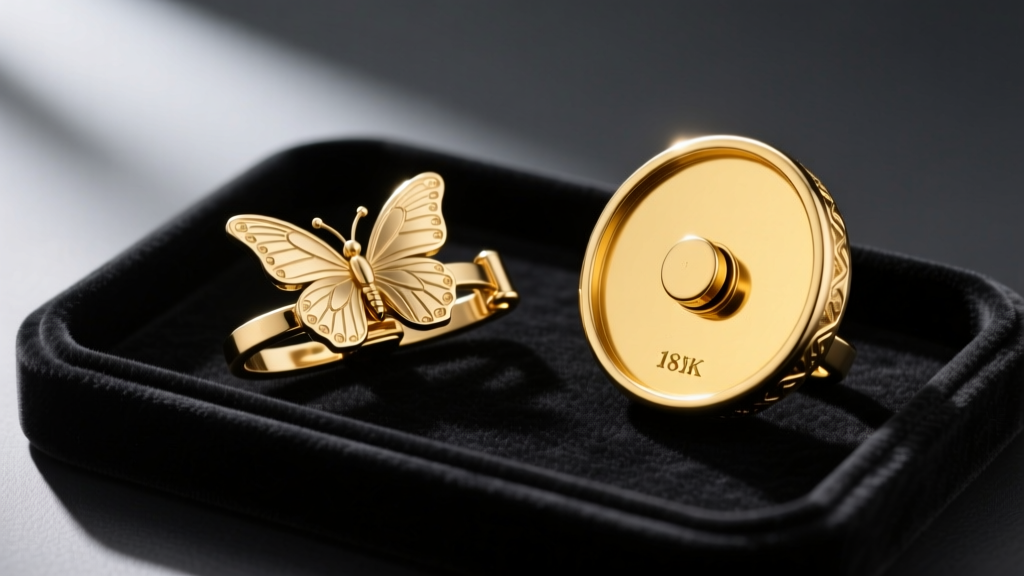
Technical Failure Modes of Butterfly Backs
While convenient, standard friction backs are highly susceptible to work hardening and metal fatigue. Every time the back is pushed onto the post and pulled off, the metal scrolls undergo slight deformation. Over months of daily wear, the metal loses its elasticity and 'opens up,' resulting in a catastrophic loss of grip tension. Furthermore, standard brass or low-karat gold butterfly backs often contain nickel or copper alloys that can oxidize, leading to contact dermatitis. According to the American Academy of Dermatology, nickel allergy is one of the most common causes of allergic contact dermatitis, making hypoallergenic materials like platinum, 18k yellow gold, or titanium essential for sensitive ears.
Screw Backs: Thread Pitch and Security Metrics
Screw backs offer a significant upgrade in security by utilizing a threaded post and a internally tapped backing. The mechanical engagement of the threads prevents the back from being pulled off by accidental snags on hair or clothing.
Thread Specifications and Cross-Threading Risks
High-end screw backs typically utilize M0.8 or M0.9 metric thread pitches. The precision of these threads is paramount. If the threads are cut poorly, or if the user forces the back on at an incorrect angle, cross-threading occurs. Because precious metals like 18k gold and platinum are relatively soft, cross-threading will strip the threads on the post, permanently ruining the earring. To mitigate this, premium manufacturers use hardened steel or titanium for the threaded post, while keeping the nut (the back) in a slightly softer gold alloy so that if stripping occurs, it happens to the cheaper, replaceable back rather than the primary earring post.
Precision Locking Systems: La Pousette and Clutch Mechanisms
For maximum security without the tediousness of screw backs, precision locking systems are the gold standard. The most famous of these is the La Pousette back, invented in the 1990s. This mechanism houses a dual-spring internal system with twin metal plungers.
When you squeeze the sides of the La Pousette back, the plungers retract, allowing the back to slide freely along the post. When released, the spring-loaded plungers snap directly into the post's groove. This provides a positive mechanical lock that cannot be dislodged by lateral pulling forces. The only failure point is the internal spring degrading over decades, or the accumulation of sebum and skin cells inside the mechanism jamming the plungers. Regular ultrasonic cleaning is required to maintain the mechanism's tolerance.
Comparative Analysis of Earring Back Security
To help you make an informed decision, we have compiled a technical comparison matrix of the primary types of earring backs for studs based on security, material longevity, and pricing.
| Back Type | Security Rating (1-10) | Primary Failure Mode | Avg. Price Range (Pair) | Ideal Post Gauge |
|---|---|---|---|---|
| Standard Butterfly (Friction) | 4/10 | Metal fatigue / Scroll stretching | $5 - $25 | 20G - 19G |
| Jumbo Friction (Silicone Core) | 6/10 | Silicone degradation / Sebum buildup | $15 - $40 | 18G - 16G |
| Screw Back | 8/10 | Cross-threading / Thread stripping | $40 - $120 | 18G (Threaded) |
| La Pousette (Locking) | 10/10 | Internal spring jamming / Debris | $80 - $250+ | 19G - 18G (Notched) |
Silicone and O-Mbacks: Polymer Degradation and Hypoallergenic Use
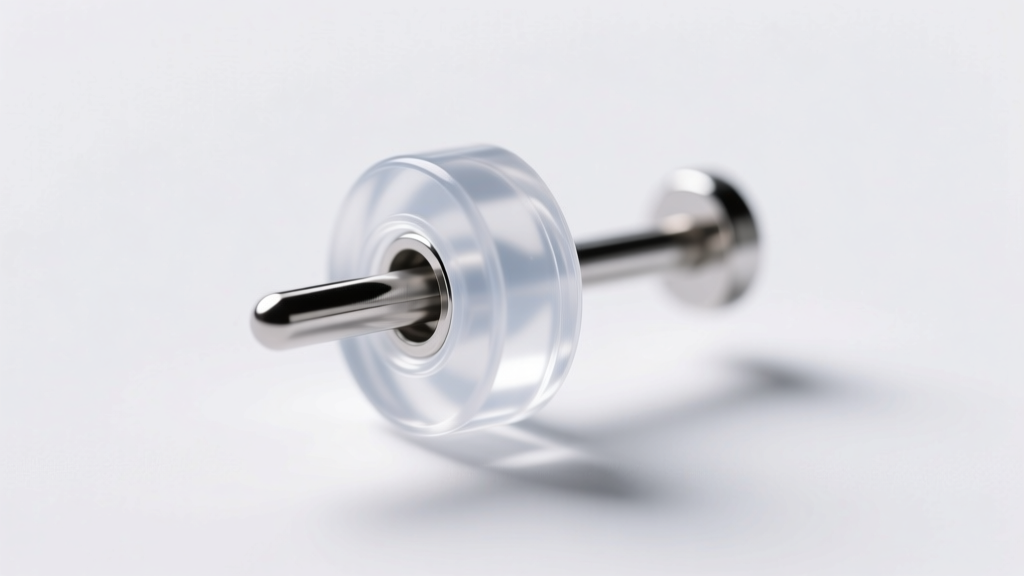
Silicone backs, often sold as 'O-mbacks' or 'jumbo friction backs with silicone inserts,' have surged in popularity due to their comfort and hypoallergenic properties. They utilize a medical-grade thermoplastic polyurethane (TPU) or silicone core encased in a metal shell, or they are solid polymer discs.
The Shore A Hardness Factor
The effectiveness of a silicone back relies on its Shore A hardness rating. A rating that is too low (soft) will tear easily and fail to grip the post notch. A rating that is too high (hard) will cause pressure necrosis on the earlobe and fail to provide adequate friction. Furthermore, solid silicone backs are highly susceptible to degradation from UV exposure and the natural lipids (sebum) produced by the skin. Over 12 to 18 months of continuous wear, the polymer will become brittle, yellow, and eventually crack, necessitating regular replacement.
Expert Troubleshooting: Why Your Earring Backs Keep Failing
A secure earring requires a symbiotic relationship between the post gauge, the groove depth, and the backing mechanism. A mismatch in any of these three variables guarantees failure.
If you are experiencing persistent issues with your stud earrings falling out, consider the following technical troubleshooting steps:
- Gauge Mismatch: Using a 20G butterfly back on an 18G heavy-weight post will force the scrolls open beyond their elastic limit, permanently ruining the tension. Always match the back to the specific gauge of the post.
- Shallow Grooves: If your jeweler custom-made the posts, ensure the lathe-cut groove is at least 0.3mm deep. Shallow grooves will not allow the locking plungers or friction scrolls to fully engage.
- Earlobe Sagging: Heavy diamond studs pull the earlobe downward, changing the angle of the post relative to the ground. This creates lateral shear stress on standard butterfly backs, pushing them off. For stones over 2.0 carats total weight, always upgrade to a La Pousette locking back or a heavy-duty screw back, and consider using an earring support jacket to distribute the weight.
By understanding the precise mechanics and metallurgy behind these findings, you can ensure your fine jewelry remains secure. For further guidance on maintaining the structural integrity of your precious metals, refer to the Gemological Institute of America's jewelry care guidelines. Ultimately, investing in high-precision earring backs is a minor expense that provides invaluable peace of mind for your most cherished pieces.


