How to Style Pink Butterfly Earrings in a Curated Ear Stack
Learn how to style pink butterfly earrings in a curated ear stack with our step-by-step guide on materials, gauge sizes, and placement.

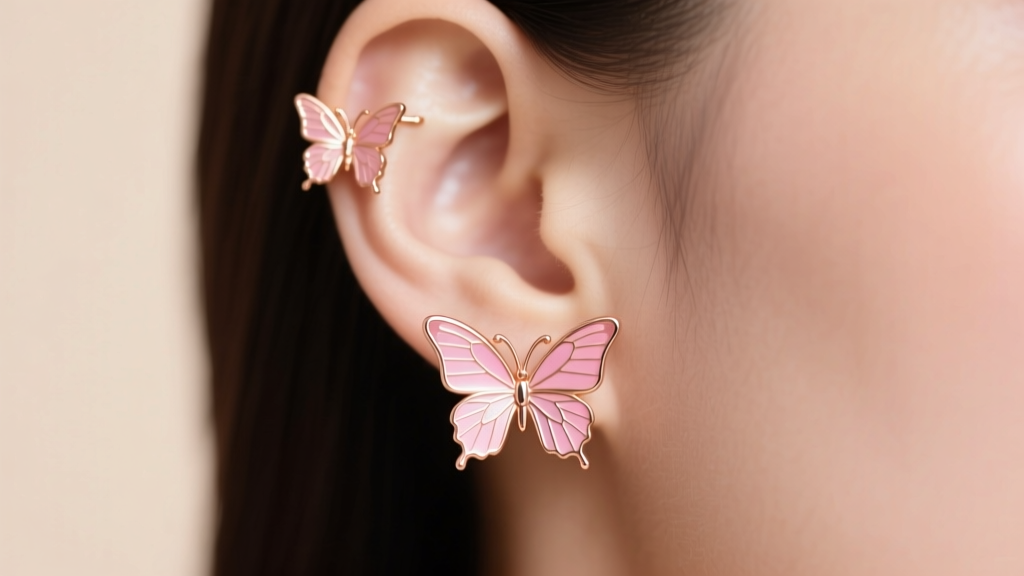
The butterfly motif has transcended its 1990s nostalgia roots to become a staple in high-end, contemporary fine jewelry. In 2026, the coquette and ethereal aesthetics have cemented pink butterfly earrings as a highly sought-after category. However, integrating these whimsical pieces into a sophisticated, curated ear stack requires more than just picking a pretty design. It demands an understanding of metallurgy, piercing anatomy, and color theory.
Whether you are working with delicate vitreous enamel, pink PVD-coated titanium, or rose gold set with pink sapphires, this step-by-step guide will teach you how to style, map, and maintain your pink butterfly earrings for a flawless, high-end ear curation.
Step 1: Selecting the Right Material and Gauge
The foundation of any successful ear stack is material integrity. Pink butterfly earrings are typically crafted using three distinct methods to achieve their signature hue, each with different durability profiles and price points.
Understanding Pink Finishes
- 14k Rose Gold: The most premium option. The pink hue comes from a higher copper content in the gold alloy. Expect to pay between $150 and $450 for solid 14k rose gold butterfly studs with pink sapphire accents.
- PVD-Coated Titanium: Physical Vapor Deposition (PVD) is a vacuum-coating process that bonds pink color to an ASTM F-136 implant-grade titanium base. According to the Association of Professional Piercers, implant-grade titanium is the gold standard for sensitive or healing piercings. PVD coatings are highly scratch-resistant and hypoallergenic, making them ideal for cartilage. Pricing typically ranges from $40 to $90.
- Vitreous vs. Cold Enamel: Cold enamel (an epoxy resin) is common in budget-friendly pieces ($20-$50) but is prone to yellowing and chipping. Vitreous enamel is kiln-fired glass fused to metal. It offers a brilliant, glass-like pink finish that will never yellow, though it can shatter if dropped on a hard tile floor.
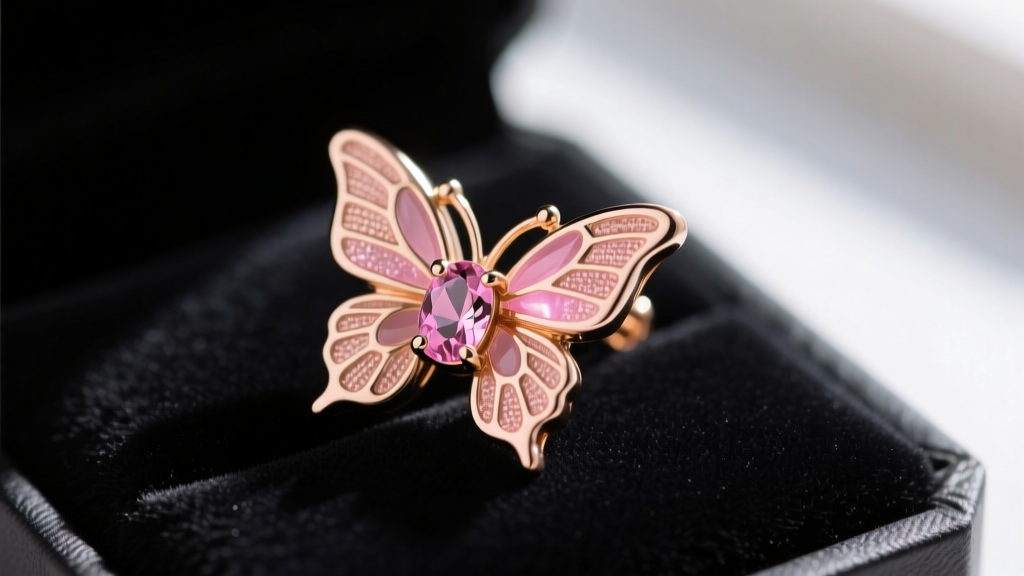
Matching the Gauge to Your Piercing
Wearing the incorrect gauge can cause irritation, migration, or the dreaded 'cheese-cutter effect.' Always verify your piercing's gauge before purchasing butterfly motifs, especially for cartilage.
- Standard Lobe: Usually pierced at 20G (0.8mm) or 18G (1.0mm). Most decorative butterfly studs are manufactured with 20G posts.
- Helix, Flat, and Tragus: Typically pierced at 16G (1.2mm). If you want a pink butterfly clicker hoop for your helix, you must source a 16G option to prevent the ear from rejecting a thinner wire.
Step 2: Mapping Your Ear Stack (Lobe vs. Cartilage)
A curated ear stack relies on visual balance. The butterfly motif is inherently intricate and visually 'heavy' due to its wings. To prevent your ear from looking cluttered, you must balance the butterfly with minimalist, geometric counterparts.
The Placement Matrix
| Piercing Location | Recommended Gauge | Best Butterfly Style | Pairing Suggestion |
|---|---|---|---|
| Standard Lobe | 20G (0.8mm) | Enamel or PVD Butterfly Stud | 14k Gold Huggie Hoop in 2nd hole |
| Upper Lobe | 20G (0.8mm) | Small Butterfly Ear Climber | Bezel-Set Diamond Solitaire |
| Helix / Flat | 16G (1.2mm) | Titanium Butterfly Clicker Hoop | Seamless Gold Hoop or Threadless Spike |
| Tragus | 16G (1.2mm) | Micro Butterfly Threadless End | Simple Gold Bead on adjacent lobe |
Pro-Tip for Ear Climbers: If you choose a pink butterfly ear climber for your upper lobe, ensure the post has a secure friction back or a specialized cuff. Climbers that rely solely on tension often droop forward, ruining the visual line of the stack.
Step 3: Color Theory and Gemstone Pairings
Pink is a versatile color in jewelry, but its undertones dictate what it should be paired with. When styling pink butterfly earrings, consider the specific gemstone or material creating the pink hue.
Warm Pinks (Coral, Rose Gold, Padparadscha Sapphire)
Warm pinks have yellow or orange undertones. These pair beautifully with 14k or 18k yellow gold. If your butterfly earrings feature warm pink enamel, anchor them with yellow gold seamless hoops or subtle yellow gold chain-link dangles to create a cohesive, sun-kissed aesthetic.
Cool Pinks (Rose Quartz, Pink Sapphire, Fuchsia Enamel)
Cool pinks have blue or purple undertones. These look striking against white gold, platinum, or silver-toned titanium. According to the Gemological Institute of America (GIA), rose quartz (Mohs hardness of 7) is relatively durable but should be protected from hard knocks. If your butterfly features inlaid rose quartz, pair it with white gold or silver huggies to enhance the icy, ethereal pink tone.
Step 4: Cleaning and Maintaining Pink Finishes
Maintaining the vibrancy of pink butterfly earrings requires specific cleaning protocols. The wrong cleaning method can strip PVD coatings, cloud gemstones, or crack enamel.
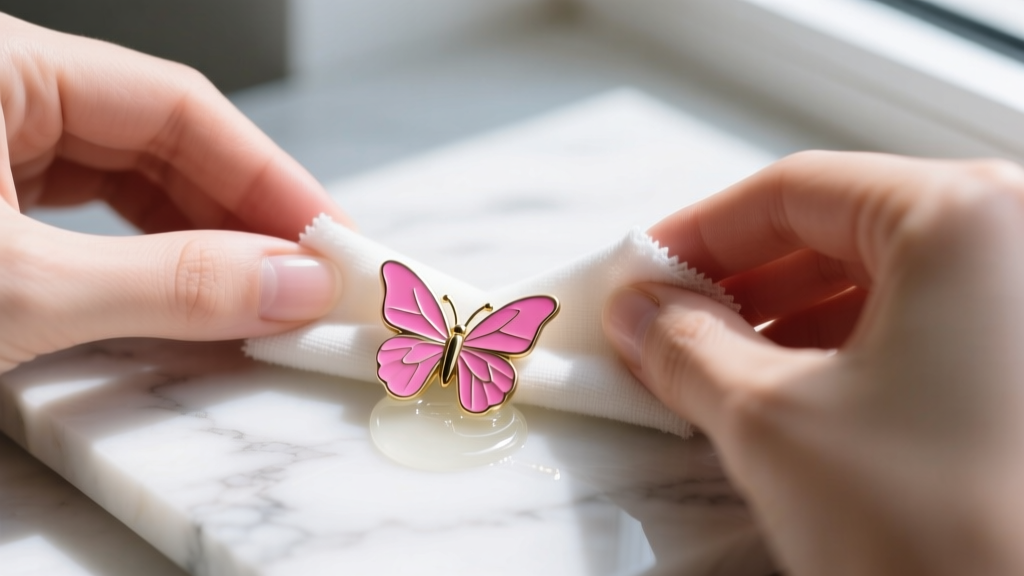
The Do's and Don'ts of Earring Maintenance
Never use ultrasonic cleaners on butterfly earrings that feature vitreous enamel, rose quartz, or opals. The high-frequency vibrations will shatter the enamel or fracture the natural inclusions inside the quartz.
Step-by-Step Cleaning Routine
- Prepare a Gentle Solution: Mix three drops of mild, phosphate-free dish soap (like Dawn) into a bowl of lukewarm distilled water. Avoid hot water, which can warp epoxy-based cold enamel.
- Soak Briefly: Submerge your solid gold or titanium pink butterfly earrings for no more than 3 to 5 minutes. This loosens sebum, dead skin cells, and hair product buildup.
- Agitate Gently: Use a baby-soft toothbrush to gently sweep around the prongs, the butterfly wing crevices, and the earring post. Do not scrub the surface of the enamel or PVD coating aggressively.
- Rinse and Dry: Rinse under a gentle stream of lukewarm water. Pat dry immediately with a lint-free microfiber cloth. Leaving water spots on rose gold can lead to minor tarnishing over time due to the copper content.
Final Thoughts on Curation
Styling pink butterfly earrings is an exercise in balancing whimsy with sophistication. By carefully selecting implant-grade materials, respecting your piercing's anatomy with the correct gauge, and pairing your pink hues with complementary metals, you elevate a nostalgic motif into a masterclass of modern ear curation. Remember that a curated ear is never truly 'finished'—it evolves with your style, so use your butterfly pieces as the vibrant anchor of your ever-changing aesthetic.


