How to Style and Wear Boa Hancock Earrings Safely
Learn how to safely wear heavy Boa Hancock earrings. Our step-by-step guide covers gauge sizing, lobe support, and styling snake motifs for any face shape.

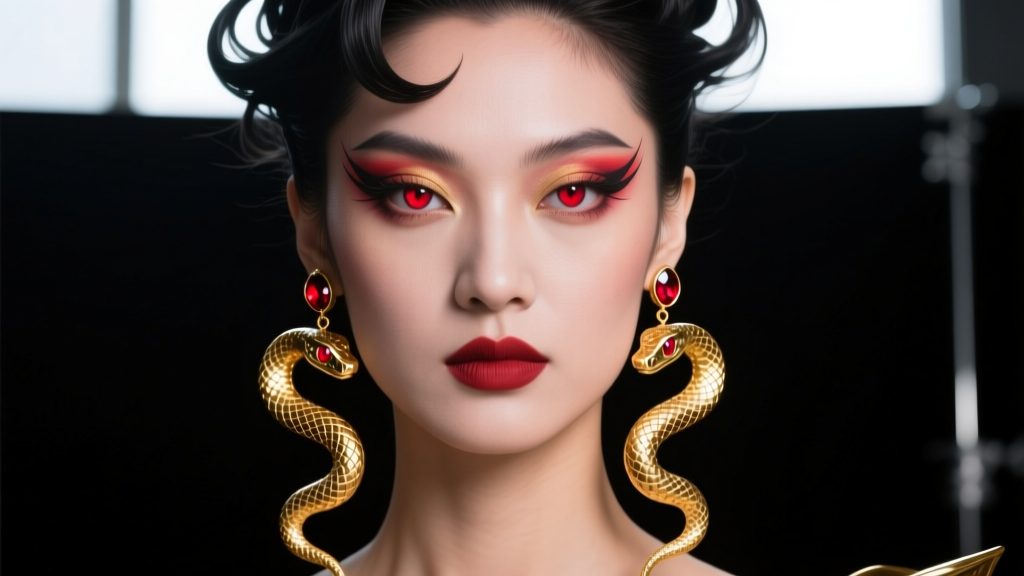
Decoding the Iconic Boa Hancock Earring Design
Boa Hancock, the Pirate Empress from the globally beloved anime and manga series One Piece, is as famous for her striking fashion as she is for her formidable strength. Her signature jewelry—large, elaborate gold serpent drop earrings featuring flared cobra hoods and piercing ruby eyes—has become a holy grail for cosplayers and statement-jewelry enthusiasts alike. However, translating anime proportions into real-world wearability presents a unique set of physical and metallurgical challenges.
In the series, these earrings drape elegantly past the jawline, often measuring an implied three to four inches in length. When replicated in solid metals to achieve the necessary golden luster, an earring of this volume can easily weigh between 25 and 45 grams per piece. To put this into perspective, a standard, comfortable everyday drop earring typically weighs between 3 and 7 grams. Wearing heavy, unoptimized cosplay jewelry for extended periods at conventions or themed events can lead to severe earlobe fatigue, stretched fistulas (the piercing hole), and even painful tearing. This guide will walk you through the exact steps to source, support, and style Boa Hancock earrings safely, ensuring your tribute to the Kuja tribe is as comfortable as it is visually stunning.
Material Matters: Choosing Skin-Safe Serpent Metals
The most common mistake buyers make when sourcing anime replica jewelry is prioritizing visual accuracy over material safety. Many mass-produced Boa Hancock earrings found on overseas marketplaces are cast from cheap zinc alloys or raw brass, which are not only excessively heavy but also notorious for causing contact dermatitis due to hidden nickel content. According to the Gemological Institute of America (GIA), understanding the difference between gold plating, gold vermeil, and solid alloys is critical for both skin safety and jewelry longevity.
Below is a comparison chart to help you select the right material for your serpent drops:
| Material Grade | Avg. Weight (per earring) | Hypoallergenic Rating | Price Range | Best Use Case |
|---|---|---|---|---|
| Zinc Alloy / Brass | 35g - 45g | Poor (High Nickel Risk) | $10 - $25 | Short-term photo shoots only |
| 316L Surgical Steel (PVD Gold) | 18g - 24g | Excellent | $35 - $60 | Full-day convention wear |
| 14k Gold Vermeil over Sterling | 15g - 20g | Very Good | $75 - $150 | Everyday cosplay & casual styling |
| Solid 14k Gold (Custom Cast) | 12g - 18g | Perfect | $400+ | Heirloom-quality collector pieces |
For the best balance of weight, safety, and aesthetic accuracy, 316L surgical steel with a PVD (Physical Vapor Deposition) gold coating is the superior choice. PVD coating is significantly more resistant to flaking and tarnishing than traditional electroplating, ensuring your cobra earrings survive the friction of convention halls and humid outdoor shoots.
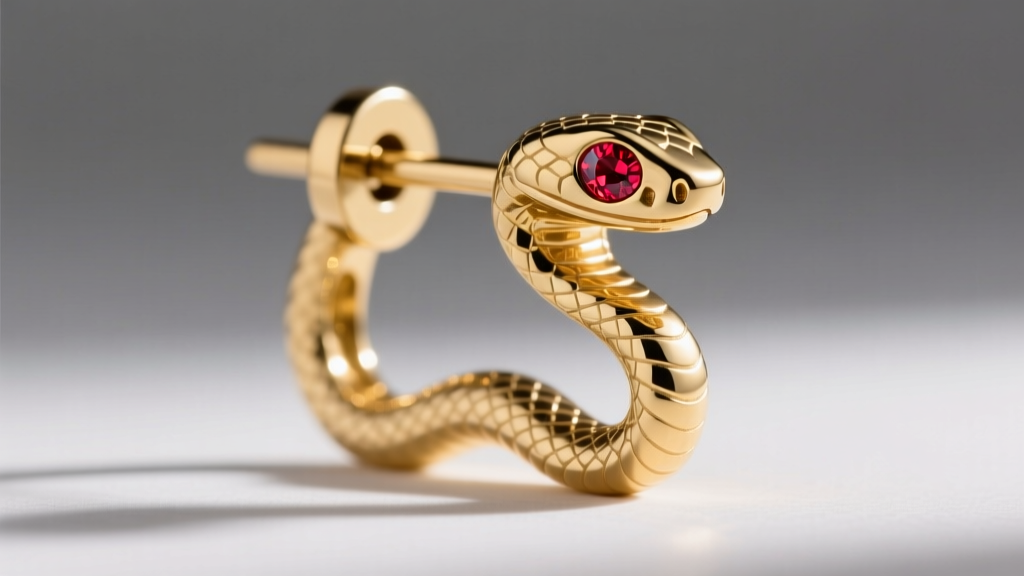
Step-by-Step: How to Support Heavy Cosplay Dangles
Even with lightweight materials, a three-inch drop earring creates a pendulum effect that places immense lateral stress on the earlobe. The Association of Professional Piercers (APP) frequently warns against the 'cheese-cutter effect'—a phenomenon where a thin wire under heavy tension slowly slices downward through the fistula tissue. To prevent permanent lobe stretching, follow this step-by-step support protocol.
Step 1: Upgrade the Wire Gauge
Most commercial fashion earrings use a 20-gauge (0.81mm) or 22-gauge (0.64mm) fishhook wire. For any earring exceeding 15 grams, this is dangerously thin. If you are having your Boa Hancock earrings custom-made or modifying a purchased pair, use jewelry pliers to swap the hook for an 18-gauge (1.02mm) or 16-gauge (1.29mm) niobium or surgical steel ear wire. The thicker wire distributes the weight across a wider surface area of the fistula, drastically reducing cutting pressure.
Step 2: Apply Silicone Earring Support Patches
Adhesive silicone patches (such as BlingDots or LobeWonder) are non-negotiable for heavy dangles. These transparent medical-grade silicone discs adhere to the back of your earlobe, providing a rigid scaffold that prevents the lobe from bending forward under the earring's weight.
- Prep the Skin: Clean the back of your earlobe with rubbing alcohol to remove natural oils and let it dry completely.
- Apply the Patch: Peel the silicone disc and center it over your piercing hole from the back.
- Pierce and Secure: Push the earring post through the pre-punched hole in the patch, then secure it with a wide, flat friction back or a silicone O-ring stopper rather than a standard butterfly clutch, which can slip under heavy loads.
Step 3: Utilize the 'Tape Trick' for Extreme Weights
If you are wearing a heavy brass replica for a brief photoshoot and do not have silicone patches, use a small square of medical paper tape on the back of the lobe. While less effective than silicone, the tape provides a temporary friction barrier that helps distribute the downward pull of the cobra hood across the broader tissue of the ear.
Styling the Pirate Empress Look for Everyday Wear
While massive, four-inch serpent drops are perfect for the convention floor, they are highly impractical for daily wear, office environments, or crowded commutes. Fortunately, the core motif of Boa Hancock's jewelry—the elegant, dangerous curve of the cobra—can be scaled and adapted to flatter various face shapes without sacrificing the character's essence.
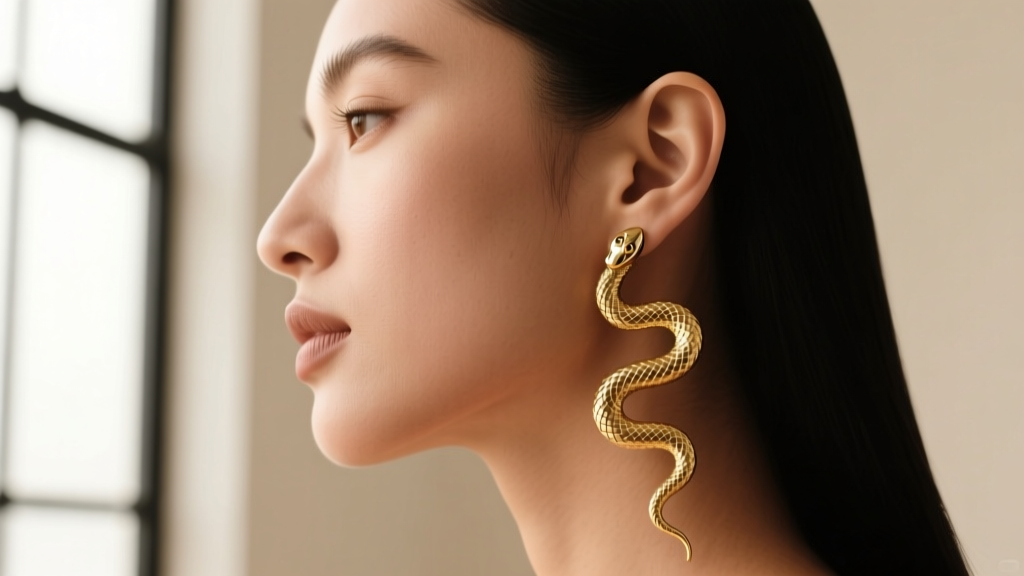
Adapting the Motif for Your Face Shape
Round Faces: The original long, vertical drop earrings are incredibly flattering for round face shapes, as the sharp, elongated lines of the serpent's body create an optical illusion that lengthens the jaw and neck. Stick to drops that end at least one inch below the earlobe.
Square Faces: Angular jawlines benefit from curved, organic shapes. Look for a 'cobra huggie' design—a thick, gold hoop that wraps snugly around the earlobe, terminating in a sculpted snake head resting against the cartilage. The curve softens the jawline while maintaining the Kuja tribe aesthetic.
Oblong/Long Faces: Avoid long dangles, which will over-elongate your features. Instead, opt for a wide, horizontal stud featuring the flared cobra hood. A 15mm wide hood stud draws the eye outward, creating a balancing width across the cheekbones.
Maintenance and Storage for Elaborate Drop Earrings
Intricate cosplay jewelry requires meticulous care to preserve its golden finish and gemstone inlays. The 'ruby' eyes in Boa Hancock replicas are typically made from dyed cubic zirconia, glass, or synthetic corundum. These materials are highly sensitive to harsh chemicals and ultrasonic vibrations.
Never clean your serpent earrings in an ultrasonic jewelry cleaner; the high-frequency waves can easily shatter the adhesive holding the gemstone eyes in place, or cause dyed stones to fracture and cloud. Instead, use a soft-bristled baby toothbrush dipped in a mild solution of warm water and phosphate-free dish soap. Gently brush the scales and crevices of the cobra hood, rinse under lukewarm water, and pat completely dry with a microfiber cloth before storing.
Pro-Tip: Always store heavy drop earrings hanging from a dedicated jewelry rack or laid completely flat in a velvet-lined box. Tossing them into a standard jewelry box will inevitably cause the thin fishhook wires to bend and the delicate snake tails to snap under the pressure of other accessories.
By respecting the physical limits of your earlobes, choosing skin-safe metallurgy, and adapting the iconic serpent motif to your unique facial structure, you can channel the fierce elegance of the Pirate Empress safely and stylishly, whether you are navigating the Grand Line or simply grabbing coffee in the real world.


