How to Style Yellow Stud Earrings for Your Skin Tone
Learn how to choose, style, and care for yellow stud earrings based on your skin undertone, piercing gauge, and gemstone material.

The Gemology and Metallurgy of Yellow Studs
Yellow stud earrings are a vibrant, versatile staple in modern jewelry collections, but achieving the perfect look requires more than just picking a bright color. The visual impact of a yellow stud depends heavily on the interplay between the gemstone's refractive index, the metal alloy's karat weight, and your unique skin undertone. Before diving into styling frameworks, it is crucial to understand the materials you are wearing against your skin.
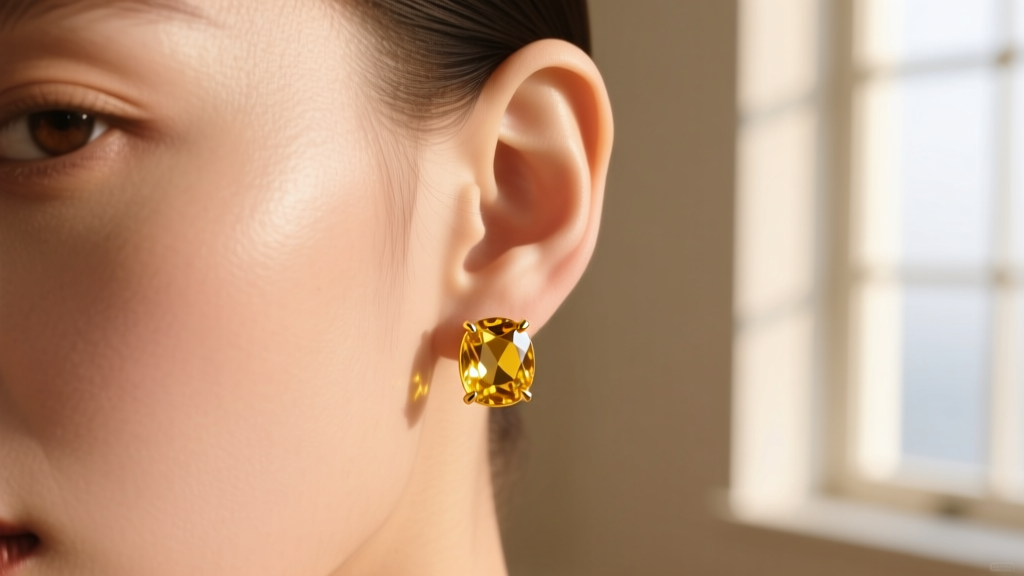
When shopping for yellow gemstone studs, you will typically encounter three primary options: Citrine, Yellow Sapphire, and Amber. Citrine (a variety of quartz) sits at a 7 on the Mohs hardness scale, making it durable for daily lobe wear. According to the Gemological Institute of America (GIA), most commercial citrine is actually heat-treated amethyst, which yields a deep, golden-orange yellow. Yellow Sapphire, scoring a 9 on the Mohs scale, offers superior scratch resistance and a cooler, more lemon-like hue due to trace amounts of iron. Amber, conversely, is an organic fossilized resin scoring a mere 2 to 2.5 on the Mohs scale. While amber offers a warm, prehistoric golden glow, it is highly susceptible to scratching and chemical damage, requiring specialized care.
The metal setting is equally important. For yellow gold settings, 14-karat gold (58.5% pure gold) is the industry standard for earring posts because its copper and zinc alloy mix provides the structural rigidity needed to prevent bending. 18-karat gold (75% pure gold) offers a richer, more saturated yellow color that beautifully complements warm gemstones, but it is softer and better suited for the decorative front settings rather than the post itself.
Step 1: Identify Your Skin Undertone
The most common styling mistake is matching jewelry to the surface color of your skin rather than your undertone. Your undertone is the subtle, underlying hue that dictates whether cool or warm colors make your complexion look radiant or washed out. Follow these three diagnostic steps to determine your undertone:
- The Vein Test: Examine the veins on the underside of your wrist in natural daylight. If they appear predominantly green or olive, you have warm undertones. If they look blue or purple, you have cool undertones. If you see a mix of both, you are neutral.
- The Sun Reaction Test: Consider how your skin reacts to sun exposure. If you burn easily and rarely tan, you likely have cool undertones. If you tan easily and rarely burn, you lean warm.
- The White Paper Test: Hold a piece of pure white printer paper next to your clean, makeup-free face in front of a mirror. If your skin looks slightly yellow, peachy, or golden by comparison, you are warm. If it appears pink, red, or bluish, you are cool.
Step 2: Match the Yellow Hue to Your Undertone
Once you have identified your undertone, you can strategically select the specific shade of yellow stud earrings that will create a harmonious contrast. Yellow is not a monolith; it spans from cool, acidic lemon tones to warm, earthy mustard hues.
| Skin Undertone | Best Yellow Hue | Ideal Metal Pairing | Gemstone Recommendation |
|---|---|---|---|
| Warm | Golden, Mustard, Amber | 14k or 18k Yellow Gold, Rose Gold | Heat-treated Citrine, Baltic Amber |
| Cool | Lemon, Chartreuse, Pale Yellow | White Gold, Platinum, Silver | Yellow Sapphire, Yellow Diamond |
| Neutral | True Primary Yellow, Honey | Two-Tone, 14k Yellow Gold | Yellow Topaz, Enamel |
| Olive | Earthy Ochre, Marigold | Antique Yellow Gold, Bronze | Fire Opal, Tiger's Eye |
Step 3: Select the Right Gauge and Post Length
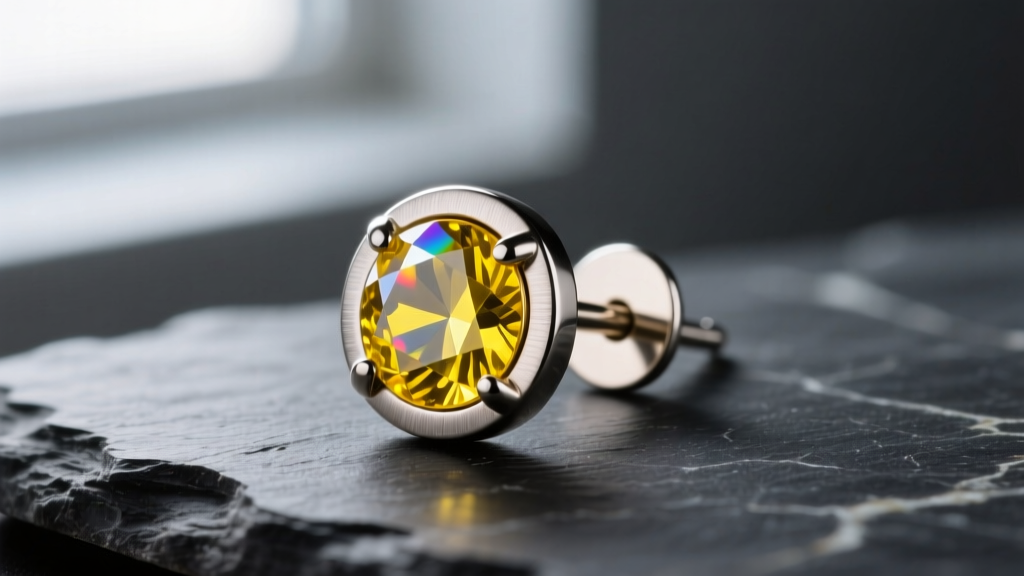
A beautiful yellow stud will look awkward and cause discomfort if the hardware does not match your specific piercing anatomy. The Association of Professional Piercers (APP) establishes strict standards for body jewelry sizing, and ignoring these can lead to migration, embedding, or tearing.
Gauge Sizing Framework
- 20-Gauge (0.81mm): The standard for traditional, gun-pierced earlobes. Most commercial fashion studs from mall retailers use this thin wire. It is suitable for fully healed, standard lobe piercings but too fragile for cartilage.
- 18-Gauge (1.02mm): The sweet spot for modern lobe piercings done with a needle by a professional piercer. It offers excellent stability without being overly thick.
- 16-Gauge (1.29mm): The standard for upper lobes, helix, tragus, and flat piercings. If you are placing a yellow sapphire stud in your cartilage, you must use a 16G post to prevent the jewelry from shifting or causing the "cheese-cutter effect" during sleep.
Post Length and Backing Types
For standard lobes, a 6mm post length is usually sufficient. For thicker lobes or fresh cartilage piercings, an 8mm post accommodates swelling. Ditch traditional butterfly backs, which harbor bacteria and dig into the neck. Instead, opt for flat-back (labret) posts with a secure internal threading or threadless push-pin mechanism. Brands like Maria Tash and BVLA specialize in these high-end, anatomical fittings.
Step 4: Proper Cleaning and Maintenance
Yellow gemstones and enamel details require specific cleaning protocols to maintain their brilliance. Using the wrong method can permanently cloud a stone or strip a finish.
Material-Specific Cleaning Rules
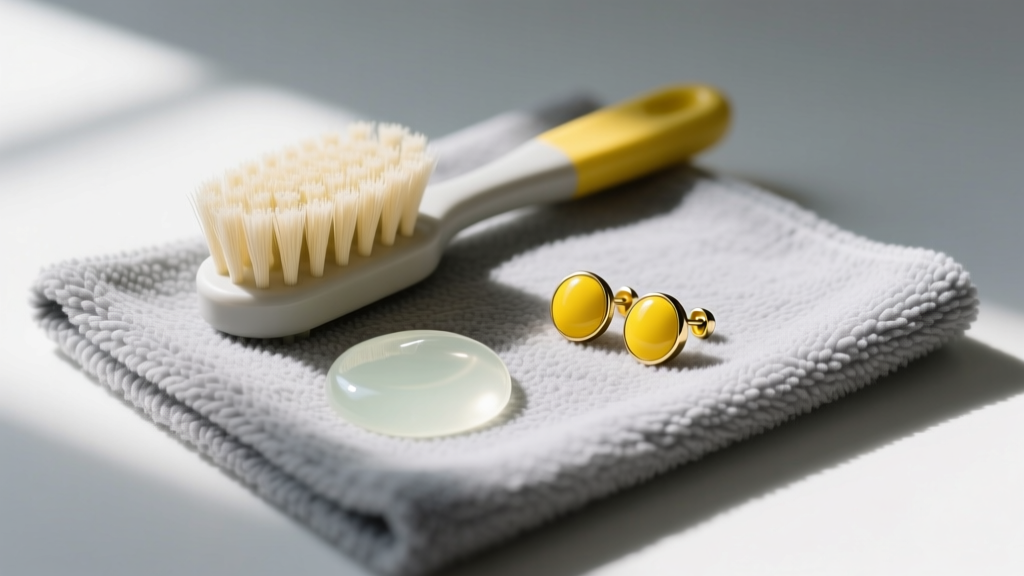
- For Yellow Sapphire and Diamond: These are highly durable. Mix a few drops of mild, ammonia-free dish soap in warm water. Soak the studs for 15 minutes, then gently scrub the back of the setting and the gemstone's pavilion (underside) with a baby-soft toothbrush. Rinse and pat dry with a lint-free cloth.
- For Citrine and Topaz: Avoid ultrasonic cleaners. While these stones are relatively hard, they can have internal liquid inclusions or fractures that may expand and shatter the stone under high-frequency vibrations. Stick to the warm soapy water method.
- For Amber and Enamel: Never soak amber or enamel yellow studs. Amber is porous and can absorb chemicals, while enamel can crack under thermal shock. Simply wipe them gently with a damp, untreated microfiber cloth and dry immediately.
Expert Styling Frameworks for 2026
As we navigate the jewelry trends of 2026, the "curated ear" remains dominant, but with a shift toward intentional color blocking. When styling yellow stud earrings within a multi-piercing setup, use the Anchor-Accent Framework.
"Treat your primary lobe piercing as the anchor. If you place a bold, 8mm golden citrine stud in the lower lobe, use smaller, neutral-toned flat-backs (like white gold or clear diamonds) in the upper lobes and helix to let the yellow pop without overwhelming the ear's real estate."
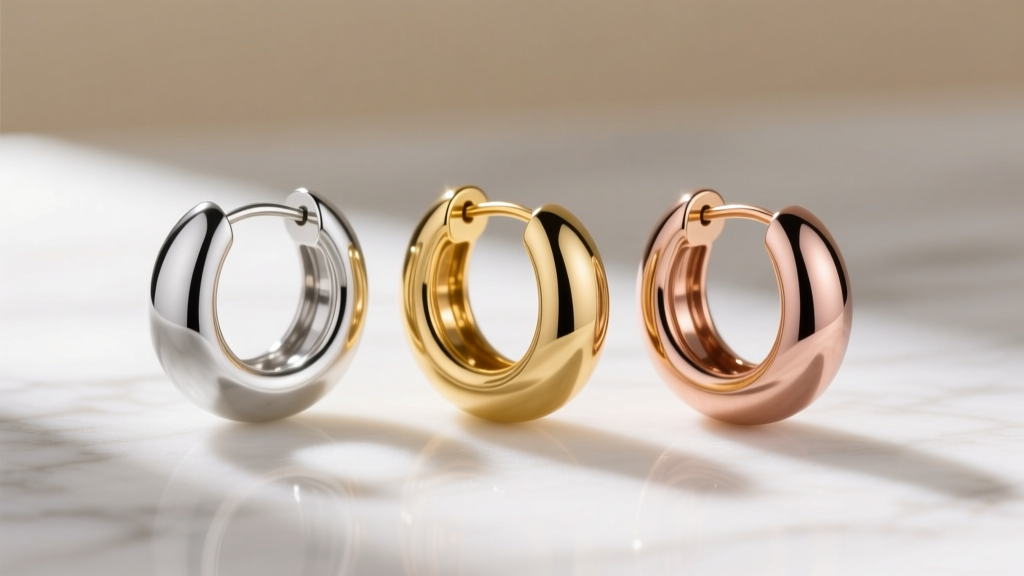
Alternatively, try the Monochromatic Gradient. Pair a deep amber stud in the lobe with a pale lemon-yellow sapphire in the upper lobe, and a subtle yellow-gold huggie hoop in the mid-helix. This creates a cohesive, vertical line of color that draws the eye upward, elongating the neck and framing the jawline beautifully. By understanding the gemology, respecting your skin's undertone, and adhering to proper anatomical sizing, your yellow stud earrings will transition from a simple accessory to a masterclass in personal styling.