Cute Bow Earrings: A Beginner's Guide to Coquette Styling
Discover how to style cute bow earrings with our beginner-friendly guide. Learn about materials, gauge sizes, and face-shape matching for the coquette look.

The Rise of the Coquette Aesthetic: Why Bow Earrings?
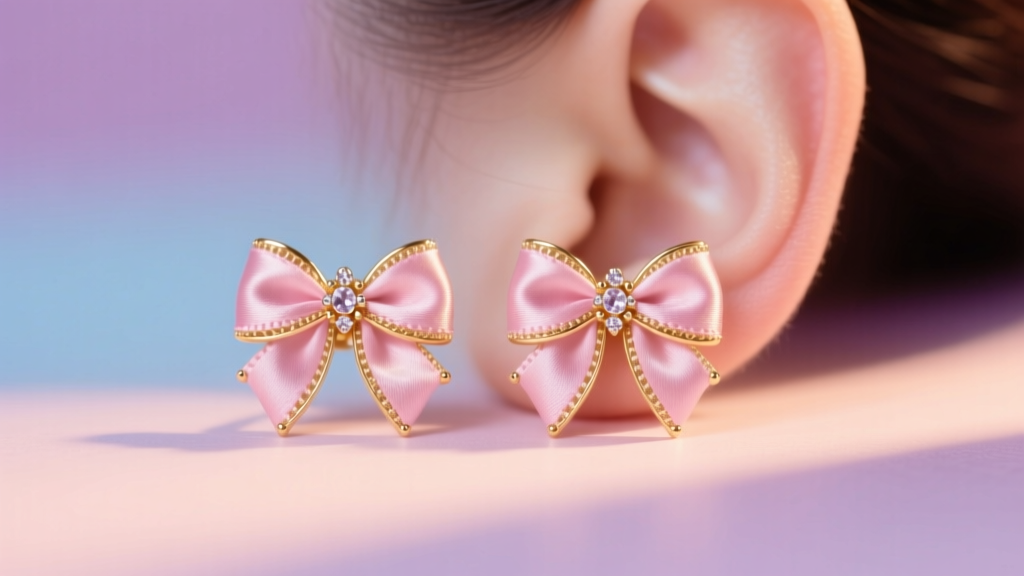
If you have spent any time on fashion forums or luxury runways in 2026, you have undoubtedly noticed the omnipresence of the coquette aesthetic. Moving past the fleeting 'balletcore' trend of the early 2020s, the modern coquette look has matured into a sophisticated appreciation for hyper-feminine details, with cute bow earrings serving as the undisputed centerpiece. Unlike the oversized, costume-like bows of previous seasons, today's iterations focus on delicate proportions, high-quality metallurgy, and versatile wearability.
For beginners, navigating the sheer volume of ribbon, knot, and loop designs can be overwhelming. Do you opt for a subtle stud or a cascading drop? How do you ensure the metal won't irritate your freshly pierced lobes? This comprehensive guide breaks down the anatomy, materials, and styling frameworks you need to master this whimsical yet elegant trend.
Decoding Bow Earring Anatomy & Materials
The biggest mistake beginners make is prioritizing the visual design of the bow over the base metal. Because bow earrings often feature intricate loops and wirework, they have more surface area to tarnish or react with your skin's natural oils. Understanding material grades is non-negotiable for long-term wear.
Metal Grades & Hypoallergenic Needs
According to the Association of Professional Piercers, nickel is the most common culprit behind contact dermatitis in jewelry. Many budget-friendly bow earrings use brass as a base metal, which is often alloyed with nickel before being plated in gold. Once that thin plating wears off from friction, the nickel leaches into the skin.
| Material | Durability | Hypoallergenic? | Best For |
|---|---|---|---|
| Implant-Grade Titanium (ASTM F-136) | Exceptional | Yes (100%) | Sensitive ears, new piercings, cartilage |
| 14k or 18k Solid Gold | High | Yes (Usually nickel-free) | Everyday luxury, heirloom pieces |
| PVD-Coated Stainless Steel | Very High | Mostly (Depends on base) | Budget-friendly daily wear |
| Gold-Plated Brass | Low | No | Occasional, short-term wear only |
Enamel, Resin, and Gemstone Accents
Beyond the metal, the 'ribbon' of the bow is often rendered in enamel or resin. Cold enamel (epoxy resin) is common in lower price tiers but is prone to yellowing under UV exposure and chipping if dropped. Vitreous (fired) enamel, baked at high temperatures, offers a glass-like finish that resists yellowing. For a more elevated look, pavé-set cubic zirconia or lab-grown diamonds along the 'knot' of the bow add a subtle sparkle without overpowering the silhouette.
Sizing, Gauges, and Piercing Placements
A beautiful bow earring will look entirely wrong if it stretches your piercing or sits awkwardly on your ear. The structural integrity of your piercing must dictate the weight and gauge of the earring you choose.
Understanding Gauge and Weight Distribution
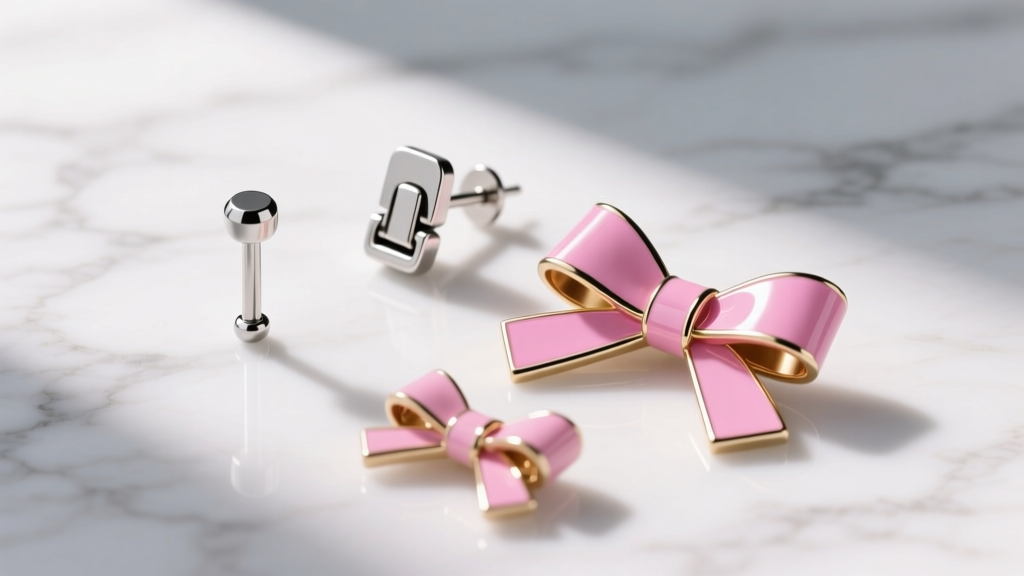
Standard lobe piercings are typically done at 20-gauge (0.81mm) or 18-gauge (1.02mm). However, many heavy, oversized bow drops are manufactured with thicker 16-gauge posts for structural support. Forcing a 16G post into an 18G hole will cause micro-tearing and blowouts. Always check the product specifications for the exact post thickness.
Furthermore, weight distribution is critical. A heavy enamel bow on a thin wire post acts as a lever, slowly pulling your earlobe downward over time—a condition known as earlobe elongation. If you love heavy statement bows, look for designs that feature a wide, flat backing plate or pair them with silicone 'lobe support' patches worn behind the ear to distribute the weight evenly.
Cartilage Considerations: Helix and Flat Piercings
Cute bow earrings aren't just for lobes. Small, tight knot-bows are incredibly popular for helix and flat cartilage piercings. Cartilage is typically pierced at 16-gauge. Because cartilage lacks the elasticity of the earlobe, you must ensure the bow's loops do not press tightly against the ear's folds, which can cause pressure bumps (hypertrophic scarring). Opt for 'forward-facing' cartilage studs where the bow sits flush against the skin without protruding loops that catch on hair.
Face Shape Matching: Finding Your Perfect Bow
The geometry of the bow you select should complement, rather than clash with, your natural facial structure. Here is a practical decision framework for matching bow proportions to face shapes:
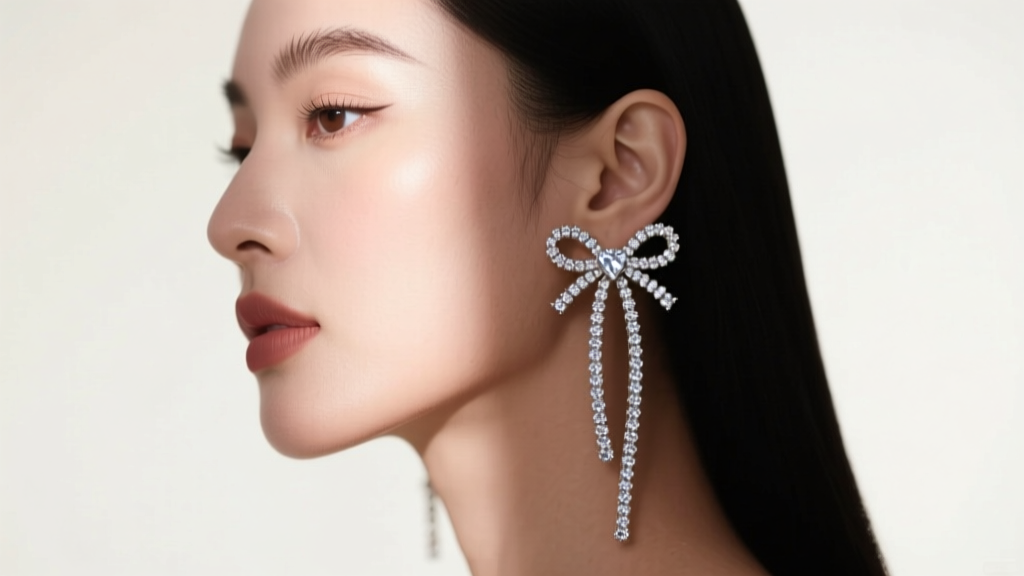
- Round Faces: Avoid wide, flat, horizontal bows that emphasize facial width. Instead, choose cascading or drop-style bow earrings where the ribbon tails hang vertically. This elongates the jawline and draws the eye downward.
- Oval Faces: You have the most versatility. Both wide 'butterfly' bows and tight, minimalist knot studs will look balanced. Experiment with asymmetric styling—one large bow stud on one side, and a delicate chain on the other.
- Square Faces: Soften a strong, angular jawline with bows that feature curved, rounded loops and fluid, wavy enamel ribbons. Avoid bows with sharp, geometric, or rigid wire angles.
- Heart-Shaped Faces: Since the forehead is wider and the chin is narrow, choose bows that add a touch of volume at the bottom of the earlobe. Teardrop-shaped bows or bows with small pearl accents dangling from the ribbon tails help balance the lower half of the face.
Practical Troubleshooting: Snags, Tarnish, and Maintenance
Bow earrings present unique physical challenges due to their shape. The open loops of the ribbon and the delicate ties are notorious snag hazards.
The 'Snag and Pull' Failure Mode
If you frequently wear cashmere sweaters, knit scarves, or have long, layered hair, open-wire bow earrings will catch and pull. To mitigate this, look for 'solid-fill' bows where the ribbon loops are cast as solid metal or fully filled with enamel, leaving no gaps for threads to slip through. Alternatively, wear your hair in an updo or sleek ponytail when wearing intricate wirework bows.
Friction Backs vs. Secure Closures
Standard 'butterfly' friction backs are inadequate for bow earrings. The uneven weight of the bow causes the earring to droop, and the friction back slowly slides down the post throughout the day. Upgrade your hardware. If the earring has a threaded post, use a secure screw-back. If it is a smooth post, swap the butterfly back for high-quality silicone O-rings or locking earlobe backs that grip the post via internal tension rather than simple friction.
Cleaning Enamel and Gemstones
Do not use ultrasonic cleaners on bow earrings featuring cold enamel or glued-in rhinestones; the high-frequency vibrations will shatter the resin and dislodge the stones. Instead, use a soft-bristled baby toothbrush dipped in warm water and a drop of mild, phosphate-free dish soap. Gently brush the crevices of the 'knot' where skin oils and perfume residue accumulate, then pat dry with a lint-free microfiber cloth.
Expert Styling Tip: To elevate the coquette aesthetic without looking costumey, mix your metals and textures. Pair a matte-finished 14k gold bow stud with a sleek, high-polish huggie hoop in the same ear. The contrast between the romantic bow and the modern, industrial hoop grounds the look, making it appropriate for both the office and evening events.
Where to Shop: Price Tiers & Brand Examples
The market for bow earrings is vast, but quality varies wildly. Here is how to navigate the pricing landscape in 2026:
- Under $40 (Fashion Tier): Brands like Etsy artisans and fast-fashion retailers offer trendy designs in gold-plated brass or stainless steel. Expect PVD coatings that may last 6-12 months with careful wear. Great for testing the trend before committing.
- $50 - $150 (Bridge Tier): This is the sweet spot for quality. Look for boutique jewelers offering 14k gold-filled options or sterling silver with thick rhodium plating. Brands in this tier often use fired enamel and secure screw-backs.
- $200+ (Fine Jewelry Tier): Solid 14k/18k gold, lab-grown diamond accents, and lifetime craftsmanship guarantees. According to GIA educational resources, verifying the origin and quality of any melee diamonds set into the 'knot' of the bow is essential at this price point. These are heirloom pieces meant to last generations.
Ultimately, cute bow earrings are a joyful celebration of personal style. By prioritizing biocompatible metals, understanding the mechanics of your piercings, and selecting proportions that flatter your unique features, you can wear this trend with confidence and elegance. Whether you are threading a delicate gold ribbon through a fresh helix piercing or clasping a pair of diamond-encrusted drops for a gala, the perfect bow is out there waiting to be tied.


