2026 Trends: How to Style Gold Diamond Hanging Earrings
Discover 2026 styling trends for gold diamond hanging earrings. Expert tips on karat weights, diamond cuts, face-shape matching, and luxury pairings.

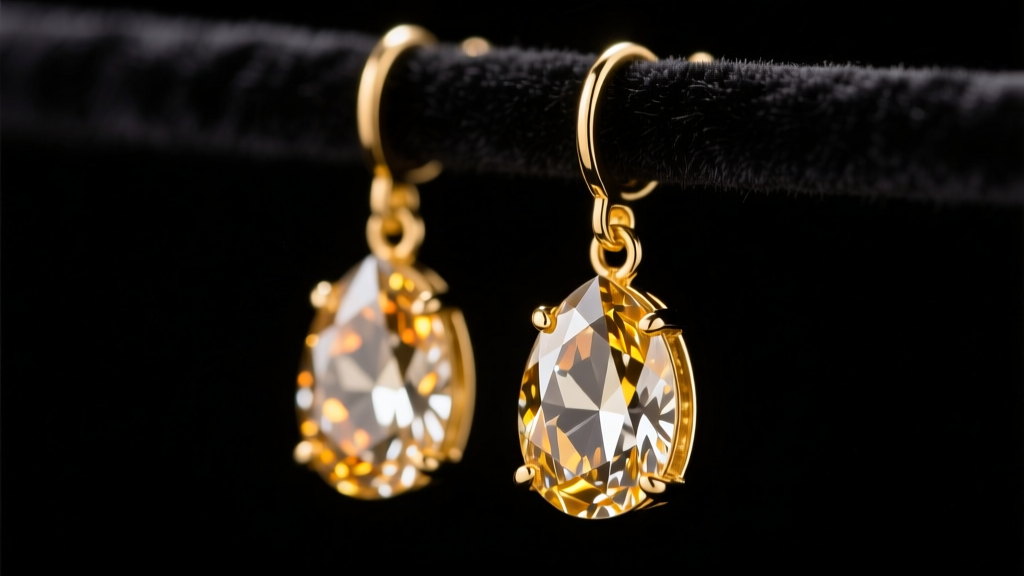
The 2026 Shift: From Static Chandeliers to Kinetic Dangles
The landscape of fine jewelry has shifted dramatically as we navigate 2026. While heavy, static chandelier earrings dominated the early 2020s, the current zeitgeist favors kinetic, architectural movement. Specifically, gold diamond hanging earrings have evolved from traditional red-carpet staples into versatile, everyday luxury statements. This year's designs prioritize fluid articulation, allowing the diamonds to catch light dynamically with every turn of the head. This analysis breaks down the metallurgical choices, gemological specifications, and styling frameworks defining this year's most coveted ear aesthetics.
Material Breakdown: Karat Gold & Diamond Specifications
When investing in hanging earrings, the structural integrity of the gold is just as critical as the brilliance of the stones. The alloy composition dictates both the color and the tensile strength required to support a dangling drop without warping.
- 14k Gold (58.5% Pure Gold): The pragmatic choice for intricate, multi-joint hanging earrings. The higher presence of copper and silver alloys provides superior tensile strength, allowing jewelers to use thinner, more delicate wires (typically 20-gauge) that resist bending under the weight of the drop.
- 18k Gold (75% Pure Gold): Prized for its rich, buttery yellow hue and hypoallergenic properties. However, 18k gold is inherently softer. To prevent the earring wire from pulling out of the earlobe, 2026 designs in 18k gold utilize thicker 18-gauge or 16-gauge wires and reinforced leverback clasps.
Gemologically, the industry is moving away from standard round brilliant cuts for dangles. According to the Gemological Institute of America (GIA), light return in moving jewelry requires specialized faceting. Briolette cuts (teardrop-shaped stones faceted entirely around) and rose cuts (flat bottoms with domed, faceted tops) are the dominant choices for 2026. Briolettes offer 360-degree scintillation, while rose cuts provide a subtle, moody flash that appeals to the modern minimalist.
| Gold Karat | Optimal Wire Gauge | Trending Diamond Cut | Durability & Movement Profile |
|---|---|---|---|
| 14k Gold | 20g - 18g | Rose Cut / Melee Pavé | High tensile strength; ideal for long, multi-link chains |
| 18k Yellow Gold | 18g - 16g | Briolette / Pear | Softer alloy; requires thicker wire and reinforced jump rings |
| 18k White Gold | 19g - 17g | Emerald Cut / Baguette | Rhodium-plated for rigidity; excellent for geometric Art Deco drops |
Face Shape & Kinetic Movement: A Styling Framework
The defining feature of gold diamond hanging earrings is their kinetic swing. This movement interacts directly with the jawline and neck, making face-shape matching a crucial element of 2026 styling.
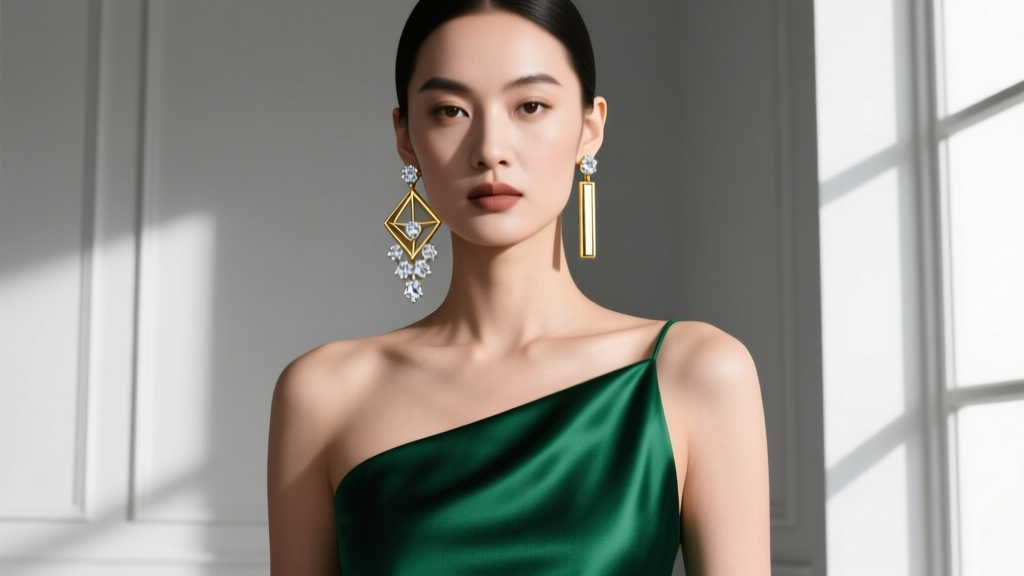
The Proportionality Matrix
- Round Faces: Opt for linear, articulated drops measuring 1.5 to 2.5 inches. The vertical movement elongates the neck and draws the eye downward, creating a slimming illusion. Avoid wide, circular hoops with dangles.
- Square Faces: Soften a strong jawline with undulating, curved dangles. Teardrop briolettes set in 18k gold that sway gently will offset angular features. Keep the length just above the collarbone (approx. 2 inches).
- Heart-Shaped Faces: Bottom-heavy designs, such as inverted triangles or chandelier-style drops that widen at the base, balance a narrower chin.
- Oval Faces: The universal canvas. In 2026, oval faces are leaning into extreme asymmetry—wearing one oversized, shoulder-grazing gold diamond hanging earring while leaving the opposite ear completely bare or adorned with a single flush-set stud.
The Mechanics of the Dangle: Hardware & Weight Distribution
A common failure point in luxury jewelry is the hardware. The American Gem Society (AGS) frequently highlights that improper clasp selection leads to lost stones and warped metals. For hanging earrings, weight distribution is paramount.
"The failure point of 90% of hanging earrings is not the clasp itself, but the jump ring connecting the drop to the wire. In 2026, top-tier luxury houses are laser-welding these connection points to eliminate the micro-gaps that cause metal fatigue and eventual snapping."
— Master Jeweler & Bench Technician
Clasp Hierarchy for 2026
- The Leverback: The undisputed champion for heavy diamond drops. A hinged wire loops through the piercing and snaps securely into a locked catch. It supports up to 8 grams of weight without dragging the earlobe.
- The French Wire (Fishhook): Elegant and minimalist, but inherently insecure. If choosing a French wire for a valuable diamond drop, you must use a high-friction silicone earring back or a specialized 18k gold locking clutch to prevent the earring from slipping out during movement.
- The Omega Back: Features a hinged, curved wire that closes over a sturdy post. Excellent for vintage-inspired, wider hanging earrings that require a stable base to prevent flipping forward.
Curated 2026 Pairings: Necklines & Ear Stacking
Styling gold diamond hanging earrings requires a strategic approach to necklines and complementary jewelry. The goal is to create a cohesive visual flow without overcrowding the décolletage.
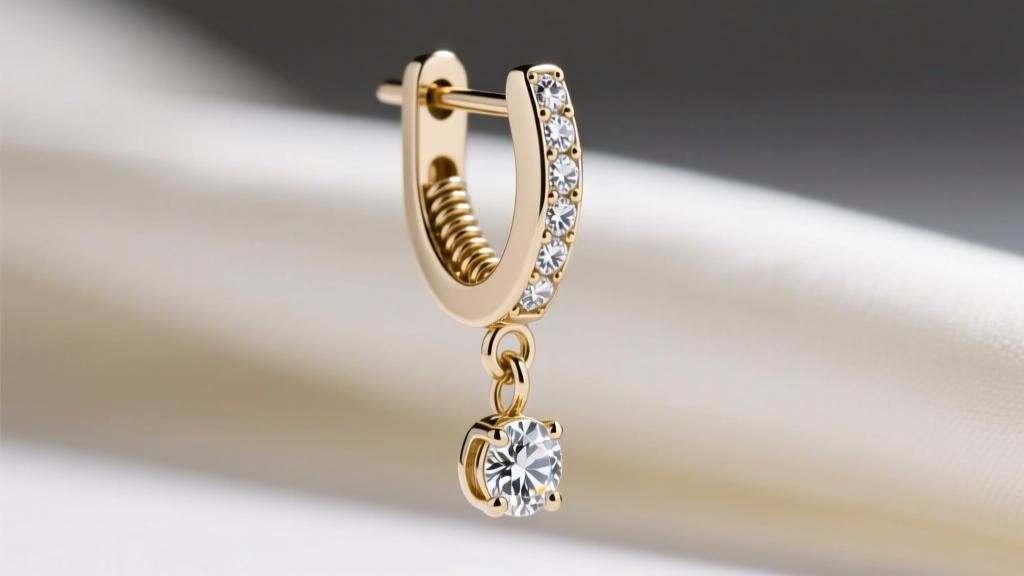
Neckline Synergies
For strapless and sweetheart necklines, maximize the drama with shoulder-dusting dangles featuring at least 1.5 carats total weight (CTW). The bare skin provides a canvas for the gold to contrast and the diamonds to scintillate. Conversely, when wearing turtlenecks or high-collared silk blouses, scale down to 1-inch geometric drops. The fabric will catch on longer chains, risking damage to both the garment and the jewelry.
The Asymmetrical Ear Stack
The "curated ear" trend has matured. Instead of matching sets, 2026 styling dictates a heavy-light balance. Anchor one ear with a substantial gold diamond hanging earring, and stack the opposite ear with three distinct pieces: a diamond huggie on the lobe, a 16-gauge titanium or gold cartilage hoop on the upper helix, and a delicate chain cuff connecting the two. This creates an editorial, high-fashion look that feels intentional rather than accidental.
Investment & Pricing Tiers for 2026
Understanding the market value of gold diamond hanging earrings is essential for informed purchasing. Prices fluctuate based on the origin of the diamonds (lab-grown vs. natural) and the complexity of the goldsmithing.
- Entry-Level Fine ($450 – $900): Typically features 14k gold with 0.25 to 0.50 CTW of lab-grown melee diamonds. Excellent for everyday wear, though the gold may show wear over a decade of heavy use.
- Mid-Tier Luxury ($2,500 – $6,000): The sweet spot for heirloom quality. Expect 18k gold, leverback clasps, and 0.75 to 1.5 CTW of natural diamonds in the VS1-VS2 clarity range. Briolette cuts in this tier offer exceptional light performance.
- High Jewelry & Artisan ($12,000+): Featuring complex articulated joints, mixed-metal accents, and rare diamond cuts (such as antique mine cuts or custom-calibered baguettes). These pieces are often numbered, limited editions from heritage houses.
By prioritizing structural integrity, kinetic diamond cuts, and intentional styling, you can ensure your gold diamond hanging earrings remain a relevant, breathtaking staple in your 2026 wardrobe and beyond.


