Pearl and Rhinestone Earrings: 2026 Trend & Style Guide
Discover how to style pearl and rhinestone earrings in 2026. Expert trend analysis, face shape guides, and material breakdowns for mixed-media jewelry.

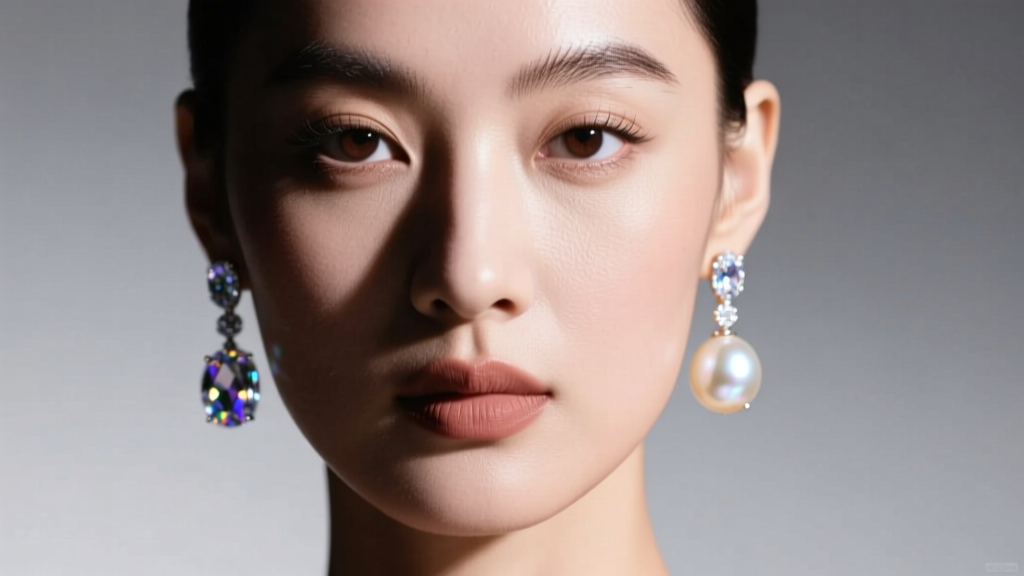
The 2026 Mixed-Media Renaissance: Organic Meets Geometric
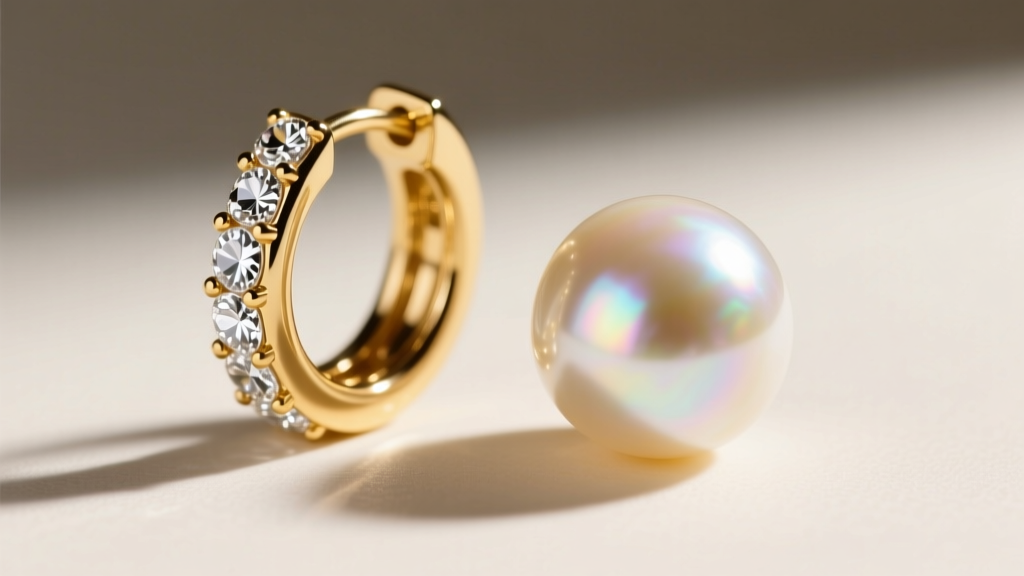
The jewelry landscape of 2026 is defined by deliberate contrast. Moving away from the minimalist, uniform metal hoops that dominated the early 2020s, contemporary styling now heavily favors mixed-media tension. Specifically, pearl and rhinestone earrings have emerged as the definitive statement piece for the year. This trend is not merely about combining two classic elements; it is about juxtaposing the organic, asymmetric imperfections of baroque freshwater pearls with the precise, mathematical light refraction of machine-cut crystal rhinestones.
According to recent market analyses by the Jewelers of America, consumer demand for mixed-material ear styling has increased by 34% year-over-year, driven largely by the 'curated ear' movement on social platforms and high-fashion runway adaptations. Designers are no longer treating pearls as strictly traditional or rhinestones as purely vintage. Instead, they are engineering structural earrings where a raw, unpolished pearl acts as the visual anchor, suspended beneath a geometric pavé rhinestone cluster. This guide breaks down the material science, facial geometry, and structural integrity required to master this trend.
Material Breakdown: Luster, Hardness, and Refraction
To evaluate the quality of pearl and rhinestone earrings, one must understand the distinct physical properties of the components. The market is currently flooded with glass imitations and resin pearls that degrade rapidly. As a discerning collector or stylist, you must look for specific material grades.
| Material Component | Grade / Type | Mohs Hardness | Visual Characteristic | Average Price Range (Per Pair) |
|---|---|---|---|---|
| Pearl | AAA Freshwater (Baroque) | 2.5 - 4.5 | High orient, asymmetric shapes, deep luster | $80 - $250 |
| Pearl | Akoya (Round) | 2.5 - 4.5 | Mirror-like luster, perfect spheres, high cost | $300 - $800+ |
| Rhinestone | Preciosa / Swarovski Crystal | 6.0 - 7.0 | Lead-free, high refractive index, sharp facets | $40 - $150 |
| Rhinestone | Machine-Cut Glass | 5.5 | Lower refraction, prone to foil tarnishing | $15 - $45 |
The Gemological Institute of America (GIA) notes that the nacre thickness of a pearl dictates its longevity. For everyday wear earrings, ensure the freshwater pearls have a minimum nacre thickness of 0.8mm to prevent peeling. On the rhinestone side, always opt for lead-free crystal (like Preciosa) over acrylic or glass. Crystal possesses a higher refractive index, meaning it bends light more aggressively, creating the 'fire' necessary to balance the soft, glowing luster of the pearl.
Face Shape Mapping: Balancing Proportions
The interplay between the soft curves of a pearl and the sharp angles of a rhinestone cluster allows for highly strategic face-shape mapping. Here is a practical framework for selecting the right silhouette based on underlying bone structure:
- Round Faces: Avoid circular huggies or short studs that emphasize width. Opt for elongated drop earrings where a vertical line of baguette-cut rhinestones terminates in a single, teardrop-shaped baroque pearl. This creates a visual elongation of the jawline and neck.
- Square Faces: Soften strong, angular jawlines by prioritizing the organic element. Choose earrings where the pearl is the dominant feature, perhaps a large, asymmetrical freshwater pearl capped with a small, delicate rhinestone bail. Avoid sharp, geometric rhinestone clusters that mimic the angle of the jaw.
- Heart-Shaped Faces: Balance a wider forehead and narrower chin with chandelier-style earrings. Look for designs that are wider at the bottom, utilizing a horizontal spread of rhinestones that cradle a cluster of smaller, round Akoya pearls at the base.
- Oval Faces: The most versatile canvas. Oval faces can carry the extreme tension of avant-garde designs, such as an ear cuff that connects a helix rhinestone chain to a lobe pearl stud, or heavily oversized, asymmetric statement pieces.
The Cartilage Curation: Gauge Specifics and Stacking
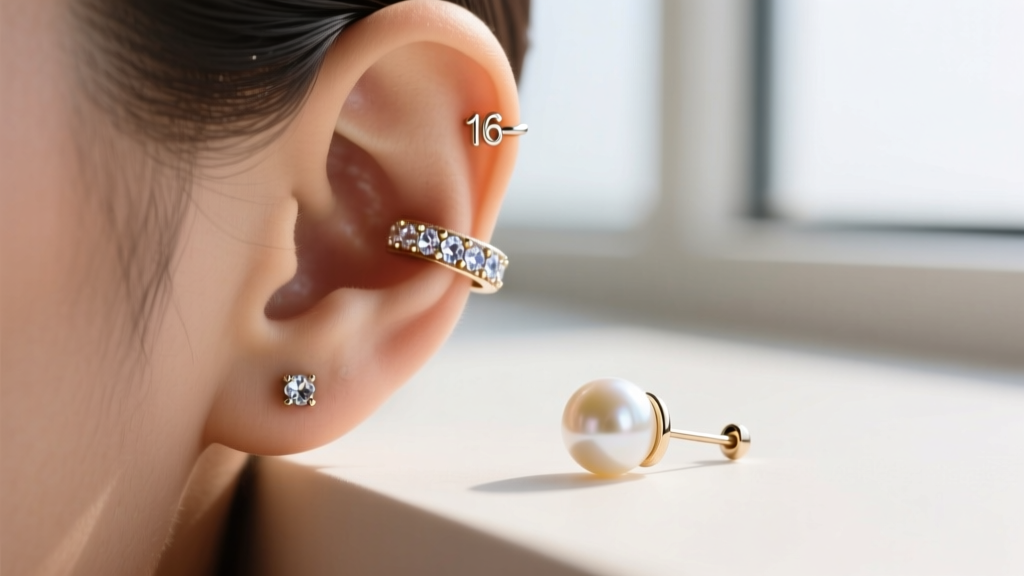
In 2026, pearl and rhinestone earrings are no longer confined to the standard lobe piercing. The 'curated ear' relies heavily on integrating these materials into upper-ear cartilage piercings (helix, forward helix, and tragus). However, mixing materials in cartilage requires strict attention to gauge sizing and weight distribution.
Standard lobe piercings are typically 20-gauge (0.8mm) or 18-gauge (1.0mm), which easily supports the weight of a glass or crystal rhinestone setting combined with a lightweight hollow freshwater pearl. Cartilage piercings, however, are generally pierced at 16-gauge (1.2mm) or 14-gauge (1.6mm). If you are purchasing a rhinestone-encrusted huggie or clicker for a cartilage piercing, you must verify the post or wire thickness. Forcing an 18-gauge earring into a 16-gauge cartilage hole can cause the 'cheese-cutter effect,' where the thin wire migrates through the tissue due to the heavy leverage of the pearl pendant.
Pro-Tip for Stacking: When building an ear stack, use the rhinestones as your 'light catchers' in the upper ear (helix/tragus) where they will catch ambient light, and anchor the lobe with the pearl to provide a matte, grounding contrast at the base of the ear.
Wear & Care: Preventing Adhesive Failure and Degradation
The most common failure mode in mixed-media jewelry is not the breaking of the metal, but the failure of the adhesive bonding the rhinestone to the setting, or the pearl to its cap. Understanding how these pieces are assembled is critical for longevity.
'Never use ultrasonic cleaners on pearl and rhinestone earrings. The high-frequency vibrations will shatter the epoxy bond holding the rhinestone foil backing, and the heat can crack the pearl's nacre layers.'
Adhesive Breakdown: Many mass-market brands use cyanoacrylate (super glue) to set rhinestones. This adhesive becomes brittle over time and turns white when exposed to moisture. High-end jewelers use two-part jeweler's epoxy or, ideally, mechanical prong settings. Always inspect the rhinestones under a loupe; if you see yellowing around the base of the stone, the adhesive is failing.
Pearl Degradation: Pearls are organic calcium carbonate. They are highly susceptible to acids, including the natural lactic acid in human sweat, as well as perfumes and hairsprays. The 'last on, first off' rule is non-negotiable. Wipe your pearls with a damp, lint-free microfiber cloth after every wear to remove skin oils, which can eventually eat through the nacre and dull the orient. Store them in a breathable cotton pouch, never in an airtight plastic bag, as pearls require ambient moisture to prevent cracking.
2026 Market Watch: Investment vs. Accessible Trend Pieces
The market for pearl and rhinestone earrings is currently bifurcated into two distinct tiers. On the accessible end, brands like & Other Stories and Zara are utilizing glass rhinestones and resin-coated shell beads, offering trend-forward silhouettes in the $25 to $60 range. These are excellent for seasonal styling but should not be expected to last beyond a year of regular wear due to foil tarnishing and coating degradation.
On the investment end, independent fine jewelers and heritage houses are utilizing 14k or 18k recycled gold, AAA-grade freshwater pearls, and precision-cut Preciosa crystals. Prices in this tier range from $250 to $1,200. When investing at this level, prioritize mechanical settings (prongs and bezels) over glued components, and ensure the brand offers a repair policy for re-tipping prongs or re-knotting silk pearl suspensions. By focusing on material integrity and structural design, you can curate a collection that transcends fleeting trends and remains a staple of sophisticated ear styling for years to come.


