Sublimation Earrings: Budget & Value Assessment Guide
Discover the true value of sublimation earrings in our 2026 budget assessment. Learn about material costs, hardware grades, and fair pricing tiers.

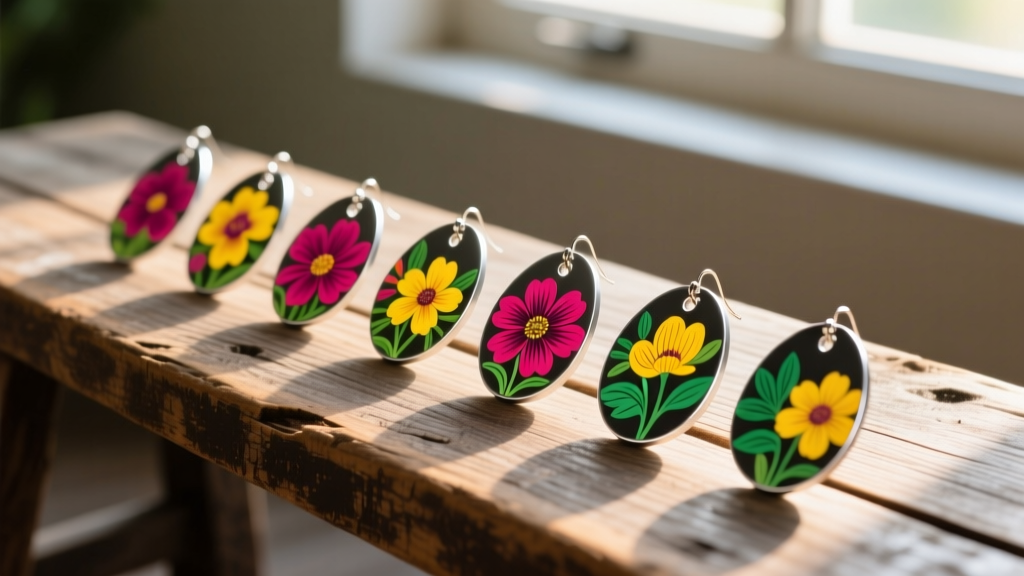
The Economics of Sublimation Earrings: What Are You Actually Paying For?
In the rapidly evolving indie jewelry market of 2026, sublimation earrings have carved out a massive niche. They offer hyper-customizable, vibrant, and lightweight designs that traditional metal casting or enamel work simply cannot replicate at a low price point. But as a buyer or a budding maker, how do you assess the true value of these pieces? Are they a fleeting fast-fashion trend, or a legitimate wardrobe investment? To answer this, we must deconstruct the material science, hardware integrity, and actual cost of goods sold (COGS) behind dye-sublimation jewelry.
Dye-sublimation is not a surface-level printing process. It involves printing specialized solid inks onto transfer paper, then using a heat press at approximately 400°F (204°C) to convert the ink into a gas. This gas permanently bonds with a specialized polyester polymer coating applied to the earring blank. Because the ink becomes part of the coating, the design will not crack or peel under normal conditions—provided the blank and hardware meet specific quality thresholds.
Material Grades: Aluminum vs. MDF vs. Poly-Acrylic
The foundation of any sublimation earring is the blank. The substrate dictates the weight, durability, and ultimately the retail value of the finished piece. Here is a breakdown of the three primary materials used in the industry, sourced from leading suppliers like Johnson Plastics Plus.
| Material | Thickness | Pros | Cons | Value Rating |
|---|---|---|---|---|
| 0.040" Aluminum | 1.0 mm | Waterproof, lightweight, ultra-sharp image transfer, bend-resistant. | Can dent if crushed; single-sided blanks leave a raw silver back. | High (Best Overall) |
| MDF (Wood Composite) | 3.0 mm | Extremely cheap, rigid, easy to cut custom shapes. | Heavy, swells and warps if exposed to moisture, edges can peel. | Low (Budget Only) |
| Poly-Coated Acrylic | 2.0 mm | Glass-like glossy finish, premium feel, excellent color depth. | Heavier than aluminum, higher blank cost, prone to scratching. | Medium-High (Premium) |
For a high-value purchase, 0.040-inch aluminum is the gold standard. It mimics the drape and lightweight feel of fine jewelry while providing a flawless, bright white base for the sublimation ink. MDF, while popular for ultra-budget crafters, is a liability in 2026; a single drop of rain or heavy sweat can cause the wood fibers to expand, breaking the polymer seal and ruining the earring.
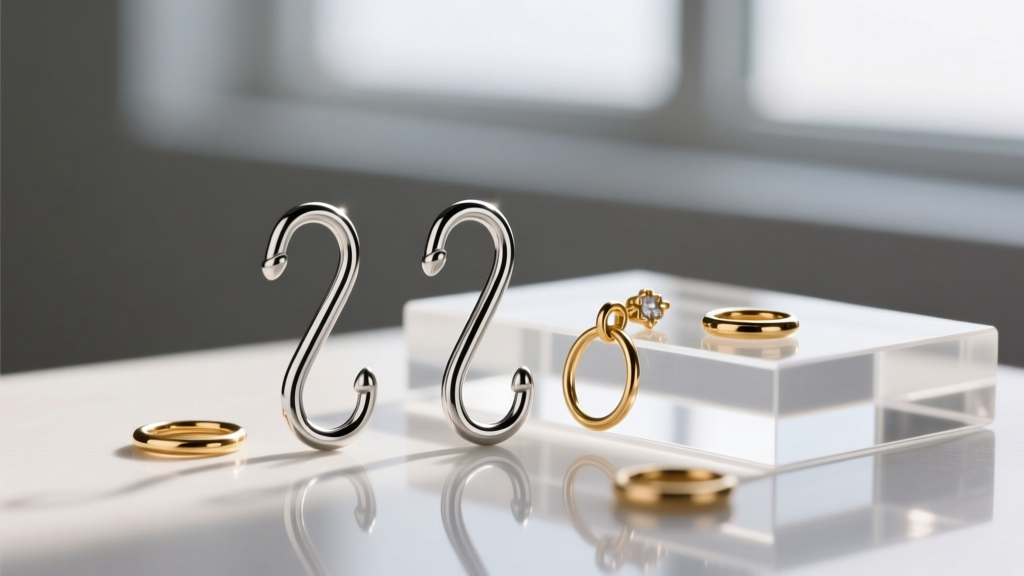
Hardware Integrity: Where Value is Won or Lost
A common failure point in budget sublimation earrings is not the printed design, but the hardware. Many mass-produced or amateur-crafted pairs utilize cheap, 24-gauge brass or mystery-metal French hooks that tarnish within weeks and cause contact dermatitis. When assessing value, you must scrutinize the ear wire and the jump rings.
The Gauge Size Sweet Spot
According to jewelry findings standards outlined by Rio Grande, the ideal wire thickness for standard lobe earrings is 20-gauge (0.81mm).
- 22-Gauge (0.64mm): Too flimsy. It bends easily when taking the earring in and out of the piercing, eventually snapping at the loop.
- 20-Gauge (0.81mm): The perfect balance of structural integrity and piercing comfort. It glides through healed lobes without friction.
- 18-Gauge (1.02mm): Often too thick for standard piercings, causing discomfort or requiring the wearer to 'stretch' the hole slightly.
Alloy Composition
Always look for 316L surgical stainless steel or niobium hooks. 316L contains molybdenum, which drastically increases corrosion resistance against skin oils and humidity. Niobium is highly reactive and can be anodized to match the sublimation colors, offering a premium, cohesive look that justifies a higher price point. Avoid anything labeled simply as 'silver-plated' or 'alloy,' as the base metals often contain nickel or lead.
Common Failure Modes and Longevity Assessment
Even with premium blanks, poor manufacturing techniques can render sublimation earrings worthless. If you are evaluating a batch from a new vendor, or troubleshooting your own craft room output, watch for these specific failure modes:
- Ghosting: If the transfer paper shifts even a millimeter during the 45-to-60-second heat press cycle, the design will have a blurry, doubled edge. This indicates poor press technique or inadequate heat-tape usage.
- Incomplete Sublimation (Fading): If the heat press is not calibrated correctly (e.g., pressing at 350°F instead of the required 400°F), the ink does not fully gasify. The earring will look vibrant on day one but will fade to a washed-out pastel within a month of UV exposure.
- Edge Peeling on MDF: If the polymer coating on an MDF blank does not wrap entirely around the routed edge, moisture will enter the side of the earring, causing the top layer to bubble and flake off.
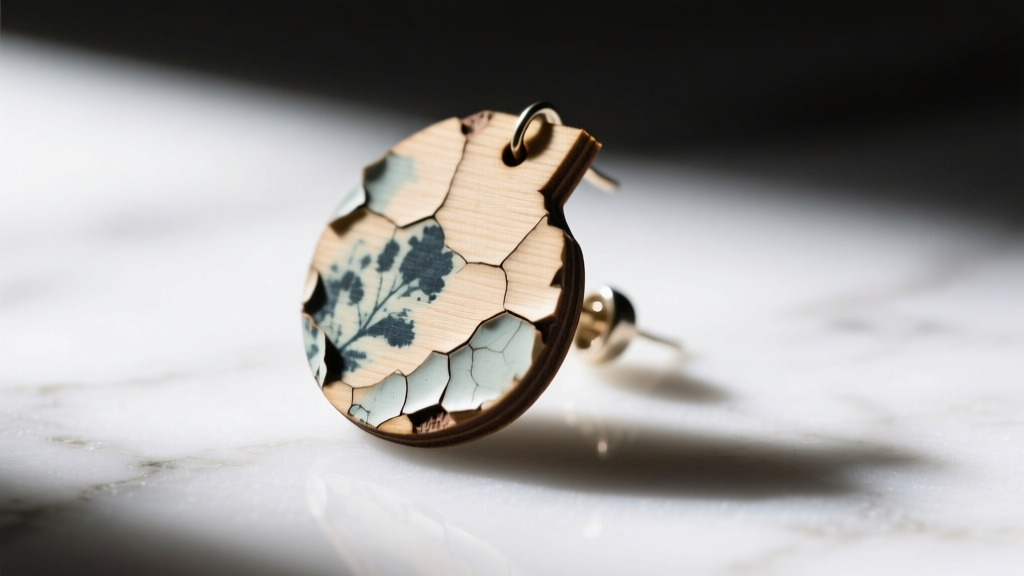
Pricing Framework: How to Spot a Fair Deal in 2026
Understanding the COGS helps buyers avoid overpaying and helps makers price their work sustainably. The raw materials for a standard pair of 2-inch aluminum sublimation dangles—including the blank, sublimation ink, transfer paper, 20G steel hooks, and jump rings—typically cost between $0.85 and $1.40. However, you are paying for the artisan's design time, color-calibration expertise, and labor.
The 2026 Market Pricing Tiers
- Tier 1: Mass-Market Dropshipped ($3 - $8)
Usually printed on thick MDF or low-grade acrylic. Hardware is often 22-gauge mystery alloy. The designs are frequently stolen or AI-generated without color-correction. Verdict: Poor value; high risk of skin irritation and rapid degradation. - Tier 2: Independent Artisan / Etsy ($14 - $24)
Printed on 0.040" double-sided aluminum blanks. Features 20-gauge 316L steel hooks. Designs are original, color-profiled for specific sublimation inks (like Sawgrass or Cosmos Ink), and sealed properly. Verdict: Excellent value; the sweet spot for durable, unique statement pieces. - Tier 3: Premium Mixed-Media ($28 - $45+)
Sublimation combined with laser-cut wood inlays, hand-painted resin accents, or genuine gemstone dangles. Hardware includes niobium or 14k gold-filled wires. Verdict: High value for collectors and those seeking hybrid fine-fashion jewelry.
"The true value of sublimation jewelry lies in its ability to democratize complex, full-color art. A traditional enameled earring with four colors and a gradient would cost hundreds of dollars to cast and finish. Sublimation achieves this for under twenty dollars, provided the maker respects the chemical requirements of the polymer bond."
— Journal of Modern Craft & Material Science, 2025
Final Verdict: Are Sublimation Earrings a Smart Wardrobe Investment?
When evaluated strictly on a budget-to-visual-impact ratio, high-quality sublimation earrings are unmatched. They allow wearers to match hyper-specific color palettes, support indie artists, and enjoy large, dramatic silhouettes without the heavy earlobe fatigue associated with solid brass or stone jewelry.
However, the 'value' is entirely contingent on the maker's adherence to material standards. As a buyer, always check the product description for aluminum blanks and surgical steel or niobium hardware. If a vendor is transparent about their gauge sizes and substrate materials, you are likely looking at a product built to last for years, rather than a disposable accessory destined for the landfill. For those willing to do a quick material check, sublimation earrings remain one of the smartest, most vibrant investments in the contemporary accessories market.
Quick Buyer's Checklist
- Verify the blank material (Aluminum > Acrylic > MDF).
- Confirm the ear wire gauge (20G is ideal).
- Check for UV-resistant top-coats if you live in high-sun climates.
- Ensure jump rings are soldered or tightly closed to prevent the dangle from detaching.
For more insights on jewelry findings and metal allergies, consult the educational resources at Fire Mountain Gems, a staple in the jewelry-making community for decades.


