Sunlight Earrings: Material Guide for Maximum Sparkle
Discover the best materials for sunlight earrings. Compare gemstone refraction, metal reflectivity, and UV resistance for ultimate outdoor sparkle.

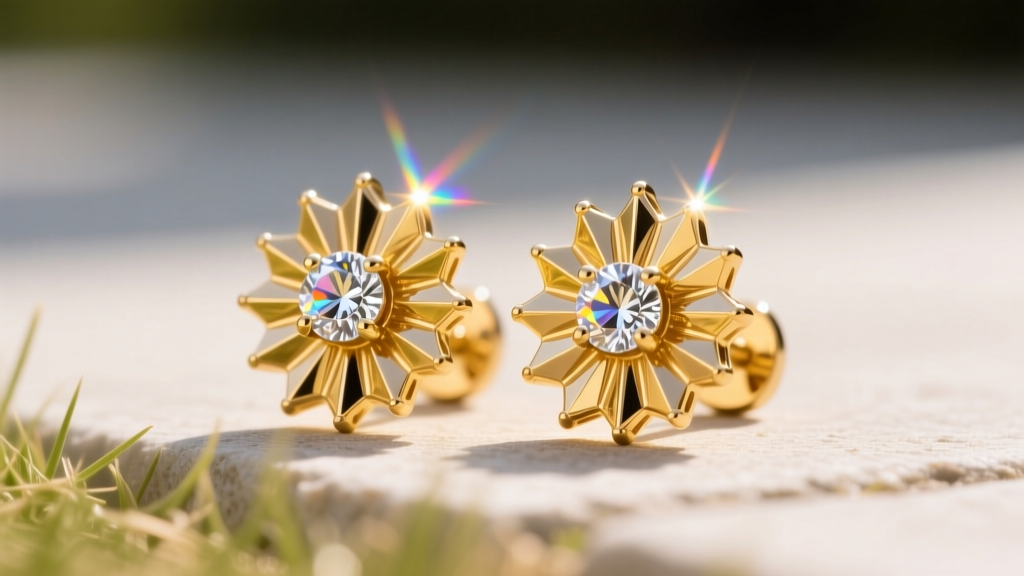
When curating a collection of sunlight earrings—pieces specifically designed or selected to maximize optical performance in direct outdoor lighting—understanding material science is non-negotiable. Direct sunlight provides the ultimate stress test for jewelry. It reveals the true refractive capabilities of gemstones, highlights the micro-polish of precious metals, and accelerates the chemical degradation of sensitive alloys. In 2026, the trend of outdoor-centric, light-catching jewelry requires a rigorous approach to material selection. This guide breaks down the exact optical properties, UV resistance, and structural requirements for earrings meant to thrive under the sun.
The Physics of Outdoor Brilliance: Refractive Index and Dispersion
The term 'sparkle' is actually a combination of two distinct optical phenomena: brilliance (white light return) and fire (the dispersion of light into spectral colors). When sunlight earrings are exposed to direct, unfiltered UV and visible light, the gemstone's Refractive Index (RI) and dispersion values dictate its visual performance. According to the Gemological Institute of America (GIA), the way a stone bends light determines its brilliance, while its dispersion dictates the colorful flashes visible in bright conditions.
Moissanite vs. Diamond vs. Cubic Zirconia
For maximum fire in direct sunlight, moissanite is the undisputed champion. Moissanite possesses a dispersion value of 0.104, which is more than double that of a natural or lab-grown diamond (0.044). When sunlight hits a moissanite sunburst earring, it fractures the light into intense, rainbow-like flashes. Diamonds, with an RI of 2.42 compared to moissanite's 2.65, offer superior white brilliance and a crisper, more glass-like scintillation, which many purists prefer for a sophisticated daytime look. Cubic Zirconia (RI 2.15) falls short; under harsh midday sun, CZ tends to look overly glassy and can exhibit a cloudy, dull appearance due to its lower hardness and susceptibility to micro-scratches that scatter light.
- Moissanite: Best for intense rainbow fire. Pricing: $250–$500 per carat.
- Lab-Grown Diamond: Best for crisp, white scintillation. Pricing: $600–$1,200 per carat.
- White Sapphire: Lowest RI (1.77). Appears flat and glassy in direct sunlight. Not recommended for high-impact sunlight earrings.
Metal Reflectivity and the Sunscreen Factor
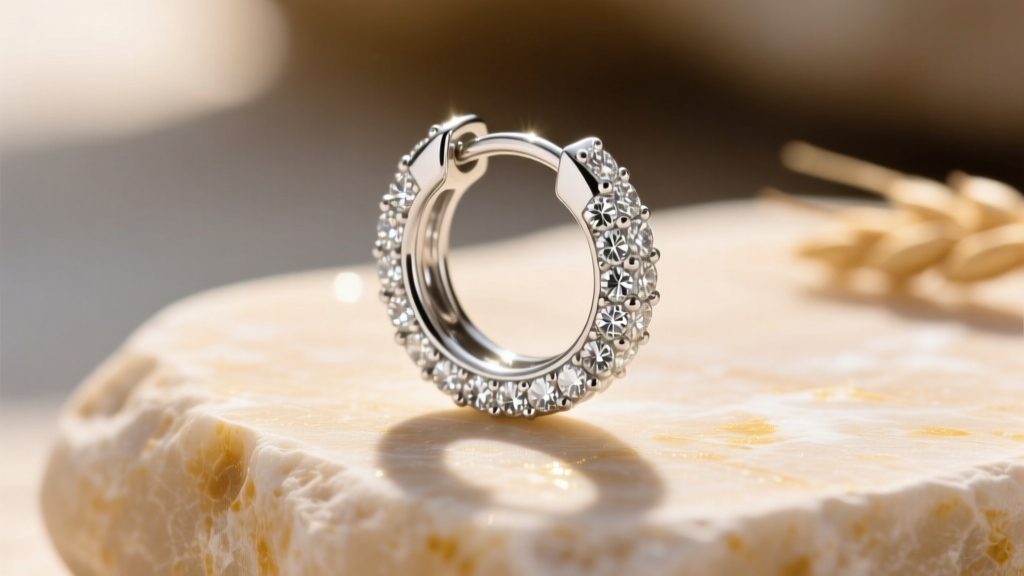
Sunlight earrings are inherently worn outdoors, meaning they are constantly exposed to sweat, humidity, and, most critically, sunscreen. The chemical composition of your SPF can wreak havoc on certain metal alloys. Chemical sunscreens containing avobenzone can react with the copper present in 14k and 18k rose gold, as well as sterling silver, accelerating oxidation and leaving a dark or greenish patina on the metal and your skin.
Furthermore, mineral sunscreens (zinc oxide and titanium dioxide) leave a microscopic white film that lodges into the crevices of pavé settings and milgrain detailing, instantly dulling the metal's reflectivity. To combat this, the best metals for sunlight earrings are those that resist chemical bonding and are easy to clean.
Platinum and 18k yellow gold are the premier choices for outdoor wear. Platinum's natural white luster does not require rhodium plating (which can wear off and expose yellowish alloys underneath), and 18k yellow gold's high pure-gold content makes it highly resistant to the corrosive salts found in human sweat and ocean air.
Sterling silver, while affordable, requires frequent polishing if worn outdoors regularly. If you prefer the look of white metal but want to avoid platinum's premium price tag (often 40-60% higher than gold), palladium or high-grade titanium offer excellent hypoallergenic properties and UV/sweat resistance, though they lack the traditional prestige and resale value of platinum.
UV-Sensitive Gemstones: What to Keep in the Shade
Not all gemstones are created equal when it comes to prolonged UV exposure. Direct, intense sunlight can cause irreversible structural and color damage to several popular earring stones. The Jewelers of America explicitly warns against exposing certain heat- and light-sensitive gems to prolonged direct sunlight.
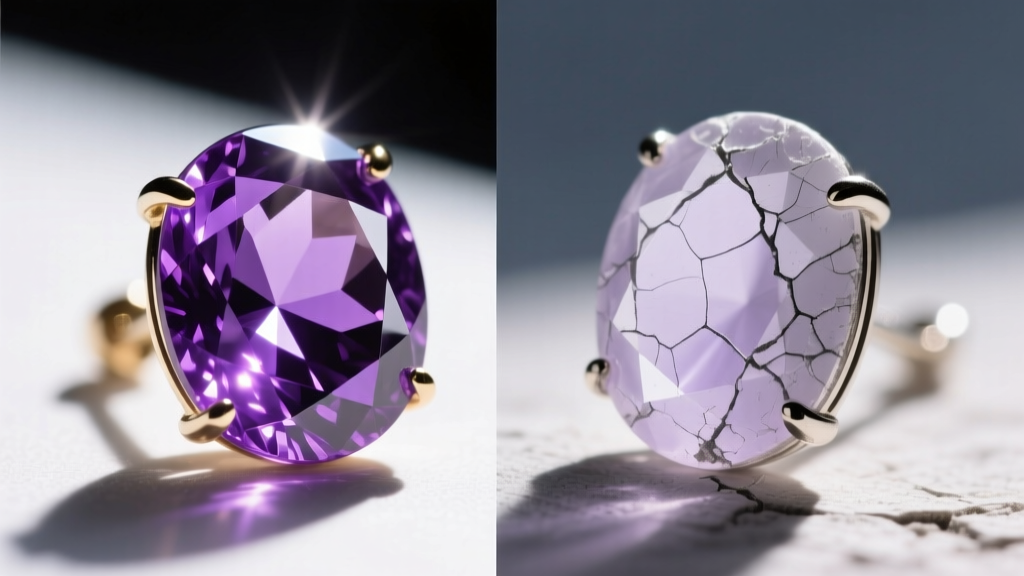
- Amethyst & Kunzite: Prolonged UV exposure breaks down the color centers in these stones, causing vibrant purples and pinks to fade into a washed-out, pale gray.
- Morganite: While slightly more stable than kunzite, morganite can lose its peachy-pink saturation after hundreds of hours of direct sun exposure.
- Opals: The heat from direct sunlight can dehydrate opals, leading to 'crazing'—a network of microscopic internal fractures that ruins the stone's play-of-color and structural integrity.
- Citrine: Often heat-treated amethyst, citrine can become brittle and lose its warm orange hue if subjected to extreme thermal shock from outdoor heat.
For sunlight earrings, stick to UV-stable stones: diamonds, moissanite, sapphires, rubies, and spinels. These corundum and carbon-based stones are virtually impervious to UV fading.
Material Comparison Matrix for Sunlight Earrings
| Material | Refractive Index | Dispersion (Fire) | UV/Heat Stability | Sunscreen Resistance |
|---|---|---|---|---|
| Moissanite | 2.65 | 0.104 (Excellent) | High | N/A (Gemstone) |
| Diamond | 2.42 | 0.044 (Very Good) | High | N/A (Gemstone) |
| Platinum | N/A | N/A | High | Excellent |
| 18k Yellow Gold | N/A | N/A | High | Very Good |
| Sterling Silver | N/A | N/A | High | Poor (Tarnishes) |
| Amethyst | 1.54 | 0.013 (Poor) | Low (Fades) | N/A (Gemstone) |
Structural Integrity: Gauge Sizes and Wind Resistance
Sunlight earrings often feature dynamic designs—think sunburst dangles, oversized hoops, and intricate chandelier settings—meant to catch the light as the wearer moves. However, outdoor environments introduce wind, which can turn a beautiful dangle earring into a liability. The 'cheese cutter effect' occurs when a heavy earring is caught by a gust of wind, pulling violently on the earlobe and potentially tearing the piercing.
To mitigate this, structural gauge selection is critical. Standard lobe piercings are typically done at 20-gauge (0.81mm). However, for any sunlight earring that drops more than 1.5 inches or weighs over 4 grams, you must upgrade the post or wire thickness. An 18-gauge (1.02mm) or even 16-gauge (1.29mm) post provides exponentially more shear strength, distributing the weight across a wider surface area of the earlobe. If you are designing or purchasing huggies or medium-sized hoops for outdoor festivals or beach wear, opt for a 14-gauge (1.63mm) wire for the hoop itself to prevent bending and warping when exposed to accidental impacts or heavy winds.
Clasp Security in Active Environments
Standard butterfly friction backs are insufficient for active outdoor wear. Sweat acts as a lubricant, allowing friction backs to slide off the post unnoticed. For sunlight earrings worn in dynamic outdoor settings, mandate the use of screw-backs, locking la-backs, or silicone ear nuts with a wide flange. For hoops, a seamless clicker mechanism with a secure hinge is vastly superior to a traditional latch-back, which can easily snag on hair or clothing and pop open.
Final Verdict: Engineering the Perfect Sunlight Earring
Creating or selecting the ultimate sunlight earrings requires balancing optical physics with environmental chemistry. For unparalleled rainbow fire that dominates in direct sunlight, pair a high-cut moissanite with an 18k yellow gold sunburst setting. The warm tone of the gold complements the spectral flashes, while the alloy's purity resists the corrosive effects of summer sweat and sunscreen. Avoid UV-sensitive stones like amethyst, and always prioritize structural integrity by selecting thicker 18-gauge posts for dangle designs. By respecting the material science behind the sparkle, your earrings will maintain their brilliance and structural integrity, season after season.


