Suspender Earrings 2026: The Ultimate Threader Style Guide
Discover the 2026 suspender earrings trend. Learn how to style threader chains, choose the right gauge, and master face-shape pairing for a modern look.

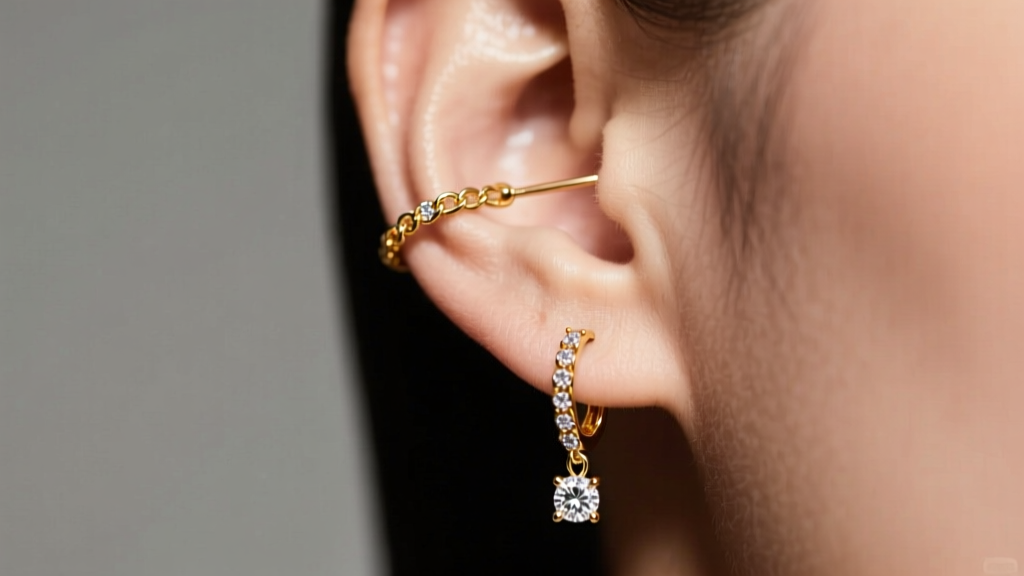
The Anatomy of a Suspender Earring: Beyond the Basic Threader
Suspender earrings, frequently referred to as threader earrings or ear threads, have transcended their early-2000s novelty status to become a cornerstone of modern fine jewelry. As we navigate the 2026 jewelry landscape, the shift toward kinetic, movement-based accessories and "quiet luxury" has propelled suspenders back into the spotlight. Unlike traditional post earrings that rely on a rigid metal rod and a butterfly clutch, suspender earrings utilize a flexible chain that glides directly through the ear piercing, relying on gravity and friction for retention.
To truly master this style, one must understand the precise anatomy of the piece. A high-quality suspender earring consists of three distinct components: the needle, the chain, and the terminal drop. The needle is a rigid, tapered wire designed to pierce the fistula without catching. According to manufacturing standards detailed by Rio Grande, standard lobe piercings typically heal at 20-gauge (0.81mm) or 18-gauge (1.02mm). Therefore, premium suspender needles are crafted at 22-gauge (0.64mm) to glide effortlessly without causing micro-tearing or scar tissue buildup. The chain itself is usually an even finer 24-gauge (0.51mm), transitioning seamlessly from the needle to create a fluid, liquid-metal effect.
Chain Weave Dynamics: How Texture Dictates Movement
Not all suspender earrings behave the same way. The specific chain weave drastically alters the earring's drape, light reflection, and most importantly, its friction profile within the earlobe. Choosing the right weave is critical for both aesthetics and wearability.
- Box Chain: Composed of square links that lie completely flat. Box chains offer a highly reflective, modern surface that catches the light beautifully. However, their smooth profile offers minimal friction, making them the most prone to slipping out of the ear during movement.
- Cable Chain: The classic oval-link design. Cable chains provide a traditional, delicate look but possess a major functional flaw: the open links can easily snag on fine hair or knit sweaters, potentially pulling the earring out entirely.
- Rope Chain: Created by twisting multiple strands of links together. Rope chains offer a textured, vintage-inspired aesthetic. Crucially, the uneven surface creates micro-friction against the fistula, making rope chain suspenders significantly more secure than box or cable varieties.
- Bead Chain: Featuring small spherical links, bead chains provide excellent grip within the piercing. They are highly secure but require more frequent cleaning, as the spherical joints can trap sebum and cosmetic residues.
2026 Material Matrix: Choosing Your Perfect Pair
The constant friction of a chain moving through a piercing demands high-quality, hypoallergenic metals. Base metals or heavy plating will eventually wear down, exposing the ear to nickel and copper, which can cause contact dermatitis. Below is a comparative matrix of the top materials used in contemporary suspender earrings.
| Material | Purity / Grade | Typical Gauge | Est. Price Range | Friction & Wear Profile |
|---|---|---|---|---|
| 14k Solid Gold | 58.5% Au | 22g - 24g | $90 - $280 | Low friction, hypoallergenic, excellent longevity |
| Argentium Silver | 93.5% Ag + Germanium | 22g | $45 - $110 | Highly tarnish-resistant, smoother glide than sterling |
| Implant Grade Titanium | ASTM F136 | 20g - 22g | $50 - $130 | Ultra-hypoallergenic, rigid needle, ideal for sensitive lobes |
| Gold Vermeil | Sterling base + 2.5µm Au | 24g | $25 - $65 | High friction risk as plating wears; requires gentle care |
For those incorporating gemstones into their terminal drops, the Gemological Institute of America (GIA) notes that bezel settings are vastly superior to prong settings for threader earrings. Because suspenders swing and sway with kinetic movement, prongs are highly susceptible to catching on clothing and bending, potentially losing the stone.
Face Shape & Styling Dynamics
The elongated, vertical nature of suspender earrings makes them a powerful tool for facial contouring. By manipulating the length and terminal weight of the threader, you can dramatically alter the perceived geometry of your face shape.
Round & Square Faces
The primary goal for round and square face shapes is to create vertical elongation and soften strong jawlines. Opt for long suspender earrings ranging from 2.5 to 3.5 inches in length. A slender 24-gauge box chain terminating in a single, teardrop-shaped gemstone or a solitary baroque pearl draws the eye downward, creating an illusion of length. Avoid short, stiff threaders or horizontal lariat loops, which will only emphasize the width of the cheekbones and jaw.
Oval & Heart Faces
Oval faces possess balanced proportions and can carry almost any suspender style. However, medium-length threaders (1.5 to 2 inches) featuring an asymmetrical design—such as a chain that threads through the lobe and features a charm on both the front and back drop—highlight the cheekbones beautifully. For heart-shaped faces, which feature a broader forehead and a narrow chin, choose suspenders with a slightly heavier, wider terminal drop at the bottom to add visual weight and balance to the lower half of the face.

The Slippage Problem: Engineering a Secure Fit
The most common complaint regarding suspender earrings is their tendency to slip out of the earlobe, especially when removing clothing or brushing hair. Because the chain lacks a fixed post, gravity and kinetic movement can slowly pull the threader completely through the fistula. Fortunately, jewelry engineers and stylists have developed several actionable solutions to this inherent design flaw.
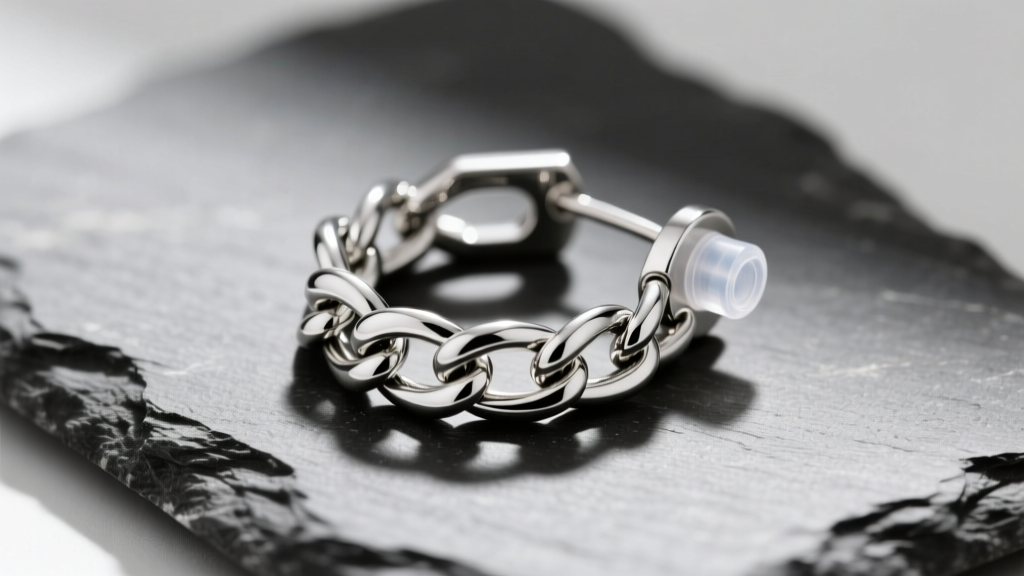
1. Silicone O-Rings and Friction Stoppers: The most effective modern solution is the use of clear silicone stoppers, often modeled after the La Pousette clutch mechanism. Once the suspender is threaded to your desired length, a tiny silicone disc is slid onto the chain behind the earlobe. The high-friction silicone grips the microscopic links of the chain, locking it in place without damaging the metal.
2. The Double-Thread Technique: For those with multiple lobe piercings, the double-thread method offers unparalleled security. Thread the needle through the primary piercing, let the chain drape down, and then weave it back up through a secondary, higher piercing. This creates a locked loop that is physically impossible to pull out without unthreading it intentionally.
3. Intentional Asymmetry: If you are wearing a single, long suspender earring as a statement piece, always thread it so that the longer, heavier drop hangs behind the earlobe rather than in front. The natural weight of the terminal drop will act as an anchor against the neck, reducing the forward momentum that typically causes the chain to slip out.
Curated Ear Integration
In 2026, the "curated ear" trend has evolved from merely clustering multiple studs to incorporating dynamic, moving elements. Suspender earrings are no longer confined to the standard lower lobe. Jewelers are now designing specialized, shorter threaders meant for the upper lobe or even the lower helix. When integrating a suspender into a multi-piercing setup, ensure the chain length does not overlap with the jewelry sitting directly beneath it. A 1-inch micro-threader in the upper lobe paired with a classic 4mm bezel stud in the lower lobe creates a sophisticated, tiered effect that captures light from multiple angles.
Conclusion
Suspender earrings represent the perfect intersection of minimalist design and kinetic energy. By understanding the critical nuances of gauge sizing, chain weave friction, and facial geometry, you can elevate this accessory from a fleeting trend to a permanent staple in your fine jewelry rotation. Whether you opt for the secure grip of a rope chain or the sleek reflection of a box weave, mastering the threader earring is an essential skill for the modern jewelry enthusiast.


