Swiss Blue Topaz Earrings: A Gemologist's Technical Buying Guide
Discover the technical details of Swiss blue topaz earrings. Learn about irradiation treatments, clarity grades, ideal metal pairings, and pricing.

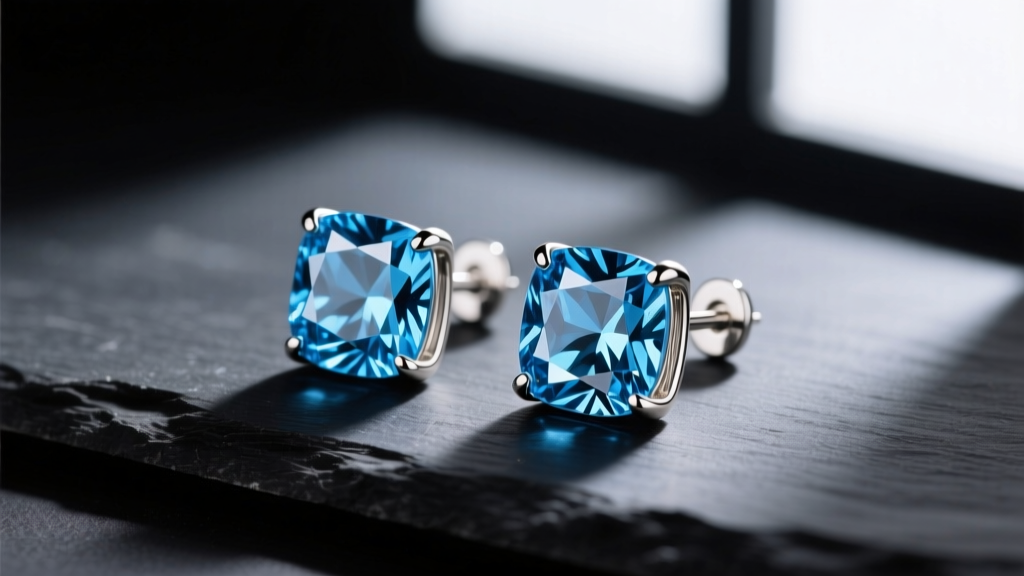
The Mineralogy and Irradiation Protocol
When evaluating Swiss blue topaz earrings, it is essential to understand the mineralogical baseline of the gemstone. Topaz is a silicate mineral of aluminium and fluorine, registering an 8 on the Mohs hardness scale and possessing a specific gravity of 3.53. In its natural state, genuine blue topaz is exceptionally rare and typically presents as a very pale, almost washed-out sky blue. The vivid, highly saturated "Swiss" blue seen in the modern jewelry market is the result of advanced, permanent laboratory enhancement.
According to the Gemological Institute of America (GIA), the vast majority of Swiss blue topaz begins as completely colorless (white) topaz, primarily sourced from mines in Brazil and Nigeria. The colorless rough is subjected to electron beam irradiation, which alters the crystal lattice structure and creates specific color centers. Following irradiation, the stones undergo a low-temperature heating process to stabilize the vibrant, medium-dark blue hue. Unlike some temporary gemstone treatments, this irradiation and heat combination is permanent and will not fade under normal UV exposure or sunlight. However, the Federal Trade Commission (FTC) mandates that jewelers disclose this irradiation treatment at the point of sale, a critical marker of a reputable vendor.
Evaluating Cut Geometry and Clarity Standards
Topaz is classified as a Type I clarity gemstone, meaning that eye-clean specimens are the industry standard. Inclusions such as liquid-filled tear cavities or two-phase inclusions are heavily penalized in the grading of Swiss blue topaz earrings. Because the material is relatively abundant in large, clean crystal formations, buyers should never accept visible inclusions in the table or crown facets of a finished earring.
The Windowing Defect: What to Avoid
The most common cutting failure in commercial-grade topaz is "windowing." Topaz has a relatively low refractive index (1.609 to 1.627) compared to sapphire or diamond. If a lapidary cuts the pavilion angles too shallow to retain carat weight, light will leak out of the bottom of the stone rather than reflecting back to the eye. This creates a dead, transparent "window" in the center of the gem where the color appears washed out.
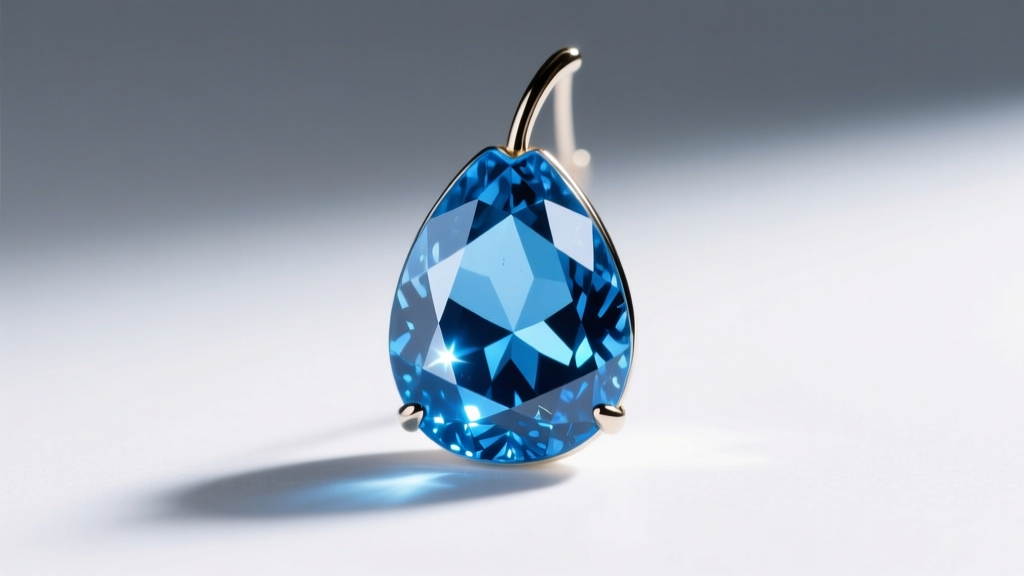
To maximize the vivid saturation of Swiss blue topaz, expert cutters utilize deep pavilions (typically angled between 42 and 45 degrees) or modified brilliant cuts. When shopping for dangle or drop earrings, inspect the stones under direct, diffused lighting. Tilt the earrings back and forth; the color should remain rich and consistent across the entire face-up surface, with no hollow or glassy patches in the center. Emerald and cushion cuts are particularly effective at showcasing the even color distribution of well-treated Swiss blue rough.
Metal Pairings, Prong Engineering, and Post Gauges
While topaz is hard enough (Mohs 8) to resist everyday scratching, it possesses a critical structural vulnerability: perfect basal cleavage on the {001} plane. This means that a sharp impact parallel to the cleavage plane can cause the gemstone to split cleanly in half. This mineralogical fact heavily dictates the engineering of the earring settings.
Setting Specifications and Prong Tension
For Swiss blue topaz earrings, four-prong or six-prong martini and basket settings are standard. However, the prongs must be meticulously engineered. V-prongs are strictly required for pear, marquise, or trillion cuts to protect the sharp, vulnerable points where cleavage risks are highest. The prong tips should be rounded and polished to prevent snagging on textiles, which could torque the stone and induce a fracture. As detailed in mineralogical databases like Mindat.org, the basal cleavage of topaz requires jewelers to avoid applying excessive downward pressure during the setting process, making platinum or 14k gold the preferred metals due to their malleability and secure grip.
Post Gauge and Earring Back Mechanics
Because Swiss blue topaz is frequently cut in substantial carat weights (3 to 8 carats per stone) to maximize color depth, the physical weight of the earrings becomes a significant factor. Standard 20-gauge (0.81mm) earring posts are often insufficient for heavy drop earrings, leading to post bending and earlobe stretching.
| Earring Style | Recommended Post Gauge | Ideal Earring Back | Metal Recommendation |
|---|---|---|---|
| Stud (1-3 ctw) | 20-Gauge (0.81mm) | Standard Friction Back | 14k Yellow or White Gold |
| Heavy Stud (4+ ctw) | 18-Gauge (1.02mm) | La Pousette or Screw Back | 18k Gold or Platinum |
| Drop / Dangle | 18-Gauge (1.02mm) | Secure Leverback or Latch | 14k Palladium White Gold |
For heavy Swiss blue topaz studs, upgrading to an 18-gauge post paired with a La Pousette locking back or a threaded screw back ensures the earring sits flush against the earlobe without drooping forward, which is vital for maintaining the optical alignment of the stone.
Market Pricing and Imitation Detection
As of 2026, the wholesale market for treated blue topaz remains highly stabilized, making Swiss blue topaz earrings an accessible luxury. Pricing is generally dictated by the cut quality and the carat weight of the stones, rather than rarity. Well-cut Swiss blue topaz typically ranges from $12 to $25 per carat for stones in the 2 to 5-carat range. Once you factor in the precious metal setting and labor, a high-quality pair of 4-carat total weight (ctw) 14k gold Swiss blue topaz stud earrings should retail between $250 and $450. Prices significantly lower than this often indicate the use of thin gold plating over brass or silver, which will inevitably tarnish and degrade.
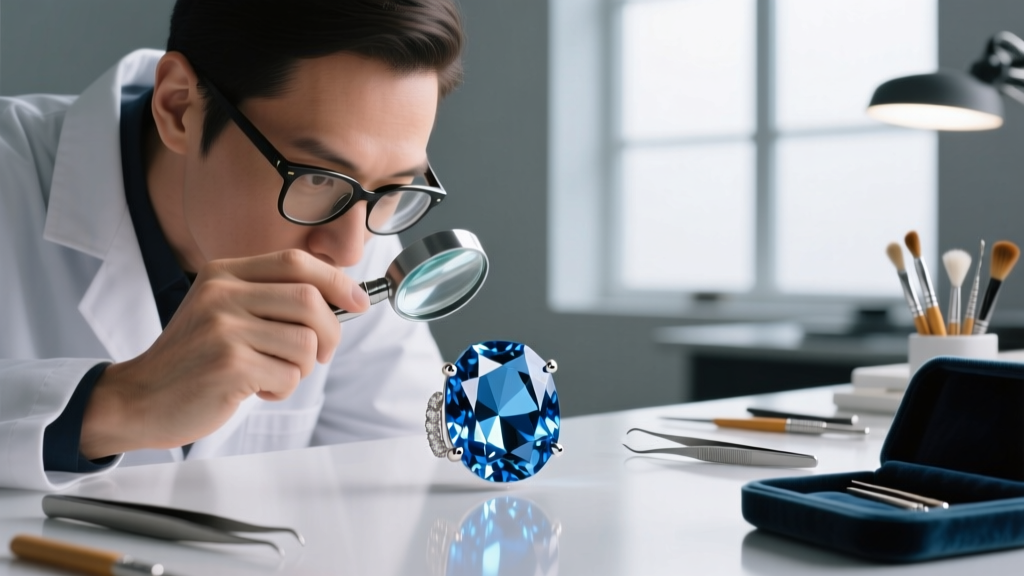
Distinguishing Topaz from Aquamarine and Spinel
Unscrupulous sellers may attempt to pass off synthetic blue spinel or treated aquamarine as Swiss blue topaz. Gemologists distinguish these materials through pleochroism and refractive index. Topaz is strongly pleochroic, meaning it exhibits different color intensities when viewed from different crystal angles. Furthermore, a handheld refractometer will show topaz with an RI of roughly 1.62, whereas aquamarine (a beryl) sits lower at 1.57, and synthetic spinel rests higher at 1.72. Always request a gemological report or a detailed invoice that explicitly states "irradiated blue topaz" rather than vague terms like "blue gemstone earrings."
Care, Maintenance, and Cleavage Risks
The maintenance of Swiss blue topaz earrings requires strict adherence to safe cleaning protocols. The most catastrophic mistake a consumer can make is placing topaz earrings into an ultrasonic cleaner. The high-frequency acoustic cavitation generated by ultrasonic waves can easily exploit the gemstone's basal cleavage planes, causing internal stress fractures or completely shattering the stone.
Similarly, steam cleaners should be avoided, as sudden thermal shock can induce fracturing. The GIA Care and Cleaning Guide recommends using only a mild, phosphate-free dish soap mixed with lukewarm water. Use a soft-bristled infant toothbrush to gently agitate the dirt trapped beneath the pavilion facets and around the prong heads. Rinse thoroughly with distilled water to prevent hard water spotting, and dry with a lint-free microfiber cloth. When storing your earrings, keep them in a separate, fabric-lined compartment; while topaz is a Mohs 8 and will not be easily scratched, its hard edges can easily abrade softer gems like pearls, opals, or even 18k gold settings if they are tossed loosely into a jewelry box.


