Demon Slayer Tanjiro Earrings: Metal & Material Guide
Discover the best materials for Demon Slayer Tanjiro earrings. Compare titanium, surgical steel, and acrylic for safe, long-lasting Hanafuda styles.

The Hidden Danger in Anime Merch Jewelry
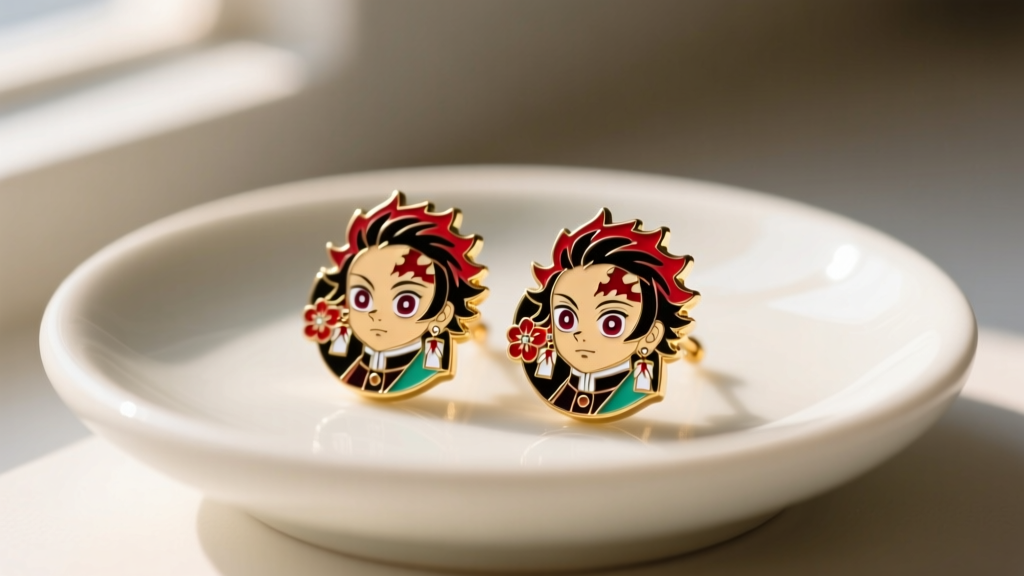
The iconic Hanafuda earrings worn by Tanjiro Kamado are a staple for anime fans, but the jewelry market is currently flooded with low-quality, mass-produced replicas. While the striking red and black sunburst design is visually captivating, the underlying metallurgy of cheap demon slayer tanjiro earrings often poses a significant risk to your skin health. Many budget options sold on dropshipping sites and convention floors are cast from porous zinc alloys and plated with nickel-heavy washes that rapidly degrade upon contact with human sweat.
When you wear large dangle earrings, the metal post sits in the fistula (the piercing channel) for hours. If the base metal contains reactive elements, the lactic acid and salt in your sweat will trigger an electrochemical reaction, leaching nickel ions directly into your tissue. According to the American Academy of Dermatology, nickel allergy is the most common cause of allergic contact dermatitis, leading to severe itching, lobe swelling, and weeping infections. As collectors and fans seek higher-quality cosplay and everyday pieces in 2026, understanding the material science behind these specific earrings is critical for both comfort and longevity.
Base Metals: Titanium vs. Surgical Steel vs. Zamak
The structural integrity of the earring hook and the backing plate of the charm dictate how long the piece will last. Here is how the most common base metals compare when engineered into Hanafuda-style dangles.
ASTM F136 Titanium (The Ultimate Choice)
For sensitive ears, implant-grade titanium (specifically ASTM F136 Ti6Al4V ELI) is the undisputed gold standard. This alloy contains aluminum and vanadium but is entirely free of nickel. Because Tanjiro's earrings are relatively large—typically measuring 1.5 by 2.5 inches—weight becomes a major factor. Titanium boasts an exceptional strength-to-weight ratio, meaning the hooks will not bend under the swinging momentum of the charm, yet they remain light enough to prevent earlobe fatigue. The Association of Professional Piercers universally recommends this specific titanium grade for all long-term wear.
316L Surgical Stainless Steel
316L steel is an iron-based alloy containing chromium, nickel, and molybdenum. The 'L' stands for low carbon, which enhances its corrosion resistance. While it does contain nickel, the nickel is tightly bound within the crystalline structure of the steel, meaning it rarely leaches unless the surface is deeply scratched or exposed to highly acidic environments. For the vast majority of wearers, 316L French wire hooks are perfectly safe, highly polished, and significantly more affordable than titanium. However, those with severe, clinically diagnosed nickel allergies should avoid it.
Zamak and 'Tibetan Silver' (Avoid at All Costs)
If a product listing describes the metal as 'Tibetan Silver', 'Antique Silver', or simply 'Alloy', you are likely looking at Zamak. Zamak is a die-cast alloy of zinc, aluminum, magnesium, and copper. It has a low melting point, making it incredibly cheap to mass-produce, but it is highly porous. To make it look shiny, manufacturers electroplate it with a microscopically thin layer of nickel or silver. Within weeks, friction and sweat wear through this plating, exposing the reactive zinc core, which rapidly oxidizes and turns your earlobes a sickly shade of green.
The Charm: Laser-Cut Acrylic vs. Enamel
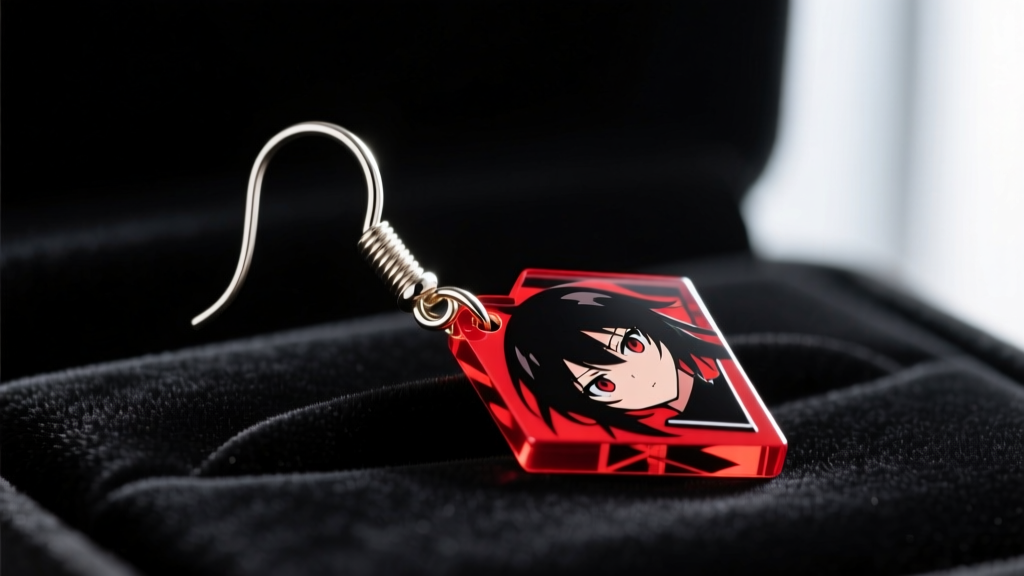
The visual impact of demon slayer tanjiro earrings relies entirely on the charm's geometric sun and earring tassel design. The material used to render these colors drastically affects the earring's weight and colorfastness.
- Laser-Cut PMMA Acrylic: Polymethyl methacrylate (PMMA) is the premier choice for modern anime jewelry. It is optically clear, incredibly lightweight, and can be laser-cut with microscopic precision to achieve the sharp, crisp lines of the Hanafuda pattern. High-quality UV-printed acrylic will not yellow or peel, ensuring the red sunburst remains vibrant for years.
- Kiln-Fired Hard Enamel: For a premium, metallic finish, hard enamel (vitreous enamel) is fired in a kiln at over 1,400°F, fusing powdered glass to a copper or steel base. The result is a scratch-resistant, glossy surface that sits perfectly flush with the metal cloisons. However, this process makes the earrings noticeably heavier.
- Soft Enamel with Epoxy Coating: A cheaper alternative where liquid paint is dropped into metal recesses and sealed with a dome of clear epoxy resin. Over time, UV exposure will cause the epoxy to yellow, giving the iconic red and black design a muddy, degraded appearance.
Hardware & Gauge: Preventing the Cheese-Cutter Effect
Because Hanafuda earrings are dangles, they are subject to kinetic energy every time you turn your head. This swinging motion introduces a physics problem known in the body modification community as the 'cheese-cutter effect'. If a heavy charm is suspended from a wire that is too thin, the localized pressure (Force divided by Area) on the bottom of your earlobe piercing can slowly slice through the tissue.
To prevent lobe migration and tearing, the hardware gauge must be carefully matched to the charm's mass. Never wear heavy acrylic or enamel dangles on ultra-thin 22-gauge wires.
For standard Demon Slayer replicas, a 20-gauge (0.81mm) or 18-gauge (1.02mm) French wire hook is optimal. The 20-gauge wire is thick enough to distribute the weight of a 5-gram acrylic charm safely across the fistula, while still being thin enough to slide comfortably through a standard 20G/18G earlobe piercing without causing friction trauma. Additionally, look for hooks that feature a smooth, rounded ball tip at the end of the wire to prevent the metal from catching on hair or clothing.
Material Comparison Matrix
Use this data table to evaluate the specific material combinations available on the market before making a purchase.
| Material Combination | Avg. Weight (Per Pair) | Hypoallergenic Rating | Expected Lifespan | Price Range (USD) |
|---|---|---|---|---|
| Zamak Alloy + Soft Enamel | 18 - 24g | Poor (High Nickel Risk) | 1 - 3 Months | $5 - $12 |
| 316L Steel + Hard Enamel | 14 - 18g | Good (Safe for Most) | 2 - 5 Years | $18 - $35 |
| ASTM F136 Titanium + PMMA | 6 - 9g | Excellent (100% Nickel-Free) | Lifetime | $25 - $45 |
Final Verdict for Collectors
When shopping for demon slayer tanjiro earrings, always prioritize the base metal of the hook and the backing plate over the visual design alone. A beautifully printed charm is useless if the hook causes a severe contact dermatitis flare-up. For daily wear and convention cosplays, ASTM F136 titanium hooks paired with laser-cut PMMA acrylic charms offer the ultimate balance of featherlight comfort, absolute biocompatibility, and razor-sharp visual accuracy. If you prefer the premium, heavy feel of traditional jewelry, opt for 316L surgical steel paired with kiln-fired hard enamel, ensuring you inspect the metal cloisons for any signs of cheap epoxy doming.


