Tarnish Earrings vs. Tarnish-Free: The Ultimate Metal Guide
Discover why cheap metals cause tarnish earrings and explore the best tarnish-free materials like titanium and solid gold for safe piercings.

The Chemistry of Tarnish: Why Metals React
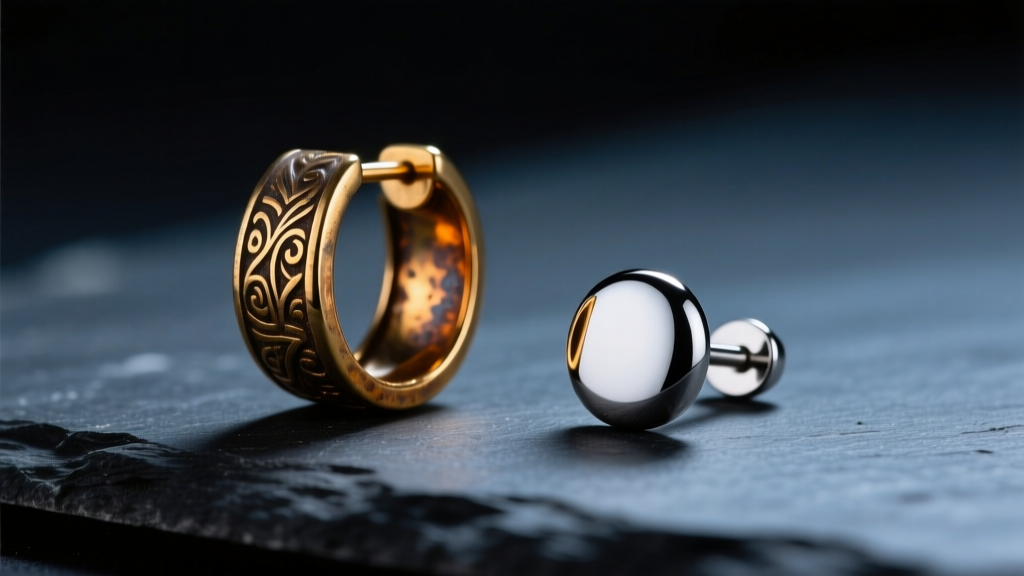
When consumers search for solutions to tarnish earrings, they are usually dealing with the chemical reality of oxidation and sulfur reactions. Tarnish is not dirt; it is a thin layer of corrosion that forms on the surface of certain metals when they react with environmental elements like oxygen, moisture, and hydrogen sulfide. In the jewelry industry, the phrase 'tarnish earrings' has become a catch-all for low-quality alloys that turn skin green, lose their luster, and trigger contact dermatitis.
According to the Association of Professional Piercers (APP), the presence of reactive base metals like copper, brass, and nickel in jewelry alloys is the primary culprit behind both tarnishing and adverse skin reactions. As we navigate the jewelry market in 2026, the shift toward biocompatible, tarnish-free metals has never been more critical for maintaining both the aesthetic longevity of your jewelry and the health of your piercings.
The Metal Hierarchy: From High-Risk to Biocompatible
Not all metals are created equal. To stop buying jewelry that degrades within weeks, you must understand the metallurgical hierarchy of earring materials.
The High-Tarnish Offenders: Brass, Bronze, and Copper
Brass and bronze are copper-based alloys. When exposed to the natural acids in human sweat and the oxygen in the air, copper undergoes a rapid oxidation process, creating copper chloride and copper carbonate (commonly known as verdigris). This is the exact chemical reaction that leaves a green or black ring around your earlobe. Furthermore, these base metals are frequently alloyed with nickel or lead to reduce manufacturing costs, making them a severe allergy risk. They have absolutely no place in fresh or healed piercings.
The Conditional Metals: Sterling Silver and Surgical Steel
Sterling Silver (925): Pure silver is too soft for jewelry, so it is alloyed with 7.5% copper to create sterling silver. That copper content is precisely why sterling silver tarnishes. When exposed to sulfur in the air or cosmetics, it forms silver sulfide (Ag2S), a blackish coating. While safe for fully healed earlobes, sterling silver should never be worn in fresh cartilage piercings or left in the ear 24/7, as the tarnish can become embedded in the healing fistula, causing a permanent gray stain known as argyria.
316L Surgical Stainless Steel: This alloy contains iron, chromium, and nickel. The chromium creates a passive oxide layer that prevents rust and tarnish. However, the nickel content (typically 8-10%) makes it unsuitable for those with nickel sensitivities. While it won't tarnish in the traditional sense, if the passive layer is scratched, the underlying iron can oxidize.
The Biocompatible Elite: Titanium, Niobium, and Solid Gold
Implant-Grade Titanium (ASTM F136): This is the gold standard for body jewelry. Titanium does not contain copper, iron, or nickel, meaning it is physically incapable of tarnishing or rusting. It is completely inert, lightweight, and biocompatible. Additionally, titanium can be anodized using electrical currents to create vibrant, permanent colors (like teal, gold, or rose) without using any surface plating that could flake or degrade.
Solid Gold (14k and 18k): According to the Gemological Institute of America (GIA), pure 24k gold is entirely tarnish-resistant but too soft for daily wear. Therefore, it is alloyed with metals like zinc, copper, and silver. High-quality 14k and 18k gold from reputable 2026 body jewelry brands use nickel-free palladium or silver alloys, ensuring the metal remains brilliantly untarnished while being safe for sensitive skin.
2026 Material Comparison Matrix
Use this data-driven matrix to evaluate your next earring purchase based on material properties, pricing, and piercing safety.
| Metal Type | Tarnish Resistance | Biocompatibility | Avg. Price (Studs) | Best Use Case |
|---|---|---|---|---|
| Brass/Copper Alloys | Very Low | Poor (High Allergy Risk) | $10 - $25 | Display only; avoid wearing |
| Gold Plated / Vermeil | Low (Plating wears off) | Poor to Fair | $20 - $50 | Occasional wear on healed lobes |
| Sterling Silver (925) | Moderate | Fair (Copper alloy) | $30 - $80 | Fully healed lobes; remove to sleep |
| 316L Surgical Steel | High | Good (Contains Nickel) | $15 - $40 | Healed piercings (non-sensitive) |
| ASTM F136 Titanium | Absolute | Excellent (Nickel-Free) | $25 - $65 | Fresh piercings & lifetime wear |
| 14k / 18k Solid Gold | Very High | Excellent (If nickel-free) | $150 - $400+ | Lifetime daily wear & heirlooms |
Piercing Placement, Gauges, and Mechanical Fit
Choosing a tarnish-free metal is only half the battle; the physical dimensions and threading of the earring dictate how your body responds to it. Mechanical irritation is frequently misdiagnosed as a metal allergy.
Standard Gauge Sizes
- 20 Gauge (0.8mm) & 18 Gauge (1.0mm): The standard for traditional earlobe piercings and delicate butterfly-back studs. Ensure the post is smooth and free of micro-scratches where bacteria can hide.
- 16 Gauge (1.2mm): The universal standard for cartilage piercings (helix, tragus, conch, flat). A 16g post provides enough structural integrity to prevent the 'cheese-cutter effect,' where thin wires slowly migrate through the tissue.
- 14 Gauge (1.6mm): Typically used for industrial barbells and thicker daith or rook piercings to support the weight of the jewelry and minimize migration.
Threading and Backings
For fresh or easily irritated piercings, avoid externally threaded jewelry (where the screw is on the post). Pushing a threaded post through a fistula causes micro-tears, leading to irritation bumps that users often blame on the metal. Instead, opt for internally threaded or threadless (press-fit) titanium or solid gold jewelry. For flat-back labrets, ensure the disc is properly sized (usually 3mm to 5mm) so it rests flush against the back of the ear without embedding into the tissue.
Rescue Protocols: How to Clean and Restore
If you already own jewelry that has begun to degrade, proper metallurgical cleaning can restore it—provided the base metal isn't compromised.
Cleaning Sterling Silver
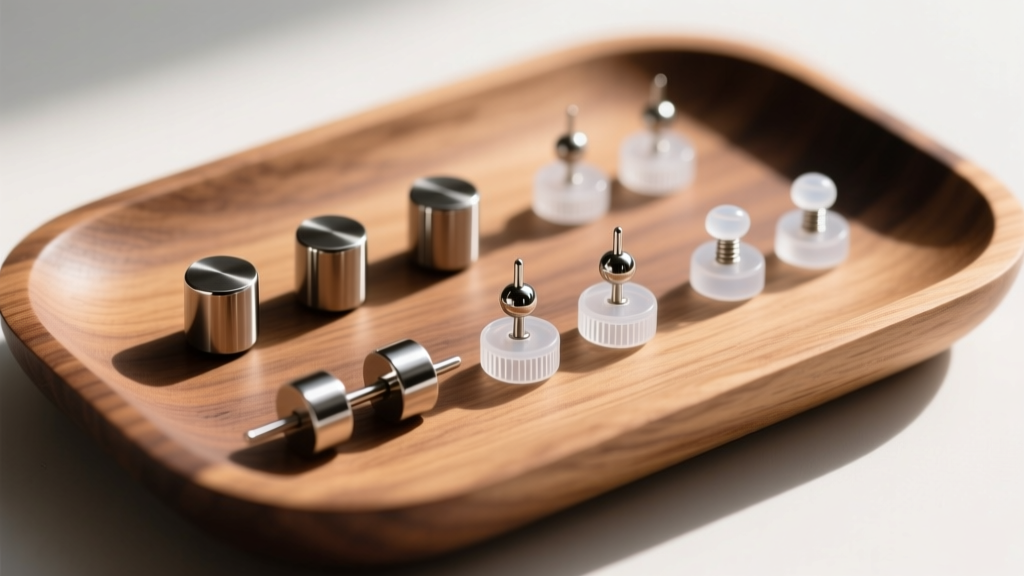
For mild silver sulfide tarnish, use a specialized microfiber silver polishing cloth impregnated with jeweler's rouge. For heavy, blackened tarnish, a chemical silver dip containing thiourea will reverse the reaction instantly. However, never use silver dip on jewelry featuring porous gemstones like opals, pearls, or turquoise, as the harsh chemicals will destroy the stone's nacre and internal structure.
Maintaining Titanium and Solid Gold
Because ASTM F136 titanium and high-karat solid gold do not tarnish, they do not require chemical dips. Simply soak them in a bowl of warm water with a few drops of mild, fragrance-free antibacterial soap for 5 to 10 minutes. Gently brush away any accumulated sebum or dead skin cells with a brand-new, ultra-soft baby toothbrush. Rinse with distilled water and pat dry with a lint-free paper product. Avoid ultrasonic cleaners for jewelry with prong-set gemstones, as the high-frequency vibrations can loosen the settings over time.
Final Verdict on Tarnish-Free Investing
The era of accepting tarnish earrings as a normal part of the jewelry experience is over. By understanding the chemical composition of your metals and investing in ASTM F136 titanium or nickel-free solid gold, you eliminate the frustration of green skin, faded finishes, and allergic reactions. While the upfront cost of biocompatible metals is higher, the cost-per-wear plummets when you factor in the lifetime durability, safety, and untarnished brilliance of the jewelry.


