Master Craftsmanship: The Technical Guide to Filigree Earrings
Explore the metallurgy, structural integrity, and manufacturing techniques of filigree earrings. An expert guide to gauge, alloys, and valuation.

Defining Filigree: Beyond the Aesthetic
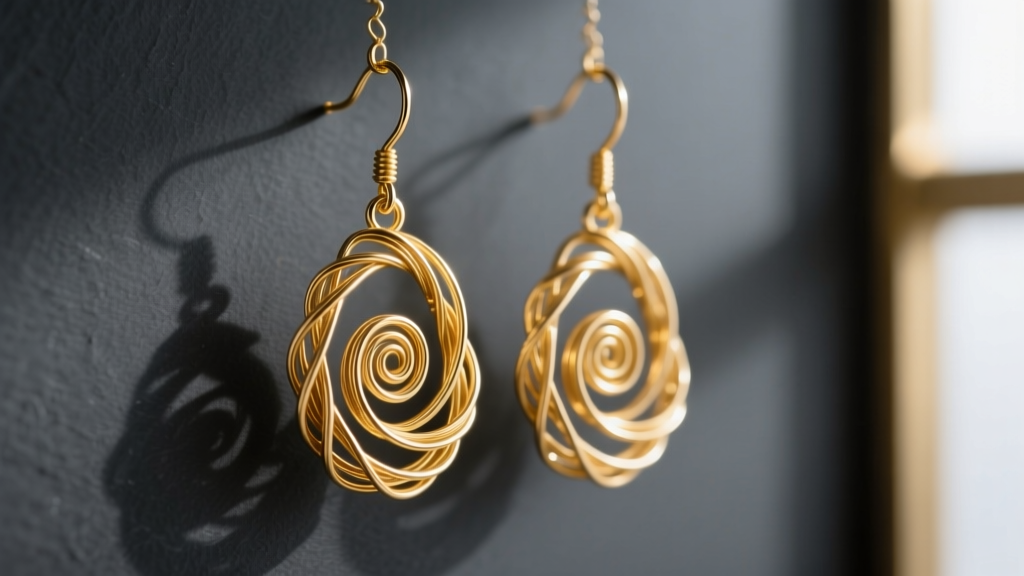
Filigree is frequently mischaracterized as a mere visual style or a synonym for "lace-like" jewelry. In reality, it is a highly specialized, ancient metalworking technique that involves the manipulation of fine wire—often drawn to 24-gauge (0.51mm) or thinner—which is then twisted, curled, and soldered into intricate openwork patterns. When evaluating filigree earrings, an expert does not just look at the beauty of the motif; they examine the structural integrity of the solder joints, the grain structure of the alloy, and the tensile strength of the base wire. As of 2026, while CAD/CAM and laser-welding technologies have evolved, the fundamental physics governing filigree remain unchanged. This guide deconstructs the technical realities of filigree earrings, equipping you with the knowledge to assess quality, durability, and true market value.
Manufacturing Techniques: Cast vs. Die-Struck vs. Hand-Wrought
Understanding how your filigree earrings were manufactured is the single most important factor in predicting their structural longevity. The method dictates the metal's internal grain structure, which directly correlates to its resistance against snapping and deformation.
The Lost-Wax Casting Trap
Many modern, mass-market filigree earrings are produced via lost-wax casting. While casting is excellent for solid, three-dimensional forms, it is inherently problematic for delicate openwork. Cast metal cools with a random, porous crystalline structure. In a filigree design featuring 22-gauge or 24-gauge wires, these microscopic porosities become critical failure points. A cast filigree wire lacks the tensile strength to withstand the lateral pressure of a snag, often resulting in a clean, unrecoverable snap rather than a bend.
Die-Striking and Grain Alignment
Die-striking involves forcing a sheet of metal into a steel mold under immense pressure (often exceeding 50 tons). This process compresses the metal, aligning its grain structure and significantly increasing its density and tensile strength. According to historical manufacturing data cited by Lang Antiques University, die-struck filigree from the Art Deco era remains remarkably intact today precisely because of this aligned grain structure. Die-struck filigree earrings feature incredibly crisp, sharp wire edges and can withstand far more physical stress than their cast counterparts.
Hand-Wrought Mastery
True hand-wrought filigree is crafted by drawing wire through a draw plate, annealing it to maintain malleability, and manually shaping it with pliers. The wires are then bound together using a lower-temperature solder. While hand-wrought pieces offer unparalleled artistic fluidity, their structural weakness lies in the sheer volume of solder joints. Each joint is a potential point of flux inclusion or thermal fatigue.
"True filigree is an exercise in metallurgical tension. You are asking a wire thinner than a human hair to hold its shape against the constant friction of daily wear." — Master Jeweler's Bench Manual
Metallurgical Realities: Which Alloys Survive the Wire-Draw?
The choice of metal alloy is not just about color or prestige; it is a mechanical decision that dictates the minimum viable wire gauge.
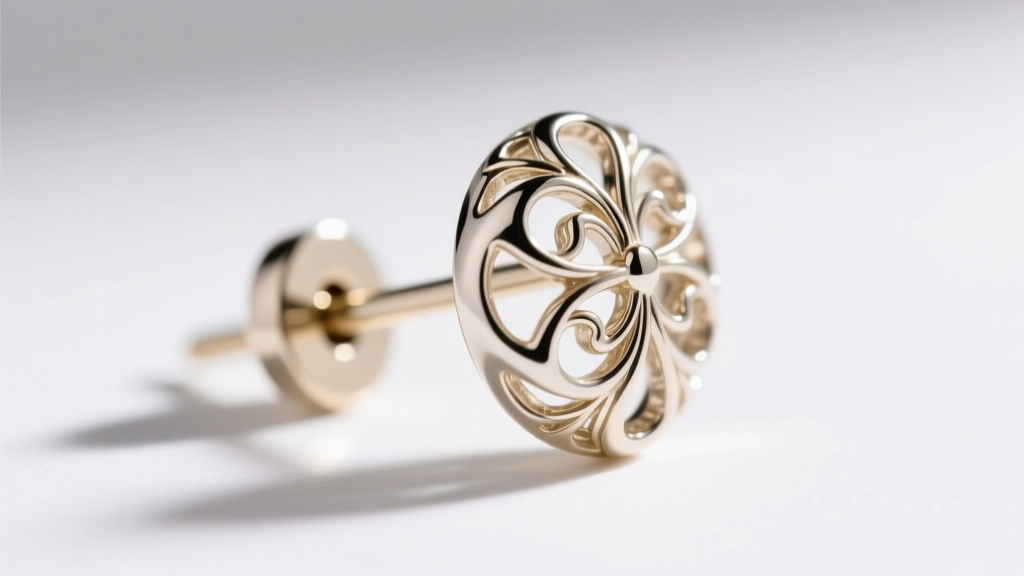
14k vs. 18k Gold: 14k gold (58.5% pure gold) is alloyed with higher percentages of copper, silver, and zinc, resulting in a higher Vickers hardness score compared to 18k gold. For filigree, 14k gold is often the superior structural choice for hand-wrought wires because it resists bending and deformation. Conversely, 18k gold is softer and more malleable, making it easier to draw into ultra-fine wires, but it requires a slightly thicker gauge (e.g., 22g instead of 24g) to maintain structural rigidity in an earring that hangs freely.
Platinum: Platinum possesses exceptional tensile strength and a unique property where it displaces rather than sheds metal when scratched. According to metallurgical overviews by the Gemological Institute of America (GIA), platinum's durability allows jewelers to execute impossibly fine filigree work—sometimes down to 26-gauge (0.40mm)—without the catastrophic snapping associated with cast gold. However, platinum's high melting point makes hand-soldering incredibly difficult, requiring specialized laser welders for assembly.
Sterling Silver: While affordable, sterling silver is highly susceptible to oxidation. In filigree earrings, the vast surface area and deep crevices accelerate tarnishing. Furthermore, silver lacks the "memory" of platinum or the hardness of 14k gold, meaning a bent silver filigree wire will often suffer from work-hardening and eventually fracture if bent back into place.
Structural Vulnerabilities and Gauge Specifications
When inspecting filigree earrings, the wire gauge is your primary indicator of intended use. Wire gauge operates on an inverse scale: the higher the number, the thinner the wire.
- 20-Gauge (0.81mm): Used for the outer structural frames and load-bearing borders of the earring. It provides the necessary rigidity to prevent the piece from warping when handled.
- 22-Gauge (0.64mm): The standard for interior scrollwork and structural crossbars. It offers a balance between visual delicacy and physical resilience.
- 24-Gauge (0.51mm) to 26-Gauge (0.40mm): Reserved for non-load-bearing decorative flourishes, granulation accents, or ultra-fine die-struck platinum pieces. Any wire in this range subjected to lateral stress will fail.
The most common failure mode in vintage and modern filigree earrings is "snag-and-pull." Because the openwork design acts like a net, it easily catches on hair, knitwear, or towels. If the outer frame is not reinforced with a solid gallery wire or a thicker border gauge, the entire piece can torque, snapping the delicate interior solder joints.
Ergonomics: Weight Distribution and Lobe Strain
Filigree is inherently lightweight due to its high ratio of negative space to metal. However, large chandelier or drop filigree earrings can still cause lobe strain if the weight is not properly distributed or if the backing mechanism is inadequate.
| Earring Style | Average Weight (Pair) | Recommended Backing | Lobe Strain Risk |
|---|---|---|---|
| Filigree Stud (Die-Struck) | 1.5g - 3.0g | Friction Post / La Pousette | Minimal |
| Filigree Drop (Hand-Wrought) | 4.0g - 7.0g | Jumbo Disc Backing | Moderate |
| Filigree Chandelier | 8.0g - 14.0g+ | La Pousette + Ear Cuff Support | High (Requires Support) |
For any filigree earring exceeding 6 grams per ear, standard butterfly friction backs are insufficient. The concentrated pressure of a small backing against the earlobe will cause the piercing to stretch and droop over time. Upgrading to a La Pousette (locking clutch) or utilizing a silicone jumbo disc distributes the weight across a wider surface area of the lobe, preserving the piercing's integrity.
Valuation: What You Should Actually Pay
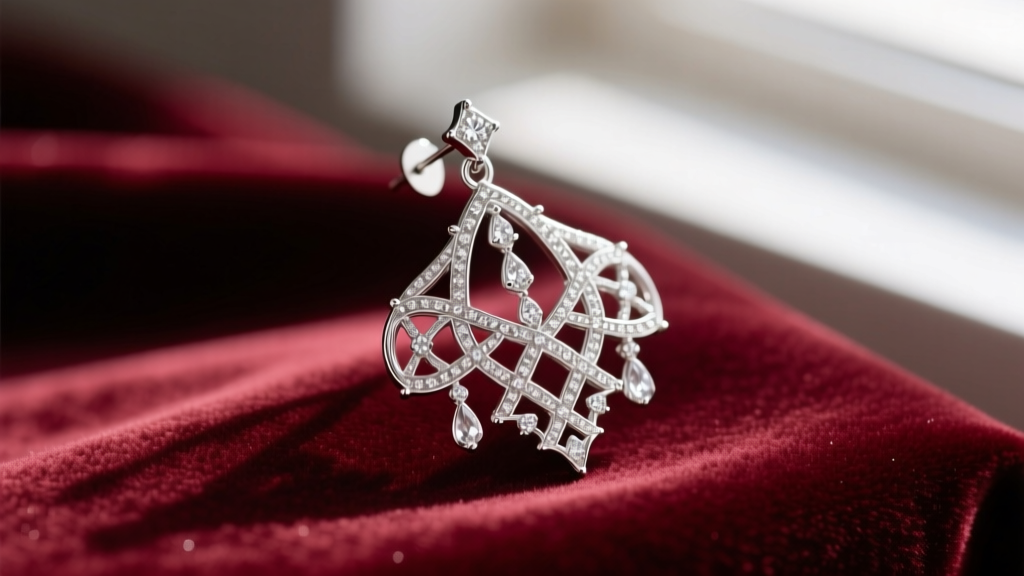
Pricing filigree earrings requires looking past the mere scrap metal weight. You are paying for bench time, technical expertise, and structural engineering.
Commercial Cast Filigree: Typically priced between $150 and $400. These are mass-produced, often featuring weak solder joints and a high risk of porosity. They are fashion pieces, not heirlooms.
Die-Struck 14k/18k Gold: Ranging from $600 to $1,500. The cost reflects the expensive steel dies required for production and the superior structural integrity of the metal. Vintage Art Deco die-struck pieces often command a premium due to the rarity of the original manufacturing molds.
Hand-Wrought / Platinum Masterwork: Starting at $2,500 and easily exceeding $10,000. This tier involves dozens of hours of bench time, custom wire drawing, and potentially laser-welding. The valuation is driven by the artisan's hourly rate and the sheer technical difficulty of executing flawless openwork in high-melting-point metals.
Maintenance: The Ultrasonic Hazard
Cleaning filigree earrings requires a fundamental shift in maintenance habits. Never place hand-wrought or cast filigree earrings in an ultrasonic cleaner. The high-frequency cavitation bubbles generated by ultrasonic machines create microscopic shockwaves that can easily fracture porous cast wires or shake loose the delicate solder joints holding hand-wrought scrollwork together.
Instead, the industry-standard protocol for cleaning filigree is manual agitation. Use a soft-bristled baby toothbrush, a few drops of mild, phosphate-free dish surfactant, and lukewarm water. Gently brush the piece from the back (the side closest to the ear) to the front, allowing the dirt to be pushed out of the openwork rather than packed deeper into the crevices. For heavy oxidation in silver filigree, a specialized silver-dip chemical bath may be used, but it must be neutralized immediately in a baking-soda water bath to prevent the chemical from eating away at the microscopic solder seams.
By understanding the metallurgy, gauge specifications, and manufacturing origins of filigree earrings, you transition from a passive consumer to an informed collector. True filigree is a triumph of tension and technique, and when properly engineered, it will outlast the trends of any single decade.


