Technical Guide to Selecting the Right Jewellery Earring Stand
Discover the technical specs for choosing a jewellery earring stand. Learn how material, gauge sizing, and weight distribution protect your earrings.

The Hidden Cost of Improper Earring Storage
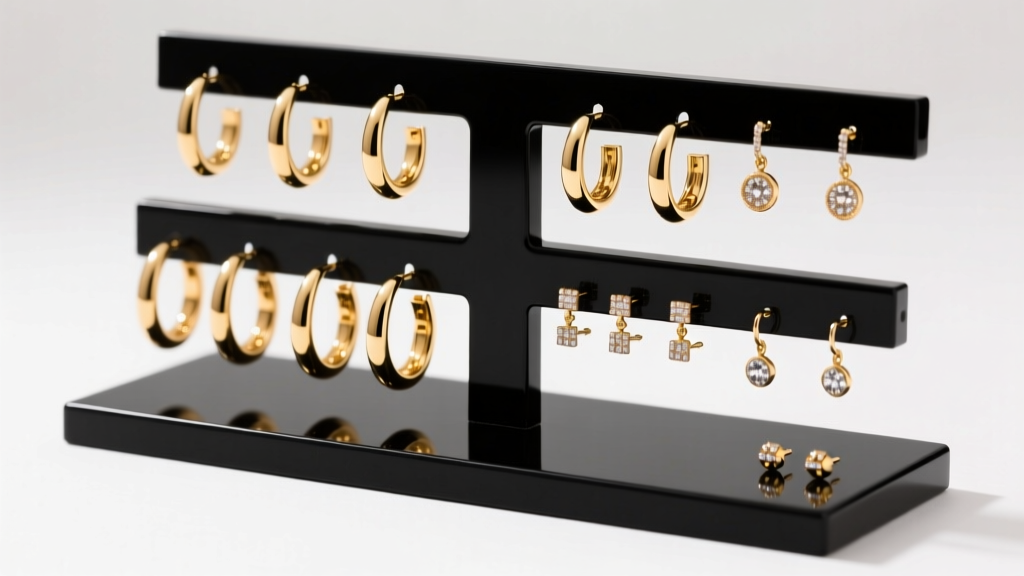
When curating a fine jewelry collection, enthusiasts often allocate their entire budget toward the pieces themselves, treating storage as an afterthought. However, from a materials science perspective, a jewellery earring stand is not merely a display accessory; it is a critical preservation environment. Improper storage leads to micro-scratches on high-polish gold, structural fatigue on delicate posts, and accelerated galvanic corrosion when dissimilar metals are forced into contact.
The architecture of your storage solution directly impacts the longevity of your earrings. According to the Gemological Institute of America (GIA), environmental factors and physical abrasion are the leading causes of degraded metal finishes and loosened gemstone prongs. This technical deep dive will dissect the material composition, gauge tolerances, and structural physics required to select the optimal jewellery earring stand for your specific collection.
Material Science: What Should Your Stand Be Made Of?
The substrate of your display unit dictates its chemical interaction with your jewelry. Many commercial displays utilize materials that actively degrade precious metals over time.
Acrylic (PMMA) and Polycarbonate
Cast acrylic is chemically inert and does not off-gas volatile organic compounds (VOCs). It is the premier choice for storing sterling silver and oxidized metals, as it will not accelerate the formation of silver sulfide (tarnish). However, acrylic has a high static charge, which can attract dust particles that cause micro-abrasions on soft metals like 24k gold if not cleaned regularly with an anti-static microfiber cloth.
Wood and MDF: The Off-Gassing Threat
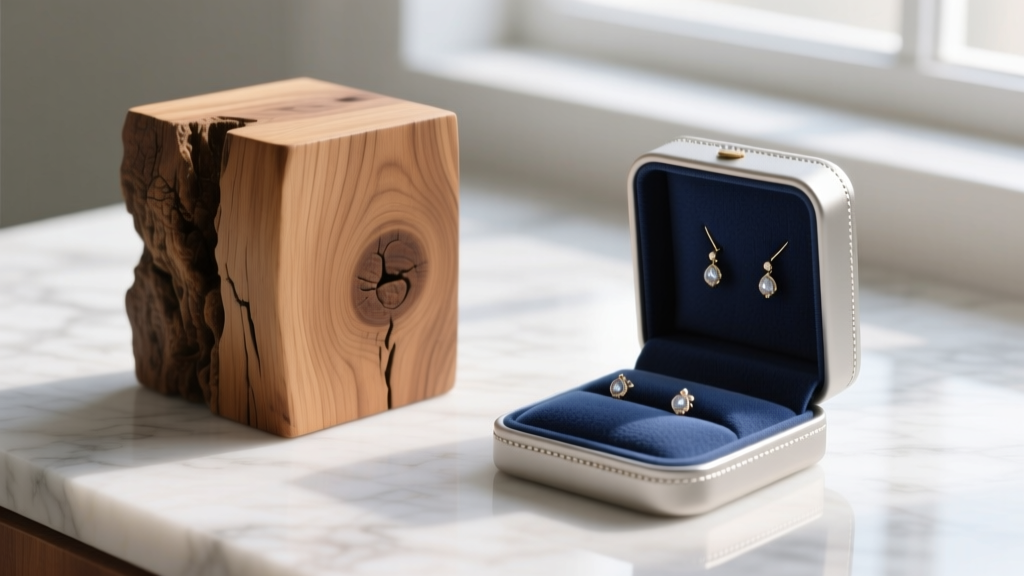
Raw woods, particularly oak and cedar, contain tannins and naturally emit acetic acid vapors. The Silver Institute warns that acidic environments rapidly accelerate tarnishing. Furthermore, composite woods like MDF and particleboard off-gas formaldehyde and sulfur compounds from their binding resins. If you prefer the aesthetic of a wooden jewellery earring stand, it must be hermetically sealed with a water-based polyurethane or lined with an active anti-tarnish barrier, such as Pacific Silvercloth, to neutralize airborne pollutants.
Treated Microfiber and Velvet
For high-carat gold and platinum, friction is the enemy. Display stands wrapped in untreated velvet can harbor microscopic silica dust. Opt for stands lined with treated, non-abrasive microfiber that has been impregnated with silver anti-tarnish agents, providing both physical cushioning and chemical protection.
Gauge Sizing and Hole Dimensions: A Technical Breakdown
One of the most frequent failure points in commercial earring storage is the mismatch between the stand's hole diameter and the earring post gauge. Forcing a post through a hole that is too tight will strip rhodium plating from white gold and weaken the structural integrity of the post. Conversely, holes that are too wide fail to secure the earring, leading to dropped pieces and bent pins.
| Earring Type | Standard Gauge | Post Diameter (mm) | Required Stand Hole Size |
|---|---|---|---|
| Standard Lobe Studs | 20G - 18G | 0.81mm - 1.02mm | 1.2mm - 1.5mm |
| Heavy Lobe / Mini Hoops | 18G - 16G | 1.02mm - 1.29mm | 1.5mm - 1.8mm |
| Cartilage / Helix Hoops | 16G - 14G | 1.29mm - 1.63mm | 1.8mm - 2.2mm |
| Body Jewelry / Plugs | 12G - 0G | 2.05mm - 8.25mm | Slotted Rails Required |
When evaluating a jewellery earring stand, look for tiered hole sizing or adjustable slotted rails. Slotted rails (typically 1.5mm to 2.0mm wide) are vastly superior to drilled holes, as they allow the earring post to slide in laterally without bending the pin or scraping the decorative front setting against the display material.
Weight Distribution for Dangles and Heavy Hoops
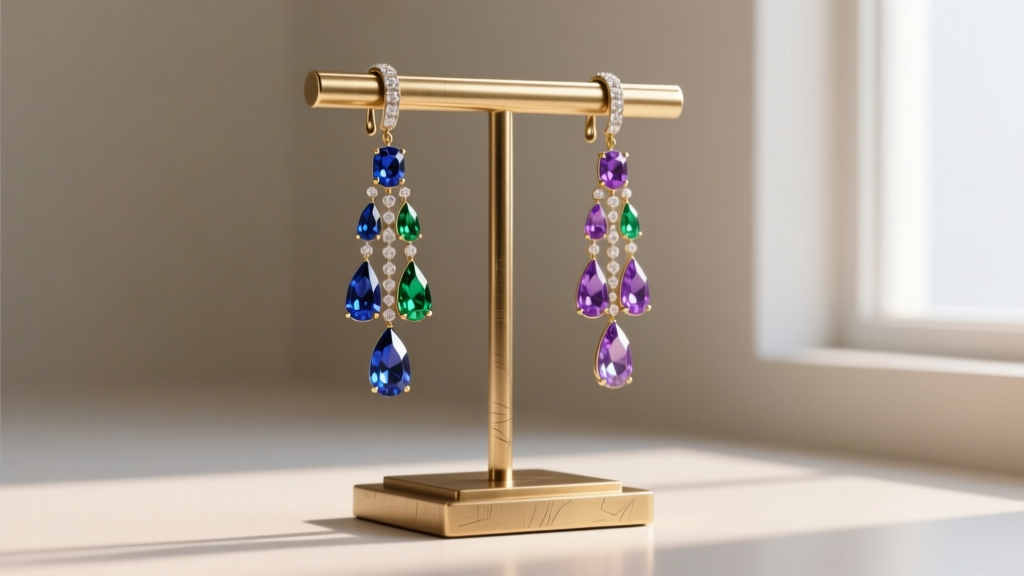
The physics of a freestanding display unit become critical when storing heavy chandelier earrings, solid gold hoops, or gemstone-encrusted drops. A poorly engineered stand will tip over, potentially snapping delicate earring wires or scattering pieces across hard flooring.
Calculating the Base-to-Height Ratio
For a T-bar or vertical tower jewellery earring stand, stability is determined by the center of gravity. As a general engineering rule for jewelry displays, the base width must be at least 40% of the total height of the stand to maintain a safe tipping threshold. For example, a 10-inch tall display tower requires a weighted base of at least 4x4 inches.
- Acrylic Towers: Require a thicker base plate (minimum 8mm acrylic) to provide adequate ballast, as acrylic is relatively lightweight.
- Brass or Steel Stands: The inherent density of the metal provides natural ballast, allowing for a smaller footprint base relative to the height.
- Offset Loading: If you hang heavy 50-gram gold hoops on one side of a T-bar, the torque applied to the vertical axis increases exponentially. Always distribute heavy pieces symmetrically to maintain structural equilibrium.
Specialized Storage for Cartilage and Threadless Ends
Modern piercing jewelry, specifically flat-back labrets and threadless (push-pin) ends, requires a paradigm shift in storage design. Standard drilled-hole stands are fundamentally incompatible with these pieces.
Protecting Threadless Pins
Threadless jewelry relies on a slight bend in the 25G or 22G pin to create tension against the inside of the shaft. If you attempt to push a threadless pin into a standard, tight drilled hole on a wooden or acrylic stand, you will permanently distort the pin's tension curve, ruining the locking mechanism. A proper jewellery earring stand for cartilage collections must feature open-faced slotted channels or magnetic holding strips.
Flat-Back Labret Preservation
Flat-back labrets feature a decorative front and a flat titanium or gold disc on the back. If stored in a standard hole, the decorative front rests directly against the stand's surface. Over time, the friction will scratch the gemstone table or wear away the high-polish finish of the metal bezel. Look for stands with recessed channels or elevated silicone grips that suspend the decorative end in mid-air, ensuring zero surface contact.
Expert Insight: Never store fine jewelry in direct sunlight, even if the display stand is visually appealing near a window. Prolonged UV exposure can fade heat-sensitive gemstones like amethyst, kunzite, and treated topaz, while thermal cycling can weaken prong settings over time.
Expert Verdict: Matching Stand to Collection
Selecting the correct jewellery earring stand requires an honest audit of your collection's material composition and structural profile. If your collection consists primarily of lightweight 18k gold studs and diamond solitaires, an inert, multi-tiered acrylic display with 1.5mm slotted rails will offer optimal visibility and protection. If you collect heavy, oversized vintage hoops and oxidized silver statement pieces, prioritize a sealed, polyurethane-coated hardwood stand with a wide, weighted base and anti-tarnish microfiber lining.
By treating your storage environment with the same technical rigor as your jewelry acquisitions, you eliminate preventable degradation, ensuring your collection remains in pristine, wearable condition for decades.


