The Wylders Earring Review: 2026 Value Assessment
Is the Wylders earring worth the investment? Our 2026 value assessment breaks down materials, pricing, durability, and cost-per-wear for this indie staple.

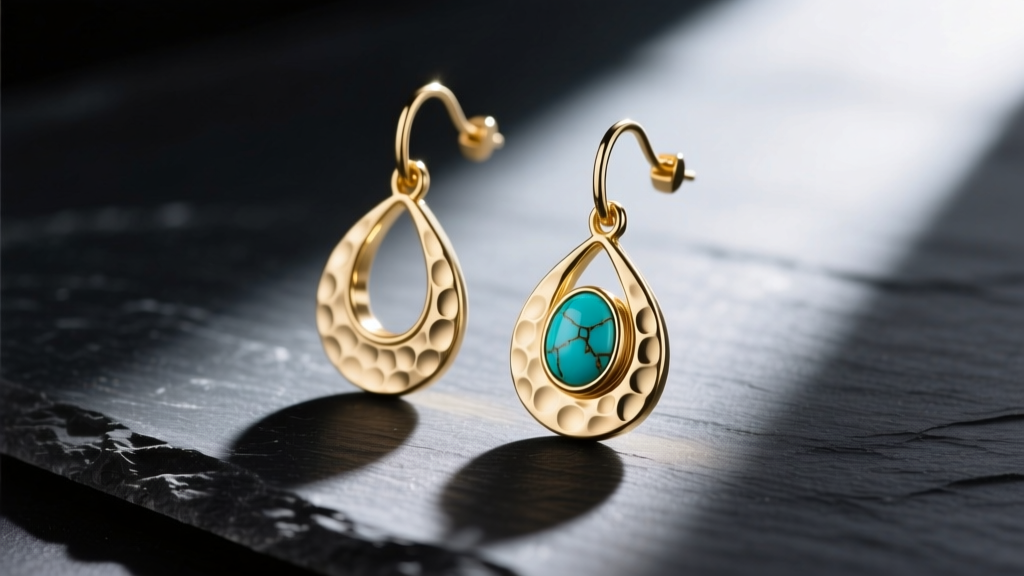
The Hype vs. The Reality: What Are The Wylders Earrings?
In the crowded landscape of indie jewelry, few pieces have generated as much organic social media traction over the last eighteen months as the Wylders earring. Known for its distinct bohemian-meets-modern aesthetic, this flagship drop earring features a hand-hammered texture, an elongated 45mm silhouette, and a bezel-set raw turquoise cabochon. But as the price tag hovers around the $165 mark, savvy jewelry collectors are asking a critical question: are you paying for enduring quality, or just brilliant marketing?
As we move through 2026, the jewelry market has seen a massive bifurcation. On one end, fast-fashion brands are pushing $30 gold-plated brass that tarnishes in weeks. On the other, heritage jewelers are pricing solid 14k gold pieces well out of reach for the average consumer. The Wylders positions itself squarely in the 'accessible luxury' middle ground. To determine if this middle ground offers genuine value, we need to look past the aesthetic and put the metallurgy, gemology, and pricing structure under the microscope.
Material Breakdown & Grade Analysis
The core value proposition of any earring lies in its material composition. The Wylders earring is constructed from a recycled brass base, plated with 14k gold vermeil, and finished with a solid 14k gold post. Let us break down what this actually means for your lobes and your wallet.
The Vermeil Thickness Factor
According to the Federal Trade Commission Jewelry Guides, for a piece to be legally marketed as 'vermeil' in the United States, it must have a base of sterling silver or another precious metal, and be plated with gold of at least 10k fineness to a minimum thickness of 2.0 microns. The Wylders exceeds this minimum, utilizing a 2.5-micron layer of 14k gold. This extra half-micron provides roughly 20% more wear resistance than standard vermeil, significantly delaying the inevitable friction wear that occurs where the earring clutch rubs against the post base.
The Base Metal Controversy: Brass vs. Sterling Silver
Here is where the value assessment gets nuanced. While the FTC technically requires a precious metal base for true vermeil, many contemporary indie brands (including The Wylders) use high-quality recycled brass to keep the retail price under $200 and reduce the physical weight of larger statement earrings. The Wylders earring weighs a mere 4.2 grams, making it exceptionally comfortable for all-day lobe wear without causing stretching.
However, you must understand the failure mode of a brass base. If the 2.5-micron gold layer eventually wears through due to friction or chemical exposure, the underlying brass will oxidize. Unlike sterling silver, which simply tarnishes black and can be polished, oxidized brass can react with the acidity in your skin, potentially leaving a harmless but annoying green residue. If you have highly acidic skin chemistry or live in a humid coastal climate, the lifespan of the gold plating on a brass base will be shorter than on a silver base.
The Post and Clutch Mechanics
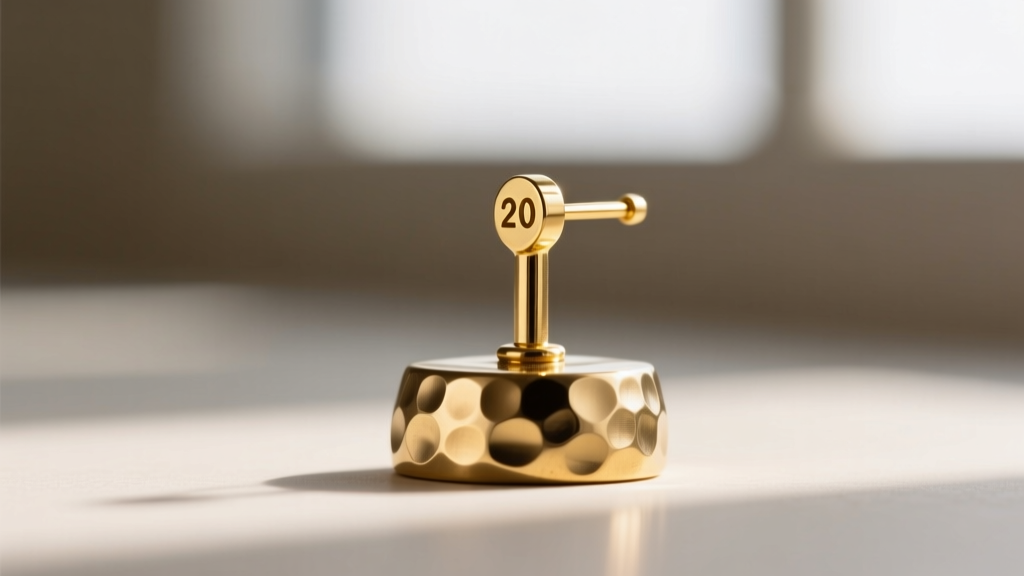
A major value-add that justifies the premium over cheaper alternatives is the earring post. The Wylders uses a solid 14k gold post, soldered seamlessly to the brass body. This is a crucial detail for anyone with sensitive ears or nickel allergies. The post is a standard 20-gauge (0.81mm) thickness, which is the universal sweet spot for healed lobe piercings, ensuring it slides in smoothly without stretching the fistula. The accompanying friction clutch is also solid gold, featuring a dual-notch groove to prevent the backing from slipping off during sleep or physical activity.
Pricing Tiers & Market Positioning
To understand the value of the Wylders earring, we must contextualize its $165 price point against its direct competitors in the contemporary jewelry space. Below is a comparative breakdown of similar drop earrings available in 2026.
| Brand / Model | Base Material | Plating / Metal | Post Material | Retail Price | Warranty |
|---|---|---|---|---|---|
| The Wylders (Flagship Drop) | Recycled Brass | 2.5μm 14k Gold | Solid 14k Gold | $165 | 1-Year Plating |
| Mejuri (Comparable Drop) | Sterling Silver | 2.0μm 14k Gold | Sterling Silver | $128 | 2-Year |
| Catbird (Solid Gold Equivalent) | Solid 14k Gold | Solid 14k Gold | Solid 14k Gold | $340 | Lifetime |
| Gorjana (Mall Tier) | Standard Brass | 18k Gold Plated | Titanium | $65 | None |
As the data illustrates, The Wylders sits at a premium compared to mass-market brands like Gorjana, primarily due to the heavier gold plating (2.5μm vs standard flash plating) and the solid gold post. However, it is noticeably cheaper than solid gold alternatives like Catbird. The trade-off is the brass base, which keeps the cost and weight down but sacrifices the lifelong durability of a sterling silver or solid gold foundation.
Cost-Per-Wear & Longevity Projection
Value is not just about the initial purchase price; it is about the cost-per-wear (CPW) over the item's usable lifespan. Let us run a realistic projection for the Wylders earring based on average consumer habits.
- Purchase Price: $165
- Wear Frequency: Twice a week (approx. 104 wears per year)
- Projected Plating Lifespan: 2.5 to 3 years with proper care before noticeable friction wear at the post base.
- Total Wears over 3 Years: 312
- Cost-Per-Wear: $0.52
At roughly fifty cents per wear, the value proposition is highly favorable for a statement piece. To put this in perspective, a $40 fast-fashion earring that tarnishes and breaks after 10 wears yields a CPW of $4.00. The Wylders earring easily outperforms lower-tier jewelry in longevity, provided the wearer adheres to strict maintenance protocols.
Gemstone Quality & Sourcing Assessment
The focal point of the Wylders earring is the raw turquoise cabochon. Turquoise is a notoriously soft and porous gemstone, ranking between 5 and 6 on the Mohs hardness scale. Because of this, the vast majority of turquoise used in contemporary jewelry undergoes stabilization.
According to the Gemological Institute of America (GIA), stabilization involves treating the porous stone with a clear epoxy resin or plastic to improve its durability and color retention. The Wylders is transparent about this process, using stabilized turquoise to ensure the stone does not crack under the pressure of the bezel setting or absorb oils and lotions from the wearer's skin, which would permanently darken and muddy the stone's vibrant blue-green matrix. From a value perspective, stabilization is not a 'fake' treatment; it is an absolute necessity for turquoise to survive daily wear in an earring that may occasionally be bumped or exposed to humidity.
Maintenance & Troubleshooting Guide
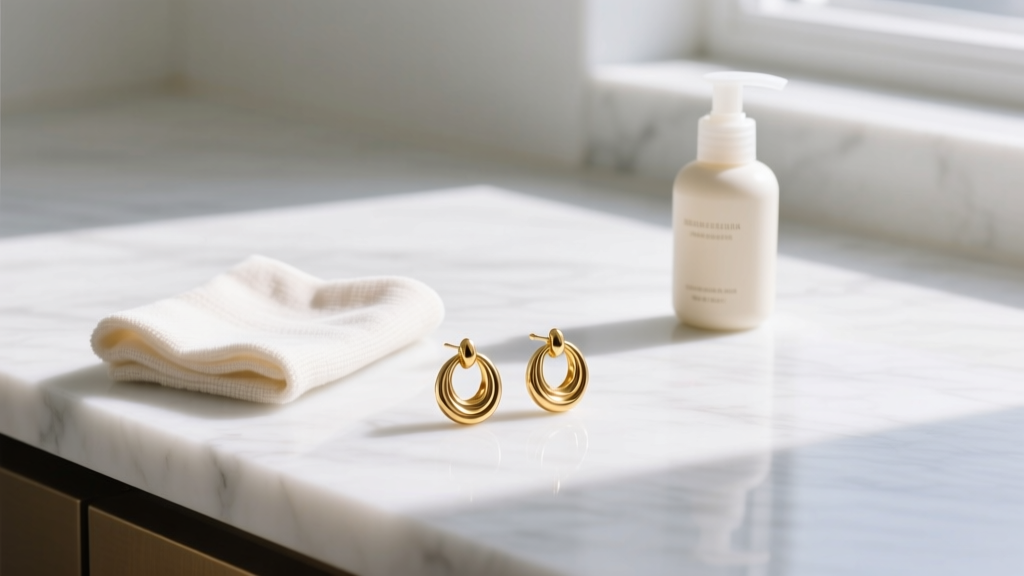
To protect your $165 investment and ensure the 2.5-micron gold layer survives for the full three-year projected lifespan, you must avoid common jewelry care mistakes. Here is your actionable maintenance framework:
What to Avoid (The Failure Triggers)
- Ultrasonic Cleaners: Never put vermeil or stabilized turquoise in an ultrasonic cleaner. The high-frequency vibrations can shatter the turquoise and strip the gold plating from the brass base.
- Polishing Cloths: Commercial silver or gold polishing cloths are impregnated with mild abrasives. Using these on vermeil will literally rub the gold layer off, exposing the brass underneath.
- Chemical Exposure: Chlorine (in pools) and sulfur (in hot springs or certain tap waters) will cause immediate, sometimes irreversible, tarnishing of the brass base if it penetrates microscopic pores in the plating.
The Correct Cleaning Protocol
When the earrings lose their luster due to skin oils and environmental dust, use this specific method:
- Mix a few drops of phosphate-free dish soap into a bowl of lukewarm (never hot) water.
- Submerge the earrings for exactly 60 seconds to loosen debris.
- Use a brand-new, extra-soft baby toothbrush to gently sweep away dirt from the hammered crevices and the bezel setting.
- Rinse briefly under distilled water (to avoid hard water spots) and pat completely dry with a lint-free microfiber cloth.
- Store in an airtight anti-tarnish pouch with a silica gel packet to control ambient humidity.
Troubleshooting: The Stuck Clutch
A common issue with 20-gauge solid gold posts is that the metal is relatively soft. If you accidentally squeeze the friction clutch too hard while putting it on, it can compress and become nearly impossible to remove. Do not use pliers, which will mar the gold. Instead, take a piece of dental floss, wrap it tightly around the post between the earlobe and the clutch, and use the floss to lever and pull the clutch backward while holding the earring face steady.
Final Verdict: Who Should Buy The Wylders Earring?
After a comprehensive budget and value assessment, the Wylders earring earns a strong recommendation for a specific type of buyer. If you are looking for a lightweight, visually striking statement earring with hypoallergenic posts, and you are willing to commit to proper jewelry maintenance, the $165 price tag is entirely justified by the 2.5-micron plating and excellent craftsmanship.
However, if you are someone who frequently swims, sweats heavily during commutes, or prefers to sleep in your jewelry, the brass base makes this a poor long-term investment for you. In that case, you would be better served saving up for a solid 14k gold alternative. But for mindful wearers who want high-end aesthetics without the four-figure solid gold price tag, the Wylders earring remains one of the smartest value propositions in the 2026 indie jewelry market.


