How to Clean Thick Earrings: Expert Care & Maintenance Tips
Learn expert cleaning and maintenance tips for thick earrings. Discover gauge-specific care, material grades, and how to prevent lobe damage.

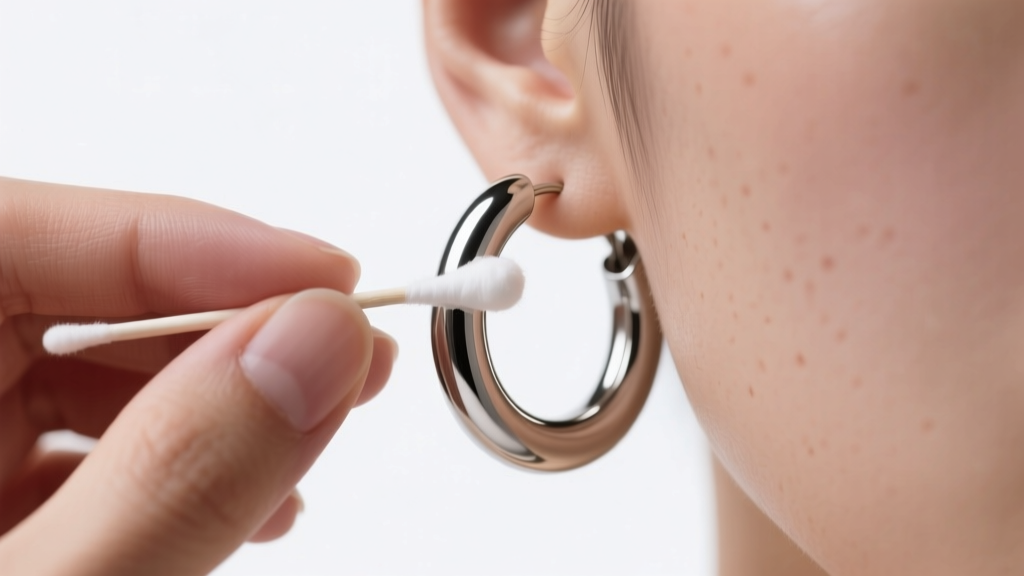
The Anatomy of Thick Piercings: Why Gauge Size Dictates Care
When jewelers and piercing professionals refer to 'thick earrings,' they are generally discussing jewelry ranging from 12-gauge (2.0mm) to 6-gauge (4.0mm) and beyond. While standard lobe piercings usually sit comfortably at 20-gauge or 18-gauge, the transition to thicker posts and hoops fundamentally changes the microenvironment of your earlobe. The fistula—the tube of healed skin lining the piercing channel—has a significantly larger surface area when stretched to accommodate thick earrings. This increased surface area produces more sebum (natural skin oils) and sheds more keratinized dead skin cells, creating an ideal breeding ground for bacteria and the notorious odor often referred to as 'ear cheese.'
Caring for heavy-gauge jewelry is not merely about wiping the metal; it is about managing the biological interaction between your tissue and the jewelry's mass. According to the Association of Professional Piercers (APP), the weight and thickness of the jewelry can cause micro-abrasions inside the fistula if not properly lubricated and cleaned. Furthermore, thick earrings often feature complex mechanical components, such as thick silicone O-rings, heavy screw-on ball ends, or intricate hinges, all of which harbor debris that standard cleaning methods easily miss.
The Chemistry of Cleaning: What to Use and What to Avoid
A common mistake among wearers of thick metal earrings is reaching for harsh astringents like rubbing alcohol or hydrogen peroxide. The American Academy of Dermatology (AAD) strongly advises against using these chemicals on any piercing tract. Alcohol strips the lipid barrier from the delicate mucosal lining of the fistula, leading to dry, cracked tissue that is highly susceptible to contact dermatitis and bacterial infiltration. Hydrogen peroxide, meanwhile, destroys newly formed, healthy cells, delaying tissue recovery from the micro-tears caused by heavy earrings dragging against the lobe.
The Gold Standard: Sterile Saline Solution
The only universally recommended liquid for daily cleaning of thick earrings is a sterile, isotonic saline solution containing exactly 0.9% sodium chloride and no preservatives. This matches the natural osmotic balance of your body's tissues, allowing the solution to flush out trapped sebum and environmental dust without causing cellular dehydration. For thick earrings, a pressurized can of sterile wound wash is vastly superior to homemade salt mixtures, as the spray pressure helps dislodge debris from deep within wide-gauge fistulas and the threads of heavy screw-on ends.
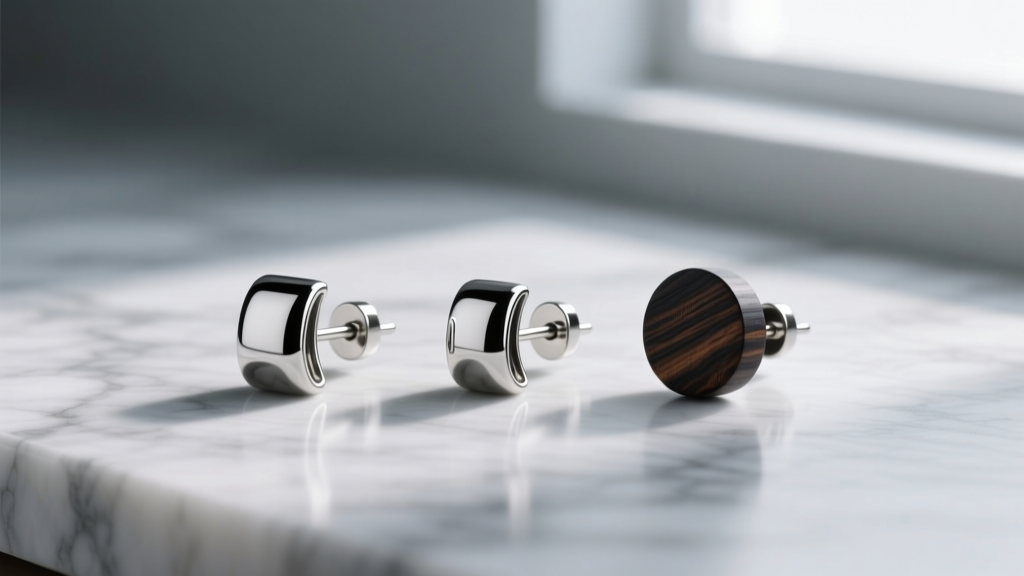
Material-Specific Maintenance Protocols
Thick earrings are manufactured from a wide array of materials, each with unique porosity levels and maintenance requirements. A 6-gauge titanium plug requires a vastly different care regimen than a 4-gauge carved wood tunnel. Below is a comprehensive breakdown of how to maintain the most common thick earring materials.
| Material Grade | Porosity & Weight | Daily Cleaning Agent | Weekly Deep Maintenance |
|---|---|---|---|
| ASTM F136 Titanium | Non-porous, Lightweight | 0.9% Sterile Saline | Wash with mild, fragrance-free soap; inspect threads. |
| 316L Surgical Steel | Non-porous, Heavy | 0.9% Sterile Saline | Check for nickel pitting; polish with microfiber cloth. |
| Borosilicate Glass | Non-porous, Heavy | 0.9% Sterile Saline | Boil in distilled water for 10 mins to fully sterilize. |
| Organics (Wood/Horn) | Highly Porous, Light | Damp cloth wipe only | Condition with pure jojoba oil; NEVER soak in water. |
| Silicone (Tunnels) | Semi-Porous, Featherlight | Mild antibacterial soap | Remove, boil, and scrub with a soft toothbrush. |
The Danger of Porous Metals and Organics
If you are wearing thick earrings made of unpolished brass, copper, or low-grade alloys, be aware that these metals are highly reactive. The acidity of your sebum will cause oxidation, leading to a green or black tarnish that can stain the skin and cause severe allergic contact dermatitis. Similarly, thick organic earrings (like ebony wood or water buffalo horn) will absorb moisture, sweat, and bacteria if not properly oiled. Never use saline on wood or horn, as the salt will draw out the natural moisture, causing the thick post to splinter or crack inside your ear.
Troubleshooting Common Thick Earring Complications
The physical mass of thick earrings introduces mechanical challenges that standard studs simply do not possess. Understanding these failure modes is critical for long-term earlobe health.
The 'Cheese-Cutter' Effect and Lobe Thinning
When heavy, thick metal hoops or drop earrings are worn continuously, gravity exerts constant downward pressure on the bottom of the fistula. Over time, this pressure restricts blood flow to the lower tissue, causing the earlobe to thin out—a phenomenon known in the body modification community as the 'cheese-cutter effect.' To prevent irreversible lobe splitting, experts recommend the 12-hour rule: never wear heavy, thick metal earrings for more than 12 hours at a time. Alternate them with lightweight acrylic, titanium, or hollow glass plugs to give the tissue time to recover its vascular flow.
Moisture Trapping and O-Ring Hygiene
Thick plug-and-tunnel earrings rely on thick silicone or nitrile O-rings to secure the jewelry in the lobe. These O-rings press tightly against the skin, creating a dark, warm, and moist environment where yeast (Candida) and staph bacteria thrive. If you wear thick earrings with O-rings, you must remove the jewelry at least twice a week to wash the O-rings in hot, soapy water and allow the earlobe to breathe. Failing to do so frequently results in a foul odor and localized fungal infections that require medical intervention.
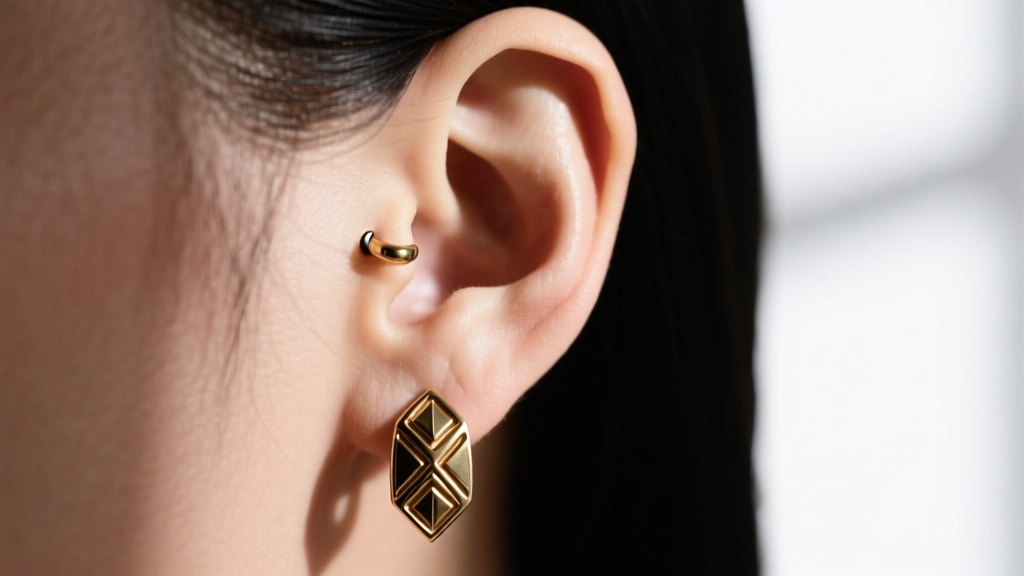
Step-by-Step Weekly Deep Cleaning Routine
While a quick spray of saline is sufficient for daily upkeep, thick earrings demand a rigorous weekly deep-cleaning protocol to maintain the integrity of both the jewelry and the tissue.
- Step 1: Removal and Inspection. Carefully unscrew the ends of your thick earrings. If the threads feel gritty or stuck, do not force them, as this can strip the metal. Apply a drop of sterile saline to the seam to loosen dried sebum.
- Step 2: The Soak. Place non-porous metal or glass earrings in a small glass cup filled with warm water and a few drops of fragrance-free, dye-free liquid soap. Let them soak for exactly 10 minutes. (Skip this for wood or horn).
- Step 3: Mechanical Agitation. Use a brand-new, ultra-soft baby toothbrush to gently scrub the threads, the inner grooves of the post, and any decorative crevices. This physical agitation is the only way to remove the hardened keratin buildup that saline alone cannot dissolve.
- Step 4: The Rinse and Dry. Rinse the jewelry thoroughly under warm running water to ensure no soap residue remains. Dry completely with a lint-free paper towel. Never use cotton balls or Q-tips, as the micro-fibers will wrap around the thick threads and become trapped in your earlobe upon reinsertion.
- Step 5: Tissue Massage. While the jewelry is out, wash your hands and massage the bare earlobe with a single drop of pure, cold-pressed jojoba oil. This mimics natural sebum, keeps the thick fistula elastic, and prevents the skin from drying out and cracking.
When to Downsize or Retire Your Thick Earrings
There comes a point in the lifecycle of a stretched piercing where the tissue can no longer safely support the weight of thick metal earrings. If you notice the bottom of your piercing hole becoming translucent, if you experience chronic aching when the earrings are in, or if the fistula remains perpetually inflamed despite strict adherence to saline cleaning, it is time to downsize. Transitioning from a heavy 4-gauge steel earring to a lighter 6-gauge titanium or glass piece can allow the tissue to retract and heal. Remember, the goal of wearing thick earrings is aesthetic expression, but it must always be secondary to the biological preservation of your earlobe tissue.
Expert Insight: 'The most common mistake I see with thick gauge jewelry is the assumption that a larger hole requires harsher chemicals to clean. The exact opposite is true. The larger the fistula, the more delicate and expansive the mucosal lining, requiring gentle, isotonic flushing rather than aggressive scrubbing or chemical drying.' — Senior Piercing Specialist


