Trap House Earrings: 2026 Budget & Value Assessment
Assess trap house earrings in 2026. We analyze base metals, gauge weights, and stone quality to help you buy iced-out streetwear earwear without overpaying.

Defining the Trap House Aesthetic in Earwear
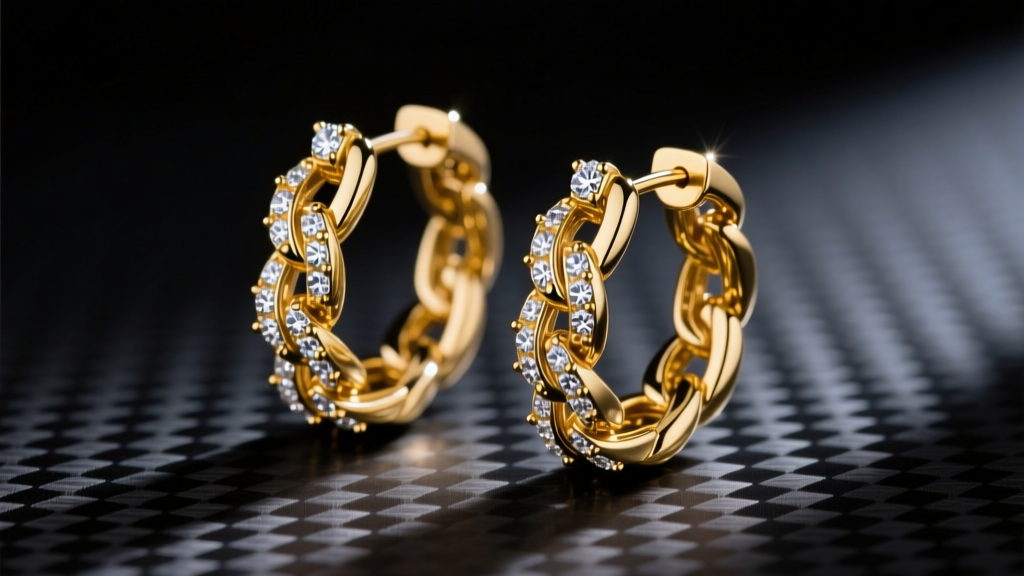
The term "trap house earrings" has evolved from a niche streetwear reference into a dominant category within urban jewelry. Characterized by bold, oversized, and heavily "iced-out" designs, this aesthetic draws direct inspiration from hip-hop culture, trap music, and high-impact streetwear fashion. We are talking about thick Cuban link hoops, heavy tennis-chain drops, and oversized signet studs encrusted with stones. However, as the demand for these statement pieces has skyrocketed, the market has become flooded with deceptive pricing and subpar materials.
In 2026, evaluating the budget versus the actual value of trap house earrings requires looking past the blinding flash of the stones. True value in streetwear jewelry is dictated by three critical factors: base metal integrity, plating technology (if not solid gold), and the structural gauge required to support the extreme weight of the pieces. This guide breaks down exactly where your money goes and how to avoid the most common traps in the iced-out earring market.
The Material Hierarchy: Where Your Money Actually Goes
When shopping for heavy, stone-encrusted earrings, the base metal determines the lifespan of the piece. The acidic nature of human sweat, combined with the friction of heavy jewelry, will rapidly destroy cheap alloys. Below is the definitive material hierarchy for streetwear earwear.
| Material Tier | Base Metal | Plating/Finish | 5-Year Value Retention | Skin Reaction Risk |
|---|---|---|---|---|
| Fast Fashion | Brass/Zinc Alloy | Flash Plating (0.05µm) | 0% (Tarnishes/Greens) | High (Nickel/Lead) |
| Mid-Tier Street | 316L Surgical Steel | PVD Gold (2.5µm) | 60% (Scratches over time) | Very Low |
| Premium Value | Solid 10k/14k Gold | None (Solid Alloy) | 90% (Retains intrinsic value) | None |
| Luxury Asset | Solid 18k Gold | None (Solid Alloy) | 100%+ (Investment grade) | None |
If you are on a strict budget, 316L stainless steel with PVD (Physical Vapor Deposition) coating is the only acceptable alternative to solid gold. PVD bonding embeds the gold color into the steel at a molecular level, making it highly resistant to sweat and friction. Conversely, brass earrings with "flash plating" will expose the raw, reactive base metal within weeks, leading to severe contact dermatitis. According to the American Academy of Dermatology, nickel and cheap alloy exposure is the leading cause of jewelry-induced allergic contact dermatitis, a common issue with budget trap house jewelry.
Weight vs. Gauge: Avoiding the "Lobe Tear" Tax
The most overlooked aspect of buying trap house earrings is the physics of weight distribution. A standard 20mm Cuban link hoop crafted from solid steel or gold can easily weigh between 15 and 28 grams per earring. Standard fashion earrings use 20-gauge (0.8mm) or 18-gauge (1.0mm) wires. When you hang 25 grams of metal from a 0.8mm wire, the wire acts like a cheese cutter against your earlobe.
The Structural Requirements for Heavy Streetwear Hoops
To protect your piercings and ensure the jewelry hangs correctly without sagging, you must pay attention to the post or wire thickness. Here are the non-negotiable gauge requirements for heavy trap house earrings:
- 14-Gauge (1.6mm): The absolute minimum for heavy hoops (15g+). Provides enough surface area to distribute weight and prevent the "cheese cutter" effect.
- 12-Gauge (2.0mm): Ideal for oversized, solid gold Cuban hoops or heavy tennis drops. Requires a stretched or naturally thicker piercing but guarantees lobe safety.
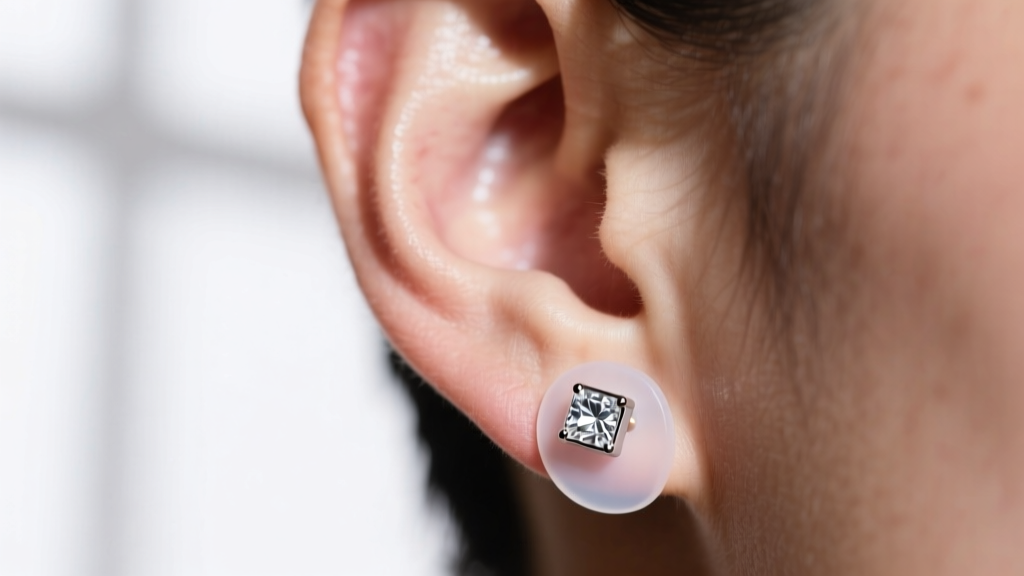
- Support Patches: If you must wear heavy iced-out studs with standard 18g or 16g posts, you must use invisible silicone earlobe support patches (e.g., BlingPads) to distribute the tensile stress across a wider surface area.
Never buy a heavy, oversized trap house hoop with a flimsy 20-gauge wire. It is a structural failure waiting to happen, and repairing a torn earlobe costs significantly more than the earrings themselves.
The "Ice" Factor: Moissanite vs. Cubic Zirconia
The "trap house" aesthetic relies heavily on the visual impact of "ice"—the brilliance and fire of the stones encrusting the metal. In 2026, the market is split between Cubic Zirconia (CZ) and Moissanite. Understanding the optical and physical differences is crucial for assessing value.
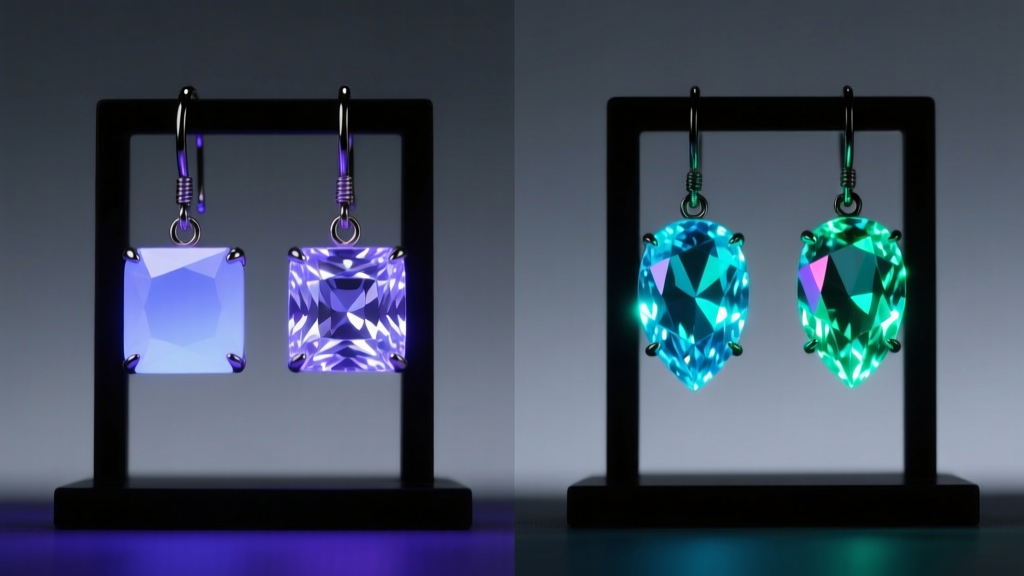
Cubic Zirconia is the budget standard. It has a Mohs hardness of 8.0 to 8.5. While it looks flawless on day one, CZ is highly porous at a microscopic level. Within six to twelve months of daily wear, skin oils, lotions, and micro-scratches will cause CZ to become cloudy and dull, completely ruining the iced-out aesthetic. Furthermore, CZ has a dispersion rate (fire) of 0.058.
Moissanite, on the other hand, is a premium lab-created stone with a Mohs hardness of 9.25, making it nearly as hard as a natural diamond. It is non-porous, meaning it will never turn cloudy from skin oils, and it boasts a dispersion rate of 0.104—more than double that of CZ. According to the Gemological Institute of America (GIA), moissanite's exceptional brilliance and durability make it the superior choice for long-term wear. When evaluating a $400 trap house earring, if it is set with CZ, you are overpaying. If it is set with Moissanite, it is a high-value investment that will pass standard diamond testers and maintain its blinding flash for decades.
2026 Market Pricing: What You Should Actually Pay
To help you assess whether a retailer is price-gouging, here are the benchmark price ranges for standard trap house earring styles in the current market. Use this framework to negotiate or verify listings.
The Golden Rule of Streetwear Jewelry: You are paying for the weight of the metal and the grade of the stone. If a piece feels suspiciously light but is priced like solid gold, it is hollowed out or plated brass.
- PVD Steel Cuban Hoops (20mm, 14g wire, AAA CZ): $45 – $85. Anything over $100 for PVD steel is a brand-name markup tax.
- Solid 10k Gold Iced-Out Studs (8mm, Moissanite): $250 – $450. 10k gold is 41.7% pure gold, offering the best durability-to-price ratio for heavy streetwear pieces.
- Solid 14k Gold Tennis Drops (Moissanite, 12g post): $800 – $1,400. The high price reflects the dense gold weight required to support the drop mechanism and the cost of precision-set moissanite.
- "Bust Down" Custom Link Earrings (Solid 14k, VVS Natural Diamonds): $3,500+. At this tier, you are buying an asset. Ensure the seller provides a certified appraisal and exact carat weight.
Verdict: Maximizing Your Streetwear Jewelry Budget
Trap house earrings are meant to be loud, unapologetic, and visually striking. However, achieving this look requires a strategic approach to your budget. If your budget is under $100, strictly limit your search to 316L stainless steel with PVD coating and AAA-grade CZ, ensuring the wire gauge is at least 14g to protect your lobes. If your budget extends into the $300 to $800 range, bypass the gold-plated illusions entirely and invest in solid 10k or 14k gold set with moissanite. By prioritizing structural integrity, biocompatible metals, and non-porous stones, you ensure that your streetwear earwear remains a permanent fixture in your collection, rather than a disposable trend that tarnishes in the back of a drawer.


