Why Your Trending It Earrings Cause Irritation & Fixes
Discover why your favorite trending it earrings cause redness, itching, and pain. Learn expert troubleshooting for metal allergies and piercing irritation.

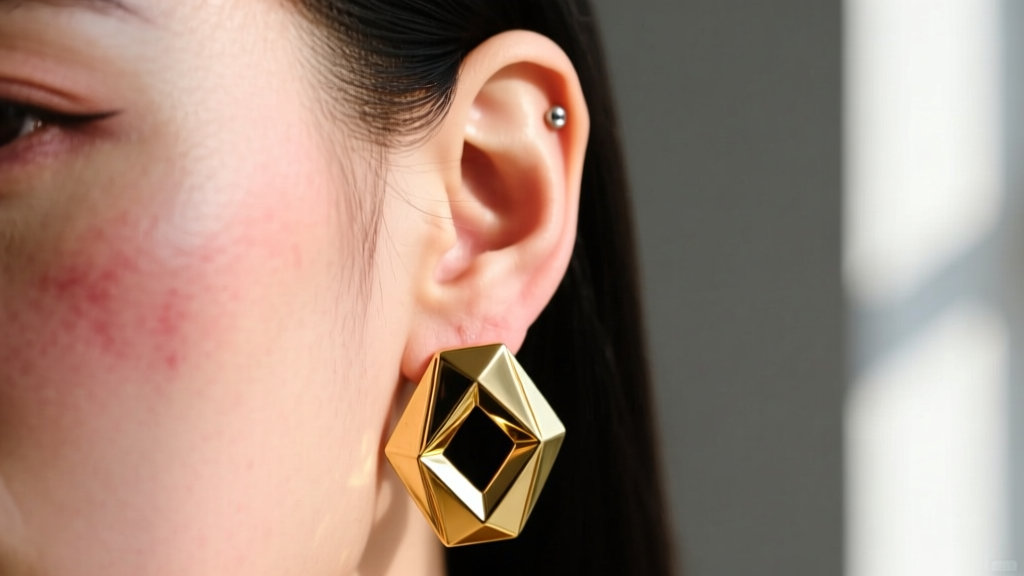
The 'It Earrings' Paradox: High Fashion, Low Comfort
Every season, the fashion cycle crowns a new wave of viral jewelry. In 2026, the spotlight is on sculptural resin drops, mixed-metal architectural cuffs, and oversized molten-gold hoops. These highly coveted 'it earrings' dominate social media feeds and sell out in minutes. However, a frustrating trend accompanies this hype: widespread piercing irritation, allergic flare-ups, and lobe stretching. When you finally track down the season's most coveted it earrings, the last thing you want is to be forced to take them off after three hours due to throbbing pain or itchy, weeping skin.
The root of this problem lies in the disconnect between fast-fashion manufacturing and basic piercing biology. Trend-driven jewelry is often prioritized for visual impact and low production costs, bypassing the strict biocompatibility standards required for long-term wear in a healed fistula. To keep your lobes healthy while still participating in the trend, we must break down the exact failure modes of these statement pieces and apply professional troubleshooting techniques.
Diagnosing the Pain: Allergy vs. Mechanical Stress
Before you can fix the issue, you must accurately diagnose the source of the irritation. Most wearers mistakenly assume all earring pain is an allergy, but mechanical trauma is equally common with heavy statement pieces.
| Symptom Profile | Allergic Contact Dermatitis | Mechanical Trauma / Friction |
|---|---|---|
| Onset Time | 12 to 72 hours after wearing | Immediate or within 1-2 hours |
| Visual Cues | Flaking, weeping, intense itching, spreading redness | Localized swelling, tenderness, micro-tears, elongated hole |
| Primary Culprit | Nickel, copper, or zinc ions leaching into the skin | Excessive weight, sharp wire edges, or incorrect gauge |
| Relief Method | Immediate removal, hydrocortisone, barrier coatings | Upsizing wire gauge, silicone O-ring support, weight reduction |
Material Breakdown: What’s Really in Your Viral Jewelry?
The vast majority of viral it earrings are cast from base metal alloys to keep retail prices under $40. The most common culprit for irritation is Zamak (a zinc alloy with aluminum, magnesium, and copper) or standard Brass (copper and zinc). These metals are typically flash-plated with a microscopic layer of gold or silver.
The Plating Degradation Problem
Flash plating is measured in microns. Fast-fashion earrings often feature plating as thin as 0.1 to 0.5 microns. When this plating wears away from friction against the earlobe or exposure to the natural pH of your skin, the underlying base metals are exposed. According to the Mayo Clinic, nickel and cobalt are among the most frequent triggers for allergic contact dermatitis. Even if an earring is labeled 'nickel-free,' the copper in brass can react with your sweat to create copper salts, leading to a green discoloration and localized irritant dermatitis.
The Stainless Steel Misconception
Many brands label their jewelry as 'surgical steel.' However, this is an unregulated marketing term. Often, they are using 304 stainless steel, which contains up to 10.5% nickel. For sensitive piercings, the Association of Professional Piercers (APP) strictly recommends only Implant-Grade Titanium (ASTM F-136) or Niobium, which contain zero nickel and possess a mirror-finish that prevents bacterial adhesion.
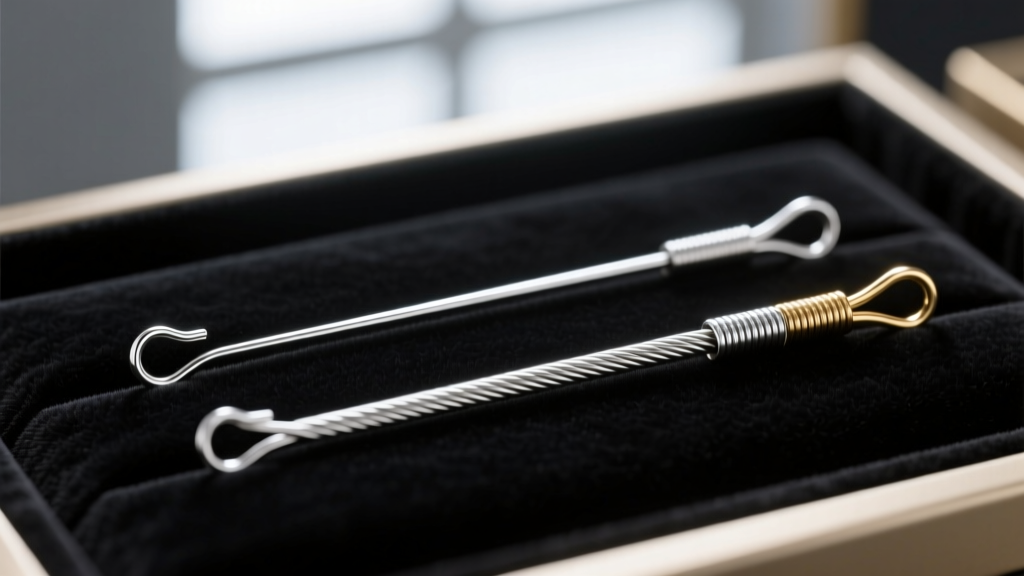
Troubleshooting Guide: Step-by-Step Fixes for Angry Piercings
If you refuse to part with your favorite statement pieces, you can modify them to be biologically compatible and mechanically sound. Here is a professional troubleshooting framework.
1. Fixing the Gauge and Weight Mismatch
Heavy resin or large acrylic it earrings often weigh between 15 and 30 grams. When this weight is suspended on a standard 20-gauge (0.8mm) or 22-gauge (0.6mm) wire, it creates the 'cheese-cutter effect.' The thin wire exerts immense pressure per square millimeter on the bottom of your fistula, slowly migrating the piercing downward and causing chronic inflammation.
- The Fix: Visit a local body piercer and ask them to 'rewire' the earring. They can remove the cheap base-metal hook and attach the heavy top to an 18-gauge (1.0mm) or 16-gauge (1.2mm) implant-grade titanium wire. The thicker surface area distributes the weight, virtually eliminating the cheese-cutter effect.
2. The Clasp and Backing Failure
Statement earrings often come with tiny, rigid metal butterfly backs. These dig into the back of the lobe, trapping sweat, dead skin cells, and soap scum, leading to irritant contact dermatitis and foul odors.
- The Fix: Discard the metal backs entirely. Replace them with flat-back silicone O-rings or disc earrings. Silicone provides a soft, flexible cushion that absorbs the kinetic shock of a heavy earring swinging, while the flat profile allows the skin underneath to breathe.
3. Creating a Biocompatible Barrier
If you suspect a mild copper or nickel allergy but need to wear the earrings for a specific event, you can create a temporary physical barrier.
- The Fix: Paint the earring post and the back of the decorative top with two coats of clear polyurethane nail polish. Allow it to cure for 24 hours before wearing. Warning: This is a temporary hack. The friction of insertion will eventually chip the polish, re-exposing the base metal. Never use this method on fresh, unhealed piercings.
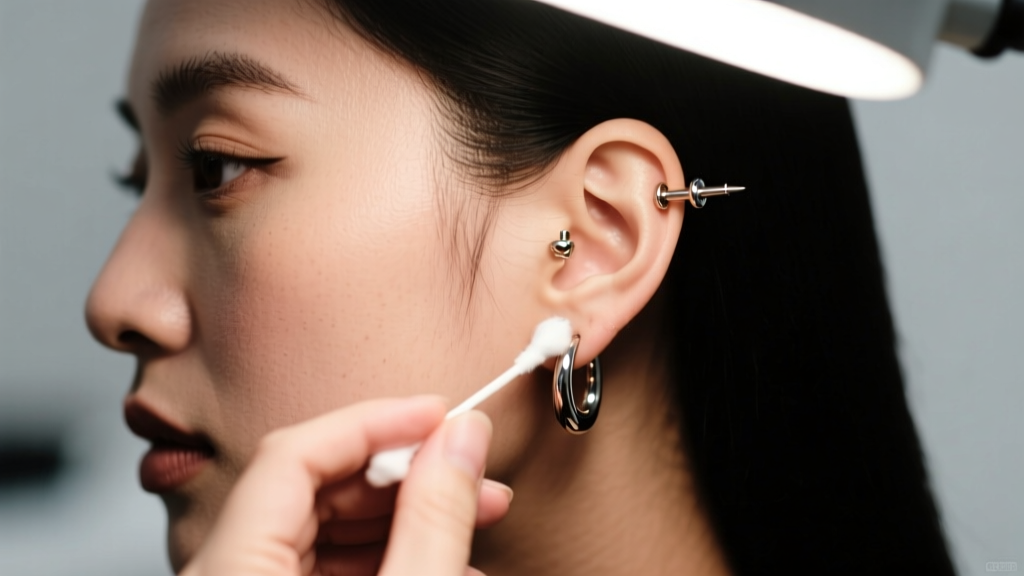
Preventative Maintenance for Statement Pieces
Trending it earrings often feature deep textures, porous resin elements, and intricate crevices that trap environmental debris. Improper cleaning accelerates both metal degradation and piercing irritation.
'The number one mistake clients make with heavy fashion jewelry is sleeping in it. The lateral pressure applied to a thick, rigid post while your head is on a pillow can easily blow out the back of a healed fistula or bend the wire, creating a sharp edge that tears the tissue upon removal.' — Senior APP-Certified Piercer
To maintain your jewelry and your lobes, adopt this strict maintenance routine:
- Daily Removal: Never sleep, shower, or exercise in base-metal statement earrings.
- Sanitization: Wipe down the earring posts with 70% isopropyl alcohol on a cotton pad after every wear to remove sebum and acidic sweat.
- Lobe Care: Cleanse your piercings with a sterile, preservative-free 0.9% sodium chloride wound wash. Avoid harsh soaps or tea tree oil, which can dry out the fistula and cause micro-cracking.
When to See a Professional
While mild redness and itching can usually be managed at home by removing the offending jewelry and applying a cold compress, certain symptoms require professional intervention. If you experience localized heat, a pulsing sensation, yellow or green discharge, or if the redness begins to streak down your neck, you may have developed a bacterial infection rather than simple contact dermatitis. In these cases, remove the jewelry immediately and consult a dermatologist or primary care physician for a targeted treatment plan. Do not attempt to treat a true infection with over-the-counter antibiotic ointments, as these trap moisture and can worsen the environment for anaerobic bacteria.


