Trendy Earrings 2025: Beginner Guide to Ear Stacking
Discover the trendy earrings 2025 ear-stacking movement. Our beginner guide covers gauge sizes, implant-grade metals, and safe cartilage placements.

The Legacy of Trendy Earrings 2025: The Curated Ear
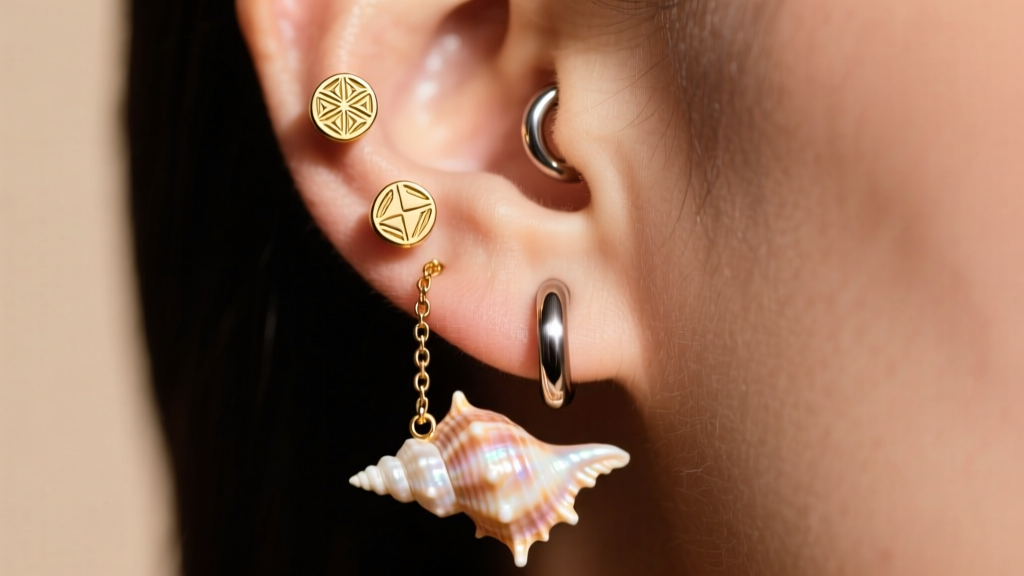
When we look back at the trendy earrings 2025 movement from our current vantage point in 2026, one thing is abundantly clear: the "curated ear" completely transformed how we approach jewelry. What started as a niche subculture in high-end piercing studios evolved into a mainstream fashion staple. The hallmark of the 2025 trend was the "messy constellation" stack—an asymmetrical, highly personalized arrangement of studs, hoops, and chains that celebrated individual anatomy.
However, for beginners stepping into this world today, the sheer volume of options can be paralyzing. More importantly, treating ear stacking purely as a fashion accessory without understanding the underlying biology and metallurgy is a fast track to infection, migration, and scarring. This guide bridges the gap between high-fashion aesthetics and clinical safety, giving you the exact frameworks needed to build a stack that heals beautifully and lasts a lifetime.
Anatomy of a Stack: Lobe vs. Cartilage Placements
A successful ear stack relies on understanding the distinct tissue types of the ear. The earlobe is composed of soft, vascular tissue that heals relatively quickly (6 to 8 weeks). In contrast, the upper ear consists of avascular cartilage, which is notoriously stubborn, taking anywhere from 6 to 12 months—or even up to 18 months for complex placements like the rook or daith—to fully heal.
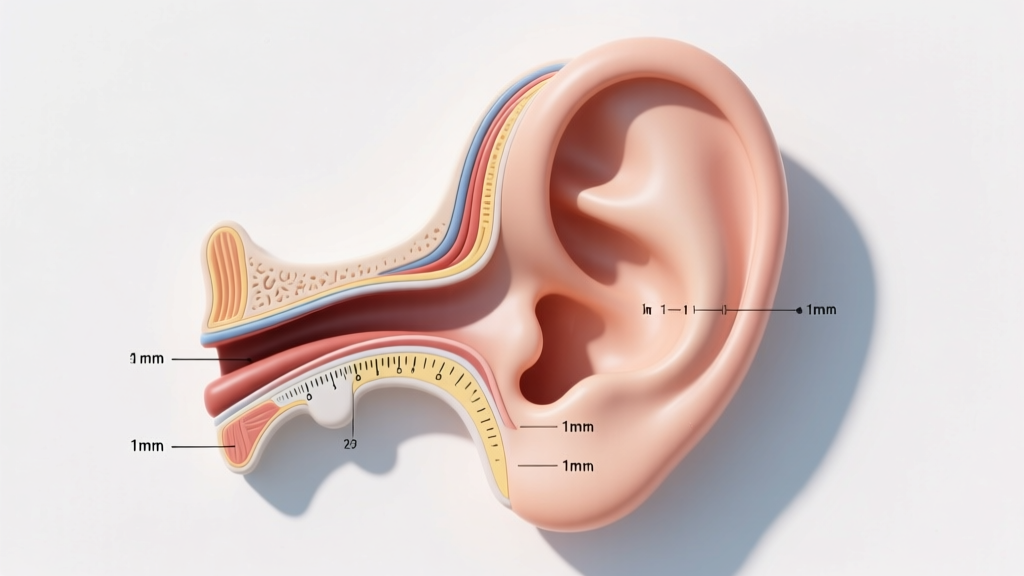
The 2025 aesthetic heavily favored the tragus (the small flap of cartilage in front of the ear canal) and the flat (the broad, relatively flat area of cartilage on the upper outer ear). When planning your stack, you must account for swelling. Cartilage can swell up to 30% of its original volume during the first four weeks of healing, requiring specialized jewelry with extra-long posts that are later downsized by a professional.
Gauge Size Cheat Sheet
One of the most common beginner mistakes is buying jewelry that does not match the piercing's gauge (thickness). Wearing a 20G earring in a 16G hole will cause the tissue to shrink around the thinner wire, making future jewelry changes painful or impossible.
| Gauge | Thickness | Primary Placement | Ideal Jewelry Style |
|---|---|---|---|
| 20G | 0.81mm | Standard Lobe | Lightweight hoops, delicate threadless ends |
| 18G | 1.02mm | Upper Lobe / Helix | Small huggies, threadless studs |
| 16G | 1.29mm | Tragus, Conch, Nostril | Labret studs, clicker rings, shields |
| 14G | 1.60mm | Industrial, Daith | Captive bead rings, straight barbells |
Material Science: What Actually Heals and Lasts
If you take only one piece of advice from this guide, let it be this: never wear "surgical steel" in a fresh or healing piercing. The term "surgical steel" is largely a marketing fabrication. Most commercial steel jewelry is made from 316L stainless steel, which contains 8% to 10% nickel. Nickel is the most common contact allergen in the world, and prolonged exposure in a healing wound leads to contact dermatitis, localized swelling, and the dreaded "piercing bump" (hypertrophic scarring).
According to the Association of Professional Piercers (APP), the only metals recommended for initial piercings and long-term wear in sensitive ears are:
- Implant-Grade Titanium (ASTM F-136): The gold standard. It is entirely nickel-free, lightweight, and can be mirror-polished to a glass-like finish that prevents bacterial adhesion.
- Niobium: A highly reactive metal that is nickel-free and can be anodized into vibrant colors using electricity, rather than toxic chemical plating.
- Solid 14k or 18k Gold: Must be alloyed for biocompatibility (avoid white gold, which often contains nickel or palladium alloys that can cause reactions).
The Mechanics: Threadless vs. Internally Threaded
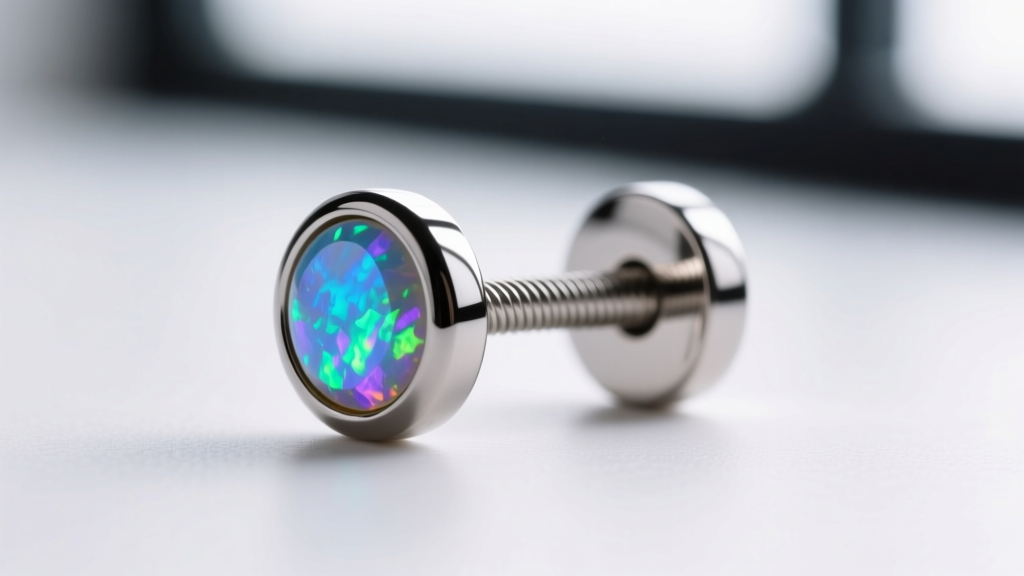
Beyond the metal itself, the construction of the earring dictates its safety. Avoid externally threaded jewelry (where the screw is on the post) at all costs; pushing those sharp threads through a piercing channel causes micro-tears in the tissue.
The industry standard for trendy, high-end ear stacks is threadless (press-fit) jewelry. A threadless system uses a hollow post and a decorative end with a slightly bent pin. You insert the pin halfway, bend it slightly, and push it into the post. The tension of the bent metal against the inside of the post holds it securely in place. This creates a seamless, smooth surface that will never snag on hair or sweaters, and it allows for infinite customization without having to unscrew tiny, easily lost balls.
Failure Modes: The Cheese Cutter Effect and Snag Hazards
When curating an ear stack, physics plays a massive role in long-term success. Two primary failure modes ruin otherwise beautiful stacks:
- The Cheese Cutter Effect: This occurs when a heavy hoop or dangle earring is worn on a very thin gauge wire (like 20G or 22G) in the earlobe. Over time, the weight and gravity cause the thin wire to slowly slice downward through the tissue, much like a wire cheese cutter. This results in permanent lobe splitting and migration. If you want to wear heavy statement hoops, ensure your lobe piercings are done at 16G or 14G to distribute the weight.
- Snag Hazards in Cartilage: The 2025 trends heavily featured prong-set gemstones. While brilliant, prongs act like tiny grappling hooks for your hair, towels, and clothing. A single hard snag on a healing helix piercing can cause immediate trauma, leading to a hypertrophic scar. For active individuals or those with long hair, opt for bezel-set gems, where the metal completely encircles the stone, creating a smooth, snag-proof profile.
"The most common reason clients come to us for jewelry removal is that they bought aesthetically pleasing but mechanically flawed jewelry from fast-fashion retailers. A bezel-set, threadless titanium end costs a bit more upfront but saves you months of dealing with irritation bumps." — Senior Piercer, Industrial Strength Body Jewelry
Building Your First Stack: A Budget & Brand Framework
Building a curated ear is an investment. While fast-fashion brands offer $15 multipacks, the cost of treating the resulting infections and removing scar tissue far outweighs the initial savings. Here is a realistic pricing framework for building a safe, high-quality stack in 2026:
Tier 1: The Foundation ($30 - $60 per piece)
For the posts and basic ends that sit inside the ear, stick to legendary body jewelry manufacturers like Anatometal or Industrial Strength. Their ASTM F-136 titanium labret posts and simple bezel-set gems are the workhorses of the piercing world. They offer a mirror finish that rivals luxury brands at a fraction of the cost.
Tier 2: The Statement Pieces ($80 - $200 per piece)
When you want to introduce solid gold, intricate designs, or high-quality synthetic opals, look to BVLA (Body Vision Los Angeles). They pioneered the threadless system and offer 14k and 18k gold ends that are designed to last generations. Their "Mina" and "Forward" clusters are iconic in the ear-stacking community.
Tier 3: Luxury & Diamonds ($250+ per piece)
If you are building a high-end constellation stack featuring genuine diamonds and specialized clicker hoops, Maria Tash remains the industry leader. Their proprietary invisible-set diamonds and angled studs are specifically designed to follow the natural contour of the ear, providing a bespoke look that standard straight posts cannot achieve.
Aftercare and Maintenance for Stacked Ears
The APP Fresh Piercing Guidelines emphasize a "less is more" approach to aftercare. The days of twisting your earrings and applying harsh chemicals like rubbing alcohol, hydrogen peroxide, or tea tree oil are over. These substances destroy the delicate, newly forming epithelial cells inside the piercing channel.
Your daily routine should consist solely of spraying the front and back of the jewelry with sterile 0.9% sodium chloride wound wash (ensure the only ingredients are water and salt). Let it air dry, or gently pat it with non-woven gauze. Avoid cotton swabs, as the microscopic fibers can wrap around the post and become embedded in the healing wound.
Finally, practice the "hands-off" rule. Touching, rotating, or playing with your new stack introduces staphylococcus bacteria from your fingers directly into an open wound. Let the body do its work, and trust the process.
Final Thoughts on Modern Ear Styling
The evolution of the trendy earrings 2025 aesthetic has permanently elevated ear piercing from a simple accessory to a recognized form of body modification art. By prioritizing implant-grade materials, respecting anatomical gauge limits, and investing in threadless mechanics, you ensure that your curated ear is not just a fleeting trend, but a comfortable, beautiful, and permanent addition to your personal style.


