Tropical Earrings: A Beginner's Guide to Island-Inspired Styles
Discover everything about tropical earrings in our beginner guide. Learn about sweat-resistant metals, enamel types, and styling tips.

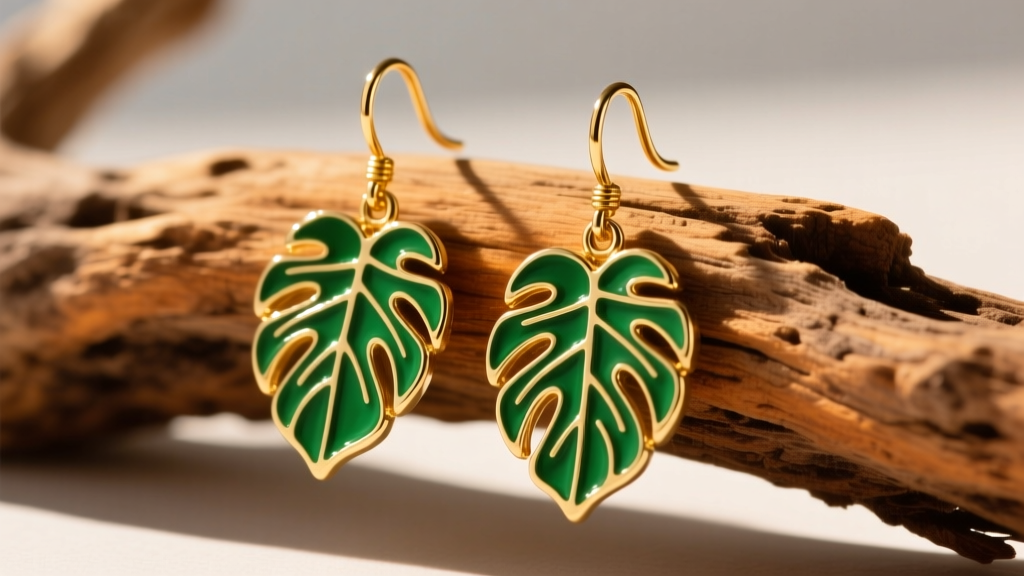
When the weather warms up or a beach vacation approaches, the jewelry box inevitably shifts toward brighter, bolder, and more organic designs. Tropical earrings—characterized by botanical motifs, vibrant color palettes, and resort-ready silhouettes—are a staple of warm-weather styling. However, as we navigate the jewelry landscape in 2026, it is clear that not all island-inspired pieces are created equal. The combination of high humidity, saltwater, and sweat creates a hostile environment for cheap metals and fragile finishes.
This beginner-friendly explainer will decode the material science, structural integrity, and styling proportions of tropical earrings, ensuring your next purchase survives the climate while elevating your aesthetic.
Decoding the Tropical Aesthetic: Beyond the Basics
The term "tropical" in jewelry design extends far beyond simple plastic palm trees. High-quality tropical earrings draw inspiration from lush flora and exotic fauna, translating them into wearable art. Common motifs include the Monstera deliciosa (known for its dramatic fenestrations), the Strelitzia (bird of paradise), hibiscus blooms, and marine life like sea turtles and manta rays.
From a design perspective, these pieces rely heavily on high-contrast color blocking. You will frequently see deep emerald greens, vibrant coral oranges, and oceanic blues. The challenge for the consumer lies in how these colors are applied to the metal base, which directly dictates the earring's lifespan and resistance to tropical climates.
Material Science: Surviving Heat, Humidity, and Sweat
The most critical factor when buying tropical earrings is the base metal. Humid environments and perspiration accelerate chemical reactions, making material choice a matter of both aesthetics and dermatological health.
The Base Metal Breakdown
If you are purchasing earrings for a beach trip, avoid brass and copper alloys entirely. Brass is an alloy of copper and zinc. When copper reacts with the salts, water, and fatty acids in human sweat, it creates copper chelate—a green salt that will stain your epidermis and ruin the piece. Instead, look for these reliable alternatives:
- ASTM F136 Implant-Grade Titanium: The absolute gold standard for sensitive ears. It contains zero nickel, is highly resistant to saltwater corrosion, and is lightweight enough for large, statement-making tropical dangles.
- 316L Surgical Stainless Steel: A highly durable, budget-friendly option that resists rust and tarnish, though it contains trace amounts of nickel. If you have a known nickel allergy, the Cleveland Clinic advises avoiding steel and sticking strictly to titanium or solid gold.
- 14k or 18k Gold Vermeil: Vermeil (pronounced ver-may) requires a thick plating of at least 2.5 microns of gold over a sterling silver base. Standard "gold-plated" jewelry often features a microscopic 0.5-micron layer that will wear off within weeks of exposure to sweat and friction.
Understanding Post Gauges and Threading
Most standard tropical studs and dangles utilize a 20-gauge (0.8mm) or 18-gauge (1.0mm) post. For heavy, oversized monstera or hibiscus dangles, an 18-gauge post provides necessary structural support to prevent the earring from drooping or tearing the fistula (the piercing hole). Furthermore, always check the threading. Avoid externally threaded posts, where the screw threads are on the post itself; these act like tiny files, scraping the delicate tissue of your piercing upon insertion. Opt for internally threaded or threadless (push-pin) designs for a smooth, trauma-free experience.
The Enamel Dilemma: Resin vs. Vitreous Glass
Color is the lifeblood of tropical earrings, and enamel is the primary medium used to achieve it. However, the term "enamel" is frequently misused in the jewelry industry, masking significant differences in durability.
Cold Enamel (Epoxy Resin)
Ubiquitous in the $15 to $40 price range, cold enamel is actually a two-part epoxy resin. While it allows for brilliant, opaque colors and intricate detailing, it has a Mohs hardness of only 2.0 to 2.5. This makes it highly susceptible to scratching. More importantly, prolonged exposure to the UV index in tropical climates will cause white and light-colored resins to yellow and become brittle over time.
Vitreous Enamel (Kiln-Fired Glass)
True vitreous enamel is finely ground glass fused to metal at temperatures exceeding 1400°F. With a Mohs hardness of 5.0 to 6.0, it is incredibly durable, scratch-resistant, and completely impervious to UV fading. When shopping for premium tropical earrings, look for brands that explicitly state "kiln-fired" or "vitreous" enamel. According to the Gemological Institute of America (GIA), vitreous enamel requires only mild soap and water for cleaning, whereas harsh chemicals can degrade the metal-enamel bond.
Sizing, Weight, and Face Shape Proportions
Tropical earrings often lean toward maximalism, but proportion is key to ensuring the jewelry complements rather than overwhelms your features. Below is a structural guide to matching island-inspired silhouettes with your face shape.
| Face Shape | Ideal Tropical Silhouette | Motif Examples | Weight Consideration |
|---|---|---|---|
| Round | Angular, geometric, and elongated dangles to create vertical lines. | Long palm fronds, vertical bird of paradise drops. | Keep under 15g per ear to avoid dragging the lobe. |
| Square | Curved, rounded hoops and soft-edged studs to soften the jawline. | Circular hibiscus hoops, curved sea turtle huggies. | Medium weight (10-20g) is well-supported. |
| Heart | Teardrop or chandelier shapes that are wider at the bottom. | Teardrop monstera leaves, cascading coral reef dangles. | Bottom-heavy designs balance the forehead; watch for snagging. |
| Oval | Versatile; can pull off oversized, wide statement studs. | Large symmetrical tortoise shell hoops, wide sunburst studs. | Can handle statement weights (20g+) with silicone backings. |
Care, Maintenance, and Storage
The longevity of your tropical earrings depends heavily on how they are stored between wears. High humidity is the enemy of sterling silver bases and cold enamel finishes.
Expert Tip: Never use ultrasonic jewelry cleaners on tropical earrings featuring cold enamel, turquoise, coral, or mother-of-pearl. The high-frequency vibrations will shatter the resin and strip the polish from porous organic gems.
To maintain your pieces, follow this simple maintenance protocol:
- Post-Wear Wipe Down: After wearing your earrings in a humid or salty environment, wipe the posts and backs with a microfiber cloth dampened with distilled water to remove sweat and salt crystals.
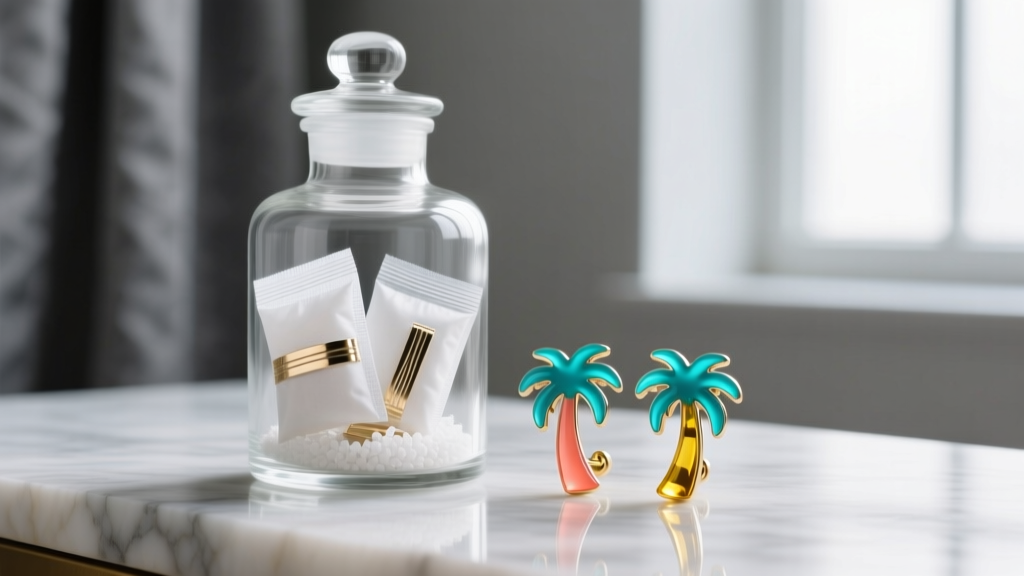
- Moisture Control: Store your jewelry in an airtight glass or acrylic apothecary jar with a few silica gel packets to maintain a low-humidity microclimate.
- Tarnish Prevention: Drop a 3M anti-tarnish strip into your storage container. These strips absorb sulfur compounds from the air, preventing the sterling silver base of vermeil pieces from oxidizing and turning black.
Price Tiers: What to Expect When Shopping
Understanding the market tiers will help you set realistic expectations regarding material quality and craftsmanship.
- Fashion Tier ($15 - $40): Expect brass or zinc alloy bases with gold-tone plating and cold enamel. These are perfect for a single vacation but will likely tarnish or chip within a season of heavy wear.
- Demi-Fine Tier ($45 - $120): The sweet spot for most buyers. You will find 14k gold vermeil over sterling silver, 316L stainless steel, and higher-quality cold enamel or basic vitreous enamel. Posts are often internally threaded.
- Fine Jewelry Tier ($150+): Solid 14k or 18k gold, ASTM F136 titanium, and master-crafted kiln-fired glass enamel. These pieces are heirloom-quality, entirely waterproof, and designed to withstand decades of tropical wear without degradation.
By prioritizing biocompatible metals, understanding the limits of resin, and matching the silhouette to your proportions, you can build a curated collection of tropical earrings that looks just as stunning on the beach as it does in the city.


