Troubleshooting a 14k Gold Earrings Studs Set: Expert Fixes
Learn how to troubleshoot your 14k gold earrings studs set. Expert fixes for bent posts, allergic reactions, loose backs, and tarnish.

The Reality of Wearing 14k Gold Daily
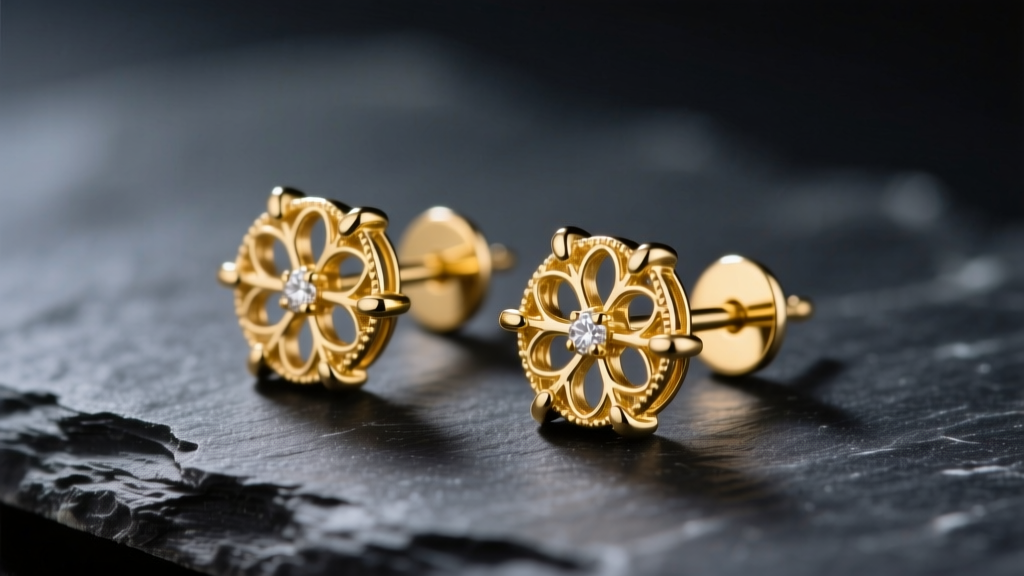
A high-quality 14k gold earrings studs set is a staple in any jewelry collection, offering the perfect balance of durability, luxury, and everyday wearability. Pure 24k gold is far too soft for daily-wear body jewelry, which is why 14k gold—an alloy containing 58.3% pure gold and 41.7% strengthening metals like copper, silver, and zinc—is the industry standard for fine jewelry. However, even with its enhanced structural integrity, daily wear introduces a host of mechanical and chemical challenges. From bent posts and mysterious skin irritations to failing earring backs and unexpected tarnish, owning a premium set requires knowing how to maintain it. This guide provides deep-dive troubleshooting for the most common issues plaguing your favorite studs, backed by metallurgical facts and professional piercer standards.
Diagnosing Post Bending and Structural Weakness
The most frequent complaint regarding any gold stud set is a bent post. Because 14k gold relies on alloyed metals for strength, the thickness of the post—measured in gauges—dictates its structural resilience. Most standard fashion jewelry studs are manufactured at 20-gauge (0.81mm) or even 22-gauge (0.64mm) to save on precious metal costs. While fine for occasional wear, a 20-gauge post will easily bend if you sleep on your side or catch the earring on a sweater.
How to Safely Straighten a Bent Post
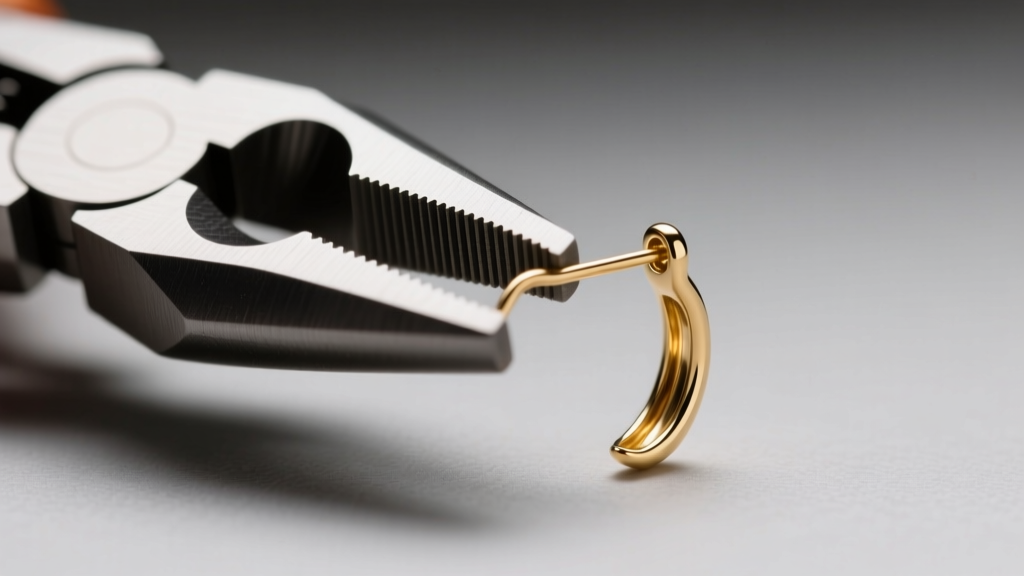
If your post bends, do not use standard steel pliers, as they will mar the gold and compromise the rhodium plating (if white gold). Instead, use nylon-jaw pliers. Grip the post firmly at the base near the setting to avoid stressing the solder joint, and apply slow, steady pressure to bend it back to a 90-degree angle. If the post has been bent back and forth multiple times, it will suffer from metal fatigue and eventually snap. In this case, take the set to a bench jeweler to have the post laser-welded or replaced with a heavier 18-gauge (1.02mm) post for long-term durability.
Solving the 'Mystery' Allergic Reaction
Many wearers assume that because they purchased a genuine 14k gold earrings studs set, they are immune to contact dermatitis. However, allergic reactions to 14k gold are surprisingly common and are almost always caused by the alloying metals, not the gold itself. According to the Gemological Institute of America (GIA), the specific alloy recipe varies drastically between yellow, rose, and white gold, directly impacting biocompatibility.
| Gold Color | Primary Alloy Metals | Nickel Content? | Allergy Risk Level |
|---|---|---|---|
| 14k Yellow Gold | Silver, Copper, Zinc | Rarely | Low |
| 14k Rose Gold | High Copper, Silver | No | Low (unless copper-sensitive) |
| 14k White Gold | Nickel, Palladium, Zinc | Often Yes | High (if nickel alloyed) |
The Rhodium Plating Factor
Most 14k white gold studs are plated with rhodium, a hypoallergenic platinum-group metal that provides a bright, silvery finish. Over time, friction from hair, hats, and cleaning wears this plating away, exposing the nickel-bearing alloy underneath. If your earlobes become itchy or flaky after months of wearing white gold studs without issue, the rhodium has likely worn thin. The permanent fix is to have a jeweler re-plate the earrings, or switch to 14k palladium-white gold, which is naturally white and entirely nickel-free.
Troubleshooting Loose or Missing Earring Backs
Losing an earring back is a minor annoyance; losing the stud itself is a financial heartbreak. Standard friction backs (often called butterfly backs) rely on a small metal scroll that grips the post's notch. Over time, the tension in this scroll weakens, especially if you frequently remove the earrings by pulling the back straight off rather than twisting it.
Upgrading Your Security Mechanisms
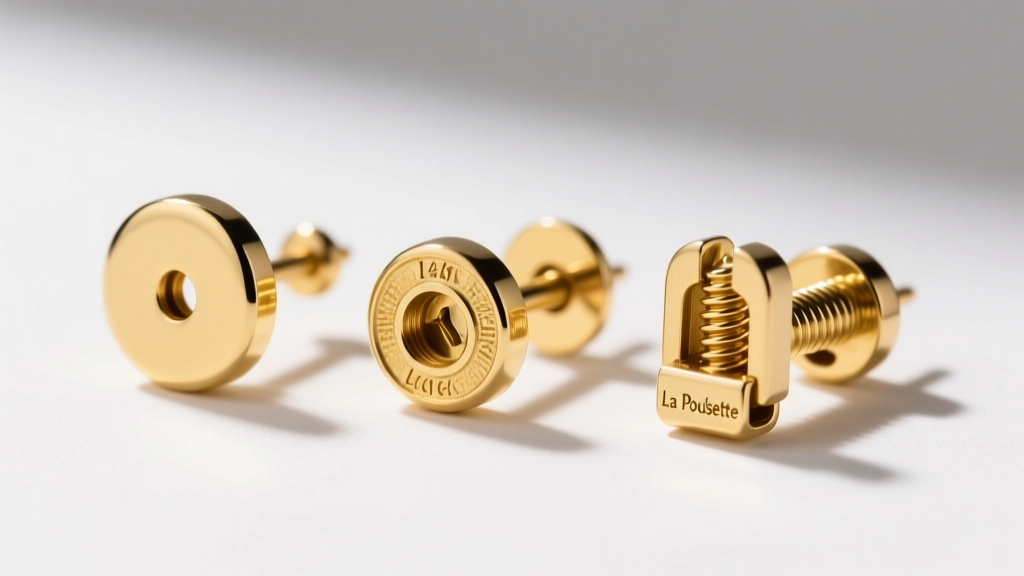
If you are constantly troubleshooting loose backs, it is time to upgrade your hardware. Here are the professional alternatives:
- Screw Backs: These require the post to be threaded. They offer excellent security but can be frustrating to align and thread, especially for those with limited dexterity.
- La Pousette Backs: The gold standard for high-value studs. These feature a mechanical locking system with two small tabs that you pinch to slide the back on and off. They lock securely into a groove on the post and will not vibrate or pull loose.
- Silicone O-Rings: A cheap, temporary fix. Slipping a tiny medical-grade silicone O-ring over the post behind a standard friction back creates a secondary physical barrier that prevents the earring from falling out if the metal clutch fails.
Restoring Dullness and Removing Tarnish
While pure gold does not tarnish, the copper and silver alloys in 14k gold are highly reactive to sulfur, chlorine, and environmental pollutants. If your yellow or rose gold studs have developed a dull, slightly brownish film, this is surface tarnish, not a sign of fake gold.
Expert Warning: Never use commercial silver dip cleaners on a 14k gold earrings studs set, especially if the set features porous gemstones like pearls, opals, or turquoise. The harsh thiourea chemicals in silver dips will permanently etch and ruin these stones.
To safely restore the luster, create a warm bath of distilled water and a few drops of mild, phosphate-free dish soap. Let the studs soak for 15 minutes to break down sebum and cosmetic buildup. Gently agitate the settings with an ultra-soft baby toothbrush. For stubborn tarnish on the metal (away from stones), a professional jeweler's polishing cloth impregnated with mild red jeweler's rouge will safely lift the oxidation without stripping away microscopic layers of gold.
Cartilage vs. Lobe: Gauge and Length Mismatches
A critical troubleshooting issue arises when wearers attempt to use standard lobe studs in cartilage piercings (like the helix or tragus). Standard lobe studs typically feature a post length of 6mm to 7mm. The Association of Professional Piercers (APP) notes that cartilage tissue is denser, swells more significantly, and requires different jewelry dimensions to heal and breathe properly.
Using a 6mm lobe stud in a cartilage piercing often results in the earring back pressing tightly against the skin, causing embedding, moisture trapping, and subsequent hypertrophic scarring or infection. If you are moving a 14k gold stud to a cartilage piercing, ensure the post is at least 8mm (5/16') long and ideally 18-gauge or 16-gauge to match standard cartilage piercing needles. Always swap to a flat-back labret style for cartilage, as traditional butterfly backs will dig into the rear of the ear and cause severe pressure necrosis.
Final Maintenance Protocols
Troubleshooting your jewelry is ultimately about proactive care. Store your 14k gold earrings studs set in a dedicated, anti-tarnish lined jewelry box with individual compartments to prevent the posts from scratching the gold settings or catching on other chains. By understanding the metallurgy of your gold, upgrading to secure locking backs, and respecting the anatomical differences between lobe and cartilage piercings, you can ensure your investment remains secure, comfortable, and brilliantly polished for decades.


