Why 14k Gold Earrings for Sensitive Ears Still Cause Rashes
Still reacting to your jewelry? Learn why 14k gold earrings for sensitive ears cause rashes and how to troubleshoot alloy allergies and fit issues.

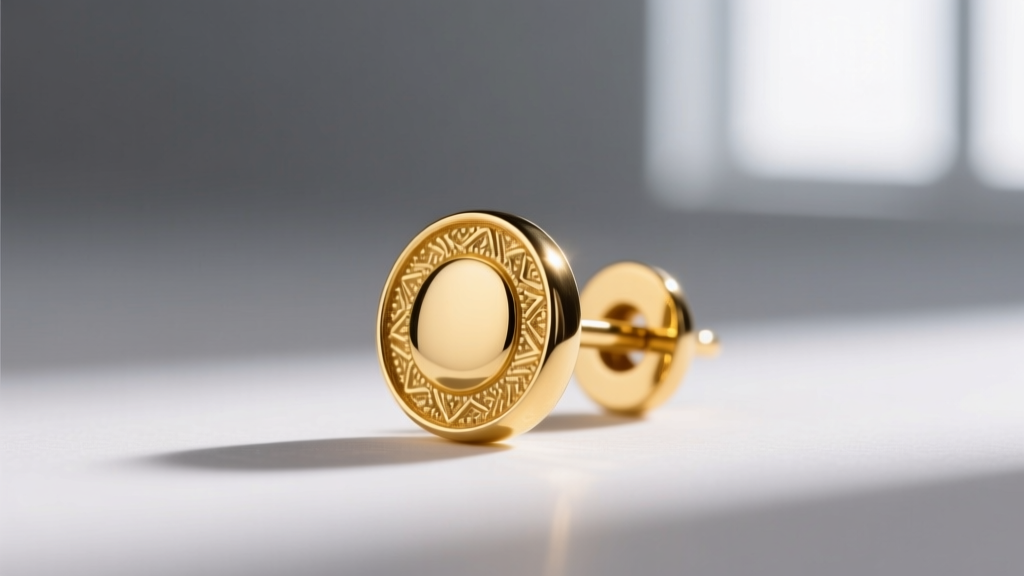
There are few things more frustrating in the world of fine jewelry than investing in high-quality pieces, only to experience an adverse physical reaction. You specifically sought out 14k gold earrings for sensitive ears, paid the premium for solid gold, and yet, your earlobes are still red, swollen, and intensely itchy. If you are currently dealing with a painful flare-up, you are not alone, and more importantly, you are not necessarily allergic to gold itself.
The reality of metallurgy and body modification is that true gold allergies are exceptionally rare. The culprits behind your discomfort usually lie in hidden alloy metals, mechanical friction from improper gauge sizing, or degraded surface platings. In this comprehensive troubleshooting guide, we will decode the exact reasons your jewelry is causing contact dermatitis and provide a step-by-step protocol to resolve the issue.
The Hidden Culprits Behind 'Hypoallergenic' Gold Reactions
To understand why your ears are reacting, we must first look at the chemical composition of 14-karat gold. Pure 24k gold is entirely hypoallergenic, but it is far too soft to be used for earring posts; a 24k post would bend and warp under the slightest pressure. Therefore, jewelers alloy gold with other metals to increase its tensile strength and durability.
By definition, 14k gold contains exactly 58.5% pure gold. The remaining 41.5% is a cocktail of alloy metals. In the United States, the term 'hypoallergenic' is largely unregulated in the jewelry market. A manufacturer can legally stamp a piece as 'hypoallergenic' even if the 41.5% alloy blend contains nickel—the most common metal allergen in the world. According to the American Academy of Dermatology, nickel allergy affects roughly 18% of adults in North America, leading to allergic contact dermatitis characterized by erythema, vesicles, and severe pruritus (itching).
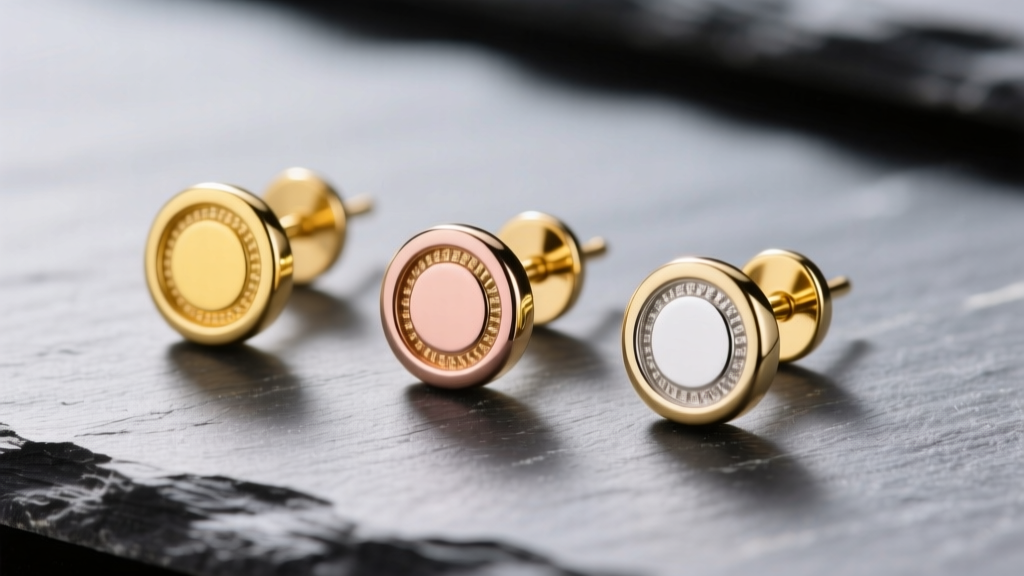
Decoding the Alloys: Yellow vs. White vs. Rose 14k Gold
Not all 14k gold is created equal. The color of the gold dictates the specific alloy metals used, which directly correlates to your risk of experiencing an allergic reaction. Understanding these variations is critical when selecting 14k gold earrings for sensitive ears.
| Gold Color | Primary Alloy Metals | Nickel Risk | Sensitization Profile |
|---|---|---|---|
| Yellow Gold | Silver, Copper, Zinc | Low (Usually Nickel-Free) | Generally the safest option. High silver content is well-tolerated by most skin types. |
| White Gold | Nickel or Palladium, Zinc | High (Unless Palladium-based) | Traditional white gold uses nickel for a bright white finish. High risk for contact dermatitis. |
| Rose Gold | Copper, Silver | None | Copper can cause a harmless green oxidation on the skin, but true copper allergies are rare. |
The White Gold Rhodium Trap
Many wearers of white gold earrings report that their ears were fine for the first six months, but suddenly developed a rash later on. This is due to rhodium plating. Because nickel-based white gold has a slightly yellowish-gray tint, jewelers plate it with rhodium (a platinum group metal) to give it a brilliant, mirror-like white finish. Rhodium is highly biocompatible. However, earring posts experience high friction against the fistula (the piercing hole). Over time, the rhodium plating wears away, exposing the underlying nickel alloy directly to your tissue, triggering a delayed hypersensitivity reaction.
Gauge Size and Friction: The Overlooked Mechanical Irritants
Before you discard your earrings due to a suspected metal allergy, you must rule out mechanical trauma. A vast majority of 'allergic reactions' to 14k gold earrings for sensitive ears are actually localized inflammatory responses caused by improper gauge sizing.
Standard earlobe piercings performed with a hollow needle are typically 18-gauge (1.02mm) or 16-gauge (1.3mm). However, many mass-market fine jewelry brands manufacture their earring posts at 20-gauge (0.81mm) or even 22-gauge (0.64mm) to save on precious metal costs. When you insert a thin 20-gauge post into a thicker 18-gauge piercing channel, the jewelry moves excessively. This creates a phenomenon known in the body modification community as the 'cheese-cutter effect.'
When a thin wire rests in a larger hole, gravity and movement cause the wire to apply disproportionate pressure to the bottom of the fistula. This creates micro-tears in the delicate epithelial tissue, inviting bacteria and causing swelling that perfectly mimics an allergic reaction.
The Fix: Measure your earring posts with digital calipers. If your piercing was done at 18g, ensure your 14k gold earrings feature a minimum 18g (1.0mm) or 16g (1.2mm) post to provide structural stability and allow the micro-tears to heal.
Step-by-Step Troubleshooting an Active Flare-Up
If your ears are currently red, weeping, or painful, follow this clinical troubleshooting protocol recommended by the Association of Professional Piercers (APP) to calm the tissue and identify the root cause.
- Remove the Irritant: Take out the 14k gold earrings immediately. Do not force them through swollen tissue; if the jewelry is embedded, seek a professional piercer or urgent care.
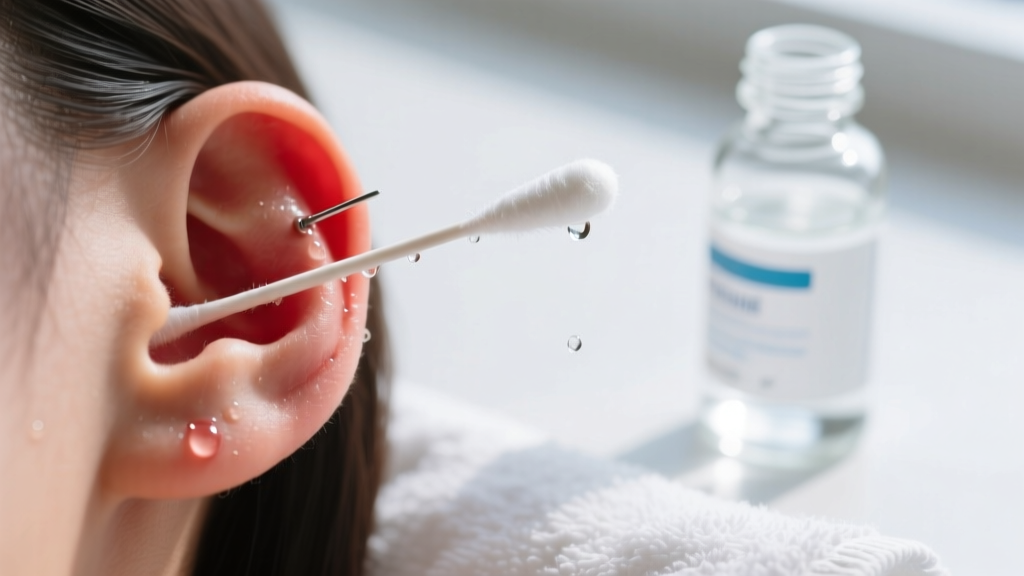
- Cleanse with Sterile Saline: Spray the affected area with a sterile 0.9% sodium chloride wound wash. Avoid rubbing alcohol, hydrogen peroxide, or antibiotic ointments, as these destroy healthy granulation tissue and trap anaerobic bacteria.
- Inspect the Jewelry Post: Use a magnifying glass to examine the earring post. Look for pitting, scratches, or areas where the rhodium plating has worn thin. Bacteria harbor in microscopic scratches, leading to chronic low-grade infections.
- Sanitize the Jewelry: Boil the solid 14k gold earrings in distilled water for 10 minutes to sterilize them. Do not use ultrasonic cleaners on porous gemstones like opals or pearls attached to the settings.
- Assess the Fit: Once the swelling subsides (usually 48-72 hours), re-evaluate the gauge thickness and the length of the post. Ensure the post is long enough to accommodate natural daily fluctuations in earlobe swelling.
How to Verify True Nickel-Free 14k Gold Before Buying
To prevent future reactions, you must change how you shop for fine jewelry. Relying on the 'hypoallergenic' label is no longer sufficient. When purchasing 14k gold earrings for sensitive ears, you must act as an informed consumer and interrogate the metallurgical origins of the piece.
Always ask the jeweler or brand directly: 'Is your white gold alloyed with palladium or nickel?' Palladium-white gold is significantly more expensive and harder to cast, but it is entirely nickel-free and safe for sensitive ears. If you are buying yellow gold, ask for confirmation that the alloy blend relies strictly on silver and copper, with zero trace nickel used as a deoxidizer during the casting process.
For ultimate peace of mind, seek out jewelers who provide a mill test certificate or a detailed breakdown of their alloy compositions. Brands that specialize in body-safe fine jewelry will proudly list their exact metal percentages and comply with the strict EU Nickel Directive, which limits nickel release to 0.2 micrograms per square centimeter per week.
When to Upgrade to Implant-Grade Titanium
If you have verified that your 14k gold is entirely nickel-free, you have corrected the gauge sizing, and you are still experiencing contact dermatitis, you may be part of the small percentage of the population with a silver or copper allergy. In this scenario, 14k gold will simply never be compatible with your body chemistry.
The definitive solution is to transition to Implant-Grade Titanium, specifically ASTM F-136. This specific grade of titanium is the global standard for surgical implants and contains absolutely no nickel, lead, or reactive alloys. While it lacks the traditional prestige and warm hue of 14k gold, anodized titanium can be treated to mimic a rich 14k yellow gold color without introducing any reactive metals to the surface. Prioritizing tissue health over traditional metallurgy is the ultimate hallmark of smart, sustainable jewelry curation.


