Troubleshooting Chunky Hoop Earrings Silver: Weight & Tarnish Fixes
Fix sagging lobes, tarnish, and broken clasps on chunky hoop earrings silver. Expert troubleshooting for weight distribution and metal care.

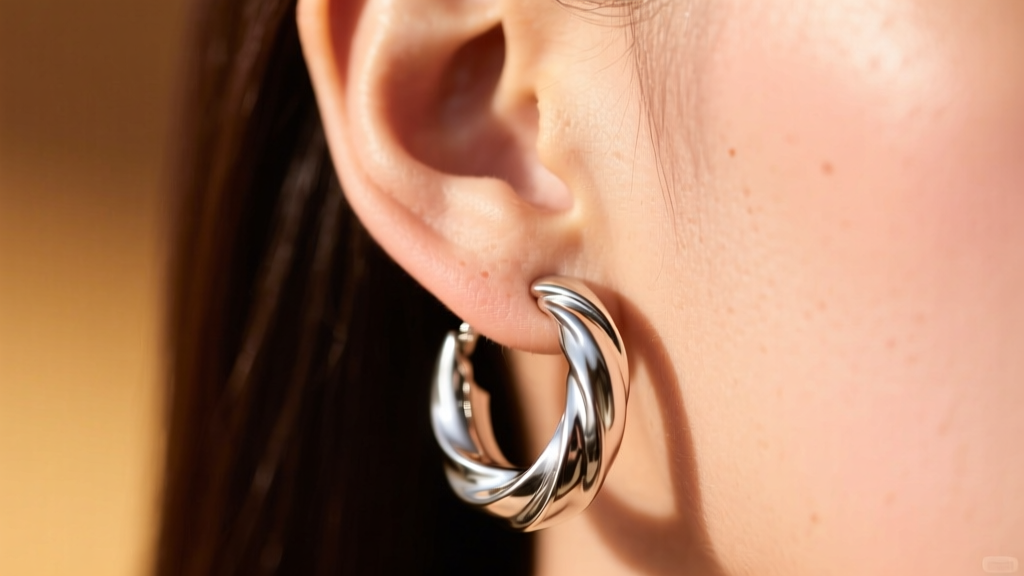
As we navigate the 2026 jewelry landscape, the demand for substantial, sculptural silver pieces has reached an all-time high. However, the physics of wearing heavy metals often clash with the delicate anatomy of the human earlobe. When troubleshooting issues with chunky hoop earrings silver, enthusiasts and jewelers alike frequently encounter three primary failure modes: lobe migration (the "cheese cutter" effect), rapid metallurgical oxidation, and mechanical hinge fatigue. This comprehensive guide provides actionable, expert-level solutions to engineer your heavy silver hoops for lifelong comfort and structural integrity.
The Physics of Heavy Silver Hoops: Why Lobes Sag and Tear
The most pervasive issue with oversized silver hoops is gravitational drag. A standard earlobe piercing is typically performed at 20-gauge (0.81mm) or 18-gauge (1.02mm). While these gauges are perfectly adequate for lightweight studs or delicate huggies, they become a liability when supporting hoops that weigh between 20 and 45 grams. The concentrated downward force on a thin wire creates a high-pressure point against the fistula (the piercing channel), leading to tissue thinning, chronic inflammation, and eventual downward migration.
"The most common mistake consumers make with heavy silver hoops is ignoring the wire gauge. A 20-gauge wire bearing 30 grams of silver will inevitably migrate through the lobe tissue, regardless of how carefully the jewelry was cast or polished." — Master Bench Jeweler
Gauge Thickness vs. Weight Distribution
To solve the cheese cutter effect, you must increase the surface area distributing the weight. According to guidelines referenced by the Association of Professional Piercers (APP), heavier jewelry requires thicker wire to maintain tissue health. If your chunky hoops exceed 15 grams, you should transition to a 16-gauge (1.29mm) or, ideally, a 14-gauge (1.63mm) wire thickness.
If your current hoops are too thin, a professional jeweler can sometimes TIG-weld a thicker silver wire segment through the post area, or you can utilize silicone O-rings to artificially thicken the wire's contact point inside the lobe. For new purchases, always verify the wire gauge, not just the overall diameter and weight, before buying heavy statement pieces.
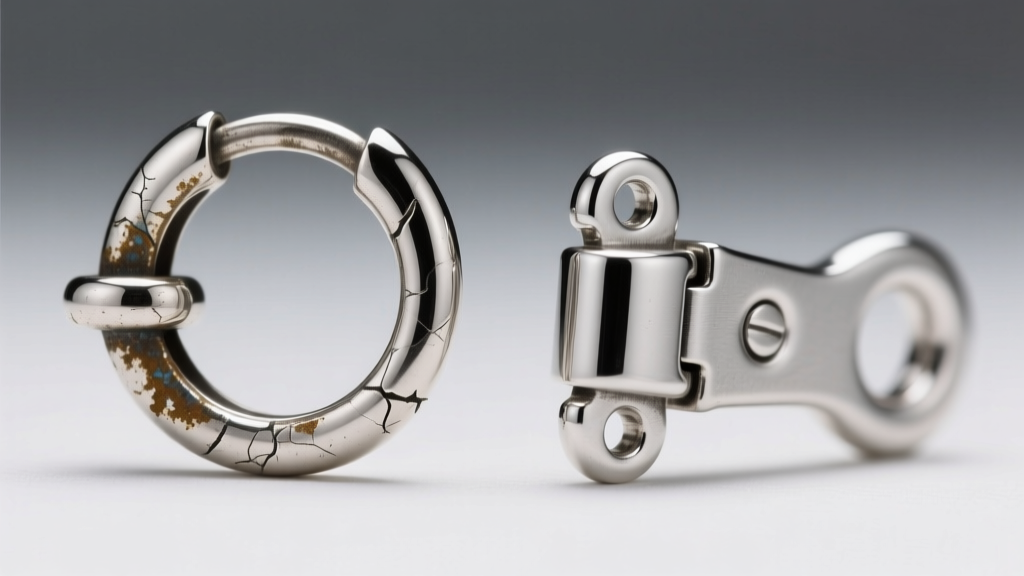
Troubleshooting Tarnish and Oxidation in Sterling Silver
Because chunky hoops have a high surface area and are often worn close to the neck and hair, they are highly susceptible to environmental tarnish. Standard 925 sterling silver is an alloy composed of 92.5% pure silver and 7.5% copper. It is this copper content that reacts with sulfur compounds in the air, humidity, and human sweat to create silver sulfide—the black, dull layer that ruins the aesthetic of a polished hoop.
Argentium vs. Standard 925 Sterling
The most effective metallurgical fix for chronic tarnishing is upgrading to Argentium Silver. As detailed by the Gemological Institute of America (GIA), Argentium replaces a portion of the copper with germanium. When exposed to oxygen, the germanium forms a transparent, protective layer of germanium dioxide on the surface, which drastically slows down the sulfidation process. For chunky hoops that are difficult to polish due to their size and hinge mechanisms, Argentium is a superior investment.
| Silver Alloy | Composition | Tarnish Resistance | Best Use Case for Hoops |
|---|---|---|---|
| Standard 925 Sterling | 92.5% Ag, 7.5% Cu | Low (Requires frequent polishing) | Textured or oxidized designs where tarnish adds contrast |
| Argentium 935 | 93.5% Ag, Cu, Germanium | High (Resists sulfur reactions) | Highly polished, heavy chunky hoops worn daily |
| Argentium 960 | 96% Ag, Cu, Germanium | Very High (Premium grade) | Luxury, seamless continuous hoops with no clasp |
Clasp and Hinge Failures: Mechanical Fixes
The sheer mass of chunky silver hoops places immense torque on the closure mechanism. Every time the earring swings or catches on a sweater, the kinetic energy is transferred directly to the hinge and the catch. Over time, this leads to warped saddle hinges, loosened snap latches, and stuck clickers.
Clicker Hinge Maintenance and Realignment
Clicker hinges are the industry standard for heavy hoops because they offer an audible, secure lock. However, if a clicker becomes difficult to open or close, do not force it. Forcing a silver clicker will bend the internal pin, rendering the earring useless.
- Cleaning: Submerge the hinge area in an ultrasonic jewelry cleaner for 3 minutes to dislodge microscopic skin cells and hardened sebum that jam the mechanism.
- Lubrication: Never use oil-based lubricants, which attract dust. Instead, apply a microscopic amount of powdered graphite to the hinge pin using a toothpick.
- Realignment: If the clasp no longer clicks securely, the silver loop (the catch) has likely stretched. Use flat-nose nylon-jaw pliers to gently squeeze the catch loop back into a tighter oval shape, restoring the tension required for a secure click.
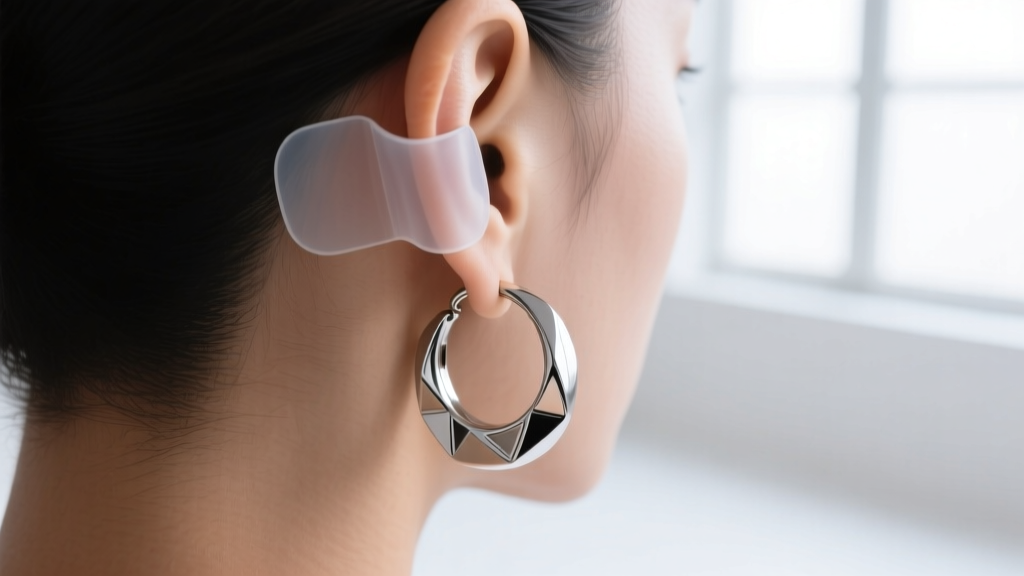
Practical Framework: Wearing Heavy Hoops Safely
Even with the correct gauge and premium alloy, hoops weighing over 25 grams require a proactive wearing strategy to prevent permanent lobe elongation. Implementing the following framework will extend the life of both your jewelry and your piercings.
- Utilize Silicone Support Patches: Products like LobeWonder or BlingDots are adhesive, medical-grade silicone patches that adhere to the back of the earlobe. They feature a reinforced slit that distributes the weight of the earring post across a wider surface area of the skin, completely neutralizing downward drag.
- Enforce an 8-Hour Wear Limit: Tissue fatigue is cumulative. Restrict heavy chunky hoops to 8-hour windows. Swap them out for lightweight titanium or hollow acrylic studs in the evening to allow the fistula to recover and promote blood flow.
- Never Sleep in Heavy Hoops: Sleeping in chunky silver hoops applies asymmetric, lateral pressure to the lobe. This not only bends the silver wire but causes the piercing channel to heal at an awkward angle, making future straight posts sit crookedly.
- Rotate Your Piercings: If you wear heavy hoops daily, alternate ears or alternate with lightweight huggies to prevent chronic micro-tearing inside the piercing channel.
Conclusion
Troubleshooting chunky hoop earrings silver requires looking beyond the aesthetic and understanding the intersection of metallurgy, mechanics, and human anatomy. By upgrading to a 14-gauge wire thickness, opting for germanium-enhanced Argentium silver, maintaining your clicker hinges, and utilizing silicone support patches, you can comfortably wear dramatic, heavy silver hoops without compromising the health of your earlobes. Invest in the structural integrity of your jewelry, and it will remain a staple in your rotation for decades to come.


