Gold Earrings Heart Styles: Troubleshooting Droop and Poke Issues
Fix common flaws in gold earrings heart designs. Learn how to stop drooping posts, prevent sharp points from poking, and maintain 14k gold.

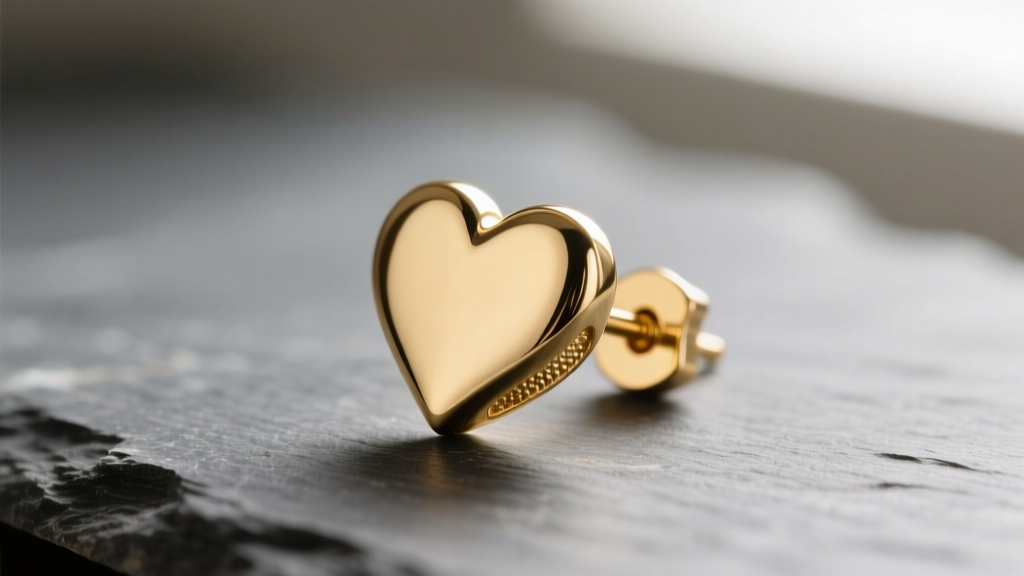
Finding the perfect gold earrings heart design means looking past the romance and examining the structural engineering. While heart-shaped studs and dangles are timeless symbols of affection, their unique geometry makes them notoriously difficult to wear comfortably. The asymmetrical weight distribution, sharp bottom vertices, and intricate top clefts create a perfect storm for jewelry failure. Whether your heart studs are constantly drooping forward or the bottom point is jabbing your neck, these issues are rarely your fault—they are the result of mass-production shortcuts.
In this comprehensive troubleshooting guide, we break down the physics of heart-shaped earrings, diagnose the most common structural flaws, and provide actionable, jeweler-approved solutions to fix them. From upgrading your earring backs to understanding gold alloy hardness, here is how to rescue your favorite romantic silhouettes.
The Physics of the Cleft and the Pendulum Point
To troubleshoot a heart earring, you must first understand its center of mass. Unlike a simple round stud or a symmetrical teardrop, a heart shape features a deep superior cleft (the dip at the top) and a concentrated inferior vertex (the bottom point).
When a jeweler solders a standard 20-gauge (0.81mm) post to the exact geometric center of the heart's back, the earring becomes top-heavy. The wide upper lobes of the heart pull the center of gravity forward and downward. Because the earlobe is soft tissue, it cannot provide the rigid support needed to counteract this forward pull. The result is the dreaded "forward droop," where the top of the heart tilts away from the face, and the bottom point juts outward, catching on hair and clothing.
Troubleshooting the "Forward Droop" (Top-Heavy Clefts)
If your heart studs refuse to sit flush against your earlobe, the issue lies in the post placement or the backing mechanism. Here are three ways to solve the droop, ranging from free at-home hacks to professional jeweler modifications.
1. The Silicone O-Ring Hack (For Minor Droop)
Standard metal butterfly clutches offer very little surface area against the back of the earlobe, allowing heavy hearts to pivot on the post. By replacing the metal clutch with a thick, medical-grade silicone O-ring backing, you increase the friction and surface area. The silicone grips the skin and the post simultaneously, acting as a shock absorber that resists the forward tilt. This works best for solid gold hearts weighing under 2.5 grams.
2. Upgrading to La Pousette Locking Backs
For heavier heart dangles or solid 14k gold studs exceeding 3 grams, silicone is not enough. You need a mechanical lock. La Pousette backs (often called "clutch backs" or "locking backs") feature a spring-loaded mechanism that grips the post's groove tightly while providing a wide, flat disc that rests against the earlobe. This wide base distributes the weight of the top-heavy cleft across a broader area of tissue, significantly reducing the pivot effect.
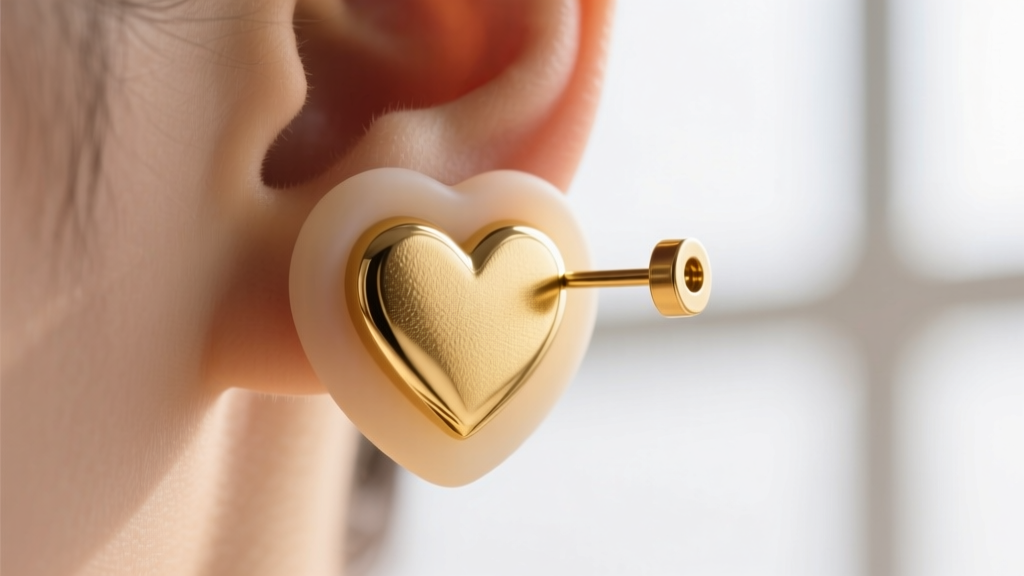
3. The Jeweler's Laser-Tack Fix (The Permanent Solution)
If the post was soldered too low from the factory, no backing will fully fix the droop. A professional jeweler can use a laser welder to safely remove the post and re-tack it 1.5mm to 2mm higher (superior) on the back of the heart. By moving the post closer to the top cleft, you align the pivot point with the actual center of gravity, allowing the earring to hang perfectly straight. Expect to pay between $35 and $60 for this modification.
Solving the "Jabbing Point" Problem
The bottom vertex of a heart earring is a major hazard. If the angle of the point is too acute, it will act like a hook, catching on sweater collars, scarves, and hair. Worse, when you lie down or hug someone, that sharp point can painfully jab your neck or jawline.
Below is a diagnostic chart to help you assess the poke-risk of your heart earrings based on their vertex angle and drop length:
| Vertex Angle | Drop Length | Poke Risk Level | Recommended Fix |
|---|---|---|---|
| Less than 45° | Under 15mm | High (Catches on fabric) | Have a jeweler file and round the tip slightly. |
| 45° to 60° | 15mm - 25mm | Moderate (Occasional snagging) | Apply a tiny drop of clear jeweler's epoxy to blunt the tip. |
| Greater than 60° | Over 25mm | Low (Safe for daily wear) | Maintain with regular polishing to prevent micro-burrs. |
Warning: Never attempt to file or sand gold jewelry at home with standard hardware tools. Gold is a soft metal, and improper filing will remove the rhodium plating (if white gold) or leave deep, unpolishable gouges. Always consult a professional.
Metal Fatigue: Why 18k Gold Fails at the Point
When shopping for heart-shaped jewelry, the karatage of the gold dictates how well the shape will survive daily wear. According to the Gemological Institute of America (GIA), pure 24k gold is far too soft for jewelry. However, even 18k gold (75% pure gold) presents a structural vulnerability for heart shapes.
The bottom point of a heart earring is highly susceptible to impact. If an 18k gold heart catches on a heavy knit sweater, the acute angle at the vertex can easily bend or warp because 18k gold has a lower Vickers hardness (typically around 100-110 HV).
The 14k Gold Advantage: For heart silhouettes, 14k gold (58.5% pure gold, alloyed with copper, silver, and zinc) is vastly superior. The higher alloy content increases the Vickers hardness to roughly 130-140 HV. This added rigidity ensures that the sharp bottom point retains its crisp geometric angle without bending when subjected to the lateral stress of snagging on clothing.
Hollow vs. Solid Gold Hearts: The Repairability Trap
Not all gold heart earrings are created equal, and troubleshooting a hollow heart is entirely different from fixing a solid one. Many large, oversized heart hoops or lightweight studs are made using an electroforming process, creating a hollow shell of gold over a resin or wax core.
- Solid Cast Hearts: These can be laser-welded, resized, have their posts moved, and easily polished to remove scratches.
- Hollow Electroformed Hearts: These are incredibly fragile. If a hollow heart dents, it cannot be hammered out without cracking the gold shell. Furthermore, the intense heat of a traditional soldering torch will melt the internal resin core, destroying the earring. If a post breaks off a hollow heart, it often cannot be reattached safely.
Always check the product specifications or ask the jeweler if the heart is "solid cast" or "hollow electroformed" before purchasing, especially if you plan to wear them daily.
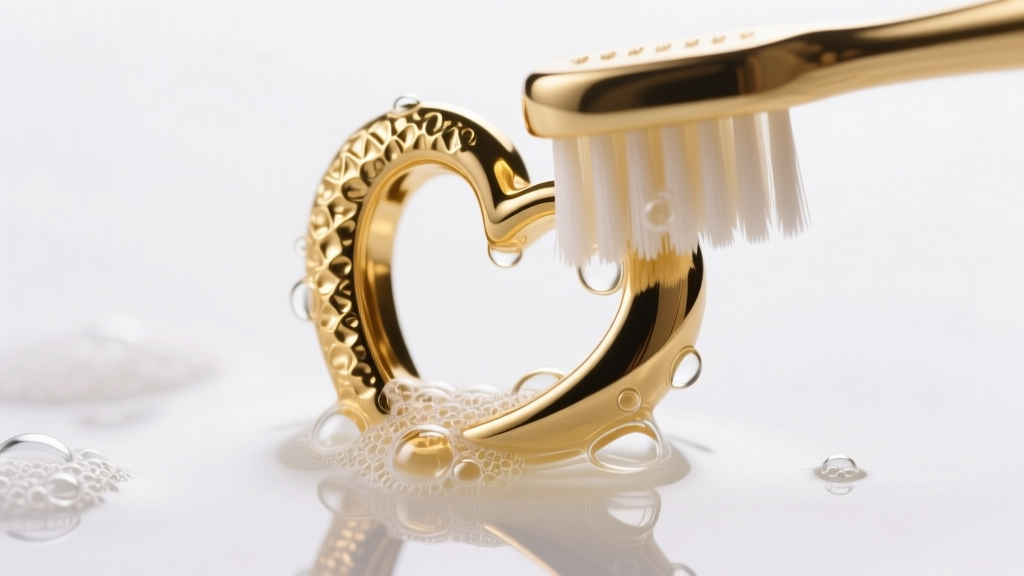
The Cleft Trap: Cleaning Intricate Top Curves
The deep dip at the top of the heart (the cleft) is a magnet for sebum, dead skin cells, foundation makeup, and hairspray. Because this area sits flush against the upper cartilage and hairline, it accumulates grime much faster than the flat face of the earring. Over time, this buildup can cause contact dermatitis and dull the brilliance of the gold.
The Jewelers of America recommends regular, gentle cleaning to maintain gold alloys, but the cleft requires a specific approach:
- The Soak: Mix a few drops of mild, phosphate-free dish soap (like Dawn) into a bowl of warm distilled water. Let the earrings soak for 15 minutes to soften the sebum trapped in the cleft.
- The Agitation: Do not use a standard hard-bristled toothbrush, as it can leave micro-scratches on high-polish gold. Instead, use an extra-soft baby toothbrush or a specialized jewelry cleaning brush with tapered bristles designed to reach into the cleft.
- The Rinse and Dry: Rinse thoroughly under lukewarm running water. Use a canned air duster or a hairdryer on the "cool" setting to blow water out of the cleft. Towel drying often leaves lint trapped in the top curve.
Final Thoughts on Heart Silhouettes
Heart-shaped earrings are a beautiful investment, but they demand a higher standard of structural engineering than basic geometric studs. By paying attention to post placement, upgrading your backing mechanisms, and choosing the right gold alloy for the job, you can ensure your favorite romantic pieces sit perfectly and comfortably for years to come.
Don't settle for drooping, poking, or tarnished jewelry. With a few minor adjustments and proper maintenance, your heart earrings will look as flawless as the day you unboxed them.


