How to Stop Ear Pain from Heavy and Pressure Earrings
Discover how to troubleshoot ear pain caused by heavy drops, tight hoops, and pressure earrings. Expert fixes for lobe strain and cartilage compression.

The Biomechanics of Ear Pain: Why Your Jewelry Hurts
Earrings are meant to be an effortless expression of personal style, yet for millions of jewelry enthusiasts, they are a source of chronic discomfort. Whether you are dealing with the dragging sensation of heavy statement dangles, the restrictive pinch of cartilage huggies, or the literal clamping force of therapeutic and vintage pressure earrings, ear pain is a solvable engineering problem. The human ear is a complex matrix of delicate skin, adipose tissue, and rigid cartilage, none of which evolved to bear sustained mechanical loads. When we ignore the physics of weight distribution and material biocompatibility, the result is micro-tearing, localized edema, and nerve compression.
In this comprehensive troubleshooting guide, we will dissect the specific failure modes that cause earlobe strain and cartilage pressure. By understanding the exact gauge requirements, clearance tolerances, and backing mechanics, you can transform your painful jewelry box into a comfortable, wearable collection. We will also address the niche category of magnetic and acupressure earrings, ensuring that intentional pressure does not cross the line into tissue damage.
Lobe Strain and the 'Cheese-Cutter' Effect
The earlobe is uniquely vulnerable to heavy earrings because it lacks a supportive cartilage framework. It relies entirely on the tensile strength of collagen and elastin fibers within the skin. When you wear heavy drop earrings—typically anything exceeding 12 to 15 grams—the downward force concentrates on the superior aspect of the piercing fistula (the skin tunnel). Over time, this creates a mechanical failure known in the body modification community as the 'cheese-cutter effect,' where the thin metal post slowly migrates downward through the tissue.
Upgrading Your Post Gauge
Most commercial fashion earrings are manufactured with 22-gauge (0.64mm) or 20-gauge (0.81mm) posts. These ultra-thin wires provide minimal surface area for weight distribution. To immediately reduce pressure on heavy lobes, you must increase the post thickness. Transitioning to an 18-gauge (1.02mm) or even a 16-gauge (1.29mm) post increases the load-bearing surface area by up to 100%, significantly reducing the sheer stress on the fistula. If your favorite heavy dangles have thin posts, a local jeweler can easily laser-weld a thicker, custom 18k gold or platinum post onto the existing design for roughly $30 to $50.
Deploying Earring Support Patches
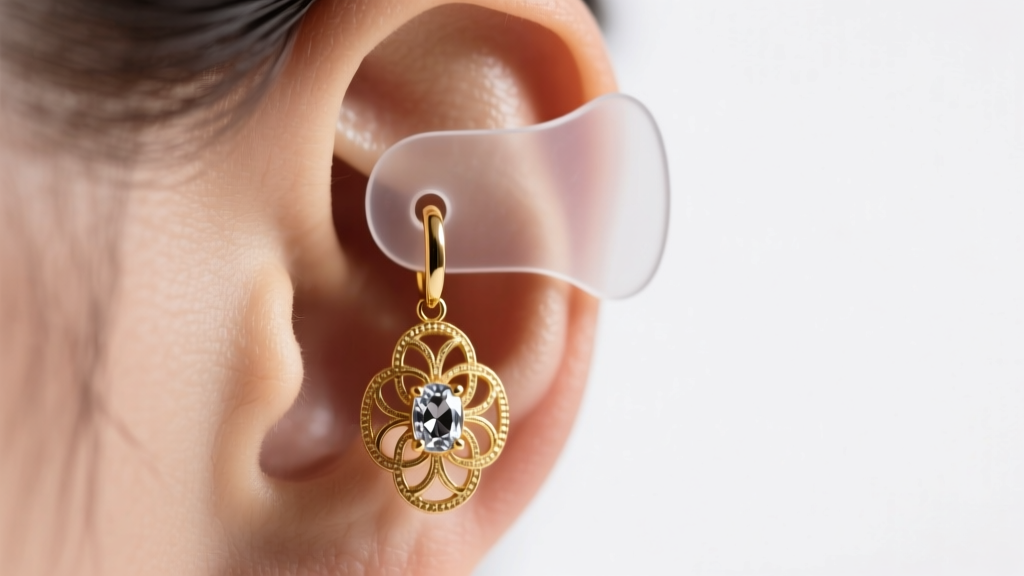
When upgrading the post isn't enough, external support is mandatory. Products like BlingDots or LobeWonder are medical-grade, hypoallergenic polyurethane patches that adhere to the back of the earlobe. These patches feature a reinforced central hole that prevents the earring back from pulling through the skin. By distributing the earring's weight across a 15mm surface area on the posterior lobe, these patches effectively neutralize the downward drag of earrings weighing up to 30 grams. For optimal adhesion, always prep the lobe with an alcohol wipe to remove natural sebum before application.
Cartilage Compression: Troubleshooting Tight Huggies and Hoops
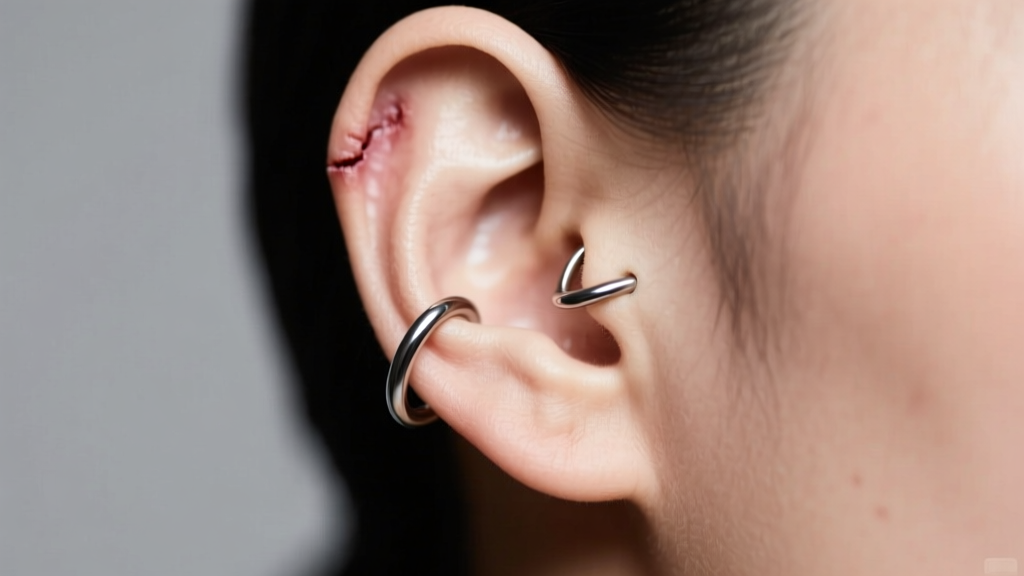
Cartilage piercings, such as the helix, tragus, and conch, require an entirely different approach to pressure management. Unlike the earlobe, cartilage is avascular, meaning it lacks its own direct blood supply and relies on the surrounding perichondrium for nutrient delivery and lymphatic drainage. When a huggie hoop or clicker ring is too tight, it acts as a tourniquet, restricting this vital fluid exchange.
The Clearance Gap Rule
A common mistake is sizing a cartilage hoop to sit flush against the skin. This is a critical error. Cartilage tissue naturally fluctuates in volume due to hydration, sleep position, and minor trauma. A properly fitted cartilage hoop must maintain a minimum clearance gap of 1.5mm to 2.0mm between the bottom of the jewelry and the base of the piercing. If your huggie leaves a visible indentation or causes a throbbing sensation after a few hours, the inner diameter is too small. For a standard helix piercing, an inner diameter of 6mm is usually the absolute minimum, with 8mm being the ideal comfort zone for most anatomies.
Material-Induced Swelling Masquerading as Pressure
Sometimes, the 'pressure' you feel isn't caused by the jewelry being too small, but by your tissue swelling in response to an allergen. According to the American Academy of Dermatology, nickel contact dermatitis affects a significant portion of the population. When cheap alloys leach nickel ions into the piercing channel, the resulting immune response causes localized edema (swelling). This swelling makes a previously comfortable hoop feel agonizingly tight. The definitive fix is to switch to jewelry that meets the ASTM F-136 standard for implant-grade titanium. As noted by the Association of Professional Piercers, this specific alloy contains virtually zero nickel and is highly biocompatible, allowing the tissue to shrink back to its baseline state and relieving the false sensation of mechanical pressure.
Adjusting Clip-Ons and Therapeutic Pressure Earrings
Not all pressure earrings are accidental; some are designed to clamp onto unpierced ears, while others, like magnetic acupressure earrings, are marketed for therapeutic benefits like migraine relief or appetite suppression. However, excessive clamping force leads to ischemia—a dangerous restriction of blood flow that can cause tissue necrosis if left unchecked for hours.
Mechanical Adjustment of Vintage Clip-Ons
Vintage screw-back and clip-on earrings are notorious for causing intense lobe pain within minutes. The tension on the metal spring or screw mechanism is often calibrated too high from the factory or has warped over decades of use. You can easily troubleshoot this at home using a pair of nylon-jaw jewelry pliers. Gently grip the base of the clip mechanism and bend it outward by just 2 to 3 degrees. This minor adjustment drastically reduces the clamping pressure while maintaining enough friction to keep the earring secure.
Silicone Cushions for Magnetic and Acupressure Styles
When utilizing magnetic pressure earrings for auricular acupressure, the goal is to stimulate nerve endings, not crush the tissue. If the magnetic pull is too aggressive, place a pair of soft silicone clip-on pads over the metal contacts. These $5 accessories increase the surface area of the earring, allowing you to achieve the necessary nerve stimulation without cutting off capillary circulation. Always adhere to the 4-hour rule: never wear high-tension magnetic or clip-on pressure earrings for more than four continuous hours without a 30-minute break to restore normal blood flow.
Comparative Analysis: Backing Types and Pressure Distribution
Choosing the correct earring backing is just as critical as the earring itself. The backing dictates how the weight and pressure are transferred to the posterior ear. Below is a troubleshooting matrix to help you match your jewelry weight to the appropriate support system.
| Backing Type | Weight Capacity | Pressure Distribution | Best Use Case |
|---|---|---|---|
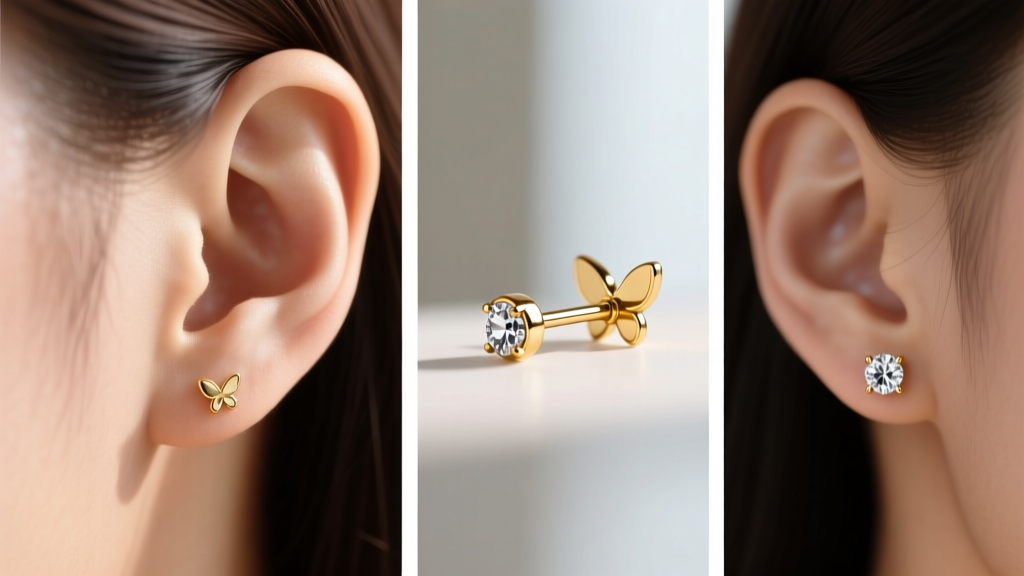
| Standard Butterfly Friction Back | Low (Under 5g) | Poor (Concentrated on a 2mm pin) | Lightweight studs, sleepers |
| La Poussière / Clutch Back | Medium (Up to 12g) | Moderate (Wider 5mm base) | Medium drops, diamond solitaires |
| Flat Silicone O-Ring | Medium-High (Up to 15g) | Good (Grips post, wide surface) | Daily hoops, moderate dangles |
| Adhesive Support Patch | High (Up to 30g+) | Excellent (Distributes across 15mm lobe) | Heavy statement pieces, vintage drops |
| Omega / French Clip Back | Variable | Adjustable (Hugs the entire lobe curve) | Unpierced ears, heavy clip-ons |
Final Thoughts on Ear Health and Jewelry Maintenance
Troubleshooting earring pain requires a shift in perspective: you must view your jewelry not just as an accessory, but as a mechanical load applied to living tissue. By upgrading to thicker gauge posts for heavy drops, ensuring proper clearance gaps for cartilage hoops, and utilizing silicone cushions for magnetic pressure earrings, you can eliminate discomfort without sacrificing style. Remember to routinely clean your earring posts and backing mechanisms with isopropyl alcohol to prevent the buildup of sebum and dead skin cells, which can harbor bacteria and exacerbate inflammation. If you experience persistent pain, heat, or discharge, remove the jewelry immediately and consult a dermatologist or a certified professional piercer to assess the tissue for signs of infection or allergic contact dermatitis.