How to Clean, Repair, and Authenticate Emmons Earrings
Learn how to troubleshoot, clean, and repair vintage Emmons earrings. Expert tips on fixing clip-ons, replacing rhinestones, and identifying hallmarks.

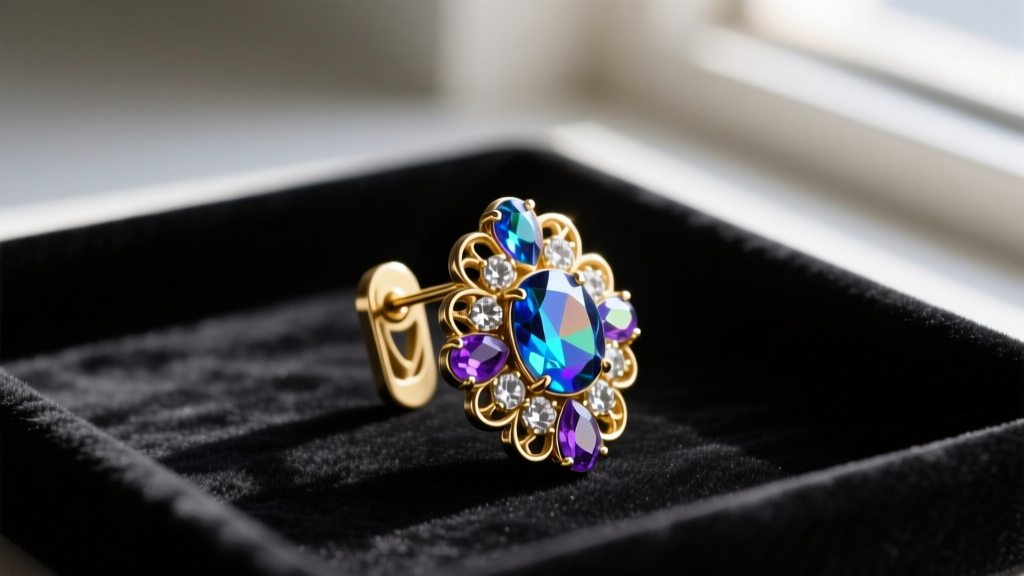
For mid-century jewelry collectors, Emmons earrings represent a golden era of American costume jewelry. Founded in 1949, the Emmons Home Fashion Guild revolutionized the industry by selling high-quality, meticulously crafted pieces directly through home parties. Unlike cheap carnival jewelry, Emmons utilized thick gold and rhodium electroplating, precision-set rhinestones, and comfortable, patented clip-on mechanisms. However, after decades in storage or daily wear, these vintage treasures inevitably develop issues ranging from degraded metal plating to missing aurora borealis (AB) stones and weakened clip-on tension.
Troubleshooting vintage costume jewelry requires a fundamentally different approach than fine jewelry repair. The base metals, adhesives, and foil-backed glass used in the 1950s and 1960s are highly sensitive to modern ultrasonic cleaners and harsh chemical dips. This comprehensive guide provides actionable, professional-grade solutions for restoring, repairing, and authenticating your vintage Emmons earrings without compromising their historical integrity or market value.
Identifying Authentic Emmons Hallmarks
Before attempting any repairs, you must verify authenticity. The secondary market is flooded with unbranded mid-century pieces mistakenly attributed to premium makers. Emmons hallmarks evolved significantly over the brand's lifespan, and recognizing these stamps is the first step in troubleshooting a piece's provenance.
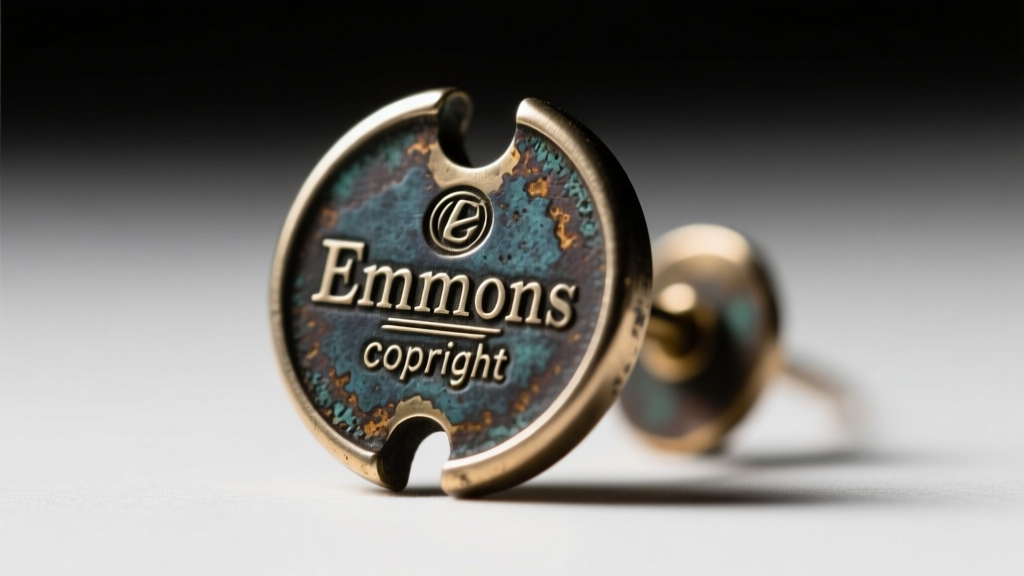
- 1949–1955: Early pieces were typically stamped with a simple, serif 'Emmons' in a recessed cartouche or directly onto the metal.
- 1956–1970s: Following the implementation of the Copyright Act of 1954, Emmons began stamping pieces with '©Emmons' or a standalone copyright symbol '©' near the brand name.
- The Sarah Coventry Connection: Emmons' sister company, Sarah Coventry, produced pieces in the same factories. If your earring is stamped 'SARAH COV' or 'Sarah Coventry', it is not an Emmons piece, though the metallurgical troubleshooting steps below remain identical.
According to the Antique Jewelry University, the presence of a copyright symbol is a reliable dating tool for mid-century costume jewelry, placing the piece firmly in the post-1955 era. If an earring lacks a hallmark entirely, examine the clip-on mechanism; Emmons frequently used patented, paddle-style clips with distinct, rounded pressure pads that differ from standard generic hardware.
Troubleshooting Metal Corrosion and Plating Loss
Emmons primarily used 'white metal' (a zinc-based pot metal alloy) or brass as a base, striking it with copper or nickel before applying a thick layer of 14k gold or rhodium plating. The most common issue collectors face is plating wear or base metal corrosion. Never use commercial silver dips or ultrasonic cleaners on these earrings; the chemical baths will strip the remaining gold plating and destroy the foil backing on the rhinestones.
| Condition | Cause | Troubleshooting & Treatment |
|---|---|---|
| Surface Tarnish / Dullness | Oils, sulfur exposure, and age | Gently wipe with a microfiber cloth dampened with distilled water and a drop of mild dish soap. Dry immediately. |
| Flaking or Peeling Plating | Moisture trapped under the plating layer | Stop cleaning. Apply a micro-thin layer of Renaissance Wax to seal the exposed base metal and prevent further oxidation. |
| Bubbling or 'Zinc Pest' | Internal corrosion of the zinc alloy base | Terminal damage. The metal is expanding and cracking from the inside out. Store in a low-humidity environment to slow progression. |
| Green Verdigris on Brass | Copper oxidation reacting with skin acids | Apply a micro-swab dipped in white vinegar strictly to the green spots, neutralize with baking soda paste, and rinse with distilled water. |
If the gold plating has worn through to the base metal on the front-facing elements, professional re-plating is rarely cost-effective for costume pieces. Instead, embrace the 'honest wear' that Antique Trader notes is often preferred by serious collectors over modern, artificial-looking re-plating jobs.
Repairing Broken Clip-On and Screw-Back Mechanisms
Emmons engineered their earrings for the unpierced ear, which was the dominant style of the 1950s. Over time, the metal fatigue causes paddle clips to lose their grip, leading to dropped and lost earrings. Conversely, early screw-back mechanisms can become stripped or overly tight.
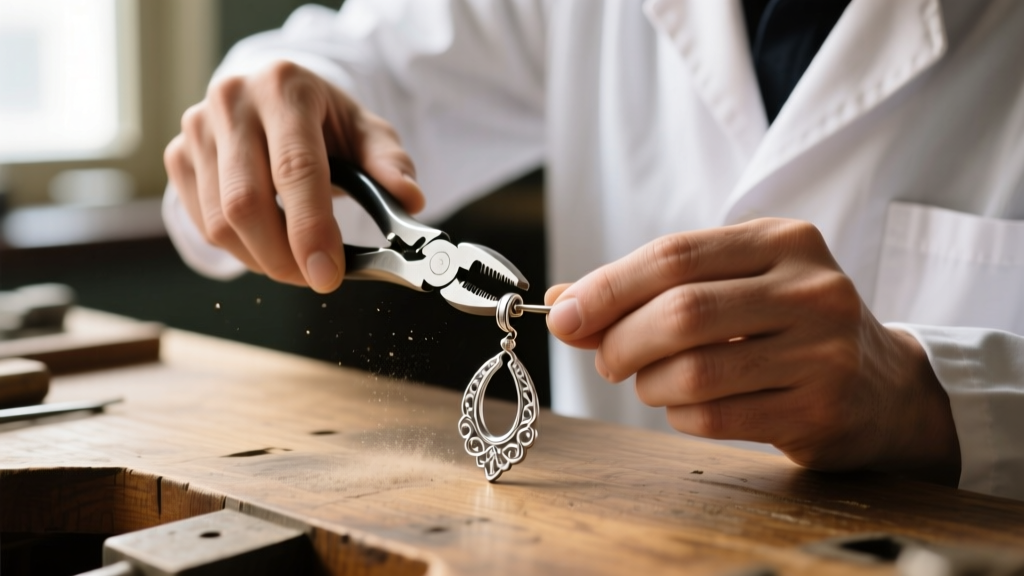
Adjusting Paddle Clip Tension
Do not use standard steel jewelry pliers to bend the clip, as the hardened steel will scratch the vintage gold plating and leave permanent, jagged tool marks. Instead, use nylon-jaw pliers. Grip the base of the clip (where it meets the earring body) and gently squeeze inward by no more than 1 to 2 millimeters. Test the tension on a piece of thick felt before wearing.
Replacing Missing Silicone Pads
The small, U-shaped silicone or rubber pads on the inside of the clip are crucial for comfort and grip. When these dry rot and fall off, the bare metal pinches the earlobe. You can source replacement vintage-style clip-on pads from jewelry supply wholesalers. To adhere them, clean the metal paddle with isopropyl alcohol to remove decades of skin oils, apply a tiny drop of E6000 craft adhesive to the pad, and clamp it lightly with a plastic clothespin for 24 hours.
Sourcing and Setting Missing Rhinestones
Emmons earrings are celebrated for their intricate rhinestone pavé work. When a stone falls out, replacing it requires precise sizing and an understanding of vintage glass manufacturing. According to the GIA Gem Encyclopedia, the optical properties of vintage leaded glass and metallic foil backings cannot be perfectly replicated by modern acrylic or flat-back resin stones.
- Measure the Seat: Use a digital caliper to measure the inner diameter of the empty prong setting in millimeters. Emmons frequently used standard chaton sizes: SS12 (3.0–3.2mm), SS16 (3.8–4.0mm), and SS20 (4.6–4.8mm).
- Source Foil-Back Chatons: You must purchase 'foiled' or 'foil-back' glass chatons with pointed backs. Modern 'flat-back' stones will sit too high in the vintage prong setting and will not catch the light correctly.
- Clean the Setting: Use a wooden toothpick to gently scrape out the hardened, yellowed original adhesive from the setting cup. Do not use acetone if the setting is near other stones, as it can melt the plastic or foil backing of adjacent gems.
- Adhesive Selection: Avoid cyanoacrylate (Super Glue), which emits fumes that will permanently 'fog' the glass. Use GS Hypo Cement. Its needle-like applicator allows you to place a microscopic bead of glue into the cup. Drop the stone in, and use a wax-tipped jewelers pick to fold the prongs over the girdle of the stone.
When to Seek Professional Conservation
There is a distinct line between restoring a piece for wear and conserving a piece for historical value. If you possess a rare, documented Emmons parure (a matched set of necklace, bracelet, and earrings) from a highly sought-after limited production run, aggressive cleaning or replacing original components will drastically reduce its appraisal value.
'The goal of antique jewelry conservation is to stabilize the piece and halt further degradation without erasing the physical evidence of its age and manufacture. Replacing original aurora borealis stones with modern equivalents destroys the artifact's material authenticity.' — Principles of Jewelry Conservation
For these museum-grade pieces, limit your troubleshooting to dry, mechanical cleaning using a soft-bristled sable makeup brush to dislodge dust from the prong settings. Store the earrings in acid-free, archival tissue paper inside a climate-controlled environment maintained at 45-50% relative humidity to prevent the zinc alloy base from succumbing to bronze disease or zinc pest. By understanding the specific metallurgical and mechanical quirks of mid-century manufacturing, you can ensure your Emmons earrings remain wearable, beautiful, and historically intact for decades to come.


