How to Fix, Clean, and Troubleshoot Ruby Huggie Earrings
Learn how to fix stuck clasps, clean treated rubies, and prevent irritation with our expert troubleshooting guide for ruby huggie earrings.

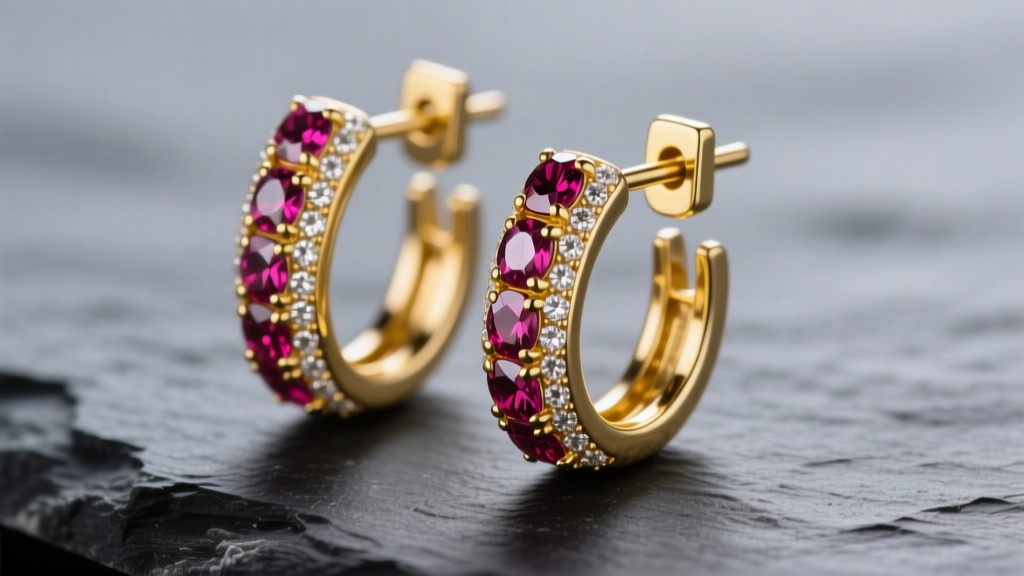
Ruby huggie earrings are a staple of modern ear curation, offering a secure, continuous hoop silhouette that hugs the earlobe. However, their compact engineering and the specific gemological properties of rubies create unique maintenance challenges. From calcified hinge mechanisms to the catastrophic effects of improper cleaning on fracture-filled stones, troubleshooting ruby huggies requires a precise understanding of both micro-mechanics and gemology.
This guide provides actionable, expert-level solutions to the most common structural and material failures associated with ruby huggie earrings, ensuring your pieces remain secure, comfortable, and brilliant.
The Anatomy of a Huggie Clasp (and Why It Fails)
Unlike standard latch-back hoops, huggies rely on a precision tension hinge or a click-lock mechanism. The male pin (typically 0.8mm to 1.0mm thick) slots into a female groove containing a microscopic tension spring. When this mechanism fails, it is rarely due to manufacturing defects; it is almost always a result of environmental calcification.
Troubleshooting Stuck or Loose Hinges
The most frequent complaint with huggies is a clasp that refuses to 'click' shut, leaving a 1mm gap that catches on hair and sweaters. This gap occurs when sebum, dead skin cells, and cosmetic lotions calcify inside the female groove, preventing the pin from seating fully.
- The Fix: Never use a metal needle to pick out the debris, as this will scratch the gold alloy and compromise the tension spring. Instead, soak the earring in 30°C distilled water with a drop of pH-neutral dish soap for exactly 10 minutes.
- Agitation: Use a 0.5mm soft-bristle interdental brush to gently sweep the groove.
- Lubrication: If the hinge is stiff but clean, apply a microscopic drop of synthetic watch oil (like Moebius 9010) to the pin. Avoid organic oils, which will turn rancid and attract dust.
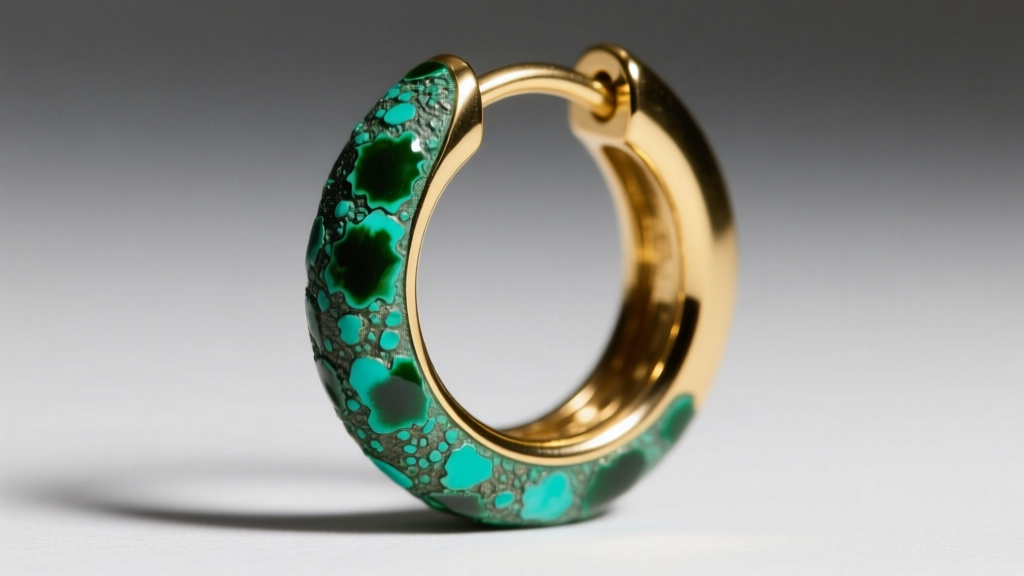
If the hinge feels loose and falls open on its own, the male pin has likely suffered metal fatigue. Because 18k gold is relatively soft, the pin can flatten over time. A professional jeweler can use a specialized micro-jeweler's plier to gently compress the pin back into a rounded profile, restoring the friction fit.
Ruby-Specific Care: Avoiding Cloudiness and Cracks
Rubies are a variety of corundum, rating a 9 on the Mohs hardness scale. While this makes them highly resistant to scratching, it masks a critical vulnerability: internal treatments. In the current market, an estimated 80% of commercial-grade rubies used in pave huggie settings are fracture-filled with lead glass to improve clarity and color saturation.
The Danger of Ultrasonic Cleaners on Fracture-Filled Rubies
Ultrasonic jewelry cleaners operate by generating high-frequency sound waves (typically 20-40 kHz) that create microscopic cavitation bubbles in the cleaning solution. While this is excellent for blasting dirt out of diamond pave settings, it is catastrophic for lead-glass-filled rubies.
The cavitation shockwaves will shatter the glass filling inside the ruby, causing the stone to cloud instantly, crack, or completely disintegrate. Furthermore, the acidic or alkaline solutions used in ultrasonic baths will etch the surface of the lead glass, leaving a permanent white haze.
To determine if your rubies are fracture-filled, examine them under a 10x jeweler's loupe against a dark background. If you see a 'flash effect'—a sudden iridescent blue or purple reflection along the internal fissures—the stones are glass-filled and must never enter an ultrasonic machine.
Safe Cleaning Protocol for Ruby Huggies
| Ruby Treatment Type | Ultrasonic Safe? | Steam Safe? | Recommended Cleaning Method |
|---|---|---|---|
| Untreated / Heat Only | Yes | Yes | Ultrasonic or warm soapy soak |
| Fracture-Filled (Lead Glass) | NO | NO | Warm water, mild soap, soft brush only |
| Lattice Diffusion | Yes | Yes | Ultrasonic or warm soapy soak |
For routine maintenance of fracture-filled ruby huggies, use a lint-free microfiber cloth to wipe away skin oils daily. According to the Gemological Institute of America (GIA), warm, soapy water is universally the safest cleaning method for all treated corundum.
Solving Metal Irritation Behind the Earlobe
Huggie earrings sit tightly against the earlobe, creating a micro-environment that traps moisture and heat. This is a primary trigger for contact dermatitis, often misdiagnosed as a simple infection.
Gauge Sizing and Post Thickness
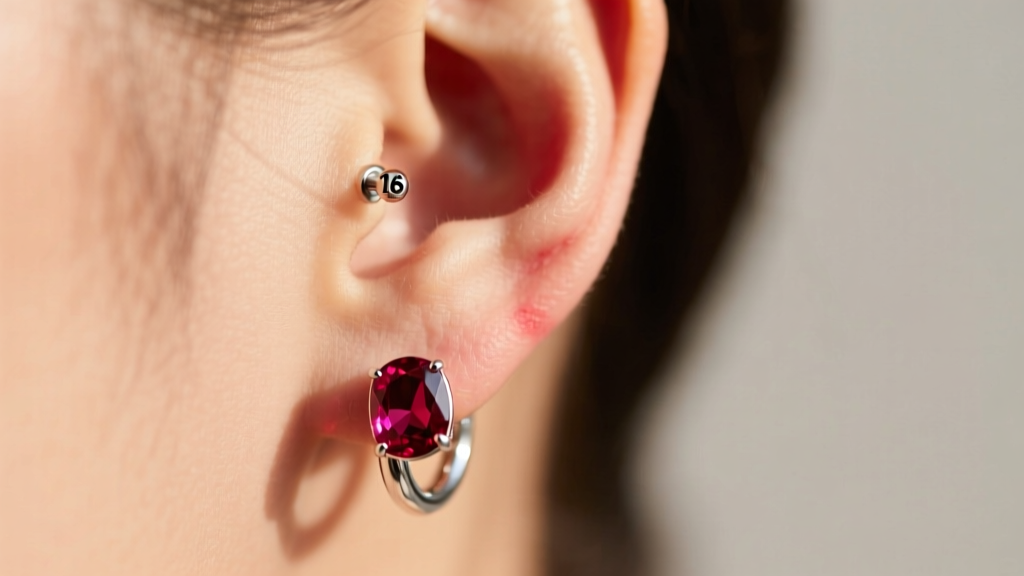
Standard earlobe piercings are typically performed at 20-gauge (0.81mm) or 18-gauge (1.02mm). However, to support the structural weight of a pave ruby and diamond huggie without the hoop warping, jewelers often manufacture the hinged post at 16-gauge (1.29mm) or even 14-gauge (1.63mm).
Forcing a 16-gauge post into an 18-gauge piercing causes chronic micro-tearing of the fistula (the piercing channel). This prevents the tissue from healing and leads to persistent soreness and the formation of irritation bumps.
- Troubleshooting Step 1: Measure your huggie post with a digital caliper. If it exceeds 1.1mm and your piercing is tender, you must have a jeweler swap the post for a custom 18-gauge pin, or gradually stretch your piercing under professional guidance.
- Troubleshooting Step 2: Evaluate the alloy. White gold huggies are frequently alloyed with nickel to achieve a bright white color. The trapped moisture behind the huggie accelerates nickel ion leaching into the skin. The American Academy of Dermatology notes that nickel allergy is the most common cause of jewelry-induced contact dermatitis. If you suspect a nickel allergy, switch to 18k yellow gold, platinum, or have the post coated with a medical-grade parylene barrier.
Preventing Stone Loss in Pave Ruby Huggies
Because huggies are designed to be worn continuously, the bottom curve of the hoop endures constant friction against the neck, hair, and clothing. Over time, this friction wears down the micro-prongs securing the pave rubies and accent diamonds.
The 'Snag Test' and Prong Maintenance
Do not wait for a stone to fall out before taking action. Once a month, perform the snag test: gently drag a piece of sheer silk or a cotton ball across the ruby pave settings. If the fabric catches on a prong, that prong has lifted and is actively threatening the stone.
To prevent catastrophic stone loss, have a jeweler perform a 'micro-tipping' procedure every 18 to 24 months. This involves using a laser welder to add a tiny bead of matching gold alloy to the worn prong tips without applying the heat that could damage the rubies. Avoid traditional torch soldering for prong repair on huggies, as the localized heat can easily cause thermal shock to treated rubies, resulting in internal fracturing.
Summary Troubleshooting Checklist
Maintaining the structural integrity and brilliance of ruby huggie earrings requires moving beyond generic jewelry care advice. By understanding the specific vulnerabilities of hinge mechanics and treated corundum, you can ensure your earrings remain a permanent, trouble-free fixture in your collection.
- Never use metal tools to clean the hinge groove; use a soft interdental brush and warm soapy water.
- Never place fracture-filled rubies in an ultrasonic or steam cleaner.
- Verify your post gauge size to ensure it matches your piercing channel and prevents micro-tearing.
- Perform the monthly silk snag test to identify lifted micro-prongs before stones are lost.


