Troubleshooting Sapphire and Diamond Drop Earrings Guide
Expert troubleshooting for sapphire and diamond drop earrings. Fix loose stones, broken hinges, heavy droop, and learn safe cleaning methods.

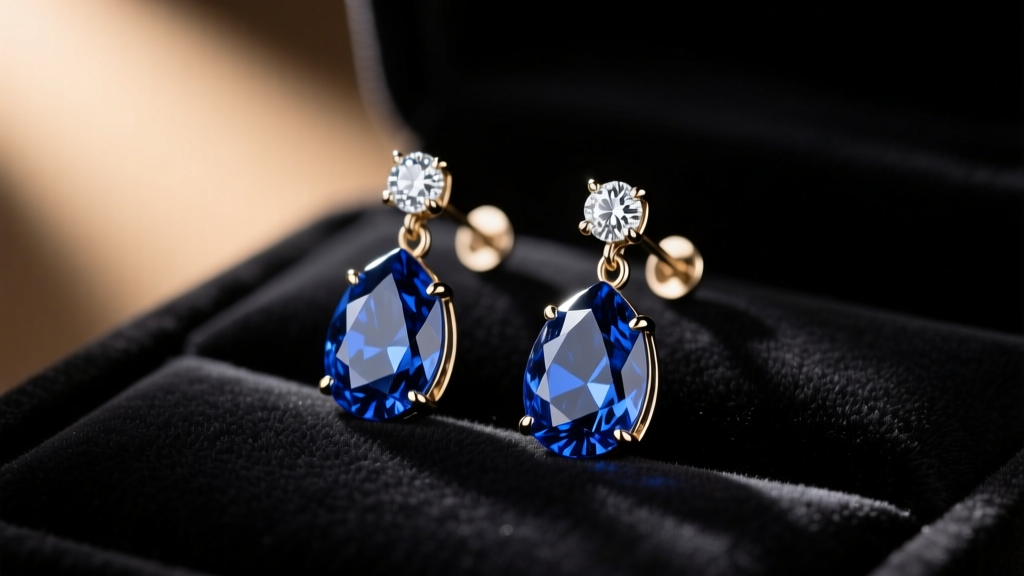
The Hidden Vulnerabilities of Articulated Fine Jewelry
Owning a pair of sapphire and diamond drop earrings is an investment in both heirloom aesthetics and high-value gemstones. However, the very design that makes drop earrings so captivating—their movement and articulation—introduces a unique set of mechanical and gemological vulnerabilities. Unlike rigid studs, drop earrings endure constant kinetic stress, swinging against the neck, catching on textiles, and bearing uneven weight distributions on the earlobe. Whether you are dealing with a loose pear-cut sapphire, a bent earring post, or mysterious dullness on your diamonds, troubleshooting these issues requires an understanding of both metallurgy and gemology. This guide provides bench-level insights into diagnosing, repairing, and maintaining your precious drop earrings.
Diagnosing Mechanical Failures: Links, Hinges, and Posts
The most common point of failure in sapphire and diamond drop earrings is the articulation joint—the tiny connection between the diamond stud top and the sapphire drop element.
Jump Ring Fatigue and Soldering
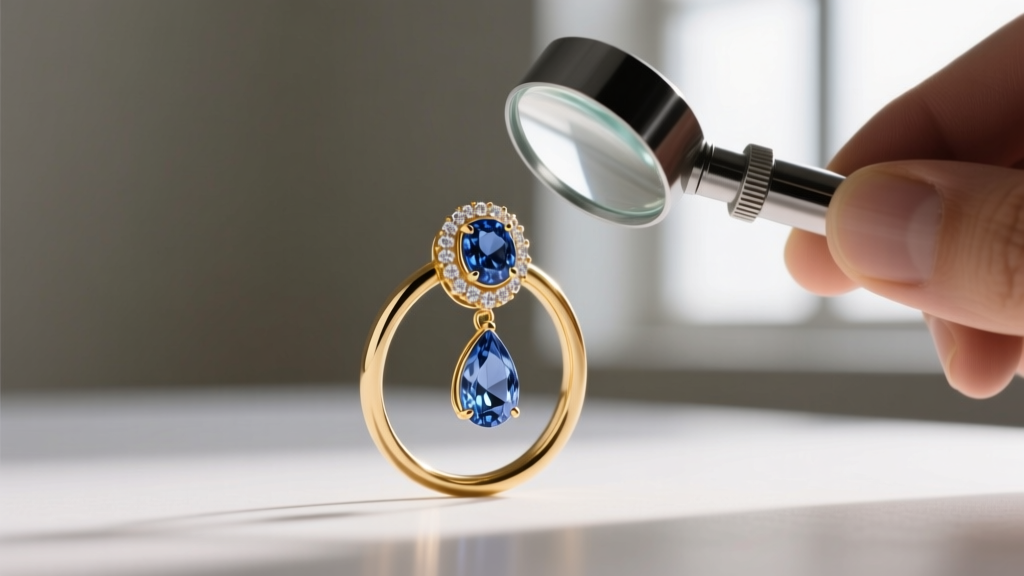
Most drop earrings utilize a jump ring to connect the top and bottom segments. Over time, the repetitive swinging motion causes metal fatigue, eventually warping the ring open or snapping it entirely. If your drop element feels loose or hangs at an odd angle, inspect the jump ring under a 10x jeweler's loupe.
- 22-Gauge Wire (0.64mm): Too fragile for heavy sapphire drops. If your earrings use this gauge, request a bench jeweler to upgrade them.
- 20-Gauge Wire (0.81mm): The industry standard for medium-weight drops. Susceptible to pulling open if the earring catches on a sweater.
- 18-Gauge Wire (1.02mm): Recommended for heavy, high-carat sapphire drops. Must be laser-soldered closed to prevent future separation.
Pro-Troubleshooting Step: If a jump ring has pulled open but not snapped, do not simply squeeze it shut with pliers. This weakens the structural integrity. A jeweler must fuse the seam using a laser welder to ensure a permanent, seamless closure without applying heat that could damage the sapphire.
The Mohs Scale Hazard: Gem-on-Gem Abrasion
One of the most overlooked issues in mixed-gemstone jewelry is the interaction between different hardness levels. On the Mohs scale of mineral hardness, diamonds rank at a 10, while sapphires (corundum) rank at a 9. While a 1-point difference seems negligible, diamond is exponentially harder than sapphire.
In articulated drop earrings, the diamond top segment frequently swings and collides with the sapphire drop. Over months of daily wear, this kinetic friction will cause the diamond's girdle or culet to micro-scratch the table facet or crown of the sapphire. If your sapphire appears cloudy or scratched under magnification, gem-on-gem abrasion is the likely culprit.
The Spacer Bead Solution
To troubleshoot and prevent this, consult a master jeweler about installing a microscopic 14k gold spacer bead or a tiny bezel-wire bumper between the diamond bail and the sapphire jump ring. This limits the swing radius and ensures that metal, rather than diamond, absorbs the kinetic impact against the sapphire.
Prong Wear and Stone Security Protocols
Sapphires are frequently cut into pear, marquise, or oval shapes for drop earrings, which necessitate specialized V-prongs at the pointed tips to prevent chipping. Diamonds in the top halo are typically set in delicate micro-pave or shared prong settings.
The 'Tap Test' for Loose Stones
Before cleaning or wearing your earrings, perform the tap test. Hold the earring by the post and gently tap the sapphire drop against your fingernail. Listen closely:
- Solid 'Click': The stone is seated properly against the bearing inside the setting.
- Rattling or 'Buzzing': The stone is loose. The prongs have worn down or bent, and the sapphire is shifting within the gallery. Stop wearing the earring immediately to prevent losing the stone.
According to the American Gem Society, prongs should be inspected by a professional every six months. Re-tipping a worn 14k or 18k gold prong typically costs between $35 and $60 per stone in 2026, a minor expense compared to replacing a lost natural sapphire.
Safe Cleaning Protocols for Mixed Gemstones
Cleaning sapphire and diamond drop earrings is fraught with hidden dangers, primarily due to modern gemstone treatments. While untreated diamonds and heat-treated sapphires are durable, the market is flooded with fracture-filled or lead-glass-filled sapphires. Subjecting these treated stones to ultrasonic cavitation or high-heat steam will shatter the sapphire or melt the filler, ruining the stone instantly.
| Cleaning Method | Diamond Safety | Sapphire Safety | Risk Factors |
|---|---|---|---|
| Ultrasonic Cleaner | Safe (if no fractures) | HIGH RISK | Shatters fracture-filled stones; loosens pave diamonds |
| Steam Cleaner | Safe | MODERATE RISK | Thermal shock can crack included sapphires |
| Ammonia Solutions | Safe | LOW RISK | Dulls the polish on lead-glass filled sapphire surfaces |
| Warm Soapy Water | Safe | Safe | None; use a soft baby toothbrush to clean under the gallery |
The Gemological Institute of America (GIA) strongly recommends warm water, mild dish soap, and a soft brush as the only universally safe cleaning method for sapphires of unknown treatment origins. Always clean over a plugged sink or a soft towel to prevent catastrophic loss if a loose stone dislodges during brushing.
Solving the 'Forward Droop' Dilemma
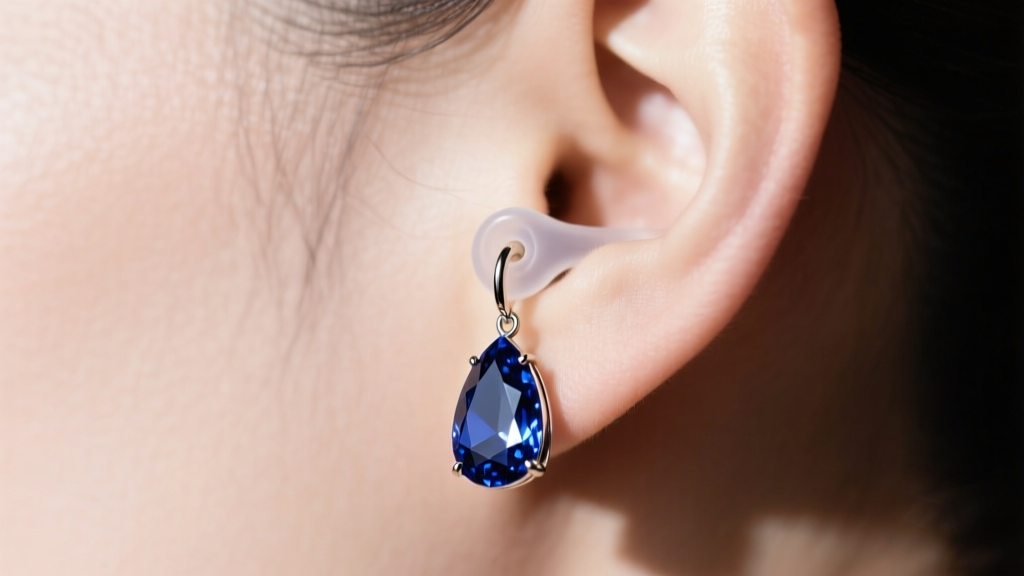
Because sapphire and diamond drop earrings concentrate significant weight at the bottom of the articulation, they frequently pull the earlobe forward, causing the earring to face the floor rather than sitting flush against the ear. This is known as 'forward droop' and is a common complaint for drops weighing more than 4 grams per ear.
Upgrading Posts and Backs
Troubleshooting forward droop requires a two-pronged approach:
- Post Gauge Upgrade: Standard earring posts are 20-gauge (0.81mm). For heavy drops, ask a jeweler to solder on a thicker 18-gauge (1.02mm) or even 16-gauge (1.29mm) post. This provides a rigid lever that resists bending under the sapphire's weight.
- Friction and Support Backs: Standard butterfly backs are insufficient. Upgrade to jumbo silicone friction backs, or invest in specialized support backs like Chrysmela or La Poussiere omega backs, which feature a wide, flat base that distributes the weight across the back of the earlobe, acting as a counterweight to the heavy sapphire drop.
When to Seek Professional Bench Jeweler Help
While you can safely clean and inspect your earrings at home, structural repairs require professional intervention. If you notice a bent hinge, a cracked sapphire girdle, or a diamond that has rotated in its pave setting, do not attempt DIY fixes with household adhesives or pliers. Jewelry glue will permanently cloud the facets of both the diamond and the sapphire, forcing a costly professional chemical bath to remove. Always consult a certified bench jeweler who utilizes laser welding and microscopic setting tools to preserve the integrity of your fine jewelry.
By understanding the mechanical stresses and gemological interactions inherent in sapphire and diamond drop earrings, you can proactively maintain their brilliance and structural security for generations to come.


