When to Change Earrings After Piercing: A Troubleshooting Guide
Learn exactly when to change earrings after piercing. Troubleshoot healing issues, avoid infections, and find the right timeline for lobe and cartilage.

The Biology of Healing: Why Timing Matters
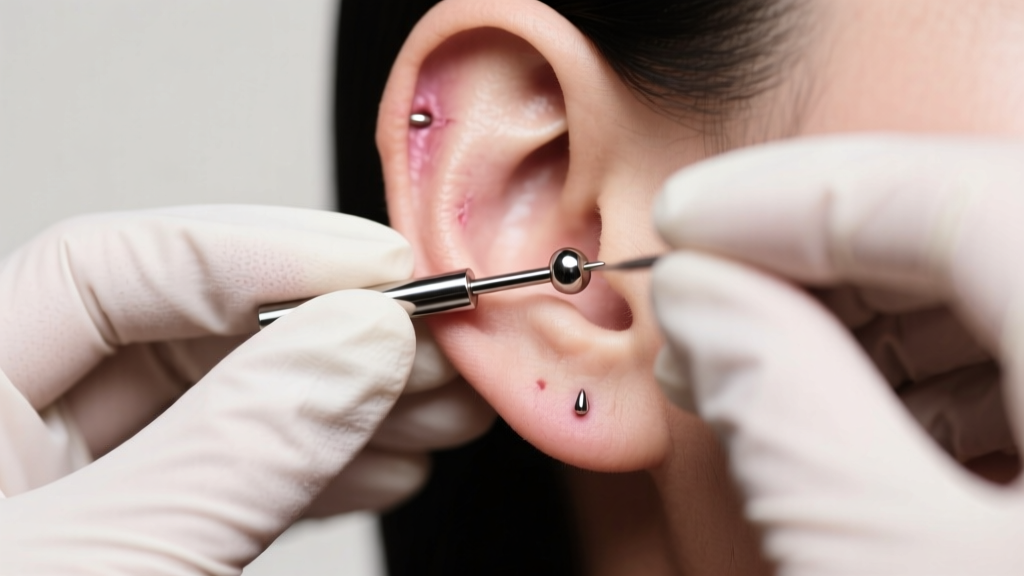
One of the most common questions in body modification is when to change earrings after piercing. The answer is rarely a simple number of weeks; it depends entirely on the biological formation of the fistula—the delicate tube of scar tissue that lines your piercing channel. When a needle passes through the ear, the body immediately initiates an inflammatory response. Over the next several months, epithelial cells slowly migrate to line the wound. If you disrupt this process by changing jewelry prematurely, you introduce micro-tears, bacteria, and foreign metals into an open wound.
As of 2026, advanced dermatological research and guidelines from the Association of Professional Piercers (APP) emphasize that visual healing on the surface does not equate to structural healing beneath the skin. A lobe piercing might look perfectly healed at four weeks, but the internal fistula remains fragile and prone to tearing. Understanding the troubleshooting signs of a compromised piercing is critical before you ever attempt to swap your starter studs for a new pair of hoops or dangles.
Standard Timelines: When to Change Earrings After Piercing by Placement
Tissue density and blood flow dictate healing speeds. Earlobes, composed primarily of soft tissue and adipose fat with high vascularity, heal significantly faster than cartilage, which is avascular and relies on surrounding tissue for nutrient delivery. Below is a clinical breakdown of when you should consider your first jewelry change.
| Piercing Placement | Minimum Healing Time | Ideal Time for First Change | Standard Gauge Size |
|---|---|---|---|
| Standard Earlobe | 6–8 Weeks | 3–6 Months | 18g (1.0mm) or 16g (1.2mm) |
| Upper Lobe / High Lobe | 8–10 Weeks | 4–6 Months | 16g (1.2mm) |
| Helix (Outer Cartilage) | 4–6 Months | 9–12 Months | 16g (1.2mm) |
| Conch / Tragus | 6–9 Months | 12–18 Months | 16g (1.2mm) or 14g (1.6mm) |
| Daith / Rook / Forward Helix | 6–10 Months | 12+ Months | 16g (1.2mm) |
Note: Professional piercers strongly advise against changing your own jewelry for the first time. Visit your piercer for the initial downsizing and swap to ensure the fistula is not damaged.
Troubleshooting: Signs You Changed Your Earrings Too Early
If you are wondering when to change earrings after piercing because your current jewelry feels uncomfortable, you might be misinterpreting normal healing symptoms for a need to swap metals. Changing jewelry too early triggers specific failure modes that can set your healing progress back by months.
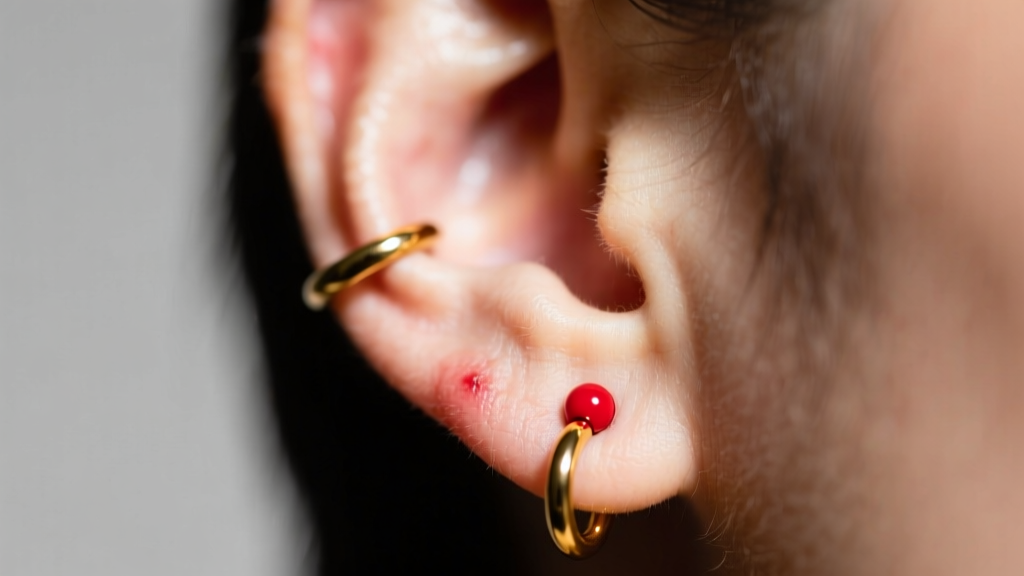
1. Irritation Bumps (Hypertrophic Scarring)
Often mistaken for keloids, irritation bumps are localized, raised, red or flesh-colored bumps adjacent to the piercing hole. They are caused by mechanical trauma (like forcing a new earring post through a tight fistula) or moisture buildup. If you change your earrings and notice a bump forming within 48 hours, you have likely caused micro-trauma. Solution: Revert to your original, sterilized flat-back titanium labret stud and begin warm sterile saline compresses twice daily.
2. Contact Dermatitis and Allergic Reactions
Many commercial earrings sold in retail stores contain nickel or low-grade alloys. If you change your starter jewelry to a fashion earring and experience itching, weeping, or a greenish tint to the skin, you are experiencing contact dermatitis. The Cleveland Clinic notes that nickel allergies can develop suddenly, even if you previously tolerated the metal. Solution: Remove the offending jewelry immediately and switch to ASTM F-136 implant-grade titanium.
3. Embedding and Swelling Traps
If you swap a long-stem starter stud for a short-stem decorative stud before all residual swelling has subsided, the tissue can expand over the jewelry backing. This is known as embedding and requires professional medical or piercer intervention to safely remove the trapped jewelry.
Material Matters: What to Wear During the Healing Window
The material of your replacement earrings is just as critical as the timeline. When your fistula is newly formed, it acts like a sponge, absorbing microscopic metal ions. Here is the hierarchy of safe materials for your first post-healing change:
- ASTM F-136 Implant-Grade Titanium: The absolute gold standard. It is entirely nickel-free, highly polished, and biocompatible. Best for sensitive ears and fresh cartilage piercings.
- Niobium: A highly reactive metal that is anodized to create colors without using toxic paints or platings. Excellent for those with severe metal sensitivities.
- Solid 14k or 18k Gold (Nickel-Free): Must be alloyed for biocompatibility. Avoid gold-plated or gold-filled jewelry, as the thin outer layer will wear away inside the fistula, exposing base metals.
- Avoid 316L Surgical Steel: Despite the name "surgical," this steel contains up to 14% nickel. It is acceptable for fully healed, mature piercings, but highly risky for recent piercings.
Step-by-Step: How to Safely Perform Your First Earring Change
Once you have reached the ideal timeline and confirmed your piercing is fully healed (no tenderness, no crusting, normal skin color), follow this protocol to safely change your earrings.
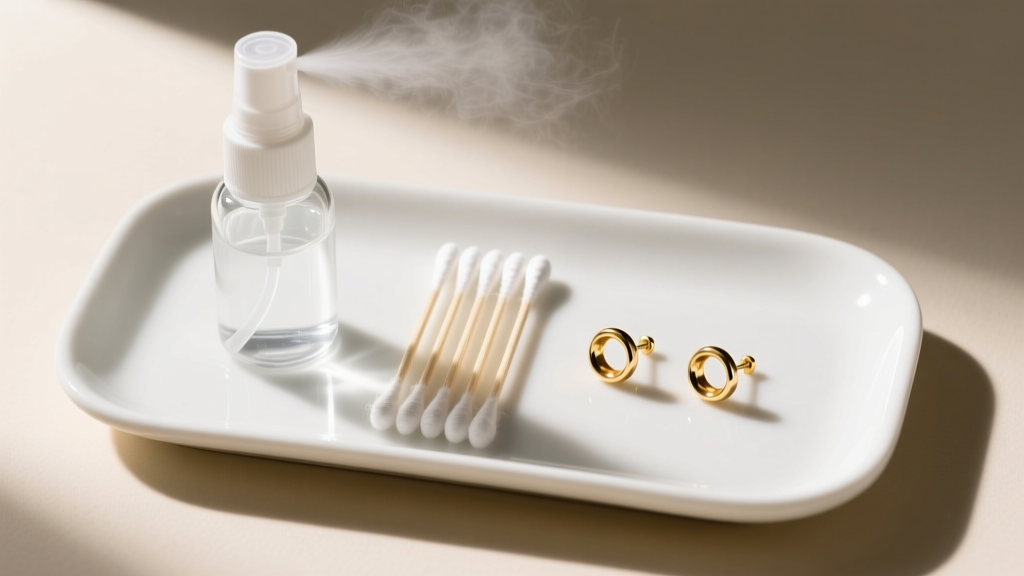
- Prep Your Environment: Wash your hands thoroughly with antibacterial soap. Lay out a clean paper towel on your counter so you do not drop your new jewelry into the sink.
- Choose the Right Jewelry Construction: Opt for internally threaded or threadless (push-pin) jewelry. Never use externally threaded earrings, where the screw pattern is on the post. Dragging sharp threads through a healing fistula will tear the delicate epithelial lining.
- Lubricate the Fistula: Never use Vaseline, Neosporin, or heavy oils, which trap bacteria and block oxygen. Instead, spray the new earring post with sterile 0.9% saline solution to provide a water-based slip.
- Insert at the Correct Angle: Piercings are rarely perfectly straight. Gently insert the post, following the natural angle of the channel. If you meet resistance, stop immediately. Forcing it will cause blunt force trauma to the channel walls.
- Secure the Backing: If using a flat-back labret, ensure the O-ring or threadless pin is securely fastened, but do not overtighten, which can cause pressure necrosis on the back of the ear.
Expert FAQ: Stubborn Piercings and Delayed Healing
Why is my cartilage piercing still hurting after 6 months?
Cartilage piercings are notorious for "false healing." They may feel fine for weeks, then suddenly flare up due to sleeping pressure, snagging on hairbrushes, or over-cleaning. If it still hurts at 6 months, you are not ready to change the jewelry. Continue your aftercare routine and consult your piercer to check the jewelry angle and bar length.
Can I take my earrings out overnight once they are healed?
Even after the initial healing phase, fistulas can shrink rapidly. For the first year, it is highly recommended to keep jewelry in the piercing 24/7. If you must remove them, use a glass or acrylic retainer to keep the channel open without introducing reactive metals to your sleeping environment.
The Golden Rule of Piercing Maintenance: Patience is the ultimate troubleshooting tool. If you are ever in doubt about when to change earrings after piercing, wait another month. Your body will reward your patience with a seamless, lifelong accessory canvas.


