Troubleshooting Earrings Prada: Fakes, Tarnish & Repairs
Expert troubleshooting for Prada earrings. Learn to authenticate vintage pieces, fix tarnished brass, repair broken clasps, and restore chipped enamel.

The Reality of Prada Fashion Jewelry: Materials & Wear
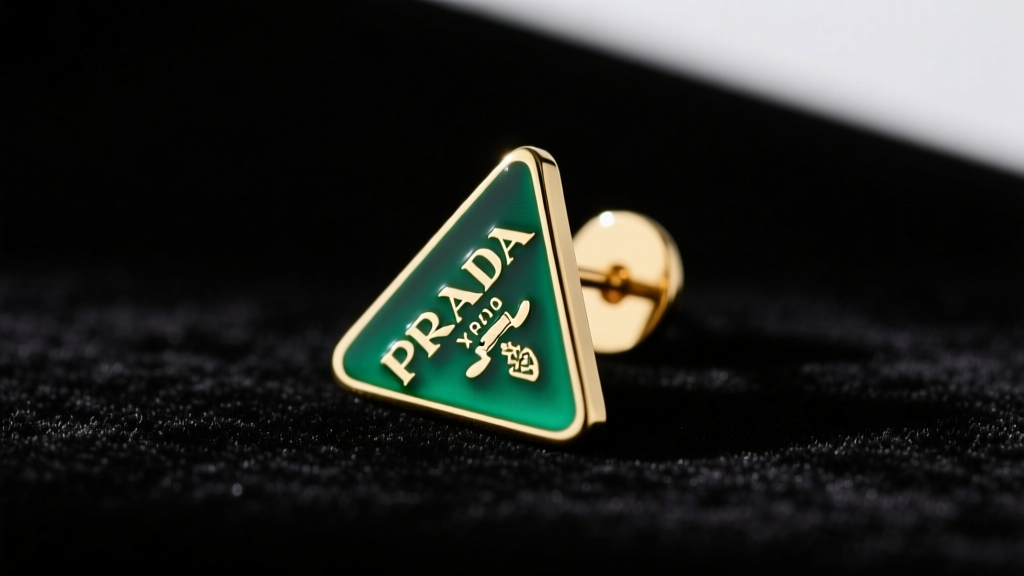
When investing in luxury fashion jewelry, understanding the material science behind the brand is critical for long-term maintenance. Unlike Prada’s fine jewelry collections which utilize 18k gold and precious gemstones, the vast majority of iconic Prada fashion earrings—including the recognizable triangle logo studs, robot motif drops, and enamel hoops—are crafted from base metals. Specifically, Prada typically employs a high-grade European brass alloy (often CuZn39Pb3) or pewter, which is then finished with galvanic electroplating in gold or silver tones. The plating thickness on luxury fashion jewelry generally ranges from 0.5 to 1.5 microns. While this provides a brilliant initial luster, it also introduces specific vulnerabilities, making troubleshooting common issues like tarnish, hardware failure, and authenticity concerns an essential skill for any collector.
Troubleshooting the "Green Ear" & Tarnish Issues
The most frequent complaint among wearers of vintage or heavily used Prada earrings is the dreaded "green ear" phenomenon, accompanied by localized tarnishing. This is not a sign of poor hygiene, but rather a predictable chemical reaction.
The Brass Base Metal Breakdown
When the microscopic layer of gold or rhodium plating wears thin—most commonly at high-friction areas like the earring post, the butterfly back, or the hinge of a hoop—the underlying copper in the brass alloy is exposed. When copper comes into contact with the chlorides, lactic acid, and moisture found in human sweat, it oxidizes to form copper chloride, which further degrades into green verdigris (copper carbonate). According to the Federal Trade Commission Jewelry Guides, base metals must be properly disclosed, but the inevitable wear of plating is a universal reality of fashion jewelry.
The Micro-Crystalline Wax Solution
Many amateur collectors attempt to seal their Prada earrings with clear nail polish. This is a critical mistake; polyurethane-based nail polishes yellow over time, chip unevenly, and can trap moisture against the brass, accelerating corrosion. Instead, troubleshoot existing verdigris by gently swabbing the affected area with a cotton bud dipped in white vinegar, followed by a neutralizing paste of baking soda and distilled water. Once completely dry, seal the earring posts and friction points with a micro-crystalline wax, such as Renaissance Wax. This museum-grade barrier is pH-neutral, invisible, and prevents oxygen and moisture from reaching the brass substrate.
Authentication Matrix: Spotting Counterfeit Earrings Prada
The secondary market is flooded with counterfeit Prada earrings. Because Prada’s designs often rely on bold geometric shapes and enamel work, they are easily replicated by overseas manufacturers. However, authenticating your pieces requires looking past the logo and examining the microscopic details of craftsmanship and material weight.
| Feature | Authentic Prada | Common Counterfeit |
|---|---|---|
| Hallmark Stamp | Deeply engraved or cast with sharp, uniform serifs. Includes "PRADA" and "MADE IN ITALY". | Shallow laser etching, misaligned dies, or missing country-of-origin stamps. |
| Enamel Application | Flush with the metal bezel. Cold enamel (epoxy) or vitreous enamel with zero bleeding onto the brass border. | Enamel sits above the bezel, shows visible brush strokes, or bleeds over the metal edges. |
| Crystal Quality | Precision-cut Swarovski or high-grade lead glass with sharp faceting and high refractive index. | Molded acrylic resin or cheap stamped glass with rounded, dull facets and internal bubbles. |
| Weight & Heft | Substantial heft due to solid brass or pewter core. Hinges operate with smooth, oiled resistance. | Noticeably lightweight, often using hollow aluminum or cheap zinc alloys. Clasps feel flimsy. |
Furthermore, the Gemological Institute of America (GIA) notes that authentic precision-cut crystals possess a distinct refractive index (typically 1.54 to 1.58 for lead glass) compared to standard acrylic. If your Prada crystal drop earrings feel warm to the touch immediately upon handling and lack a heavy, dense pull, they are likely acrylic fakes.
Hardware Failures: Fixing Clasps & Hinges
Prada’s structural hardware, particularly on their oversized hoops and clip-on vintage pieces, is subject to mechanical fatigue. A common failure mode is the snapping of the earring post at the solder joint, or the loss of tension in a hinged hoop clasp.
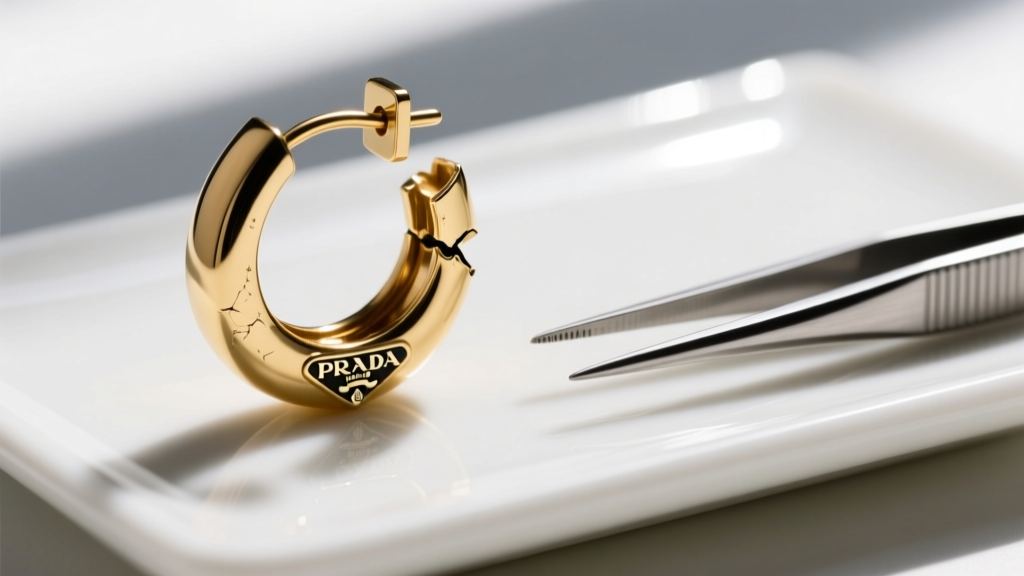
If a hoop earring hinge becomes loose and fails to "click" shut, do not attempt to bend the metal arm with standard pliers, as this will fracture the brittle brass base. Instead, use a jeweler's micro-screwdriver to gently tighten the hinge pin if it is a screw-based mechanism. For friction-fit hinges that have lost tension, a professional jeweler can apply a microscopic drop of UV-cured jewelry resin to the friction peg to restore the snapping mechanism without permanently altering the metal.
For broken posts on Prada studs, traditional silver soldering will melt the surrounding enamel and destroy the piece. The correct troubleshooting protocol is laser welding. A laser welder uses a concentrated beam of light to fuse a new brass or titanium post to the existing base metal in milliseconds, generating virtually no heat transfer to the adjacent enamel or crystal settings.
Enamel & Crystal Loss Restoration
The iconic Prada triangle logo and the playful robot motifs heavily rely on vibrant cold enamel (a two-part jewelry epoxy resin). Over time, impacts can cause this enamel to chip, revealing the raw brass under-ridge. Similarly, the prongs holding Swarovski crystals can bend, leading to stone loss.
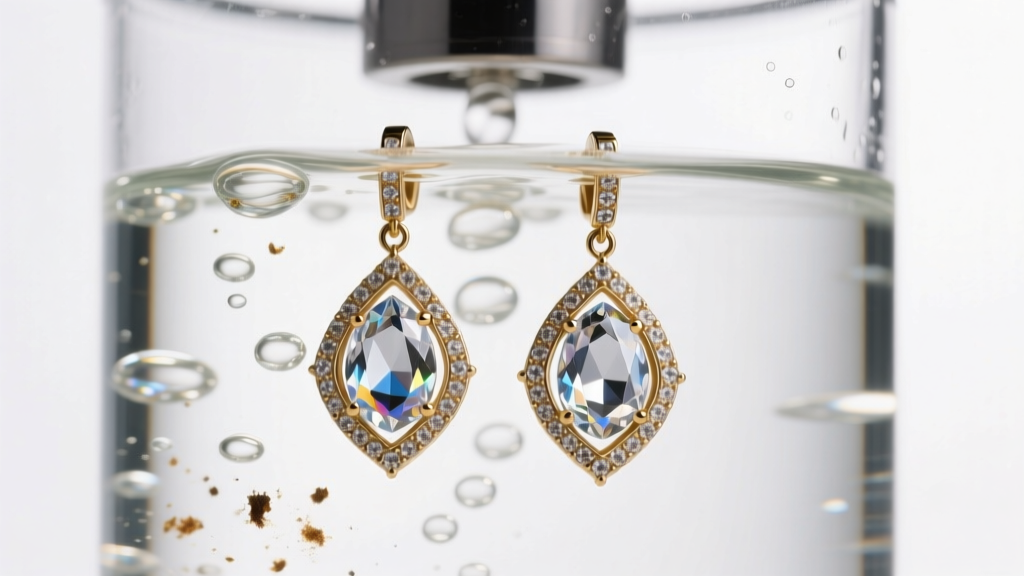
Do not attempt to clean heavily soiled Prada crystal earrings in an ultrasonic cleaner. The high-frequency vibrations can shatter the epoxy bonds holding the crystals in their settings. Instead, use a soft-bristled makeup brush dipped in a solution of warm distilled water and a drop of ammonia-free dish soap. If a crystal is missing, source a replacement Swarovski flatback or point-back crystal matching the exact millimeter diameter. Secure it using a two-part clear jeweler's epoxy, applying the adhesive to the setting cup with a needle-tip syringe to avoid clouding the crystal's facets.
For chipped enamel, professional restoration involves carefully masking the surrounding metal, lightly sanding the chipped crater with 2000-grit micro-mesh, and filling the void with a color-matched, two-part jewelry epoxy tinted with mica powders. Once cured, the surface is wet-sanded flush with the metal bezel and polished with a microfiber cloth.
Preventative Storage & Care Protocols
Troubleshooting is always more expensive than prevention. To preserve the galvanic plating and enamel integrity of your Prada earrings, they must be stored in a low-humidity, sulfur-free environment. The original Prada boxes are excellent for display, but they are not airtight. Store each pair individually in anti-tarnish cloth pouches infused with silver-guard technology, which absorbs ambient sulfur and moisture. Keep the earrings away from direct UV light, which can cause the cold enamel resins to yellow or become brittle over decades of wear. By understanding the metallurgy and construction of these luxury pieces, you can ensure your collection remains pristine and structurally sound for years to come.